President @jugendrot | Econ & Public Policy @Sciencespo | Data Analytics @UofGlasgow | Interested in financial stability and regulation | RT != endorsement
Wenn die AfD wirklich Wahlen gewinnen wollte, böte sie Führungen durchs Frankfurter Bahnhofsviertel an. Ein sichtbareres Politikversagen gibt es in Deutschland derzeit nicht.
Comme beaucoup d’anciens élèves, j’ai été attristé par les années de désordre qu’a traversées Sciences Po.
Soutien total à @lvassy qui remis au cœur de l’école l’excellence universitaire, l’universalisme républicain, tout en renforçant la politique d’échanges internationaux et d’ouverture sociale.
https://t.co/DM533jHPlm
A performance that brought tears to everyone’s eyes. Thank you to the Sükösd SUGO Boys and their leader, Zsolt Nebl, for making the inaugural session of the National Assembly truly unforgettable.
Long live a free, democratic and humane Hungary!
🇭🇺🎶 For the first time in Hungarian history, 'The forest is green / Pădure vergyé', the Hungarian Roma community's anthem—which gained that status after a 1993 civil rights protest—was played in parliament, at PM Péter Magyar's suggestion.
Many MPs were in tears, and so was I.
It's hardly the most important thing happening in British public life right now, but the clear indication that a country and its governing institutions can't identify a gaggle of historical figures with broad appeal without fear of too much of controversy is quite a sad sign
The collapse in the number of births in Germany is unabated massively undershooting eg the Eurostat forecast assumptions. I know the government's plate is full and all, but I think this receive too little attention.
@lgewessler Nein, das ist ein schwerer Fehler, ein Schlag gegen die Interessen der EU, dass Sie das in Kooperation mit AfD und anderen getan haben ist ein Desaster, wie auch viele andere Mitglieder Ihrer eigenen Partei Ihnen bescheinigen. Es ist erbärmlich.
Big step forward: negotiations concluded for the UK to rejoin @EUErasmusPlus in 2027, boosting people-to-people ties. Now over to the @EUCouncil.
Confident more progress ahead, incl. on electricity cooperation and beyond.
My statement w/ @NickTorfaen 👉 https://t.co/8KLWOa2OzB.
Was für einen Unsinn man mit Steuergeldern machen kann. Wie wär's mal mit einem lokalen Experiment für den "geordneten Rückbau". Wie schnell würden die nach Stütze durch die reichen Nachbarn rufen.
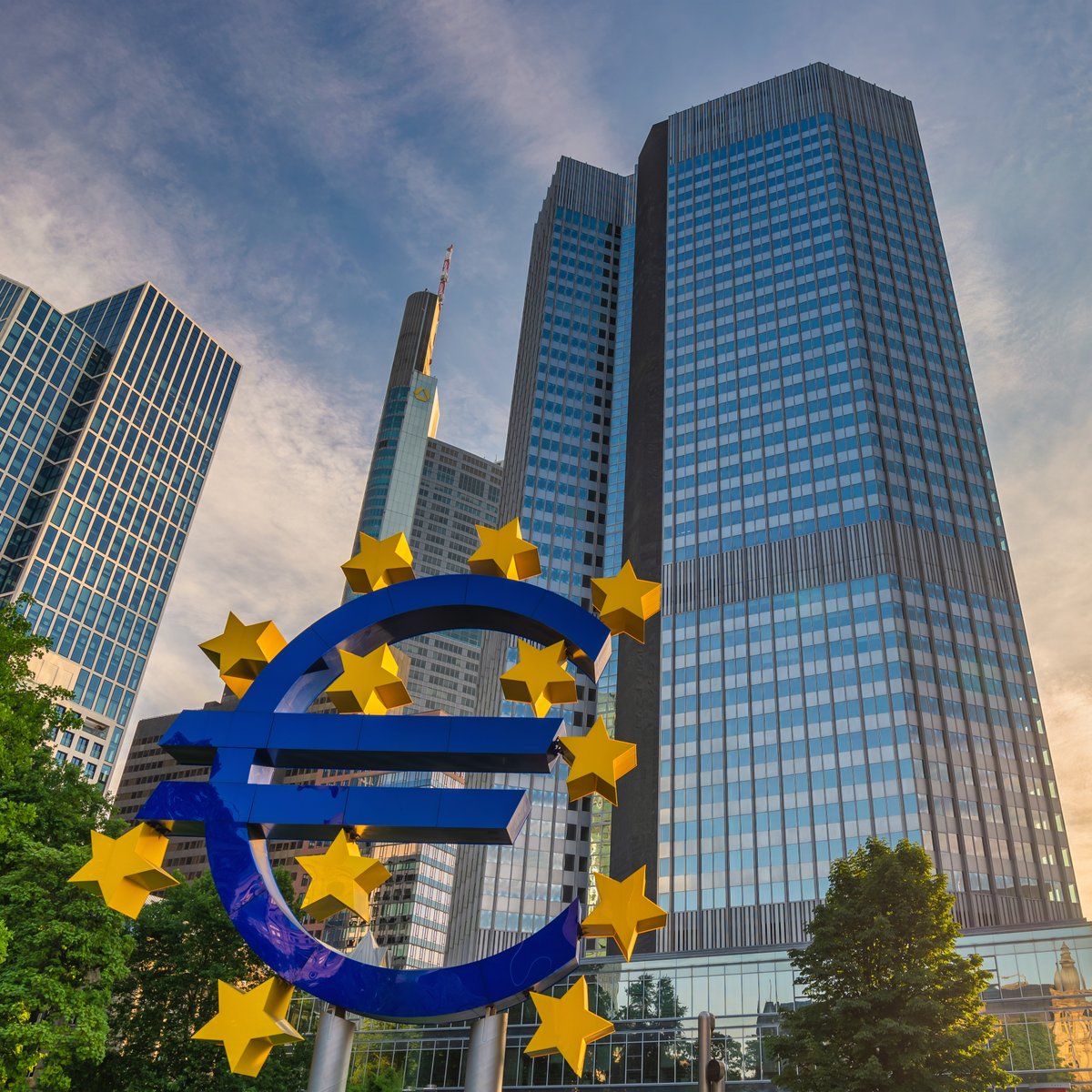
The euro embodies the idea of a united Europe and symbolises the ECB’s work, says President @Lagarde.
We’re glad to have found a joint solution with @EUFrankfurt_ and @Stadt_FFM to secure the euro landmark’s future for all the people who come to see it https://t.co/gon4ZdyPCk
The president of the National Youth Council, Liam Bremer, appeared on RTL Radio on Friday morning to discuss the outlook for Luxembourg's young people. https://t.co/4cmStI5pqX
I’ll add some data to contextualize these quotes from the article:
1. “The middle class no longer exists; you’re either poor or rich”, said a humble shopkeeper.
That’s not what the data show. The Gini coefficient in 2025 is similar to that of 2023, suggesting that income inequality has not changed significantly under Milei. It’s true, however, that one of the groups hardest hit by his policies are public employees, whose real wages have fallen by 15%. Public employees tend to belong to the upper-middle segment of the income distribution. But the middle class is much broader than that — it also includes self-employed professionals and registered private-sector workers, whose real incomes have slightly increased.
2. “The purchasing power of society has fallen dramatically.”
That’s not reflected in the data. Poverty rates (notwithstanding some relevant measurement issues) are currently lower than in 2023. Private consumption, according to national accounts, is above 2023 levels. There has indeed been great heterogeneity in income dynamics: public-sector workers and minimum pensioners lost about 15% of their income, but formal private-sector workers gained 4%, and informal workers saw a remarkable 14% increase.
3. “Domestic manufacturing is in a great depression. Argentina is deindustrializing fast.”
This is true. So far in 2025, manufacturing output is around 10% lower than in the same period of 2023. Although domestic consumption is slightly above 2023 levels, the sharp trade liberalization has significantly increased the market share of imported products versus locally made ones. This has helped Milei contain prices, but at the cost of domestic production and manufacturing employment.
4. “Between 205,000 and 250,000 formal jobs have been lost in Argentina, mostly in construction and manufacturing, and about 18,000 businesses have closed.”
This is accurate. The correct figure is around 205,000 jobs lost — counting not only private-sector employees but also public workers and domestic service. The biggest drops occurred in construction (-60,000), the public sector (-58,000), and manufacturing (-39,000).
Regarding the number of businesses that have closed, the figure is accurate. I would add that Milei’s first two years were the worst since 1996 in terms of the number of active firms, with the only exception being the start of the previous administration (which was heavily affected by the pandemic, although it later recovered).
5. “More and more Argentine workers are being forced into the informal sector, where there are no stable wages and benefits. They have no protections and are subject to cruel exploitation. Informal workers now account for 43.2% of the Argentine labor force, and half of them don’t earn enough to get by.”
That’s true — informality has been rising. But it has been rising since 2015. Milei is consolidating a longer-term trend that largely stems from Argentina’s prolonged economic stagnation.
Bombshell in Switzerland
"The write-off of the Credit Suisse AT1 capital instruments as ordered by FINMA in March 2023 lacked legal basis. The Federal Administrative Court has therefore revoked FINMA’s decree in a partial decision."