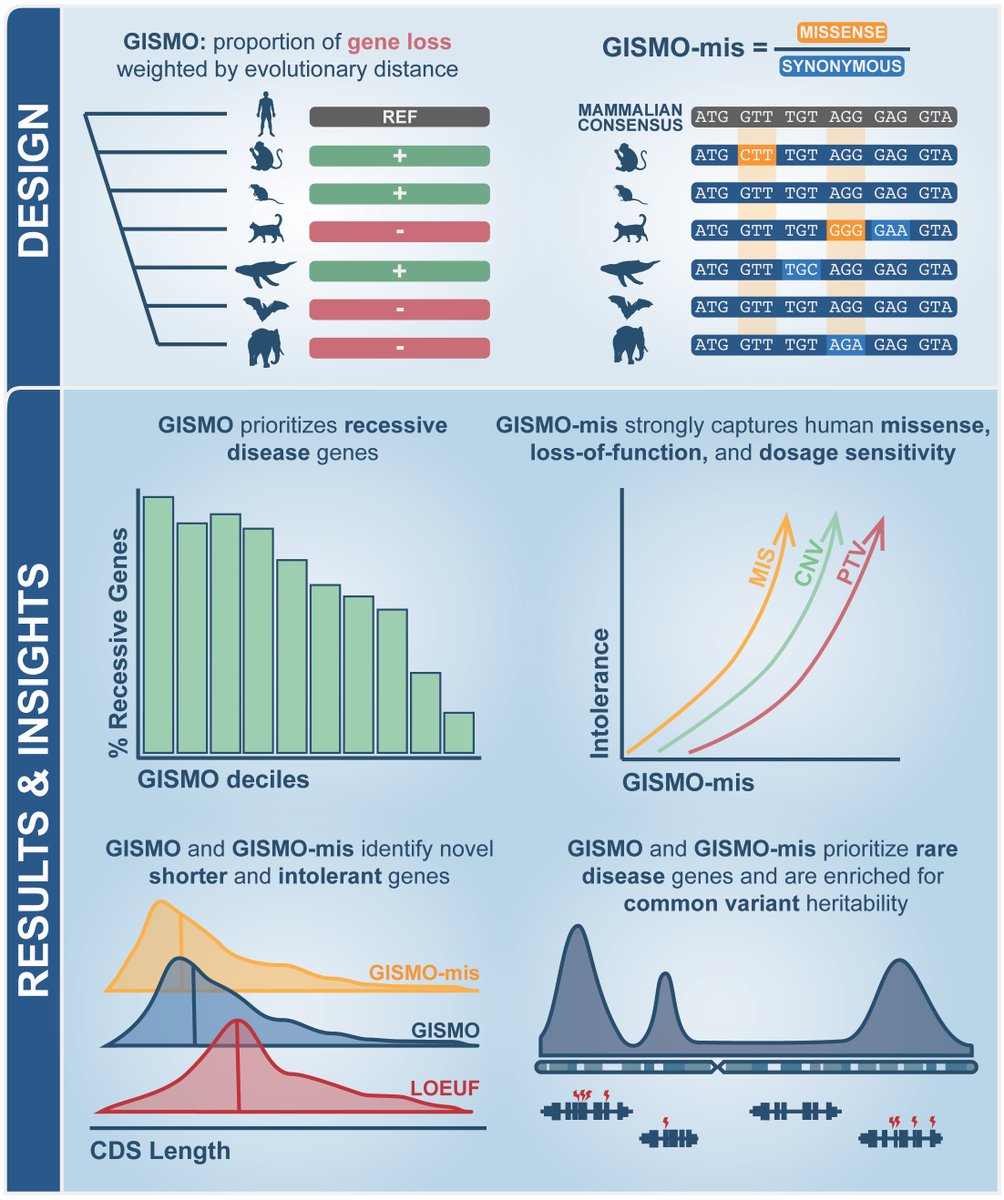
Excited to share our latest preprint from the @bmneale and @TalkowskiLab labs, where we developed metrics (GISMO/GISMO-mis) to quantify gene loss and missense variation across the mammalian tree to better understand gene essentiality! https://t.co/yAAUlFdSRR (1/n)
‼️ TRAINEE ALERT ‼️One of my all-time favorite meetings! You should definitely consider going, it's guaranteed to be a wonderful meeting in a *new* location with an excellent program! Plus, you'll get to hear me share some sage advice about the academic job market at the GRS 🤣.
Applications are now OPEN for the 2025 Human Genetics and Genomics GRC and GRS! 🎉🧬
📅 GRS: July 5-6, 2025
📅 GRC: July 6-11, 2025
📍Portland, Maine
@liao_cal and I are co-chairs for the GRS, with Shamil Sunyaev and @EimearEKenny as the GRC chairs👀
Links to apply below 👇
📣 APPLICATIONS ARE NOW OPEN for the 2025 Human Genetics and Genomics GRC and GRS!
📅 GRS: July 5-6, 2025
📅 GRC: July 6-11, 2025
Join us in Portland, Maine for compelling and exciting discussions related to human genetics and genomics!! 🧬
https://t.co/vTg9QKzAy4
We have developed and scaled the blended genome exome to >50k ancestrally diverse individuals. At ~$100/sample, it's cost comparable with GWAS arrays but assays high quality coding variants, enables CNV calling, and imputes common variants accurately https://t.co/w1iGUtWB9q
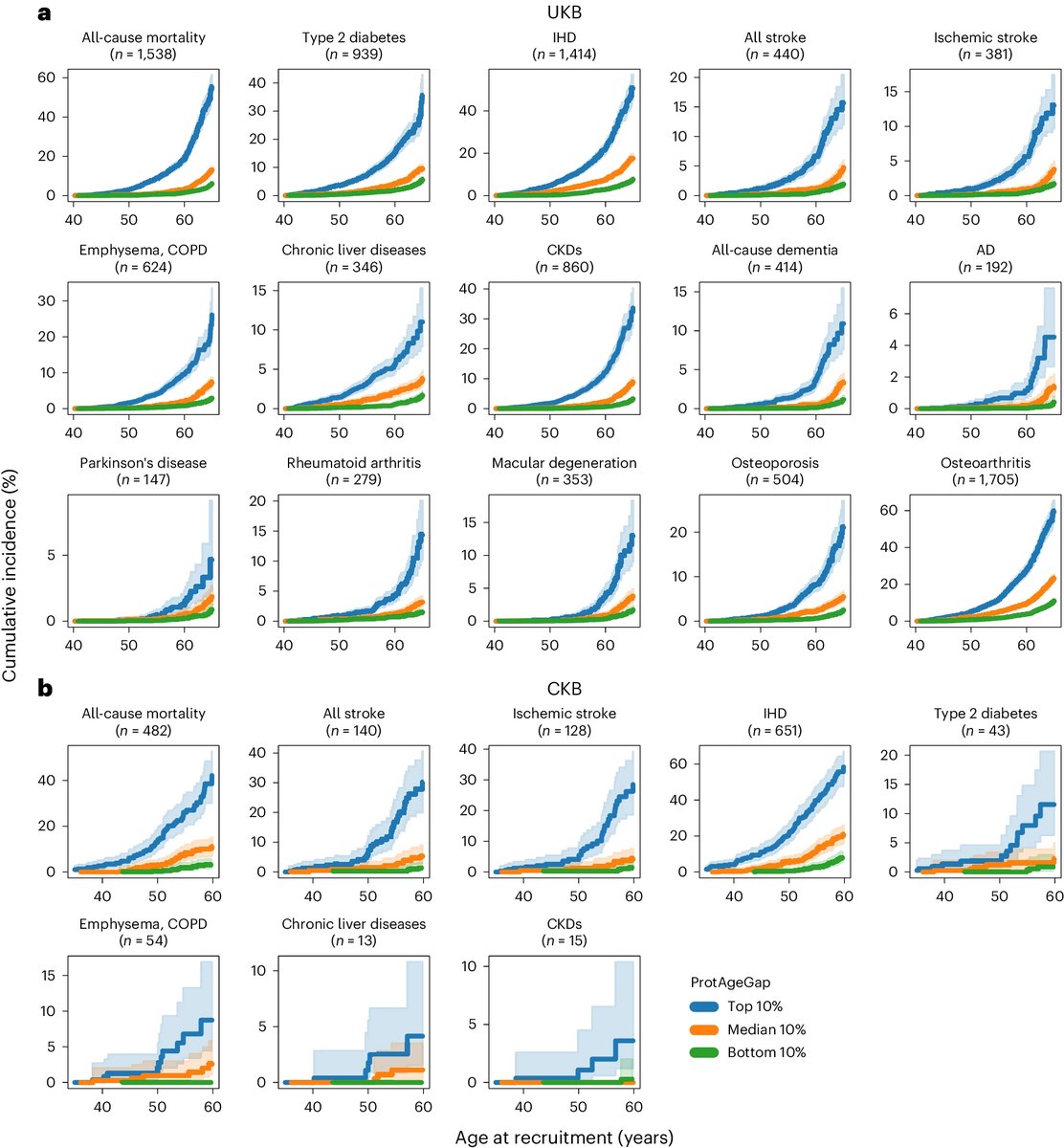
Excited to share our new paper on #proteomic#aging published today in @NatureMedicine.
We developed a proteomic age clock that is associated with nearly all major chronic diseases, multimorbidity, mortality, and #aging biomarkers (e.g., telomeres). https://t.co/No3HXeOAAl
We also found that GISMO is able to help prioritize OMIM recessive disorder genes (strongest enrichment amongst constrained deciles), which has been a complicated problem in the human genetics field given the difficulties discerning weak heterozygous and homozygous selection(8/n)
A special shoutout to my fantastic postdoc mentors @bmneale and @TalkowskiLab, who have been nothing but supportive with all my research endeavours. (12/n)
Next, we wanted to see how well these metrics may capture common and rare variant association. We found that both GISMO and GISMO-mis capture the highest proportion of common variant heritability and rare variant neurodevelopmental signal in the most constrained deciles. (7/n)
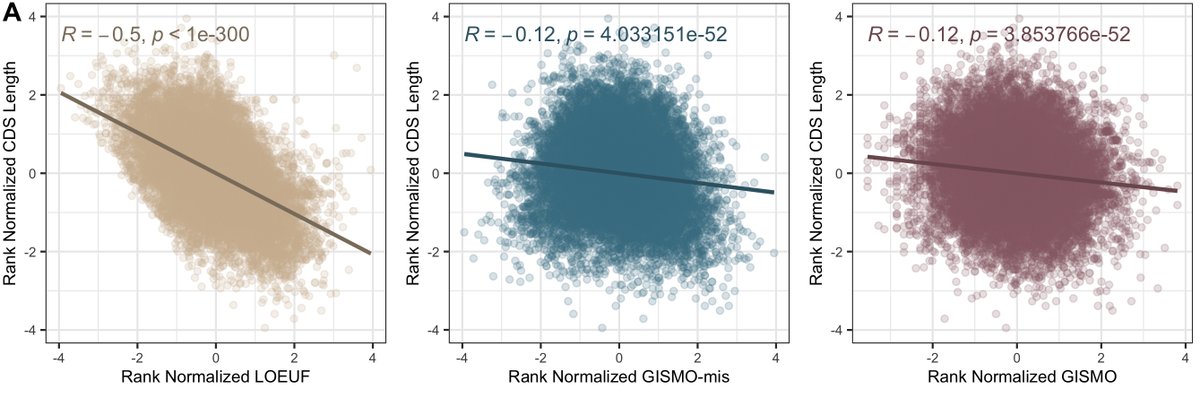
Given the strong coding sequencing length bias in current human metrics, we were excited to find that GISMO and GISMO-mis don’t have as strong of a gene length bias! This is likely due to >100 million years of evolutionary time and surveying variation that have fixated. (6/n)
Current human constraint metrics are underpowered for short genes, given the smaller mutational target space (essentially: smaller gene = less likely to have denovo mutation to propagate in populations). This often leads to coding length biases in these metrics. (5/n)
We developed GISMO (Gene identity score of mammalian orthologs) and GISMO-mis which respectively measure the proportion of gene loss and missense to synonymous ratio across Mammalia in 462 mammals (representing ~10% of all known mammals). (3/n)