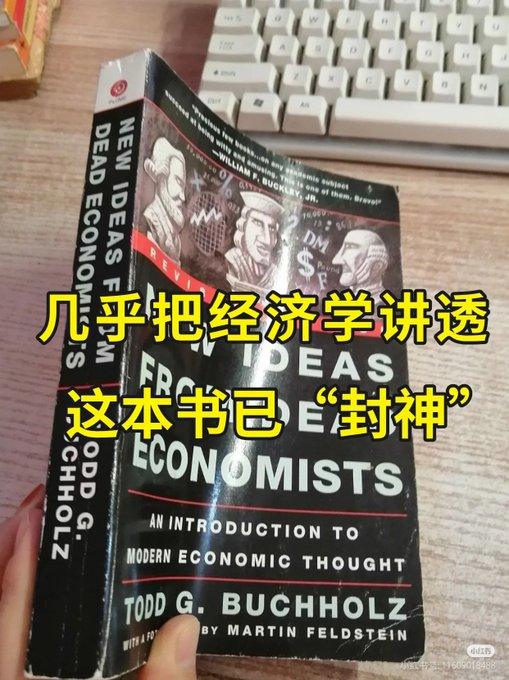
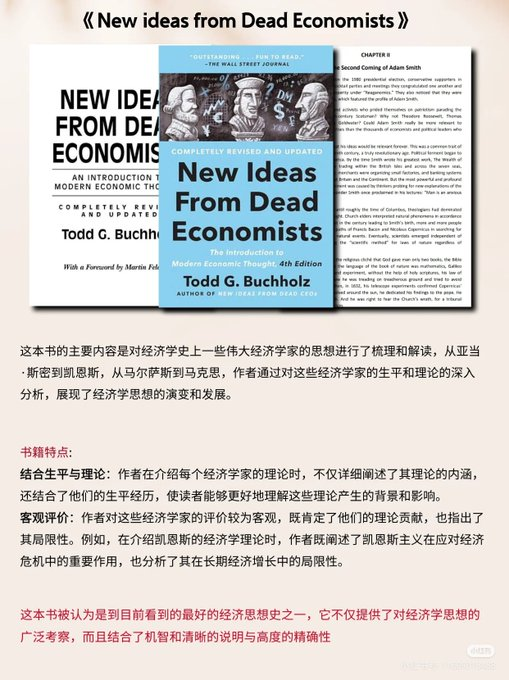
推荐一本经济学书籍,把你的经济学知识都串起来!书名:《New Ideas from Dead Economists》(中文名:《来自已故经济学家的新思路》)
书中不仅梳理了经济理论的演变脉络,更帮你看透现代经济的底层逻辑:通货膨胀、市场竞争、政 府政策……
评论区立即阅读⬇️
https://t.co/6om7OW6LTR
Get more out of GPT-6 Astra by revisiting your skills, AGENTS.md, and task prompts.
Make skill triggers specific, load guidance when it's relevant, and define what done looks like.
https://t.co/UGF0AC8Z5Y
在这个八月初的半小时演讲中,我讨论了泡沫如何产生,如何见顶,如何破灭;我六月中旬如何在预测全球半导体泡沫见顶崩裂。
泡沫亙古不变,人性难移使然。以前如此,以后也一样。 如果我们从历史中可以学到什么,那么就是我们其实什么都没有学到。
In this Chinese Ted Talk presentation recorded in early August, I discussed how I forecasted the crash of Global Semi/Kospi, and my call about the Chinese bubble burst in June 2015. $FXI
9 cool GPT 6 Astra prompts worth trying:
1. The bill renegotiator.
"Go through my internet, phone, and software bills, jump into each provider's chat support, and negotiate them down or cancel what I'm not using."
2. Turn an agency into software.
“Pick one service business in [niche] and reverse-engineer the exact workflow they sell to clients. Break it into steps, tools used, inputs, outputs, human judgment points, and places where the work gets slow or expensive. Then design the simplest AI product that could replace the first version of that service and charge $500-$5,000/month.”
3. Garage sale flipper.
"Watch Facebook Marketplace and Craigslist in my city for [cameras / furniture / bikes] listed way under market, and text me the second one's mispriced with the link."
4. Create my 1 person company dashboard.
“Look at my docs, notes, Stripe exports, analytics, customer calls, and project list, then build a weekly operator dashboard. I want to know what is making money, what is wasting time, what customers are asking for, what I should stop doing, and the three highest-leverage actions for next week. Be blunt and show your work.”
5. Audit my company for agent opportunities.
“Look at how this business works and find the tasks we should give to agents before hiring another person. For each task, estimate the current human time, the cost of mistakes, the tools involved, the difficulty of automating it, and the first safe version we could deploy. Prioritize things that save money or create revenue within 30 days.”
6. Be my browser operator.
“Use the browser to complete this workflow: [workflow]. As you go, click through the actual sites, collect the data, fill the forms where appropriate, and keep notes on what broke or slowed you down. When you’re done, give me the output, the repeatable SOP, and the automation plan so this can become an agent.”
7. The whole QA team.
"Every night, open my app on a real phone, go through signup, checkout, and the main flows, and screenshot anything that's broken or confusing."
8. The competitor spy.
"Sign up for my top 3 competitors, sit inside their product and their emails, and send me a monthly report on every new feature, price change, and thing they do better than us."
9. Make a game people would actually play for 5 minutes as a lead magnet
“Build a browser game around this mechanic: [mechanic]. Don’t just make a cute demo; add progression, tension, scoring, failure, polish, and one reason someone would send it to a friend. Then add lead capture (email/sms), it needs to tie into my core product which sells XYZ.”
GOODBYE EXCEL.
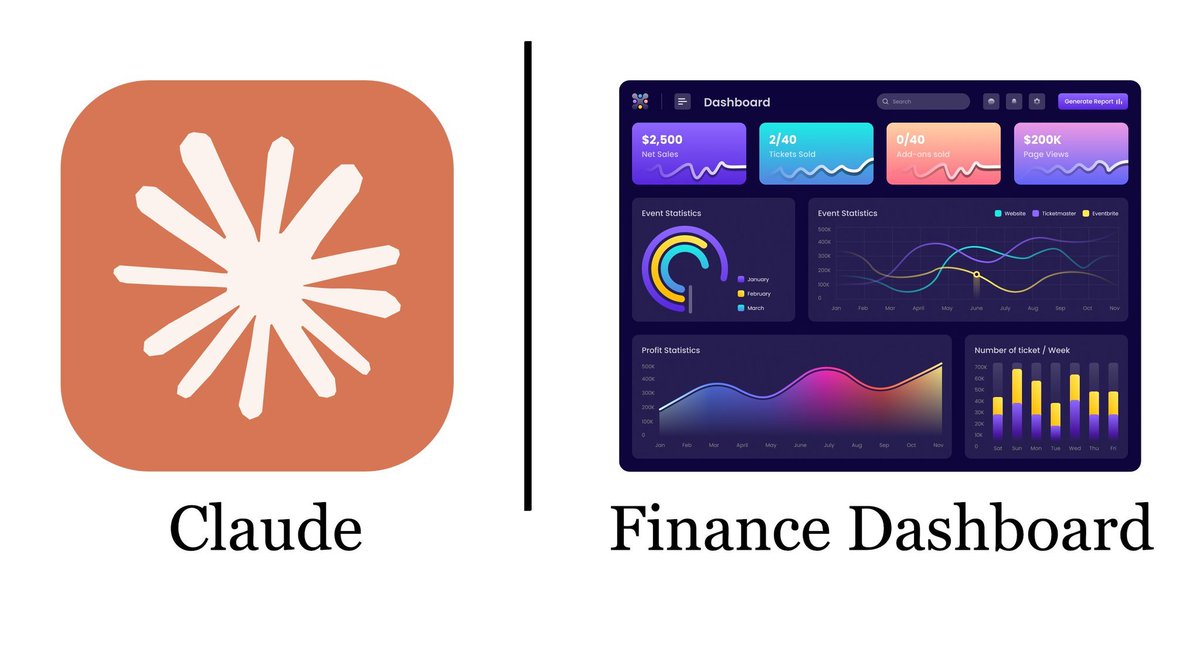
Claude can build a full FINANCE DASHBOARD that looks like a $9,000 analyst made it.
No complex formulas.
No endless spreadsheets.
No coding experience needed.
Here are 10 copy-paste prompts to build yours.
(Save this post. You’ll want these later.) 🔖
Neil Movva (@neilmovva) started his career at Nvidia, working on GPUs and kernels, and has an unusually deep understanding of inference, from software to chips to power.
We spend a lot of time on each of those layers, how they connect, and where the important tradeoffs are.
What makes this conversation special is how detailed it is (like a 401-level class), yet Neil makes it remarkably clear and easy to follow.
Today he runs Sail Research, a company building infrastructure for agents to make tokens as cheap as possible.
We discuss:
- Latency versus throughput
- Why there are no bad chips, only bad pricing
- The end of kernel engineering
- Buying chips and power no one else wants
- New chip architectures
- Nvidia lore + his contrarian view of the company
- Open source and the frontier labs
I learned a ton. Enjoy!
TIMESTAMPS
0:00 Intro
0:38 Building a “Token Factory”
4:21 The Future of Background Agents
13:09 Nvidia and the GPU Stack
23:27 Chips, Memory, and Transformers
36:14 The Future of AI Training Data
44:32 Chip Scarcity and Compute Arbitrage
52:44 Reinventing the AI Data Center
59:01 Power and the “Scavenger Strategy”
1:10:10 Open vs. Closed AI