All your problems are your own fault. Lack of discipline. No confidence. No courage. No responsibility. Bad decisions. Stop complaining and change now.
You do not have unlimited time.
Your death will come on an ordinary day, in the middle of unfinished plans, and the world will continue on without you.
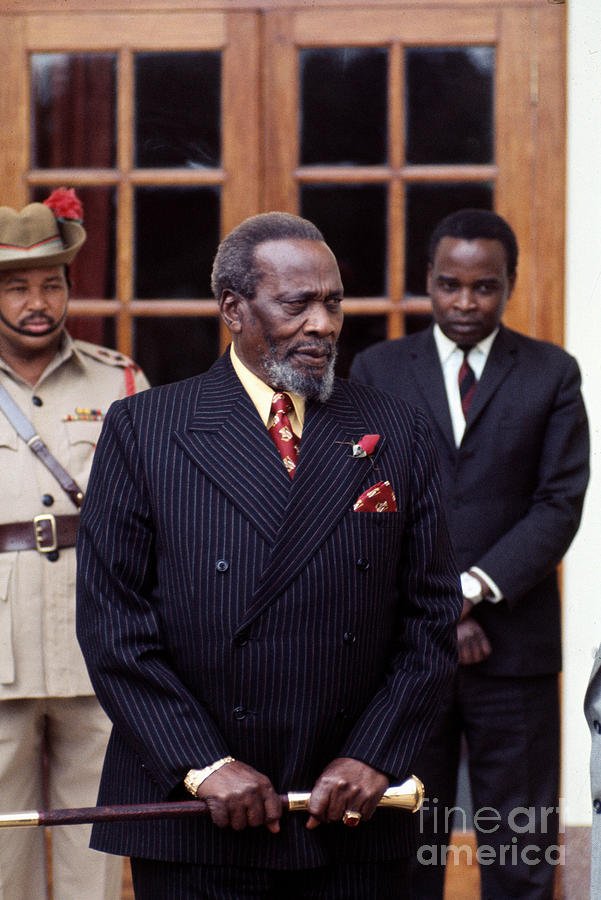
There's a story that has been kept under waters for so many years about the day Mzee Jomo Kenyatta was testing Sayuni's WiFi signal from a distance but without success. On May 4, 1968, Mzee Jomo Kenyatta the lion of Gatundu collapsed into a coma at his Bamburi home. Now, the government of that time was a replica of Kasongo's govt.
In its wisdom, the then govt decided to do what William Ruto’s government would do best in moments of crisis. Do nothing, but secretly. The country went into panic. The President’s health became the most closely guarded rumour in East Africa.
Half of Nairobi whispered him dead, the other half prayed he’d resurrect by news bulletin. By that time, only a handful of people knew Mzee had collapsed. Vice President Daniel arap Moi heard it the next day.
Charles Njonjo, the Attorney General and professional mystery man, was informed later that evening and quickly assured the British that Mzee was “as strong as a horse.” Njonjo then gave a dramatic performance worthy of an Oscar award.
He told the diplomats he had met Kenyatta twice, spoke with him that morning, and even received presidential instructions. When the Greatbatch suggested that maybe, just maybe, the government should release a statement to calm the nation, Njonjo said, “That might only make matters worse.”
As Mzee lay between coma and consciousness, Kenya was already tiptoeing near the edge of a constitutional cliff. Ministers whispered, the army watched, and the British prayed their former colony wouldn’t burn itself before tea time.
Then Bruce Roy McKenzie, the maverick Agriculture Minister, a man partly genius, partly enigma, and to some, partly Mossad agent. McKenzie had seen enough colonial crises to know what a power vacuum looked like, and it didn’t smell good.
So, on June 1 1968, he quietly invited the British Secretary of State, George Thomson, for a “post-coma crisis meeting.” Behind the heavy curtains of Greatbatch’s residence, McKenzie proposed a secret national emergency plan for Kenyatta’s sickness or death.
His argument was simple: “If we’re going to lose Mzee, let’s at least do it with class.” The British agreed and they drew up a detailed “Contingency Plan for Arrangements in the Event of the President’s Serious Illness or Death” a document so secret it probably had a heartbeat of its own.
It covered everything from who would rule Kenya(of course there was a problem with it), who would be arrested, who would cry at the funeral, and who would keep quiet.
1. A motorised medical unit was to follow Mzee everywhere complete with doctors, nurses, and probably a choir for national prayers.
2. A light aircraft was to be kept on standby to fly a doctor to wherever Mzee sneezed.
3. Telephone lines to Kisumu were to be cut immediately because, apparently, opposition spread faster than malaria.
4. A list of “hostile Kenyans” was to be detained the moment the President’s heart stopped, just in case democracy tried something funny.
5. And if Mzee died, Vice President was to rush back to Nairobi, form a “policy committee,” and assume power before the nation even finished crying.
6. The entire operation would be funded by non-accountable secret funds “Don’t ask, don’t audit.”
But fate,, Bruce McKenzie the man who built a plan to manage the death of a President would himself die first on may 24th 1978 when his plane mysteriously exploded over Ngong Hills shortly after a bomb planted in it exploded..
The pilot survived; the secret did not.
When Kenyatta finally died that same year, much of McKenzie’s plan was dusted off and quietly followed except the medical part. And so, Mzee Kenyatta outlived his own funeral plan, Charles Njonjo denied everything including the obvious, and Bruce McKenzie as the only minister who dared prepare Kenya for the unthinkable.
Bruce McKenzie wrote Kenya’s first survival manual. Nakuambia Ilikua kama ndramaa kama vindioo, Hapana chesaa!!!
i saw a quote that said, "if you don't clear your misunderstandings in time, they become the reason for permanent distance." and that's realest shit ever.