🍀 Mini update: X is healing!
The AI replies have disappeared for me and many others too since I started 🛡️ https://t.co/fezByja7sZ a few days ago
We got 500+ X accounts that were confirmed to be AI spammers suspended
There was 4 false positives on ~4000 accounts, so a 0.1% error rate, they were quickly removed
Many people who were AI reply spammers appealed and promised to never spam again: they were removed from the list. They're then monitored every hour for AI spam and if they do it again, they're back on the list but now permanently
All blocks are ONLY if they're 100% conclusive to be AI spammers (based on their replies history) AND then a human review again before ever being blocked
Thanks everyone for helping to clean up our replies!
And thanks to @dillon_mulroy and @ryanvogel originally starting the AI spammer block list which I expanded on
Here's a blog post showing how to build pixel art objects and characters with Gemini 4 Neon. Includes agent instructions you can copy.
It starts from the original pixel stacking technique and builds outwards.
https://t.co/RalCVs6PBF
@vikaskansalHQ Hi, I'm currently a Google AI Pro subscriber and want to switch to the Black Friday offer. However, I accidentally scheduled a downgrade to Google AI Plus when my current plan expires. How can I cancel this change and get the Google AI Pro Black Friday deal? Thanks!
InP laser supply is still short in AI optics, and Taiwan's monthly sales show where it's stuck before $LITE and $COHR report again.
We track LandMark, VPEC and EZconn, the three companies our Taiwan AI optics map rates as benefiting most directly from the buildout.
LandMark is limited by capacity, VPEC by InP substrate, and EZconn by optical fiber supply. Coherent doubled its in-house InP output over the past year and said transceiver growth absorbed the extra volume.
LandMark Optoelectronics (3081 TT) booked NT$570M in October, its 15th straight monthly gain and 6.5x its 2023 monthly average. On its Oct. 28 call, the CFO said orders still exceed capacity and backlog is larger than full-year 2026 revenue. He guided Q4 revenue up about 16% from Q3 and plans 2.5x today's capacity in 2027.
Our read: the 4% to 6% monthly gains since August are what LandMark can get from current lines and partners. A clear step up in monthly sales as new capacity arrives in 2027 would be the first sign this bottleneck is easing.
VPEC (2455 TT) sat at NT$310M to 326M a month from February to June. Sales jumped 29.5% in July, when InP substrate from $AXTI arrived, and have held at NT$449M to 471M since. Local research outlet UAnalyze reports VPEC ran at only about half its capacity in Q3, so the limit is material, not equipment.
Headline growth understates the shift. We estimate optical products reached a record 42.5% of VPEC's Q3 revenue, up from about 25% to 30% in 1H26. About 20% of optical revenue now comes from customers who supply their own substrate, and VPEC books only a processing fee on that work. VPEC's substrate is also expected to supply to last through 1Q27, with a German supplier adding volume in 2H27.
EZconn (6442 TT) shows a separate limit further down the chain. It makes high fiber-count cables for data centers, and its August to October sales averaged 8.4x its 2023 monthly level. According to our supply chain check, the company is running at full capacity and shipments depend on how much optical fiber it can get, with suppliers' new capacity arriving in 2027.
Over the next few monthly reports, we're watching whether LandMark steps up when its new capacity starts running in 2027, and whether VPEC keeps getting substrate after 1Q27.
Coherent buys optical filters from Apogee Optocom (6426 TT) for assembly at its own plants, while using most of its in-house coating capacity for lower-end filters, according to Apogee’s Nov. 17 earnings call.
For links between data centers, the hard part is getting hundreds of coating layers right. Apogee says its 1.6T filters use about 150 layers, while some long-haul filters for links between data centers use 250 or more. Small errors build up with each layer, making it harder to produce filters that meet spec.
Coherent reported more than $200 million in quarterly data center interconnect revenue in fiscal Q1 and expects that figure to roughly double by the end of 2027.
On the supply side, Apogee says its 23 existing coating lines are already running at full capacity. It expects ten more lines to arrive over the first three quarters of 2027.
$COHR
I’ve said this a few times: we’re now in a quasi-wartime period, so don’t be surprised by anything that happens from here.
The core tension right now is that the US and Nvidia want different things.
Nvidia wants to push AI forward worldwide as fast as possible to get to AGI.
The US wants to pull ahead of China on frontier models and make sure it reaches AGI (or superintelligence) first.
In peacetime, governments stay in the background and companies take the stage.
In quasi-wartime it flips.
Companies step back and governments take over. The crackdowns and new rules coming out of Washington all point that way.
I’ll go through it piece by piece later.
Here’s where I land for now:
a) Global AI supply and demand will both get revised down somewhat. Nvidia trades at 10x forward P/E. For stocks priced well above that, I’d still keep risk in check.
b) China’s chip industry is going to move fast now. The US is betting it gets to AGI before China catches up, like being first to the nuclear bomb.
After that, it would have plenty of ways to play the game. But if AGI doesn’t break through the way people expect, the joke’s on the US. Compute is its biggest advantage today. It would have traded a short-term tech lead for a Chinese AI ecosystem that no longer depends on America.
Every bet has a loser. But does the US really have another choice?
If you follow $LITE and $COHR, the AI optics buildout also runs through 17 Taiwan-listed companies.
We mapped them across five layers and rated how directly each one benefits. Supply is tightest in laser materials today, while CPO parts are mostly a 2027 and 2028 revenue story.
Top tier:
LandMark (3081 TT)
VPEC (2455 TT)
EZconn (6442 TT).
LandMark and VPEC grow the InP and GaAs epitaxial wafers that laser and photodetector chips are built on. LandMark has a four-year agreement with a US customer for data center CW lasers covering 2027 to 2030. WIN Semiconductors (3105 TT) and IntelliEPI (4971 TT) sit in the same layer, with less of their revenue tied to AI optics.
Modules and laser packaging are where 2026 demand shows up first, because pluggable 800G and 1.6T modules remain the volume product. LuxNet (4979 TT) began volume production of 800G products this year and expects 1.6T NPO mass production in the second half of 2027. Elite Advanced Laser (3450 TT) mounts laser chips onto submounts for module makers.
Fiber passives are benefiting from denser data center cabling now.
EZconn makes high fiber-count trunk cables and MPO cords. High fiber-count products passed half its sales in 1H26, when gross margin reached 59.5%. FOCI (3363 TT) is developing fiber array units for CPO and has told local media it expects shipments to pick up clearly in 2027.
Optical module boards need mSAP HDI from 800G up. Zhen Ding (4958 TT) and Compeq (2313 TT) both make them. A US broker expects the mSAP market for 1.6T and faster modules to grow from $0.8B in 2026 to $2.9B in 2028.
Accton (2345 TT) builds AI data center switches and also sells optical transceivers. How much it benefits depends on AI networking’s share of its revenue.
What we’re watching closely:
-How fast 1.6T replaces 800G in 2027
-Whether new InP substrate and CW laser capacity eases pricing
-CPO switch volumes, which decide when FAU and CPO parts turn into revenue
Taiwanese here. A lot of Nvidia's server, rack, cooling and power suppliers in Taiwan started as old-economy family businesses. Foxconn began in 1974 making plastic knobs for TVs. That world still runs on ties built over years of dinners and drinks, and many of the strongest ones sit with Jensen personally.
Getting that many supply chain bosses around one table isn't easy, and Jensen had the pull to do it. I think it does make a difference when the CEO across the table isn't familiar with Taiwanese culture. When a problem spans several suppliers, someone still has to get every decision-maker in the room, and that person is now gone.
Local analysts don't see every supplier as equally exposed. $TSM, $ASX and MediaTek (2454TT) were called irreplaceable, since any AI chip still needs them, whether for wafers, packaging or design.
The worry is the next tier down, where several Taiwanese vendors can do the same job and relationships help decide who gets the order. One Taipei analyst called it a risk of orders getting "poached."
I don't think this supply chain can be replaced anytime soon. Any lost Nvidia orders would likely shift to other customers, and the same suppliers already build for $AMD and custom ASIC programs.
i found the optimal first interview question, difficulty: impossible
tell me about one concrete action in your career, in a way where I can understand why it is impressive given what you knew at the time. use as few words as possible
We see non-NVIDIA HBM demand supporting Samsung's (005930 KS) 4nm foundry, even if NVIDIA's custom base dies use TSMC's 3nm process.
HBM stacks DRAM above a logic base die that handles data movement and control. Samsung builds both parts, and its HBM4 uses a base die made on its own 4nm process. Growing shipments of that product also add work for Samsung Foundry.
Samsung's March MOU with AMD covers primary HBM4 supply for the Instinct MI455X GPU.
Seoul Economic Daily reported that NVIDIA requested TSMC's 3nm process for the base dies in custom NVHBM. That would let Samsung remain a memory supplier while moving this part of the manufacturing work outside its own foundry.
Our view is that other GPU and ASIC customers could make different process choices. If Samsung's own technology meets their bandwidth, power and qualification requirements, it could retain the base-die work inside the HBM it supplies.
$AMD $NVDA $TSM
We think 40TB-class drives lifting HDD supply into 2027 as Seagate ($STX) scales HAMR and Western Digital ($WDC) ramps ePMR ahead of its HAMR launch.
Both companies reported strong cloud storage demand in their October earnings updates and are relying on higher-capacity drives to grow exabyte shipments.
Seagate’s Mozaic 4 platform, supporting up to 44TB, is already ramping with two leading cloud providers. By year-end 2026, Seagate expects HAMR to represent roughly half its nearline exabyte shipment run rate, with Mozaic 4 accounting for half of that.
We calculate an implied Mozaic 4 share of about 25%.
Western Digital expects its up-to-40TB ePMR platform to reach roughly 30% of nearline bits shipped in the December 2026 quarter and 50% in the March 2027 quarter.
WD’s 44TB HAMR platform follows, targeting qualification completion with two hyperscale customers in Q1 2027 and volume shipments in the first half. Its ePMR platform will keep ramping alongside HAMR.
We see a limited competitive threat to Seagate $STX and Western Digital $WDC from Toshiba’s Philippine HDD expansion. Even assuming Toshiba doubles its total bit capacity, our model puts its industry share at roughly 11.3%, up from about 10%.
Toshiba announced on Oct. 2 that its Philippine manufacturing subsidiary aims to roughly double annual production capacity, measured by storage capacity, by FY2027 versus FY2025.
Our report estimates Seagate and Western Digital will also increase bit capacity by a cumulative 70% to 82% over 2026 and 2027. Toshiba is expanding from a much smaller base while both larger rivals grow.
Using 75% growth for its rivals, Toshiba doubling instead of matching their pace adds just 2.5 percentage points to industry bit-capacity growth. That limits the incremental supply impact in our model.
@davegoldblatt "Hi Claude good morning how are you I'm great thx build me a YouTube-style site but restricted to videos that have been repeatedly recommended on HN over the years pls. Don't make any mistakes."
trivia:
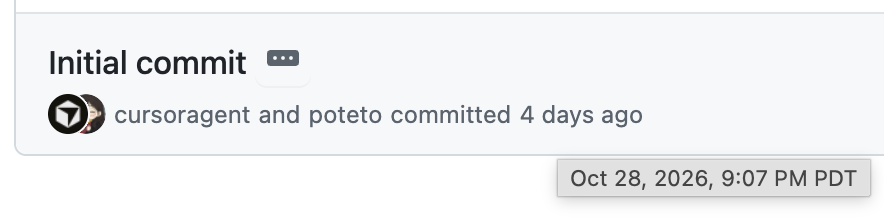
• started working on the game as a side project 4 days ago, landing ~1,150 PRs
• every time i found an issue in the code i asked bot to make a lint rule against it
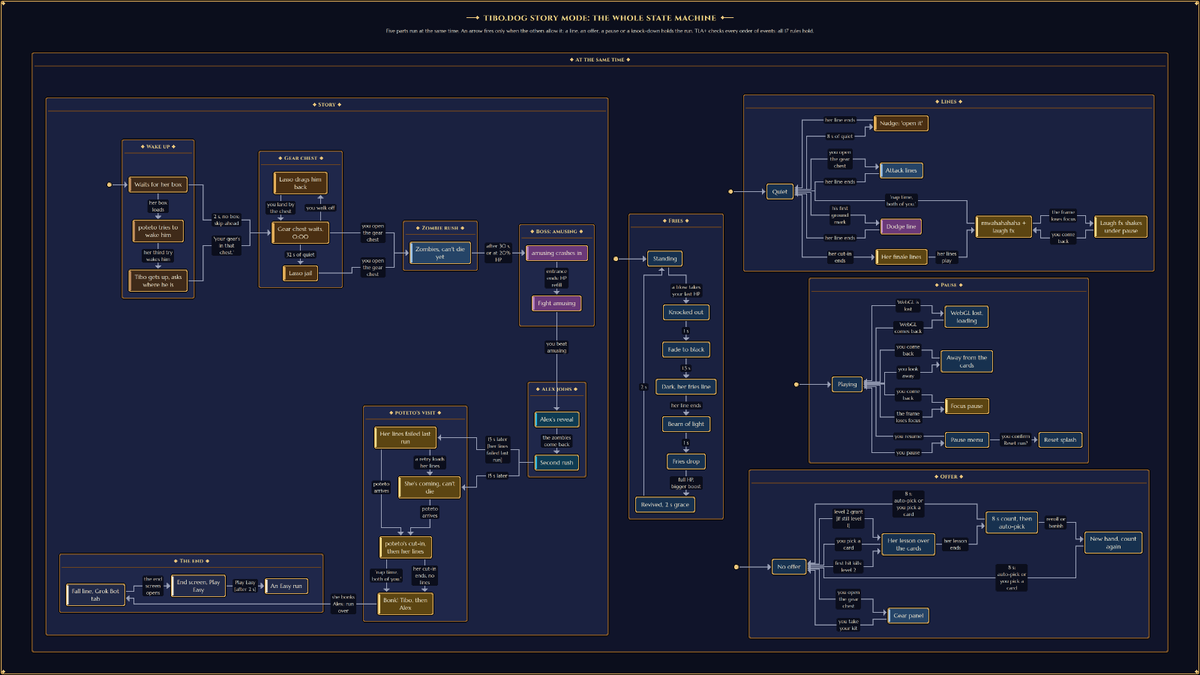
• used TLA+ heavily to find bugs in the game's various state machines: the story, cutscenes, the game's systems. there are many formal verification skills, one for each major system
• i put context into the filepaths: code that runs every frame or every tick gets a .hot.ts extension, and a lint rule bans allocating in it (no object literals, closures, new, etc.), so the game loop creates almost no garbage and GC doesn't cause stutters
• game engine is mostly custom. three.js draws the 3D scene, but the simulation, post-processing and audio are all ours
• the simulation is fully deterministic, so every run replays exactly from its inputs. when you post a high score, the server replays your whole run to check it isn't cheated
• we generate dynamic og:images for every run based on your final stats, and it's all localized too! the game supports 10 languages
• my favorite feature: the music seamlessly transitions into different music for the various biomes, continuing the previous melody
• no audio files. all the music and sound effects are synthesized live in the browser by a custom Game Boy-style chip (two pulse voices, a wave voice, noise) plus a synthwave layer. the songs are written as text in code
• all the pixel art is code. every sprite is a file drawn with one shared palette and packed into a sprite atlas at build time
• it runs inside an X post, from the 245px card up to full screen. the bar is 60 fps with 500 enemies on a mid-range phone
• the build fails if the first download goes over budget. it's about 124 KB gzipped right now
• bots play the game headless to tune each difficulty against target survival rates
• comments are banned by a lint rule. if code needs explaining, the fix is a better name or a test
Okay I built it!
🍰 Infinite Slop
https://t.co/wz0a7VSBtS
An infinite and interactive AI generated live stream of slop that goes on forever and ever
Anything that you write in the chat is generated next and AI will try to connect it to the previous video so there's an actual sequence and story line
Idea by @marcantoinefon and @rehan_shei's original stream so I made it
It'd be very expensive to run this so @fal very generously sponsors this
They also fine-tuned the model that makes this possible for the first time, making Minimax H3 50x faster and as "Max" and it can now generate videos faster than you can watch them, very cool!
Let me know what you think!!!! 😊
No sabía cuánto lo necesitaba hasta que lo hice :D
He montado un buzón de Lego con una banderita motorizada, y los hooks de Claude Code la suben cada vez que Claude acaba una tarea o me avisa.
Ahora Claude me habla físicamente. Te cuento cómo lo he hecho 👇
做課程時做到有感而發。
近幾年有關注輝達的人一定知道,市場每一年都質疑硬體迭代的那麼快,那誰要買舊的?
而事實是從「買越多省越多」,到「買越多生產越多」,而現在則是「買越多賺越多」。
這其實跟在 AI 時代下學程式一樣。
有些人覺得只要耐著性子跟 AI 講兩句,它就能寫出需要的程式,那幹嘛還學程式?
但事實是學會程式後就能更有效率的和 AI 溝通,讓省去的 token 變成真正賺到的時間。
A new puzzle game lets you solve crimes with real SQL, turning database queries into investigative actions. It teaches through a narrative that makes learning SQL feel like reading a detective novel, not trudging through textbooks.https://t.co/jFRniBgidy