PaLI-3 Vision Language Models: Smaller, Faster, Stronger
paper page: https://t.co/4KGTQYV7ux
paper presents PaLI-3, a smaller, faster, and stronger vision language model (VLM) that compares favorably to similar models that are 10x larger. As part of arriving at this strong performance, we compare Vision Transformer (ViT) models pretrained using classification objectives to contrastively (SigLIP) pretrained ones. We find that, while slightly underperforming on standard image classification benchmarks, SigLIP-based PaLI shows superior performance across various multimodal benchmarks, especially on localization and visually-situated text understanding. We scale the SigLIP image encoder up to 2 billion parameters, and achieves a new state-of-the-art on multilingual cross-modal retrieval. We hope that PaLI-3, at only 5B parameters, rekindles research on fundamental pieces of complex VLMs, and could fuel a new generation of scaled-up models.
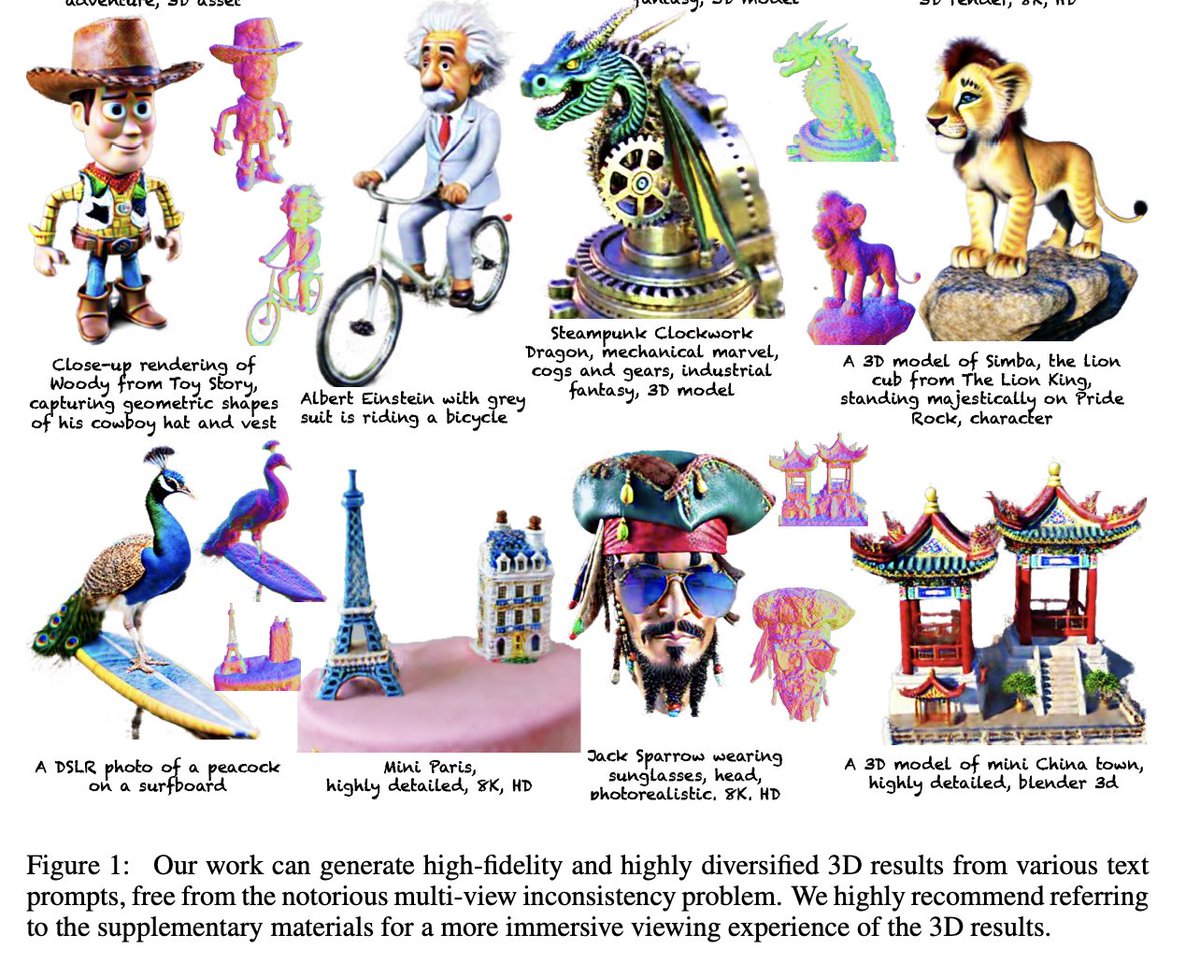
From 2D to 3D: Enhancing Text-to-3D Generation Consistency with Aligned Geometric Priors
Quick Read: https://t.co/33W2rGJRft
Paper: https://t.co/cpttp6fXPU
If you like our work, you will love our newsletter: https://t.co/nfErYZY7Ze
#artificialintelegence#DataScientists
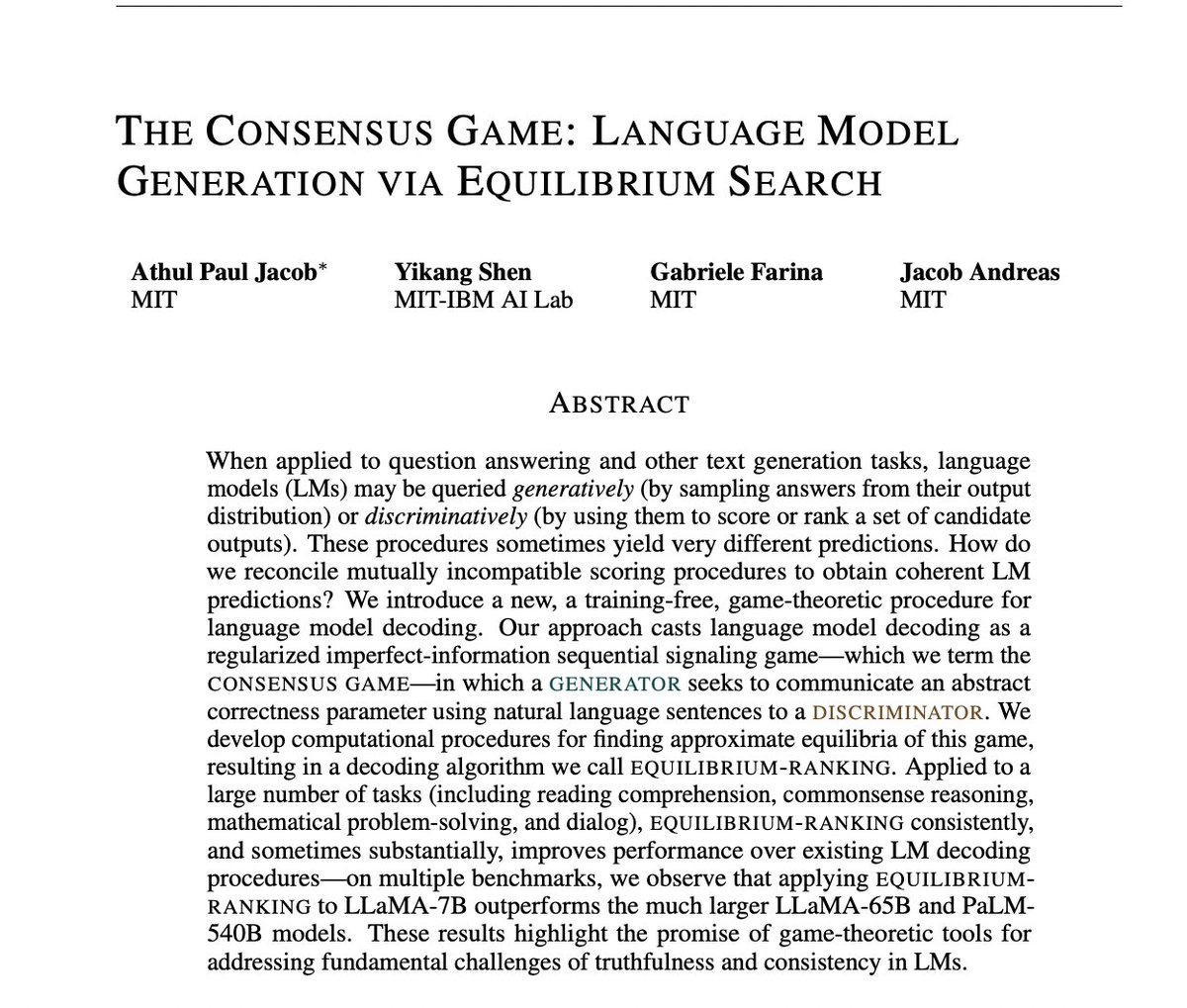
The Consensus Game: Language Model Generation via Equilibrium Search
paper page: https://t.co/X2jYww81Zi
When applied to question answering and other text generation tasks, language models (LMs) may be queried generatively (by sampling answers from their output distribution) or discriminatively (by using them to score or rank a set of candidate outputs). These procedures sometimes yield very different predictions. How do we reconcile mutually incompatible scoring procedures to obtain coherent LM predictions? We introduce a new, a training-free, game-theoretic procedure for language model decoding. Our approach casts language model decoding as a regularized imperfect-information sequential signaling game - which we term the CONSENSUS GAME - in which a GENERATOR seeks to communicate an abstract correctness parameter using natural language sentences to a DISCRIMINATOR. We develop computational procedures for finding approximate equilibria of this game, resulting in a decoding algorithm we call EQUILIBRIUM-RANKING. Applied to a large number of tasks (including reading comprehension, commonsense reasoning, mathematical problem-solving, and dialog), EQUILIBRIUM-RANKING consistently, and sometimes substantially, improves performance over existing LM decoding procedures - on multiple benchmarks, we observe that applying EQUILIBRIUM-RANKING to LLaMA-7B outperforms the much larger LLaMA-65B and PaLM-540B models. These results highlight the promise of game-theoretic tools for addressing fundamental challenges of truthfulness and consistency in LMs.
Meet LLMWare: An All-in-One Artificial Intelligence Framework for Streamlining LLM-based Application Development for Generative AI Applications
Full read: https://t.co/rSrexYG9hB
Github: https://t.co/ygIq2K5vJM
@AiBloks#ArtificialIntelligence#neural#DataScience#BigData #GenerativeAI
A Zero-Shot Language Agent for Computer Control with Structured Reflection
paper page: https://t.co/BbWz46o6pf
Large language models (LLMs) have shown increasing capacity at planning and executing a high-level goal in a live computer environment (e.g. MiniWoB++). To perform a task, recent works often require a model to learn from trace examples of the task via either supervised learning or few/many-shot prompting. Without these trace examples, it remains a challenge how an agent can autonomously learn and improve its control on a computer, which limits the ability of an agent to perform a new task. We approach this problem with a zero-shot agent that requires no given expert traces. Our agent plans for executable actions on a partially observed environment, and iteratively progresses a task by identifying and learning from its mistakes via self-reflection and structured thought management. On the easy tasks of MiniWoB++, we show that our zero-shot agent often outperforms recent SoTAs, with more efficient reasoning. For tasks with more complexity, our reflective agent performs on par with prior best models, even though previous works had the advantages of accessing expert traces or additional screen information.
Can Language Models Replace Programmers? Researchers from Princeton and the University of Chicago Introduce SWE-bench: An Evaluation Framework that Tests Machine Learning Models on Solving Real Issues from GitHub
Quick Read: https://t.co/DhmOdxCQDQ
Paper: https://t.co/MrDGBMcdSY
Github: https://t.co/s8hrjpwFwO
If you like our work, you will love our newsletter: https://t.co/TQy6K0Tz97
#ArtificialInteligence #DataScientists #bigdata
Meet MindGPT: A Non-Invasive Neural Decoder that Interprets Perceived Visual Stimuli into Natural Languages from fMRI Signals
Quick Read: https://t.co/NCmlHr4W0k
Paper: https://t.co/KDm7MdtcKE
Github: https://t.co/Obsm97S92F
If you like our work, you will love our newsletter: https://t.co/TQy6K0Tz97
#ArtificialIntelligence #DataScience
This shows how incredibly well ChatGPT follows very complex, long-form, multi-bullet rules.
Many models aren’t nearly as good as following deep instructions, even though they get close on academic benchmark numbers and support long context.
Meet Decaf: a Novel Artificial Intelligence Monocular Deformation Capture Framework for Face and Hand Interactions
Quick Read: https://t.co/JXr0eFFEEc
Paper: https://t.co/to9cDZ6Bj1
Project: https://t.co/rJSOgCYSL2
If you like our work, you will love our newsletter: https://t.co/TQy6K0Tz97
#ArtificialIntelligence #DataScience #bigdata
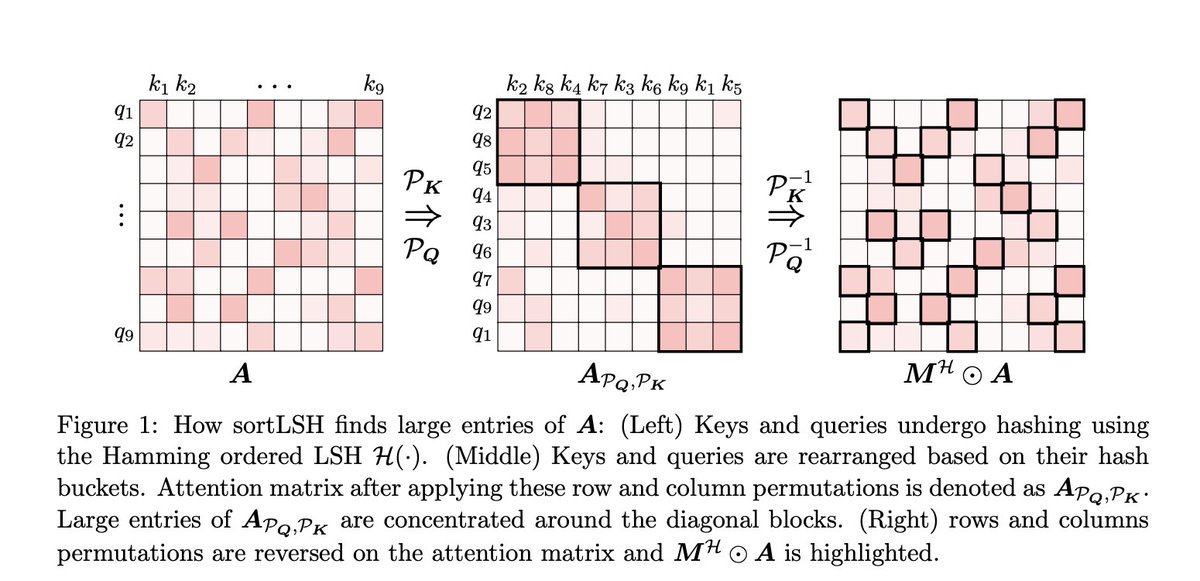
Researchers from Yale and Google Introduce HyperAttention: An Approximate Attention Mechanism Accelerating Large Language Models for Efficient Long-Range Sequence Processing
Quick Read: https://t.co/H6D6lulNHe
Paper: https://t.co/wuSnyz7UR5
If you like our work, you will love our newsletter: https://t.co/TQy6K0Tz97
#ArtificialIntelligence
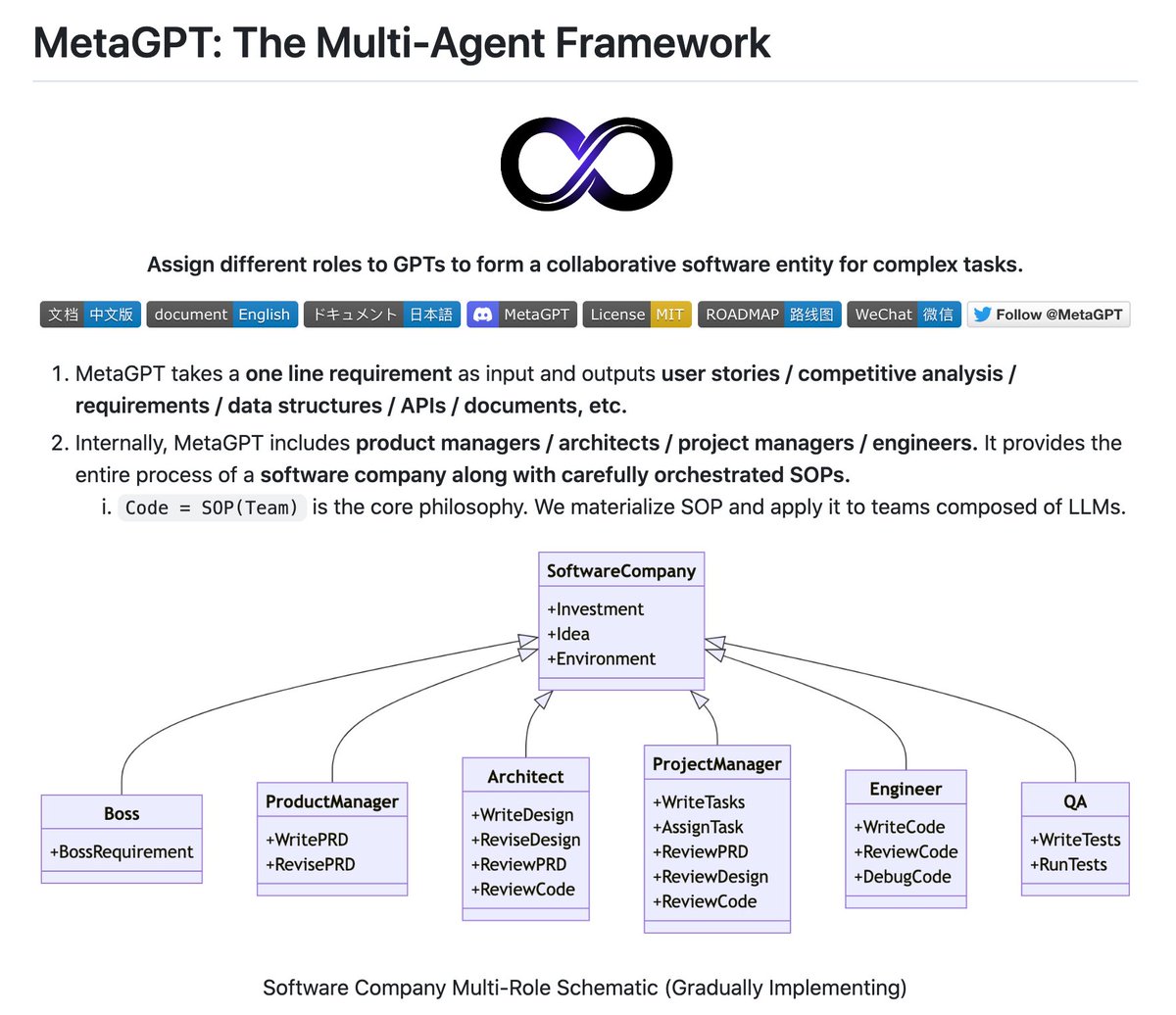
Impressive. MetaGPT is about to reach 30,000 stars on Github.
It's a Multi-Agent Framework that can behave as an engineer, product manager, architect, project managers.
With a single line of text it can output the entire process of a software company along with carefully orchestrated SOPs:
▸ Data structures
▸ APIs
▸ Documents
▸ User stories
▸ Competitive analysis
▸ Requirements
This AI Paper Proposes a NeRF-based Mapping Method that Enables Higher-Quality Reconstruction and Real-Time Capability Even on Edge Computers
Quick Read: https://t.co/Jcha3BeplY
Paper: https://t.co/v9DSWk3776
Github: https://t.co/Kl52tDy9gT
If you like our work, you will love our newsletter: https://t.co/TQy6K0Tz97
#ArtificialIntelligence #MachineLearning
This AI Tool Generates Social Media Posts Easily with Simple Text, Scripts and URLs: Meet Predis AI
https://t.co/WMfOPEbU1O
#ArtificialIntelligence#ai@PredisAI
Fondant AI Releases Fondant-25M Dataset of Image-Text Pairs with a Creative Commons License
https://t.co/GBrkIbyZkD
#ArtificialIntelligence#DataScience
Meet POCO: A Novel Artificial Intelligence Framework for 3D Human Pose and Shape Estimation
Quick Read: https://t.co/n7a9PSuRjH
Paper: https://t.co/69zqBcWbTN
Project: https://t.co/fq1VsWgF4k
If you like our work, you will love our newsletter: https://t.co/TQy6K0Tz97
#ArtificialIntelligence #DataScience
This Artificial Intelligence Survey Research Provides A Comprehensive Overview Of Large Language Models Applied To The Healthcare Domain
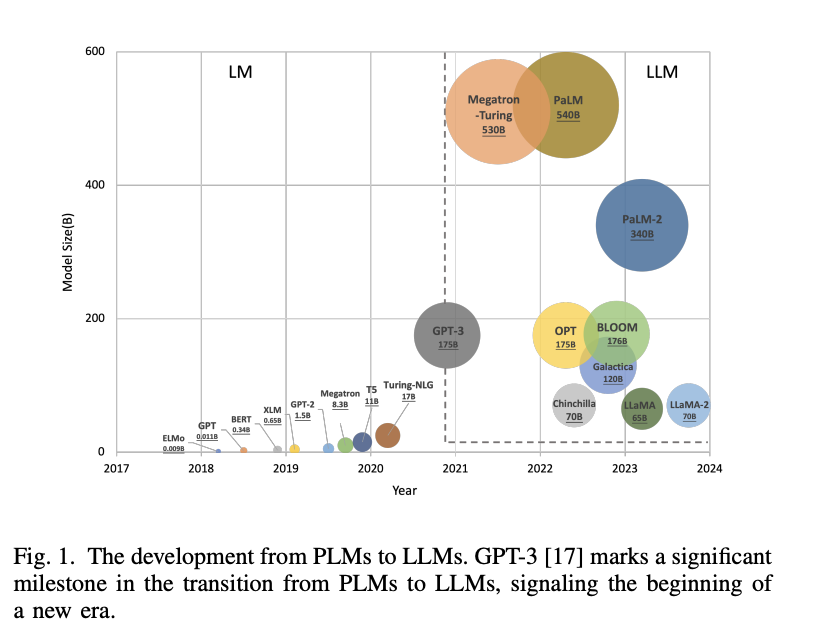
Natural language processing (NLP) systems have long relied heavily on Pretrained Language Models (PLMs) for a variety of tasks, including speech recognition, metaphor processing, sentiment analysis, information extraction, and machine translation. With recent developments, PLMs are changing quickly, and new developments are showing that they can function as stand-alone systems. A major stride in this approach has been made with OpenAI’s development of Large Language Models (LLMs), such as GPT-4, which have shown improved performance in NLP tasks as well as in subjects like biology, chemistry, and medical tests. A new era of possibilities has begun with Google’s Med-PaLM 2, which is specifically designed for the medical sector and has attained “expert” level performance on medical question datasets.
LLMs have the power to revolutionize the healthcare industry by improving the efficacy and efficiency of numerous applications. These models can offer insightful analysis and answers to medical questions since they have a thorough understanding of medical ideas and terminologies. They can help with patient interactions, clinical decision support, and even the interpretation of medical imaging. There are also certain drawbacks to LLMs, including the requirement for substantial amounts of training data and the potential for biases in that data to be propagated.
Full Read: https://t.co/gYfSiObd8Z
Paper: https://t.co/wUnrFkuEfH
#ArtificialInteligence #datascience #BigData