You spent weeks learning perfect LLM prompts
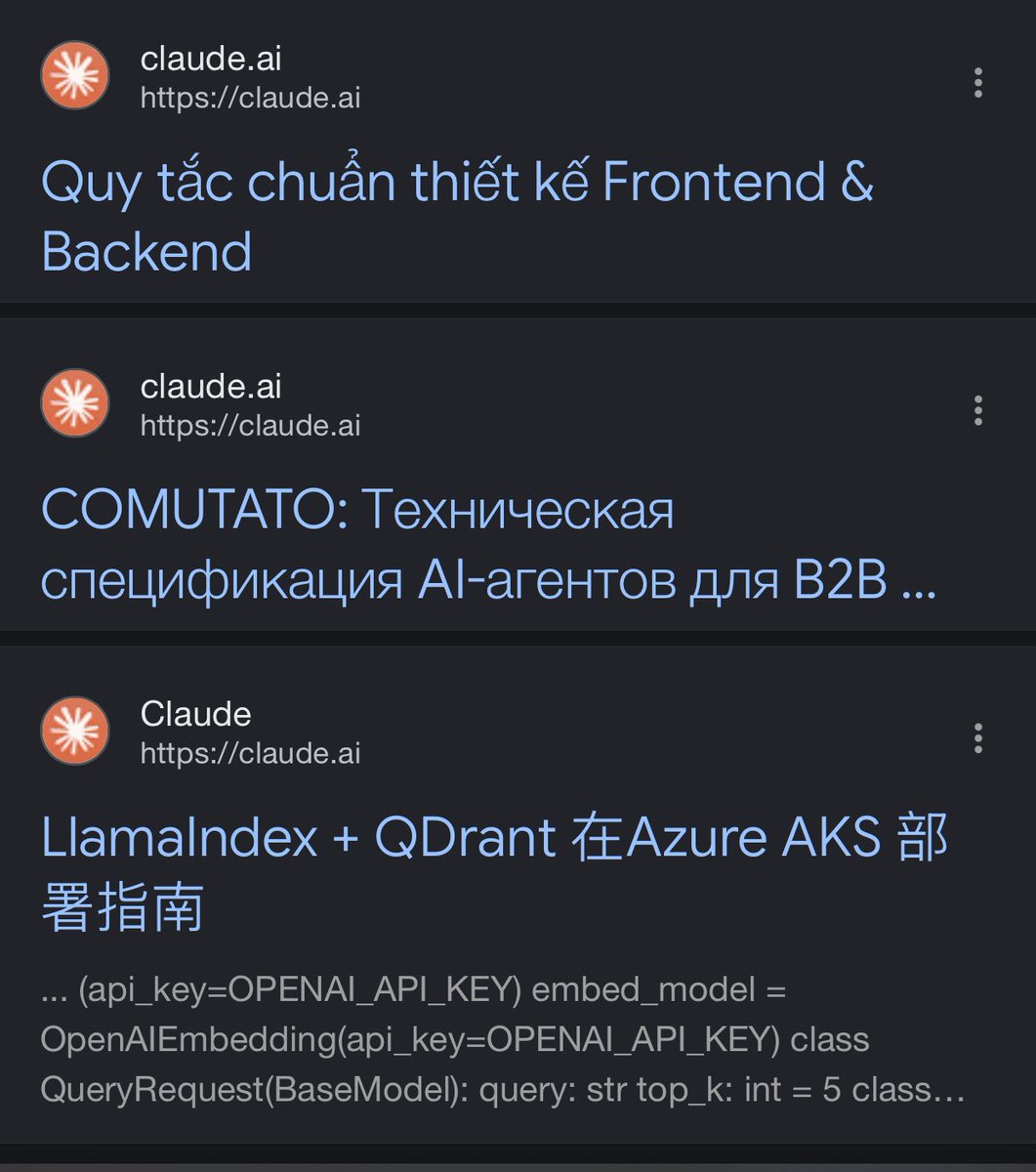
Meanwhile just typed one Google operator and found an internal NVIDIA takeover draft on Claude’s public artifacts
This is the most interesting llama.cpp update in months.
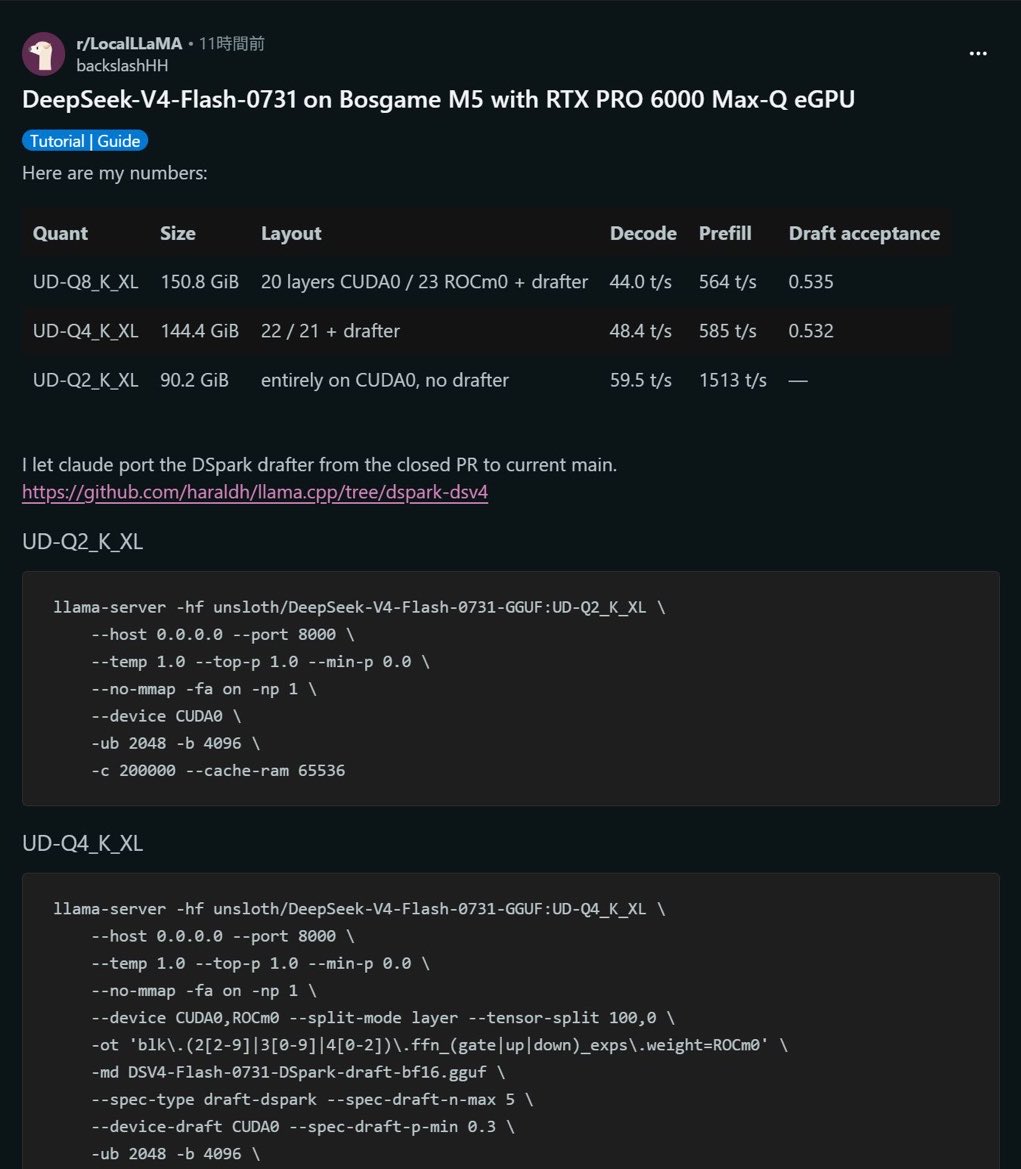
DeepSeek-V4-Flash going from “impossible” to 48 tokens/sec on mixed GPUs
You can now assign individual MoE experts to your AMD GPU while the rest stays on CUDA
DSpark (speculative decoding) & ultra-precise hybrid GPU offloading is now working.
You can now run massive MoE models like DeepSeek-V4-Flash with:
- Hybrid CUDA & ROCm (assign specific layers/experts to AMD via regex)
- 53% draft acceptance rate
- NVIDIA & AMD GPUs can now run 150GB+ MoE models at 44-48 t/s
on mixed GPU setups Mixed
big models just became realistic for a lot of people.
A full-duplex voice 7B-model that listens and talks at the same time,
It clones the target voice from a short sample, locks into a full persona, and holds real-time conversations with interruptible conversations like a human, overlaps, and natural turn-taking.
Signs of founder LARPing:
Spends more time posting about being a founder than building.
Has a polished deck but no product.
Knows more investors than customers.
Confident until you ask how it actually works.
Can't explain it without jargon.
LinkedIn bio says 'Stealth
Most successful startups consist of a wonderfully popular product more than compensating for many mistakes by the founders. You have to have that wonderfully popular product or there is too little margin for error. But if you do, it will buy your way out of all kinds of trouble.
I'm a Principal engineer & I passed system design rounds of Amazon, Atlassian, Walmart, Saleforce, and Deliveroo.
Trust me, learning system is not hard. Start from these fundamental concepts:
1) Load Balancing: https://t.co/3jKCLiI6vl
2) CDN: https://t.co/dxzCmm9gAf
3) Caching: https://t.co/pRgn0FTPp2
4) Cache Invalidation: https://t.co/QrfRjJ57gd
5) Rate Limiting: https://t.co/LE5ECM2tGt
6) API Gateway: https://t.co/DgU8cBDUVr
7) CAP Theorem: https://t.co/a8WydnAIxd
8) Sharding: https://t.co/XQLU6eDriD
9) Replication: https://t.co/KuDkFH0fjx
10) Partitioning: https://t.co/3WXKeZLbLa
11) Queues: https://t.co/JchEoCcFmF
12) Microservices: https://t.co/aAQfM6AWMq
13) Microservices Vs Monoliths: https://t.co/bTaIIWkPU3
14) Fault Tolerance: https://t.co/qXNBoyOqYT
15) Database Scaling: https://t.co/D2lvPm1wkB
16) Service Discovery: https://t.co/z2DpwbJBVI
17) Consistency models: https://t.co/K2r3nMcCQu
18) Eventual Consistency: https://t.co/SWiz4ckIKR
19) Distributed Transactions: https://t.co/xqL7BTJxXn
20) Leader Election: https://t.co/ApNaYSnSFj
21) Horizontal vs Vertical Scaling: https://t.co/IFuEmzMfob
22) Back of the Envelope Estimation: https://t.co/7ntEmtVggQ
23) Idempotency, Data Latency & Finale: https://t.co/fNArLx4MrW
Let me know what you'd like me to cover, would love to help :)
We're starting to leave the territory where you'd test an LLM by e.g. "create an svg of pelican on a bicycle". As one idea to generalize it, I was interested what Opus 5 would do if I gave it the first paragraph of the Lord of the Rings, a 1M token budget (~$10) and asked for three js render of it. Opus went off for ~2 hours and wrote 5500 lines of code that (procedurally) rendered the story. It's kind of janky but fun. But it's a bit mindboggling that the LLM has to place and orchestrate various polygon assets in (x,y,z) coordinates and write code that animates it all, and that it even does anything at all.
I also like this kind of examples because no one in their right mind would ever spend the time to write something this custom but LLMs have all the stamina and patience in the world, so it's an example where we go from "no one would ever do this" to "sure, why not, it's ~free". There might be a lot more. But I'm excited about creating hyper custom worlds that you can imagine dropping players into, e.g. here to participate in the LoTR story as a spectator NPC, or one of the characters, or etc. Something like an ephemeral GTA of X on demand.
Last thought is that the domain of worlds/games exposes a weakness in LLMs: they can't easily audit their work because they aren't able to efficiently and natively perceive videos or play games within them. Here, Opus 5 had to very slowly and painstakingly take screenshots at different points, and it messed up a few times and created a bunch of jank. An example of raw capability (multimodal, gameplay) that I think is still quite lacking.
A survey paper on World Action Models.
WAMs are moving robotics from reacting to the present toward predicting consequences before acting.
A model only counts as a WAM when its predicted future directly helps produce, score, verify, or train the action.
The trend is “dream less, act more”: full video generation is often too slow and memory-heavy for real control loops.
Many newer systems skip rendered video and use latent features, geometry, affordance maps, or motion representations instead.
Photorealistic futures are not necessarily the most useful; flow, masks, tactile signals, and physically grounded latents may constrain action better.
There is no single winning architecture because every design trades predictive richness against latency, memory, action-label cost, and physical reliability.
The biggest open question is whether robots can spend heavy predictive compute only when uncertainty, contact, or irreversible error makes it necessary.
– arxiv. org/abs/2606.20781
Title: "World Action Models: A Survey"
My first interview with @sama, Co-Founder of @OpenAI.
0:04 How to start a startup
3:30 Trusting exponentials
4:57 Operating in chaotic environments
6:12 Learning to enjoy painful experiences
8:03 Creating abundant intelligence
11:15 Keeping core suppliers on OpenAI’s timelines
12:10 Invention of the joint-stock company
15:30 The best CEOs aren’t sociopaths
16:46 We are in the singularity
18:09 AI authoritarianism vs liberty
19:24 Texting 300-400 people a day
20:32 Having a small number of deep beliefs about the future
21:41 Critical path
22:25 Thinking about what’s next
23:38 Getting on planes in marginal situations
28:16 Buying lots of compute
30:51 Ambition
34:00 Google shouldn’t have let OpenAI survive
37:54 Having his life shot through a cannon after the launch of ChatGPT
41:20 The growth of Codex
42:02 The Death Star tweet
44:46 Status games and desire to be useful
47:57 Not being ambitious enough on compute investments
50:26 Execution
51:45 Ask for what you want
54:11 First few weeks of OpenAI
55:15 Shutting down Sora to focus on Codex
57:44 Designing beautiful products
59:01 Getting addicted to TikTok
1:01:03 Inventing a new device
1:02:53 Try to get better at your strengths
1:05:57 Masa is an n of 1
1:07:11 Real trends vs fake trends
Applications are now open for the AIAF Fellowship 2026.
An 8-week, paid AI Alignment research fellowship for researchers and ML engineers looking to work on real alignment problems with mentors from AIAF and AE Studio.
Benefits:
• $12,000 stipend
• Fully remote
• Cloud GPU access & API credits
• Travel covered for the optional Demo Day in Los Angeles
• Mentorship from leading AI alignment researchers
• Opportunity to publish research
• Career support after the fellowship
Who can apply?
• ML Engineers
• AI Researchers
• MSc & PhD Students
• Self-taught Researchers
• Engineers transitioning into AI Alignment
Research areas include:
• Model interpretability
• AI alignment
• Steering & control of LLMs
• Modular pretraining
Deadline: August 17, 2026
Program starts: September 8, 2026
Apply: https://t.co/jYxS4HRVBV
Peter Thiel on the advice all young people need to hear:
"My bias was that education was a substitute for thinking about your future. What are you going to do with your future? I don't know. I'll get an undergraduate degree. What are you going to do once you have that? I don't know. I'll get a graduate degree ... And so when we think of our lives as just adding these line items on a resume, I think that's actually not the best way to go about it."
Una persona envió más de 250 candidaturas a empresas tech durante dos años.
Sin MIT. Sin Stanford. Sin título de elite.
El mes pasado Anthropic le ofreció 750.000 dólares.
Cuando le preguntaron cómo había pasado de cero a eso, compartió el video exacto que le abrió las puertas:
El curso de 2 horas de Anthropic sobre cómo convertirse en AI engineer en 2026.
Thariq Shihipar (del equipo de Claude Code) enseña, paso a paso, a construir agentes de IA desde cero.Después de verlo, queda claro que se puede entrar en un lab de IA en meses, no en años.
Guárdalo. Merece la pena.
Marcas de tiempo:
• 00:00 – AI agent harness
• 23:44 – building AI agent loops
• 56:39 – AI agent context engineering
• 1:33:34 – AI agent deterministic hooks
• 1:50:31 – Anthropic SWE interview process
Andrej Karpathy just said your kids should ignore most of school.
"80% of education should be math, physics, CS."
Not because it's useful - because it carves grooves in the brain.
Grooves that get harder to carve the older you get.
In a pre-AGI world: it gets you a job.
In a post-AGI world: it makes you a functioning, empowered human.
Everything else? Tack it on later.
The cognitive foundation is the only foundation that survives the transition.