Excited to share our latest piece published in The Conversation today! If you are curious about what policy tools the government should use to respond to a global energy price shock, read more👇
Glad to see that the Productivity Commission used our regional CGE model, VURM, to quantify the regional impacts of these policy reforms. It actually feels pretty good to see my work make a real difference!
https://t.co/4oObnXLdhH.
Very happy about my interview (in Mandarin) with SBS Mandarin on Australia's housing policies. Learned a lot about conveying academic ideas to the public. Didn't expect my head to look so big in the picture though!
https://t.co/an4DIThvRM
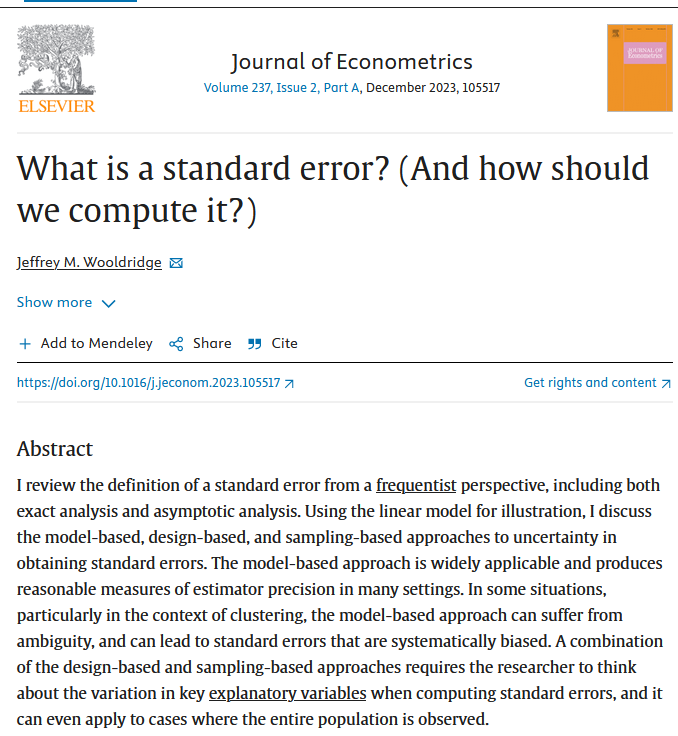
A new paper by @jmwooldridge 👇. Sometimes, the basis of statistics can be reevaluated to consider unexpected aspects that, at the first approach, were been overlooked. https://t.co/duk1KaACRw
It has been an absolute pleasure to share the journey of the CGE modelling course with so many talented participants at @WIFO in Vienna. I've learned a lot and really enjoyed my time in this lovely and the world's most livable city!
https://t.co/ooZvSJ2mgp
Wow! The RBA appears to be finally heading in the right direction by starting to involve monetary policy experts in its monetary-policy-making process !
https://t.co/nRmJzKb5WZ
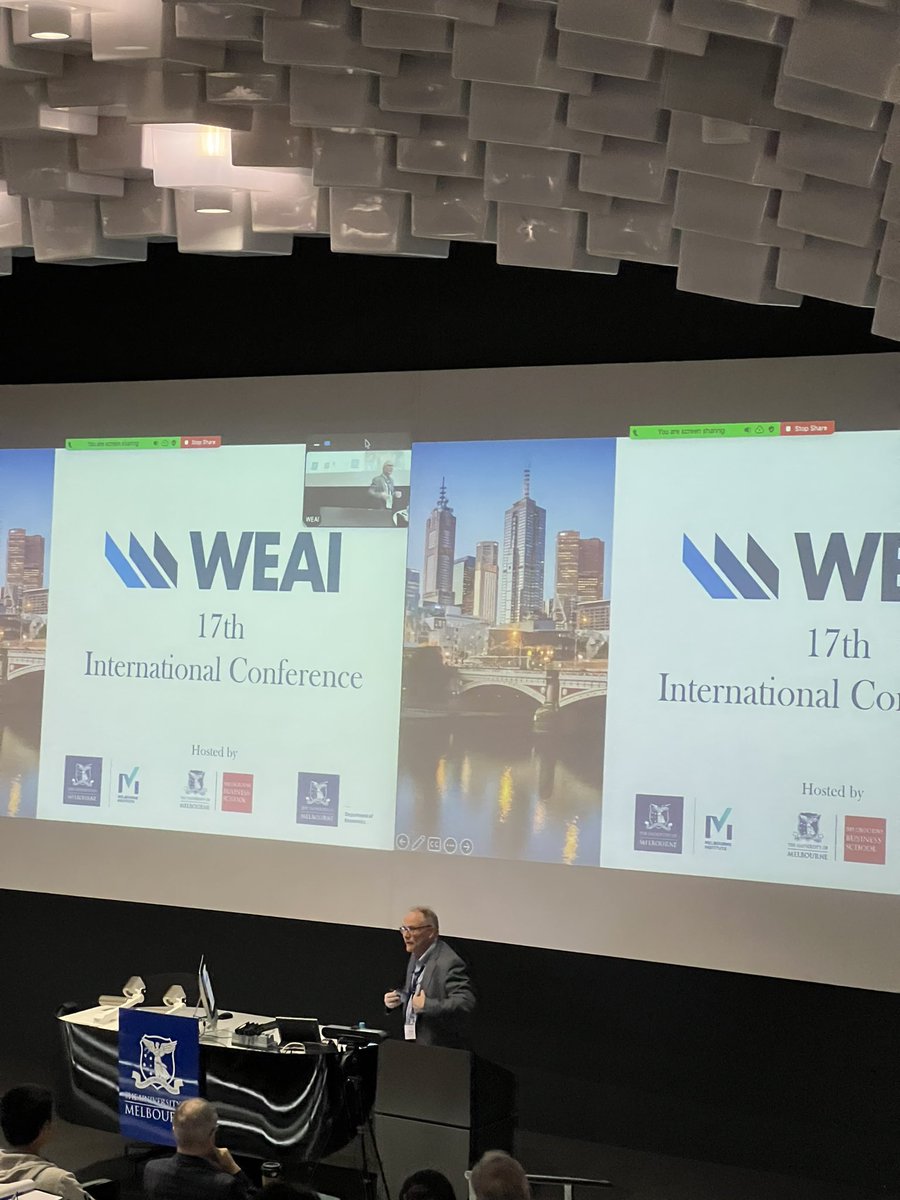
Very happy to come back to the University of Melbourne for the WEAI conference. Interesting keynote by David Card on imperfect competition in the labor markets. Got my presentation done in the afternoon (Yes!). The discussants were all very engaging! Really enjoyed my session :)
2/ Still, the temptation to make it better! Must resist !!!! (Ended up spending about three weeks restructuring and rewriting the paper with revised simulation results...
1/ My coauthors (also my bosses) have warned me again about spending excessive time reworking a previous working paper. They have valid points as there are other projects to be worked on, and the marginal benefits from continuously revising and refining the paper are limited.
@M_Johnston1 The naming problem can happen but should be extremely rare. Just checked my collections of Chinese translation of foreign books: academic books, novels and poems. They all have authors’s name clearly labeled, following by names of translators usually in smaller font.
Hi #EconTwitter!
Looking for a cool lecture on 𝐏𝐲𝐭𝐡𝐨𝐧 for #econometrics?
Check out https://t.co/ztdXWNJMng's course on numerical programming with #Python!
You'll love the simple examples and real-world applications that make this course super cool.
Highly recommended!
@TradeandMoney Very interesting read. Despite my lack of understanding of the relevant context, the post exchanges clearly indicate the complications, sensitivities, and difficulties involved in challenging issues in published work with replications without the situation becoming a bit personal
A few years ago as a PhD student I tried to replicate an AER paper and found its code for robustness checks was not consistent with what it claimed to be in the paper. After correcting the code these robustness checks actually failed. I asked around and was told no one would care
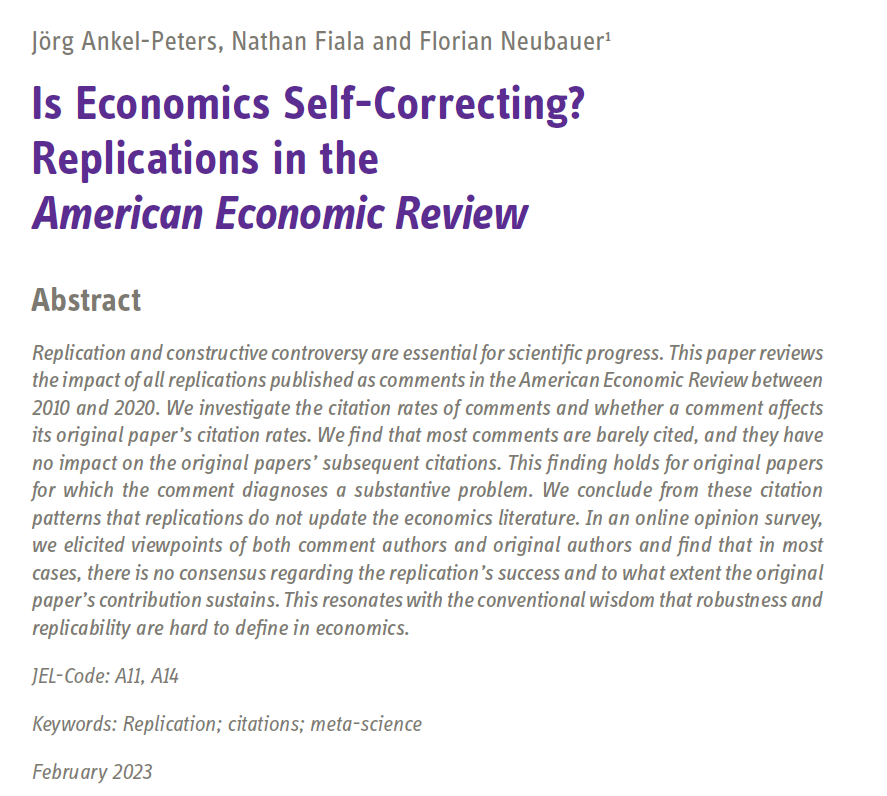
Is Economics self-correcting? We have a new discussion paper, joint with N Fiala & @flneubauer. Quick answer is: No, rather not. We reviewed all replications published as comments in the AER. Plus, we surveyed the authors. A short thread 1/. https://t.co/TdFOM0Su4W #EconTwitter
@jrgptrs I was partly convinced at the time, but it definitely lowered a PhD student's confidence in econ research. I still believe one must be responsible for the quality of the work, but also understand it largely depends on self-imposed standards. Glad to see this is getting better.