directly from the horses mouth…
“We spent billions, tens of billions, hundreds of billions of dollars.” ~
~Prime Minister Justin Trudeau (Oct. 2022)
…ummmmm tell us something we don’t know?
This is the best part from Pierre Poilievre appearance on the Diary of a CEO podcast;
"Those who push a socialist ideology have a gross contradiction in their view of human nature.
They say that human beings are wretched, self-interested, greedy when they’re in the private voluntary economy, but they’re angels when they’re in the governmental economy.
They argue that the government should just control everything because then we have all these angels that will decide for us."
🎯
Pierre Poilievre: "We should not declare a permanent rupture with our biggest customer and closest neighbour in favour of a strategic partnership for a new world order with Beijing."
"China is not a substitute for the United States of America."
From our parnters @financialpost: A tidal wave of business exits is coming, with $300 billion in revenue up for grabs, says BDC https://t.co/936MU9PNLk
A lack of sunlight is far deadlier than too much of it. Studies show that deaths from low sun exposure outnumber those from excess sun by 329 to 1, and most melanomas appear on skin that hardly ever gets sun.
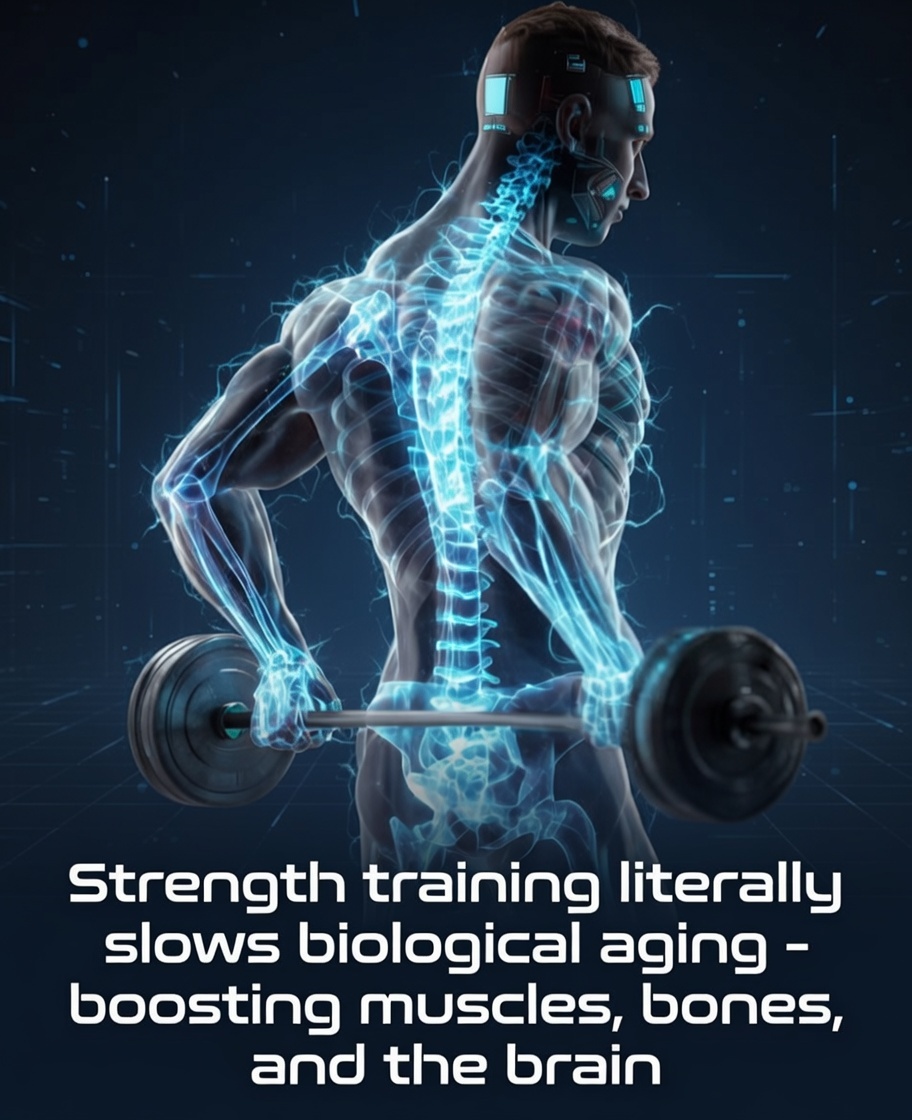
Experts now consider strength training the single most potent habit for aging gracefully and extending lifespan.
Far from being just for athletes or bodybuilders, lifting weights—or any form of resistance exercise, including body-weight moves—has emerged as one of the most powerful tools for healthy aging. It does far more than add muscle: it fortifies bones, revs up metabolism, and sharply lowers the odds of diabetes, heart disease, and other chronic conditions.
As we get older, strength training switches on bone-forming cells, fights the natural loss of muscle mass known as sarcopenia, and keeps metabolism humming efficiently. For women, it’s especially valuable, helping offset the rapid bone-density decline triggered by menopause.
The benefits extend well beyond the physical. Regular resistance work improves balance and coordination, dramatically cutting the risk of falls—the top cause of injury among older adults. It also protects the brain by enhancing insulin sensitivity, dialing down inflammation, and reducing dementia risk.
The good news? You don’t need heavy barbells or punishing workouts. Even moderate, consistent strength training delivers profound gains in both quality of life and longevity. In the words of one leading researcher, “Building and maintaining muscle may be the single best investment you can make in your future health and independence.”
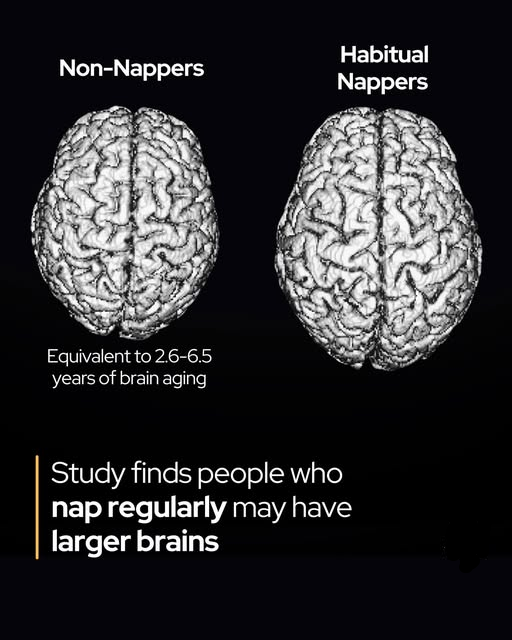
Skip your daily nap, shrink your brain.
A study by researchers from University College London and the University of the Republic in Uruguay has found that people who habitually take daytime naps tend to have significantly larger total brain volume—a key indicator of brain health that typically declines with age and is associated with reduced dementia risk.
The team used Mendelian randomization, a method that leverages genetic variants (present from birth) that make people more likely to nap regularly. By analyzing brain MRI scans and health records from more than 35,000 participants in the UK Biobank, they discovered that those genetically inclined to nap had brain volumes corresponding to 2.6 to 6.5 fewer years of aging.
While this doesn’t definitively prove that napping itself enlarges the brain, the genetic approach helps rule out many lifestyle-related confounding factors, providing stronger evidence of a potential causal relationship than traditional observational studies.
Notably, the researchers found no link between napping predisposition and performance on tests of reaction time, memory, or visual processing. However, previous studies have shown that short naps can deliver immediate cognitive benefits.
The study lacked specific data on nap duration, but prior research suggests naps of 30 minutes or less provide the greatest advantages while minimizing disruption to nighttime sleep.
This is the largest study to date linking regular napping with brain structure. Although further research is needed in more diverse populations, the findings bolster the idea that a brief daytime rest may help preserve brain volume and support long-term cognitive health.
It’s called “Social Jetlag.” And you’re doing it every week.
Waking at 6 AM on weekdays and 10 AM on weekends shifts your circadian rhythm by four hours. Cortisol spikes. Heart disease risk climbs.
The healthiest sleep habit is boring: same wake time, every single day.
Source: Sleep Medicine Reviews