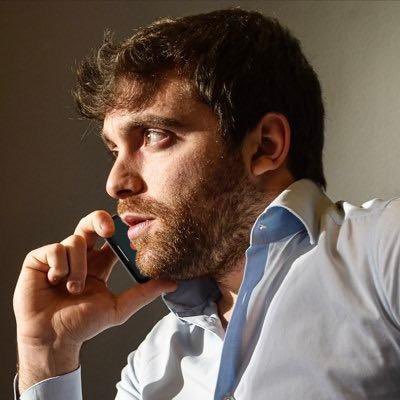
In just 90 days, we grew this health account to:
• +55.3M views
• +139K bookmarks
• +12.1K new followers (+88% US-EU)
If you're a health founder looking to build your personal/company brand on 𝕏, we've opened 2 slots for Q4.
Book a 𝕏 audit below ↓
Andrew Huberman says a compound found in coffee works about as well as minoxidil for hair loss.
But drinking more coffee won't do a thing for your hair.
Caffeine blocks an enzyme called PDE, Huberman notes, which indirectly raises a growth factor that extends how long each hair keeps growing.
The catch is that caffeine has to touch the scalp directly. Swallowed caffeine gets soaked up by receptors everywhere else in the body before much of it ever reaches the hair follicle.
Topical caffeine used about three times a week, Huberman says, comes without the blood pressure and prolactin issues that make minoxidil harder to tolerate for some people.
— Andrew Huberman on the Huberman Lab (@hubermanlab) podcast
Harvard scientists now know how to grow hair back.
At age 35, 2 out of 3 men lose their hair (regardless of genetics).
Here are 7 ways to grow your hair back (& keep it black):
1. Your follicles don't die even after loss of hair:
Three weeks in Italy felt longer to him than three weeks at home ever do.
He kept saying it out loud on the trip. Can you believe we have only been here a week.
Back home the same twenty one days vanish. Same commute, same desk, same evening, and suddenly it is October.
Nothing about the clock changed. What changed is how much his brain bothered to write down.
"Novelty expands time in your brain and makes you enjoy your life more."
Which is why the holiday feels stolen from a longer life than the one you go back to:
- New places get recorded in full
- Routine gets skipped almost entirely
- Same days, wildly different lengths
He came home from a longer three weeks than the ones waiting for him.
— Rob Dial (@RobDial_) on The Mindset Mentor Podcast
I’m a retired brain surgeon and I wanna tell you why you feel like life is passing by. I just need one minute to explain this to you so hang in there.
Repetitive daily routines stop the brain from recording clear detailed memories. When every day looks the same, your brain does not track time the same as a clock does. It tracks change. If nothing new happens then days, months, and years start to blur together.
This is know as Time compression. When life lacks variety, your brain compresses past days together, making it feel like time is sped up.
To stop feeling like life is passing you by, add new experiences to your life. Break routine habits, like changing your daily home routine, taking a different route to work, or trying a new hobby.
Schedule small trips or plan new adventures so your days do not blend together.
Practice mindfulness by staying fully focused on what you are doing right now and not trying to race off to the next task.
Keep a journal and write down happy memories or memorable parts of the day before you go to sleep.
Take deep, calm breaths when you feel anxious or rushed to return your focus to the moment.
You can and you will retrain your brain to not feel like life is passing you by by following these few simple measures.
Dr. Alexis Cowan says a sunscreen brand made specifically for dark skin makes her furious.
She says sunscreen is the last thing anyone with more melanin actually needs.
Most people with darker skin living in America, Cowan explains, are simply living too far north for the biology they inherited, since their skin evolved to receive far more sunlight than they're getting.
She calls the pressure to avoid a tan "propaganda geared towards disempowering the population," rooted in a colonial mindset that never left science or skincare.
Cowan says melanin gets sold back to people as a problem, when it's actually the opposite.
— Dr. Alexis Cowan on Jesse Chappus's The Jesse Chappus Show
One bad night of sleep can leave you insulin resistant within a matter of hours.
Ben Bikman calls it fast insulin resistance. Stress is one of three cardinal causes, and poor sleep is the main driver of the stress.
"Sleep deprivation, I believe, is the leading cause of stress."
Which puts the whole thing in a loop. You sleep badly, your stress load rises, your insulin climbs, and your body spends the day storing rather than burning.
Then the cravings arrive on top of it.
Most people treat one rough night as a mood problem. It is a metabolic event:
• Insulin resistance can arrive in hours
• Poor sleep is the main driver
• High insulin means storing, not burning
One rough night buys you a full day of storing.
— Ben Bikman (@BenBikmanPhD) on Diary of a CEO Podcast
Dr. Benjamin Bikman studies insulin resistance. Asked what a 35 year old dad should do about the fat around his middle, he did not start with food.
On Steven Bartlett's podcast, he gave 8 truths about losing belly fat:
1. Cut the evening alcohol first
Andrew Huberman says minoxidil can raise a hormone that causes men to grow breast tissue.
In some cases, it's severe enough to trigger actual milk letdown.
Minoxidil increases prolactin, according to Huberman, a hormone that works against dopamine in the body, and at higher doses that can cause reduced libido, apathy, and gynecomastia in men.
Women taking minoxidil experience a similar list of side effects to men, mostly swelling, headaches, and dizziness tied to how much the drug lowers blood pressure.
The safer path, Huberman says, is starting at the lowest possible dose and paying close attention to what your body is telling you.
— Andrew Huberman on the Huberman Lab (@hubermanlab) podcast
Harvard scientists now know how to grow hair back.
At age 35, 2 out of 3 men lose their hair (regardless of genetics).
Here are 7 ways to grow your hair back (& keep it black):
1. Your follicles don't die even after loss of hair:
The number one regret of the dying has nothing to do with money or work.
He points to what hospice nurses report hearing. Not I wish I earned more, not I wish I worked harder.
"I wish I lived a life that was true to myself, and not the life that other people expected of me."
That regret is about a life spent on someone else's conveyor belt. School, then grades, then college, then the job, then the next promotion, then the one after that.
At no point in twenty years of that sequence does anyone tell you to stop and live where you are.
Three questions worth sitting with:
- What would I notice if I slowed down
- What moments would I regret not savouring
- What am I missing at home
The list of regrets is short, and none of it is money.
— Rob Dial (@RobDial_) on The Mindset Mentor Podcast
I’m a retired brain surgeon and I wanna tell you why you feel like life is passing by. I just need one minute to explain this to you so hang in there.
Repetitive daily routines stop the brain from recording clear detailed memories. When every day looks the same, your brain does not track time the same as a clock does. It tracks change. If nothing new happens then days, months, and years start to blur together.
This is know as Time compression. When life lacks variety, your brain compresses past days together, making it feel like time is sped up.
To stop feeling like life is passing you by, add new experiences to your life. Break routine habits, like changing your daily home routine, taking a different route to work, or trying a new hobby.
Schedule small trips or plan new adventures so your days do not blend together.
Practice mindfulness by staying fully focused on what you are doing right now and not trying to race off to the next task.
Keep a journal and write down happy memories or memorable parts of the day before you go to sleep.
Take deep, calm breaths when you feel anxious or rushed to return your focus to the moment.
You can and you will retrain your brain to not feel like life is passing you by by following these few simple measures.
Dr. Alexis Cowan says her own hypothesis is that melanoma isn't caused by sun exposure at all.
She says the published research doesn't have the nuance yet to prove it either way.
Basal cell and squamous cell skin cancers may have a small connection to sun exposure, she says, but she believes building a proper "solar callus" over time may prevent even that.
She's careful to call this her hypothesis, not settled science, and says it's one of the questions she wants to formally test in her own lab.
Cowan says the sun gets blamed with zero nuance, while the data on melanoma specifically stays this incomplete.
— Dr. Alexis Cowan on Jesse Chappus's The Jesse Chappus Show
Every blood panel measures your glucose and your cholesterol. None of them measure your insulin.
Ben Bikman says that is the one thing he would change worldwide if he only got to pick one.
Insulin is the hormone that drives storage, and it is the one number the panel leaves out.
"I am an enormous advocate of measuring insulin."
He wants fasting insulin at around 7 microunits per millilitre or lower. Pair it with glucose and you get a HOMA score, which places you on the insulin resistance spectrum instead of leaving you to guess.
You cannot do this at home yet. The kits are cumbersome and not ready:
• Fasting insulin at 7 or lower
• Glucose plus insulin gives a HOMA score
• Ask your doctor to add it
They measure everything except the thing doing the storing.
— Ben Bikman (@BenBikmanPhD) on Diary of a CEO Podcast
Dr. Benjamin Bikman studies insulin resistance. Asked what a 35 year old dad should do about the fat around his middle, he did not start with food.
On Steven Bartlett's podcast, he gave 8 truths about losing belly fat:
1. Cut the evening alcohol first
Getting hard is easy, wanting it happens is hard - and happens in your head.
PT-141 works on the second one, and Real Peptides is my go-to brand for it.
They publish a 3rd party COA for every batch at 99%+ purity.
https://t.co/0Dj39GVCes
Use code "GOKU" for 20% off (aff).
Dr. Rena Malik just revealed the food that reduced erectile dysfunction in a clinical study.
Men ate 100 grams of pistachios every day. Their erectile dysfunction decreased.
Blueberries came out around 20% improvement on their own.
The Health Professionals Follow-up Study tracked 20,000 men. Those who stuck closest to a Mediterranean diet had 22% lower risk of erectile dysfunction.
The mechanism is blood vessels:
• Omega-3s and healthy fats from nuts
• Flavonoids from blueberries and citrus
• Fiber becomes short chain fatty acids
Those fatty acids protect the lining of your blood vessels. Healthier vessels mean better blood flow to the penis.
38 grams of fiber a day for men. 25 for women.
Malik won't oversell any single food:
“It's part of a whole diet.”
The strongest erection data in the interview came from a bag of nuts.
— Dr. Rena Malik (.@RenaMalikMD) on Steven Bartlett's (.@StevenBartlett) DOAC podcast
I just watched an interview of the world's most watched urologist with 2.9 million subscribers.
Dr. Rena Malik just revealed 8 things every man with sexual dysfunction needs to hear:
1) 52% of men over 50 have erectile dysfunction
skills every human should acquire:
1. speak 2+ languages well enough to get lost and still get home
2. 1-min static breath hold
3. dive to 20 ft and come up calm
4. sit still 15 min with nothing
5. mile in <6:00 (M) / <7:00 (F)
6. hunt, kill, and cook your dinner
7. eat the whole animal at least once
8. grow something from seed and eat it
9. land a punch and take one
10. 10 pull-ups (M) / 5 (F)
11. start a fire with no matches
12. deep squat 10 min
13. 5 knots from memory
14. swim 200m without panic
15. navigate 2 miles with map + compass
16. get rejected and don’t make it their problem
#16 is the hardest for me. i am still working on #12 but i am almost there. i've got the others down.
this list could be 100 items long but I am trying to think of the most important 20 things... what did I miss?
Ryan Blazer says hardwiring one laptop's internet cut its radiation exposure by 100 times.
It took the reading from 20,000 to 40,000 microwatts down to just 100 to 200.
Blazer is a building biologist who hardwired the connection with an ethernet cable, then turned off the Wi-Fi and Bluetooth antennas in settings.
The laptop still worked exactly the same.
Same internet, same apps, same iMessage, just without broadcasting a signal into the room around it.
Blazer says clients who make this one switch report working longer without feeling drained, and it costs about as much as a single ethernet cable.
— Ryan Blazer on Paul Saladino's (@paulsaladinomd) podcast
Ryan Blazer is an electromagnetic engineer and building biologist who runs a home-testing company for EMF and mold exposure.
On Paul Saladino's podcast, he broke down 7 truths about Wi-Fi most people get completely wrong:
1) Your router runs on microwave frequency
If you're a health founder looking to:
• Build your personal/company brand on 𝕏
• Become the #1 thought leader in your industry
• Add 10k new followers in 90 days - guaranteed
Schedule a 𝕏 audit with me:
https://t.co/6Ox8tTBPPV
Andrew Huberman says most people using topical finasteride are unknowingly overdosing themselves.
The standard topical dose delivers roughly 12 times more into your bloodstream than what's actually effective.
One milliliter of a common 0.25% topical solution, Huberman says, raises blood finasteride to about 2.5 milligrams, while the concentration shown to be effective for hair growth is only 0.2 milligrams.
That gap matters because side effects climb as blood concentration climbs, not as scalp concentration climbs.
Huberman says a more conservative approach, like applying that same solution just once a week instead of daily, can still lower DHT meaningfully while keeping blood levels far closer to the effective range.
— Andrew Huberman on the Huberman Lab (@hubermanlab) podcast
Harvard scientists now know how to grow hair back.
At age 35, 2 out of 3 men lose their hair (regardless of genetics).
Here are 7 ways to grow your hair back (& keep it black):
1. Your follicles don't die even after loss of hair:
Rush through your life and you will literally experience less of it.
Your hippocampus records novelty. Something new arrives and it encodes the detail, stores the snapshots, builds a thick memory file.
A day it has seen a thousand times gets nothing. No file. Nothing to look back on.
So years of routine collapse into a blink, because there is almost nothing in them to measure.
"If you rush through life and you go from one thing to the next thing to the next thing, you literally experience less of your life."
The lever is novelty, and it is smaller than you think:
- A different route home from work
- A restaurant you have never tried
- Calling someone you lost touch with
You are not short of time. You are short of things worth recording.
— Rob Dial (@RobDial_) on The Mindset Mentor Podcast
I’m a retired brain surgeon and I wanna tell you why you feel like life is passing by. I just need one minute to explain this to you so hang in there.
Repetitive daily routines stop the brain from recording clear detailed memories. When every day looks the same, your brain does not track time the same as a clock does. It tracks change. If nothing new happens then days, months, and years start to blur together.
This is know as Time compression. When life lacks variety, your brain compresses past days together, making it feel like time is sped up.
To stop feeling like life is passing you by, add new experiences to your life. Break routine habits, like changing your daily home routine, taking a different route to work, or trying a new hobby.
Schedule small trips or plan new adventures so your days do not blend together.
Practice mindfulness by staying fully focused on what you are doing right now and not trying to race off to the next task.
Keep a journal and write down happy memories or memorable parts of the day before you go to sleep.
Take deep, calm breaths when you feel anxious or rushed to return your focus to the moment.
You can and you will retrain your brain to not feel like life is passing you by by following these few simple measures.
PS. Health founders: we'll build your personal/company brand on 𝕏 without you lifting a finger.
To date, we've generated 750M+ impressions for 11+ health clients.
Interested? Schedule a 𝕏 audit here:
https://t.co/6Ox8tTBPPV
I just watched a doctor give a breathing pattern that lowers blood pressure in minutes. It costs nothing and you can start it right now.
Dr. Frita just revealed 8 truths about lowering yours naturally:
1) In for four, hold for four, out slowly
High blood pressure = your sleep
High blood pressure = your kidneys
High blood pressure = 119 million adults, and most of them feel completely fine
8 rules to get your numbers down:
1. Stop cutting salt first
I appreciate you making it to the end.
If you found this useful, interesting or insightful, give me a follow to stay updated with relevant, unconventional health content you won't find anywhere else.
I'll be sharing more content like this every day.