Four tests this Monday morning:
0. Water: city and filtered
1/2. Two mitochondria health tests
3. Fatty Acids Metabolic Panel
City + Filtered water - tested for 116 contaminants: heavy metals, pesticides, and industrial chemicals. The recent wildfires left the LA area riddled with toxins. Some of which we saw in my TOXDetect report. Even with filtration, constant monitoring is key to be aware of any unearthed toxins that will happen during the clean-up process.
Assessing Mitochondria Health
Mescreen - is a health detective for my mitochondria; taking a small part of my blood (plasma) and puts it in a lab-grown test cell to see how it affects my power generators. Then we look at 12 different health signs that show if my mitochondria are working well or if something might be wrong.
Mitoswab - looks at enzymes inside the mitochondria. If these enzymes are working well, my body has lots of energy. But if they are slow or not working right, it could cause fatigue or tiredness.
Fatty Acids Metabolic Panel - analyzes the levels and balance of essential fatty acids in the body which provide insight into nutritional status, metabolic health, and inflammation. If mitochondria aren’t working, fat metabolism suffers. If fats are imbalanced, inflammation spikes. It’s all interconnected.
These are done as a baseline measurement for an upcoming new protocol I will be testing.
WIll share details with you soon.
Most people are full of 💩—literally.
I poop 4x a day—if you’re not, you’re likely backed up, bloated & storing toxins.
Constipation isn’t normal. In Chinese medicine, stagnation = disease.
Join the 4x Club & get your digestion flowing like a river:
You can’t escape microplastics—but you can fight back
Everyday habits like drinking from plastic bottles, eating canned soup, or microwaving popcorn can quietly expose you to harmful chemicals like BPA and PFAS
These toxins can linger in your body for years, increasing your cancer risk
The good news? A few strategic changes can dramatically cut your exposure:
• Use a reverse osmosis water filter
• Avoid drinking, as much as possible, out of plastic bottles and aluminum cans
• Avoid heating plastic (this includes drinking out of to-go coffee cups)
• Limit consumption of canned soup
• Think twice about eating microwave popcorn
If you want to meaningfully impact aging in America, start with obesity—few things erode longevity and quality of life as profoundly, accelerating the biological aging process and fueling nearly every major chronic disease.
Obesity alone is linked to 13 types of cancer and cuts life expectancy by 3–10 years, depending on severity. It promotes DNA damage and accelerates our fundamental aging process—often measured by epigenetic age. It’s one of the principal differences between the U.S. and many of the world’s longest-lived nations.
We’re overfed but undernourished. 60% of all calories Americans consume come from ultra-processed foods that:
• Fail to induce proper satiety, pushing us to overeat.
• Remain cheaper than whole foods, economically incentivizing the least healthy choices.
• Hijack our dopamine reward pathways, reinforcing addictive eating behaviors.
This trifecta—no satiety, low cost, and built-in addictiveness—keeps us in a cycle of poor health outcomes and runaway healthcare costs.
But caloric excess is only part of the problem—we are also nutrient-deficient.
Low omega-3 levels—affecting 80 to 90% of Americans—carry the same mortality risk as smoking. Vitamin D deficiency—easily corrected—compromises immune function, cognition, and longevity. Nearly half of Americans don't get enough magnesium—impairing DNA repair and increasing the risk of cancer.
We are not solving these problems—we are medicating them. The average American over 65 takes five or more prescription drugs daily—stacking interactions that compound in unpredictable ways.
We must start treating physical inactivity as a disease. It carries the same mortality risk as smoking, heart disease, and diabetes. Going from a low cardiorespiratory fitness to a low normal adds 2.1 years to life expectancy.
By age 50, many Americans have already lost 10% of their peak muscle mass. By 70, many have lost up to 40%.
This isn’t just about looking strong. It’s about survival.
• Higher muscle mass means improved insulin sensitivity - it means a 30% lower mortality risk.
• Grip strength is a stronger predictor of cardiovascular mortality - the number one cause of death in the United States - than high blood pressure.
• The strongest middle-aged adults have a 42% lower dementia risk.
And yet, we treat resistance training as optional. It is not. It is the most powerful intervention we have against aging including increasing muscle mass, strength and bone density.
Hip fractures alone kill 20–60% of older adults within a year. This is a death sentence we can prevent with resistance training - which has been shown to lower fracture risk by 30-40%.
The current RDA for protein is too low for older adults.
Studies have shown when it's increased by half this reduces frailty by 32%, while doubling it, combined with resistance training, increases muscle mass by 27% and strength by 10% more than training alone. If we want to prevent muscle loss and frailty, we must update our protein recommendations and prioritize strength training.
We must foster a culture of American exceptionalism built on daily, effortful exercise. Not as an afterthought. Not as a luxury. But as a non-negotiable foundation for aging, but also clear thinking, resilience, and even leadership.
The body and brain are not separate. The consequences of poorly regulated blood sugar, sedentary living, and muscle loss are not just physical—they affect cognition, judgment, and resilience.
We cannot medicate our way out of what we have behaved our way into.
Grateful for the chance to share my voice at the Senate Aging Committee (@SenateAging). A special thank you to Senator Rick Scott (@SenRickScott) for making this opportunity possible.
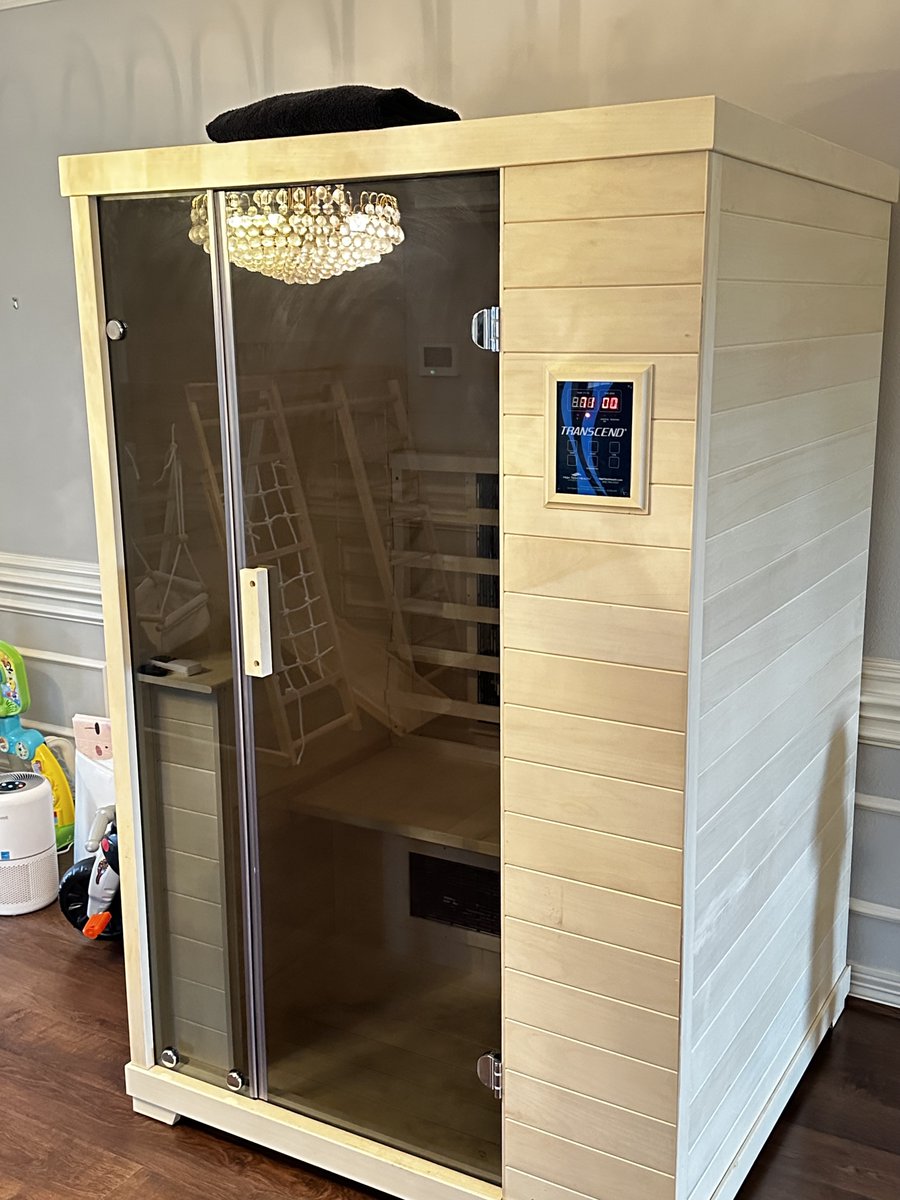
The more I research environmental toxins, the more the Sauna proves itself as a reliable detox strategy, and overall health enhancement
You get a reduction in all-cause mortality, hypertension, heart attack risk, stroke
And it can detox Microplastics and heavy metals
Just five min of daily exercise reduces dementia risk by 41%
New study: 35 minutes a week of exercise reduced dementia risk by 41%, more activity further reduces the risk.
0/ A new study with 89,667 participants (mean age=63 years, 56% women) showed that physical exercise reduces the risk of developing dementia within an average follow-up period of 4.4 years.
1/ The “first 35 minutes/week” of moderate and vigorous activity were correlated with the steepest risk-reduction of 41%, with 35-70, and 70-140 min/week correlating to larger risk reductions of 60 and 63% respectively.
2/ Beyond 126 min/week, every additional 30 min of exercise a week was correlated with 4% additional risk reduction.
3/ Significance&implications
i. This result emphasizes the importance of maintaining a minimum physical activity as a non-negotiable aspect of your health and longevity routine.
ii. The return on investment for your health, wellbeing and longevity, of your initial 10-15 minutes of daily exercise is unlikely to be matched by any other activity, with an earlier study also concluding that 75 minutes of weekly moderate-to-vigorous physical activity was correlated with 23% mortality risk reduction.
Agency > Intelligence
I had this intuitively wrong for decades, I think due to a pervasive cultural veneration of intelligence, various entertainment/media, obsession with IQ etc. Agency is significantly more powerful and significantly more scarce. Are you hiring for agency? Are we educating for agency? Are you acting as if you had 10X agency?
Grok explanation is ~close:
“Agency, as a personality trait, refers to an individual's capacity to take initiative, make decisions, and exert control over their actions and environment. It’s about being proactive rather than reactive—someone with high agency doesn’t just let life happen to them; they shape it. Think of it as a blend of self-efficacy, determination, and a sense of ownership over one’s path.
People with strong agency tend to set goals and pursue them with confidence, even in the face of obstacles. They’re the type to say, “I’ll figure it out,” and then actually do it. On the flip side, someone low in agency might feel more like a passenger in their own life, waiting for external forces—like luck, other people, or circumstances—to dictate what happens next.
It’s not quite the same as assertiveness or ambition, though it can overlap. Agency is quieter, more internal—it’s the belief that you *can* act, paired with the will to follow through. Psychologists often tie it to concepts like locus of control: high-agency folks lean toward an internal locus, feeling they steer their fate, while low-agency folks might lean external, seeing life as something that happens *to* them.”
We have been ahead of the curve: launching months ago the world's only at-home microplastics test. We now have the world's largest database of microplastics in humans. We have people testing interventions to assess their efficacy in lowering microplastic levels. We're also announcing something else big in the next few weeks.
Microplastics & Endocrine Disruptors: the 3 most important actions to take to offset their (now established) negative effects on hormones related health.
How eating clean, healthy food actually amplifies your senses & experience of life & how junk food does just the opposite. @bryan_johnson@KimKardashian@hubermanlab (excerpt from The Kardashians @hulu).