After 10 incredible years at the @InstituteGC, today marks the start of a new adventure as I join the @iborganization.
I am immensely grateful to TBI for the opportunities, the challenges that pushed me to grow, and the brilliant colleagues who made the journey so rewarding.
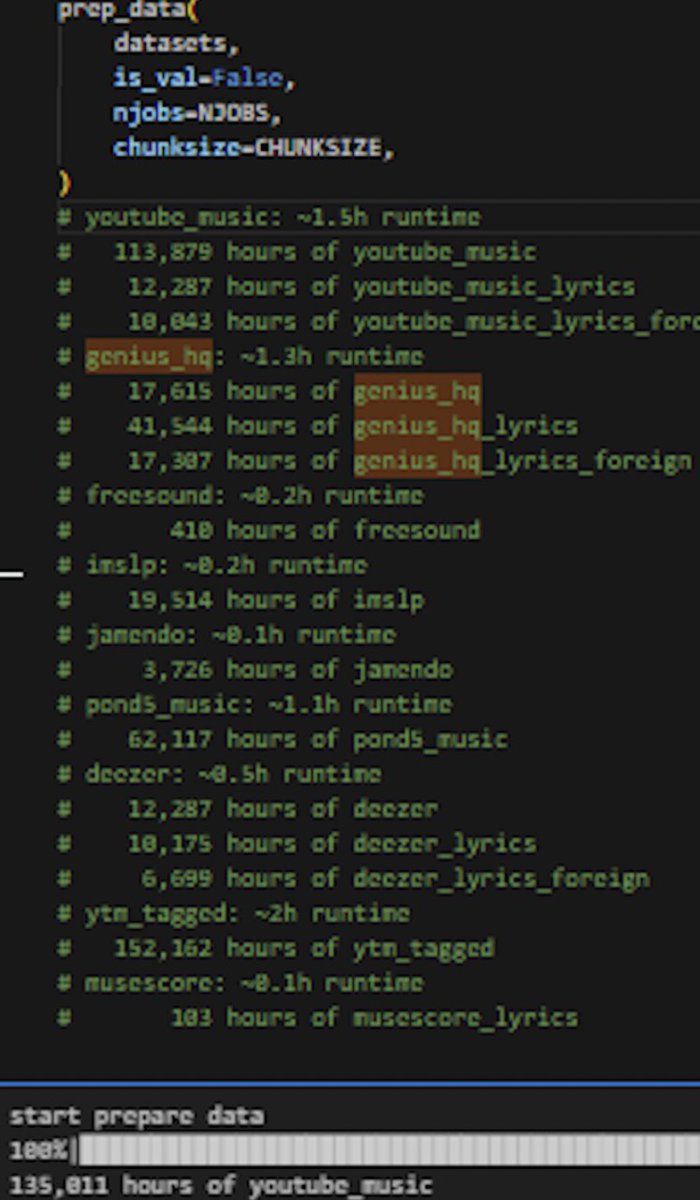
Scoop: The AI music generator Suno was hacked. Hacker shared source code that shows how the tool was made and part of the music and podcasts that were scraped to create it.
Decades worth of music, lyrics, and podcasts from YouTube, Deezer, Genius & more
«Il punto di Chat Control è sempre stato un altro: normalizzare l’idea che nelle comunicazioni private ci si possa guardare per default. La Stasi, per farlo, aveva bisogno di un regime; a Strasburgo è bastato un calendario.»
Di @lastknight . Da leggere 👇
https://t.co/SyYk0HiuiI
In Italia un papà ha diritto a 10 giorni di congedo, mentre una mamma a 5 mesi. Questo scarica tutta la responsabilità della cura su di loro.
C'è una proposta di legge di iniziativa popolare che chiede un congedo più giusto, condiviso e paritario.
Qui: https://t.co/NLX0xNMvIB
Again, this proves my point made yesterday. The Germans will talk about EU integration, how we all need to do more, need to play in one team blah, blah, blah. But when it comes to it they’ll just undermine everything, they’re not honest.
Introducing Loupe, our latest privacy app for iOS. Discover what apps can learn about you just by reading data your iPhone already exposes, such as your languages, installed apps, device sensors, and much much more
Loupe is free, private, and open source. Give it a try 👇
Discovered a new method for detecting if someone is using Incognito in Chrome:
Write 512 tiny 1-byte responses into a scratch Cache API cache, then read:
https://t.co/gsVNLl57y6.estimate().usageDetails.caches
Normal Chrome: ~393kb
Incognito: ~85kb
Why? When you're in incognito, Chrome writes to memory instead of disk, which leaves less metadata residue
In the last 6 months at @Ahrefs, we analyzed over 1 billion data points across 14 studies. Here's what we learned about AI search optimization:
1) "Best X" blog listicles are the single most prominent content format cited by AI chatbots. They make up 43.8% of all page types cited by ChatGPT specifically.
2) 67% of ChatGPT's top 1,000 citations come from sources marketers can't influence: Wikipedia (29.7%), homepages (23.8%), app stores (6.6%). Only 32.3% are influenceable content like educational pages, reviews, news, and blog posts.
3) 28.3% of ChatGPT's most-cited pages have zero Google organic visibility. These pages get cited repeatedly by ChatGPT despite not ranking in Google at all. A completely separate discovery layer.
4) ChatGPT only cites about 50% of the URLs it retrieves. It fetches dozens of pages per query but uses half as background context without attribution. This means that being retrieved and being cited are very different things.
5) Adding schema markup had zero meaningful impact on AI citations. AI Overviews actually dipped −4.6%, while AI Mode (+2.4%) and ChatGPT (+2.2%) showed changes indistinguishable from zero.
6) YouTube mentions have the highest correlation (0.737) with AI brand visibility out of all the factors we studied (including all the conventional SEO metrics like backlinks, page count, DR, etc). This held true for both Google-owned and OpenAI products.
7) AI Overviews reduce clicks to the #1 result by 58%. That’s up from 34.5% just 10 months earlier. The trend is accelerating.
8) 99.9% of AI Overviews appear on informational intent queries. Transactional, navigational, and local searches are almost entirely AIO-free. Shopping triggers AIOs just 3.2% of the time.
9) For a given search query, Google’s AI Mode and AI Overviews reach the same conclusions 86% of the time — but cite almost entirely different sources (only 13.7% citation overlap).
10) AI Overviews change every 2.15 days on average, with 70% of content differing between consecutive observations. But semantic similarity stays at 0.95. The words, sources, and entities constantly shuffle, but the actual meaning barely moves.
Shopify CEO Tobi Lutke explains Goodhart’s law and why he doesn’t like KPIs or OKRs
“Goodhart’s law is real. The moment a metric becomes a goal, it’s no longer a useful metric… No metric by itself is a complete heuristic for a complex business. There’s a million different tensions in a company, and you can’t keep all of them in harmony by optimizing for one thing.”
For this reason, Shopify doesn’t use KPIs or OKRs. But as Tobi explains, this doesn’t mean they don’t value data and metrics.
“We are extremely data informed. We have invested enormous amounts of money and time into systems that give us basically everything at our fingertips… But what Shopify attempts to do is just not over-fit for what’s quantifiable.”
People love optimizing for highly-quantifiable things because there’s immediate gratification that comes from seeing a number go up. But Tobi thinks that the most important aspects of a product are rarely quantifiable:
“The overlap of the most valuable things you can do with a product and the things that happen to be fully quantifiable are like maybe 20%. Which leaves 80% of a value space unaddressable by the people who only look at quantifiable things.”
He continues:
“Shopify is comfortable with unquantifiable things like taste, quality, passion, love, hate… The sort of deep satisfaction that a craftsperson feels when they’ve done a job well is actually a better proxy if you allow it to be.”
They then have robust analytics systems that tell the company if something’s wrong or a new rollout breaks something.
“We think about it as a cockpit for a pilot. The decisions are still made by pilots, and we think this leads to better results… I think there needs to be more acceptance in business of unquantifiable things… And then metrics take a support function.”
Source: @lennysan (Feb 2025)