Currently a research analyst at @ApartmentList and studied physics and economics at UIUC ‘18 + USFCA ‘20 🤠✨things I like: dogs, guitars, motorcycles, sewing 💫
Do you prefer the hustle and bustle of the city or the peace and quiet of the suburbs? Take our poll and tell us why in the comments.🏡
In our latest report, we're seeing rental demand shift away from downtown and toward the suburbs in major metros.🏙️→ https://t.co/Ky8TgUp3cp
Apartment List just released a new Cost of Living Calculator, helping renters make better decisions (and maybe triggering those of us in the Bay Area)
Even if not moving, fun to play around. Rents in Seattle and Tampa have almost converged, but still a huge cost of living gap
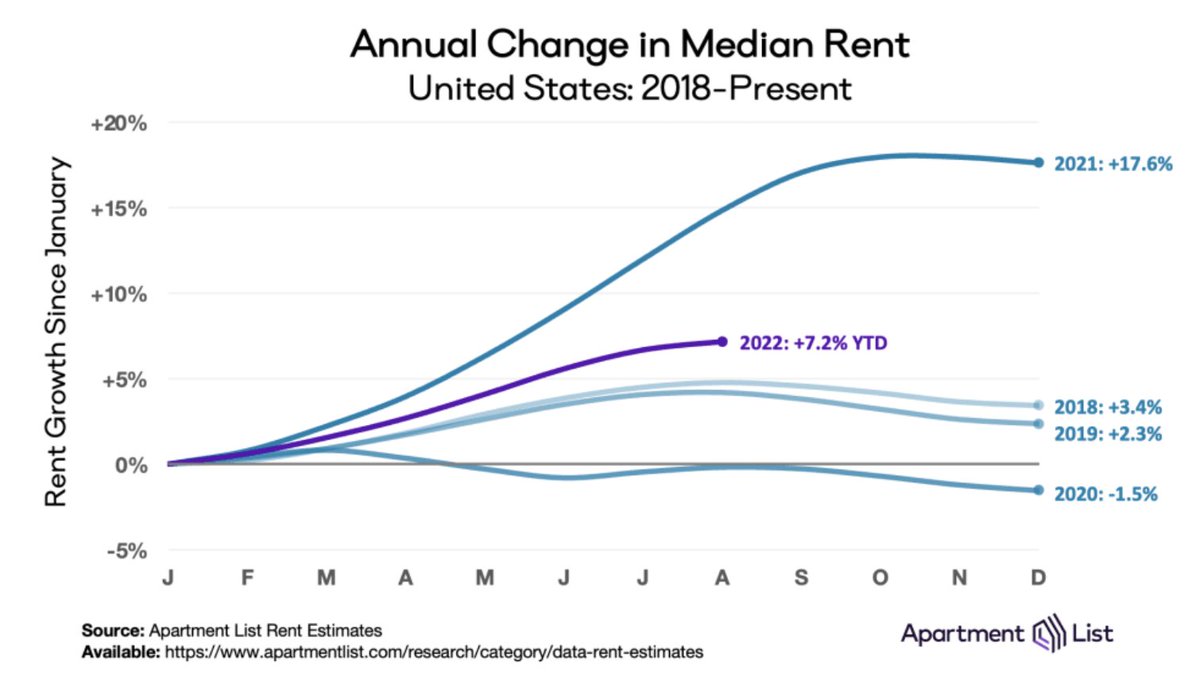
NEW: Last month in August, the rental market continued to decelerate, as rent growth came in at just 0.5%. If the seasonal pattern holds, price declines should materialize in the coming months.
Get the latest in our September Rent Report →
https://t.co/IsPtMkr4V9
But right now it's young adults, moving out on their own, who are driving the surge in rental demand.
There are nearly twice as many Gen Z adults living alone today than there were pre-pandemic.
🧵 My newest report examines recent household formation (and decline), and what it’s done to housing affordability.
Household decline typically only happens during recessions. 1MM households dissolved in '09. In COVID we lost 2.5MM (!) in six months.
https://t.co/Dhg2XQDwCV
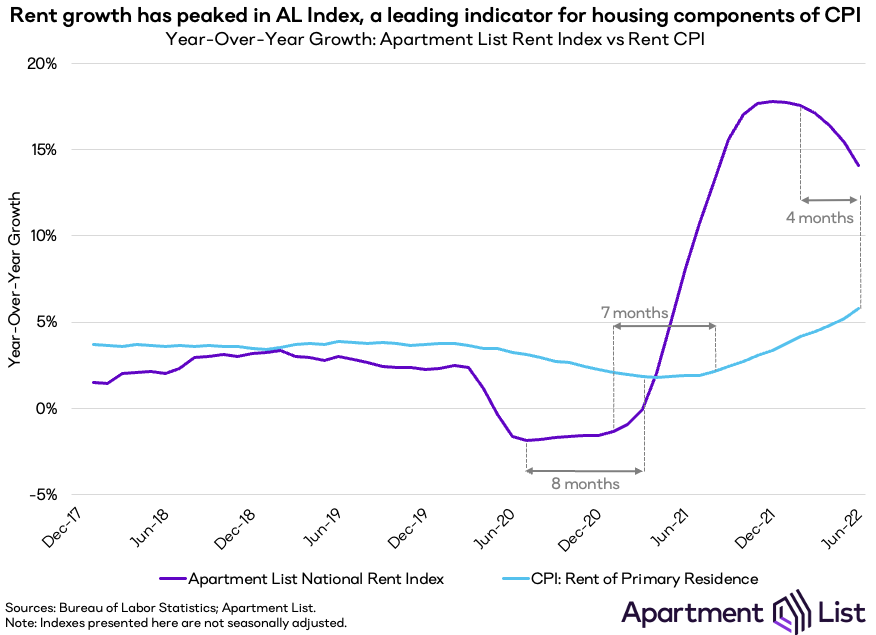
The CPI's rent component had it's biggest MoM increase yet today (+0.8%), and is now up 5.8% YoY
But YoY rent growth is already falling according to our index, and we expect it will peak in the CPI sometime this fall
1/6
The housing market feels absolutely bonkers for basically everyone. So I set out to figure out what, exactly, is going on and what this all means for buyers, sellers and renters
What’s Up With the Crazy Housing Market? https://t.co/nFnwfHWURA
Great breakdown of the current housing market moment by @rondakaysen. Loved our conversation and thrilled to contribute with a number of terrific researchers in the piece.
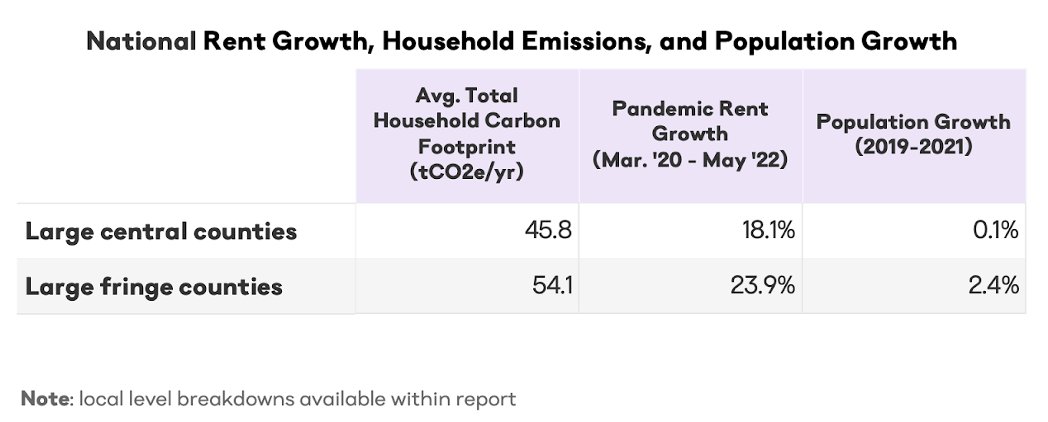
The average household carbon footprint in large metros is 18% higher in suburban "fringe" counties than in urban central counties. This calls for more dense, walkable communities, but the pandemic poses a few concerns. 🏘️
Read our new Climate Report → https://t.co/w0mLmIyKf1
IMO household formation has been a really understated factor in explaining rising housing costs.
‼️ 4+ million households formed in 1.5 years ‼️
That's a huge surge in housing demand, especially as people shifted towards smaller, lower-cost markets.
Great dive into one of my favorite topics. Two answers to two different questions.
Many renewing, staying put, and a bit shielded. Those actively searching are feeling the pain of a really tight market.
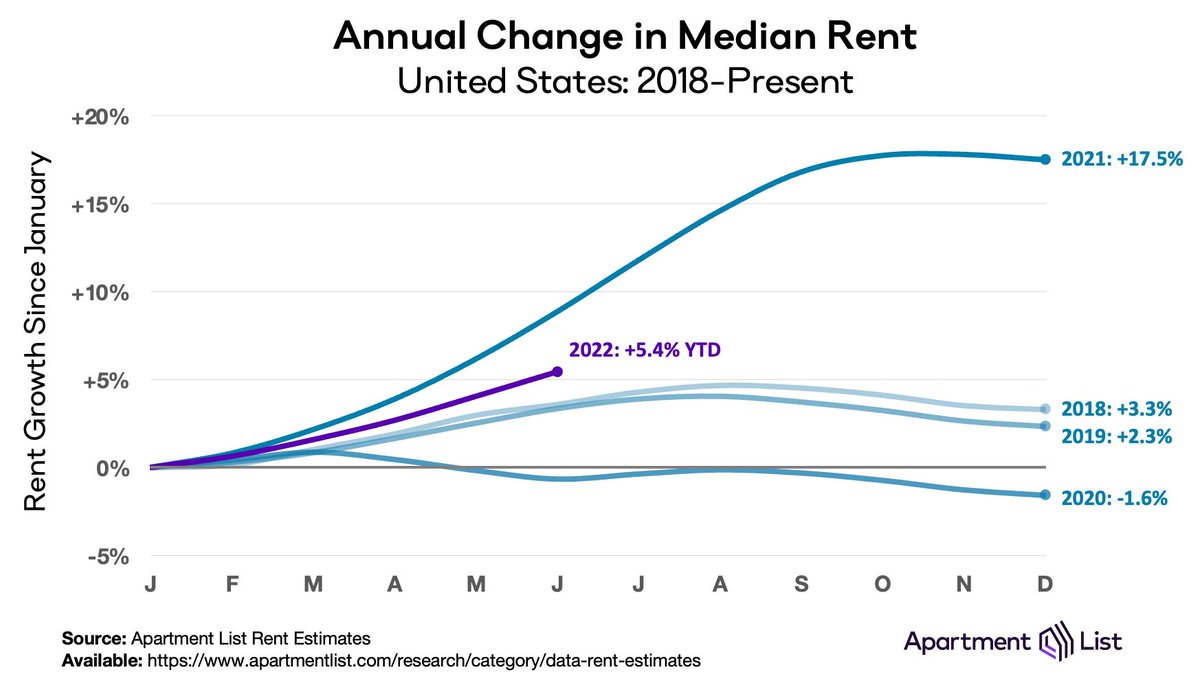
Market rents cooling but far from cool.
Now I can add bass under “things I like” in my bio, look at this new beauty ✨ anyone looking to form a band? Our band name could be “the marginal returns” 🤠🎶
Chief Economist @IAPopov spoke with @jeannasmialek from @nytimes to discuss inflation and the rising rent prices.
“Rent growth and occupancy are off of Everest peak and back at base camp, but we’re still a long way from the sea.”
Read the full story: https://t.co/2BRhWnDtde
1.
🚨NEW DATA PRODUCT🚨
The @ApartmentList Research Team is thrilled to release our newest public dataset. The Apartment List Vacancy Index is a monthly time series tracking the apartment vacancy rate in hundreds of locations across the country.
https://t.co/IY7nq5rJdb
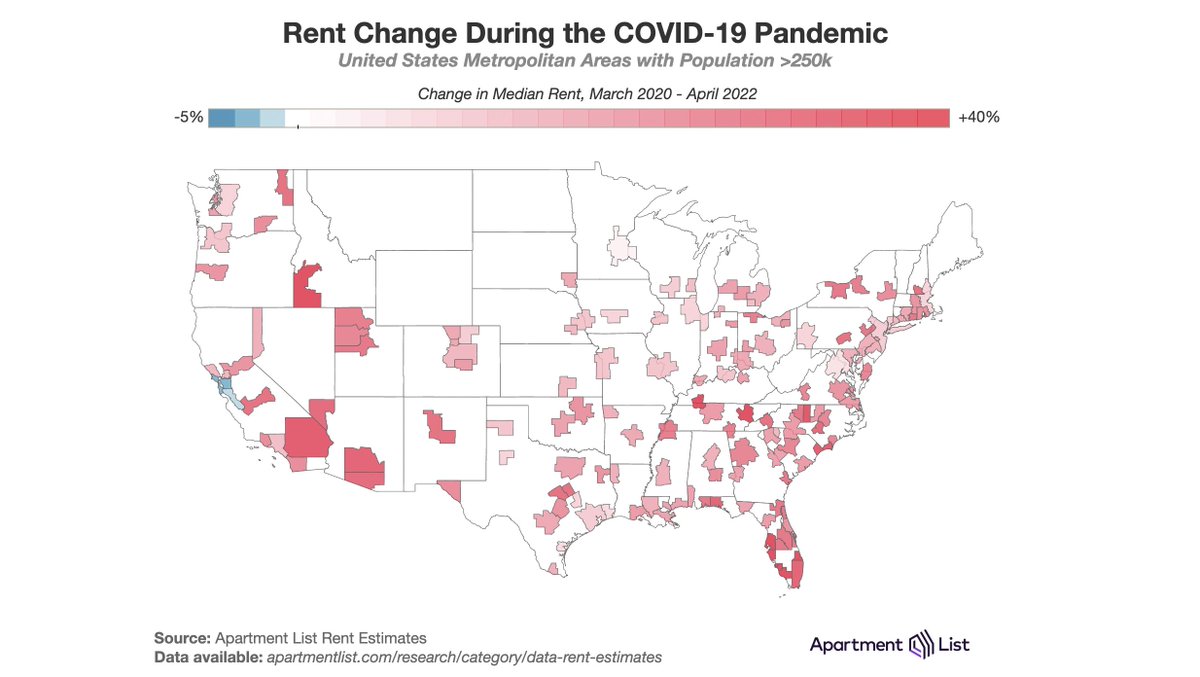
The San Francisco Bay Area is officially the last place in the country where rent prices are still below pre-pandemic levels.
SF metro: -3.3% since March 2020
SJ metro: -1.3%
Rest of USA: +20%