@MaxGhenis@MelissaLDell Yeah, hi, Max. You might want to know that there are a few small problems with that paper. As in, well, there is no discrete mita boundary to run a RDD on. If you need an unpaywalled copy, I will get it to you.
https://t.co/PWOYFiMGzG
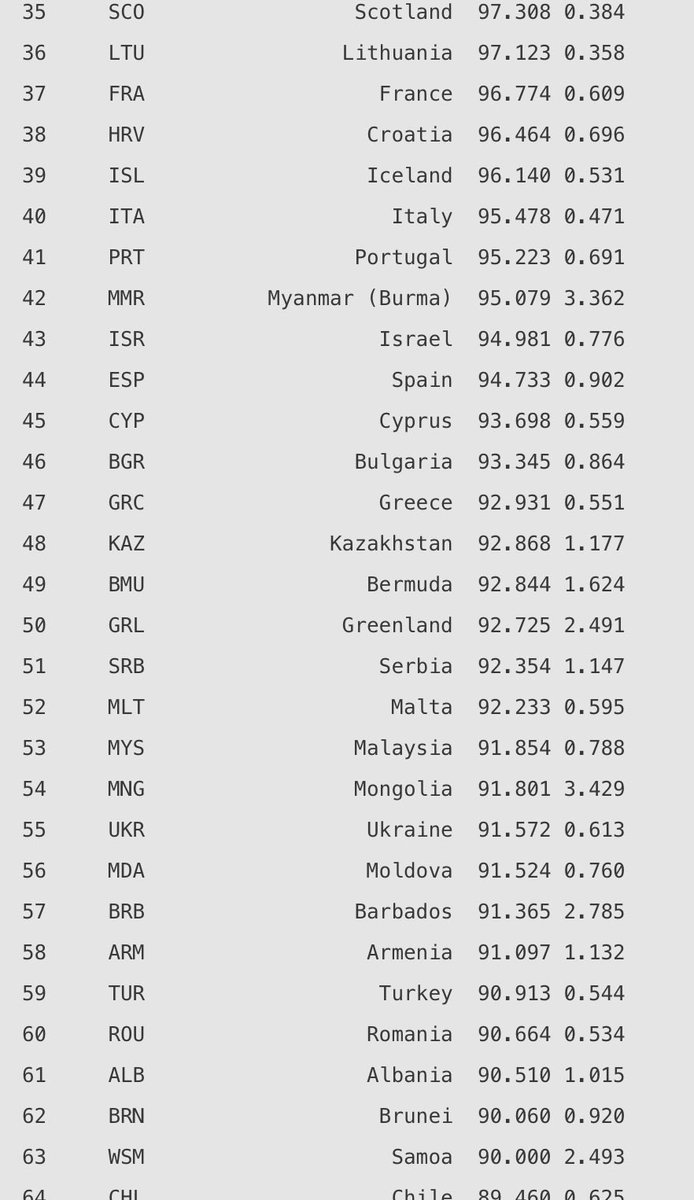
@JesusFerna7026@dum_as_hek@lugaricano National iq lists are problematic, but the recent Seb Jensen listing Spain with avg IQ between Western Europe and leading Latin American countries sounds about right. Sure looks that way based on accomplishments
@JesusFerna7026@Noahpinion Outside of China and possible Vietnam, convergence has stopped, but I think everybody is doing ok in development outside communist holdouts— Cuba and North Korea- and Pakistan. Major exception is Sub Africa
In 2024, the US undercounted the number of international students by 200,000. The error went unnoticed for months.
Working with @buxwal has taught me how much the federal government just *doesn’t* know things. It’s Seeing Like A State in reverse — for questions like “how many visa-holders are currently in the country?” the answer is “Nobody knows.” The data doesn’t exist, or when it does it’s interpretable only by the civil servants who have spent 20 years working with it.
The flip side of this state of affairs is that, with the right team, you take government data and produce new knowledge. For instance, the @ifp immigration team built https://t.co/aEwqUfMtqS — it tracks how international students enter the workforce after they graduate. It’s more comprehensive and detailed than any federal government resource on the topic. There’s tremendous alpha available if you’re willing to learn how a federal dataset actually works.
Violet’s piece for Statecraft is a good guide to doing just that.
https://t.co/KSRF3RuApC