Los agentes de IA ya compran. Según Forter, en la semana del 19/10 el 77% de las órdenes de agentes en su red llegó por navegación web, no por protocolos.
El desafío hoy no es otro chatbot: es preparar catálogo, checkout y seguridad para agentes.
https://t.co/yzJxsD4HTP
Worked 2 decades in in consulting.
Made Partner in my 30s.
Led teams of 100+ people.
Run 9-figure client portfolios.
Lived and worked in 4 continents.
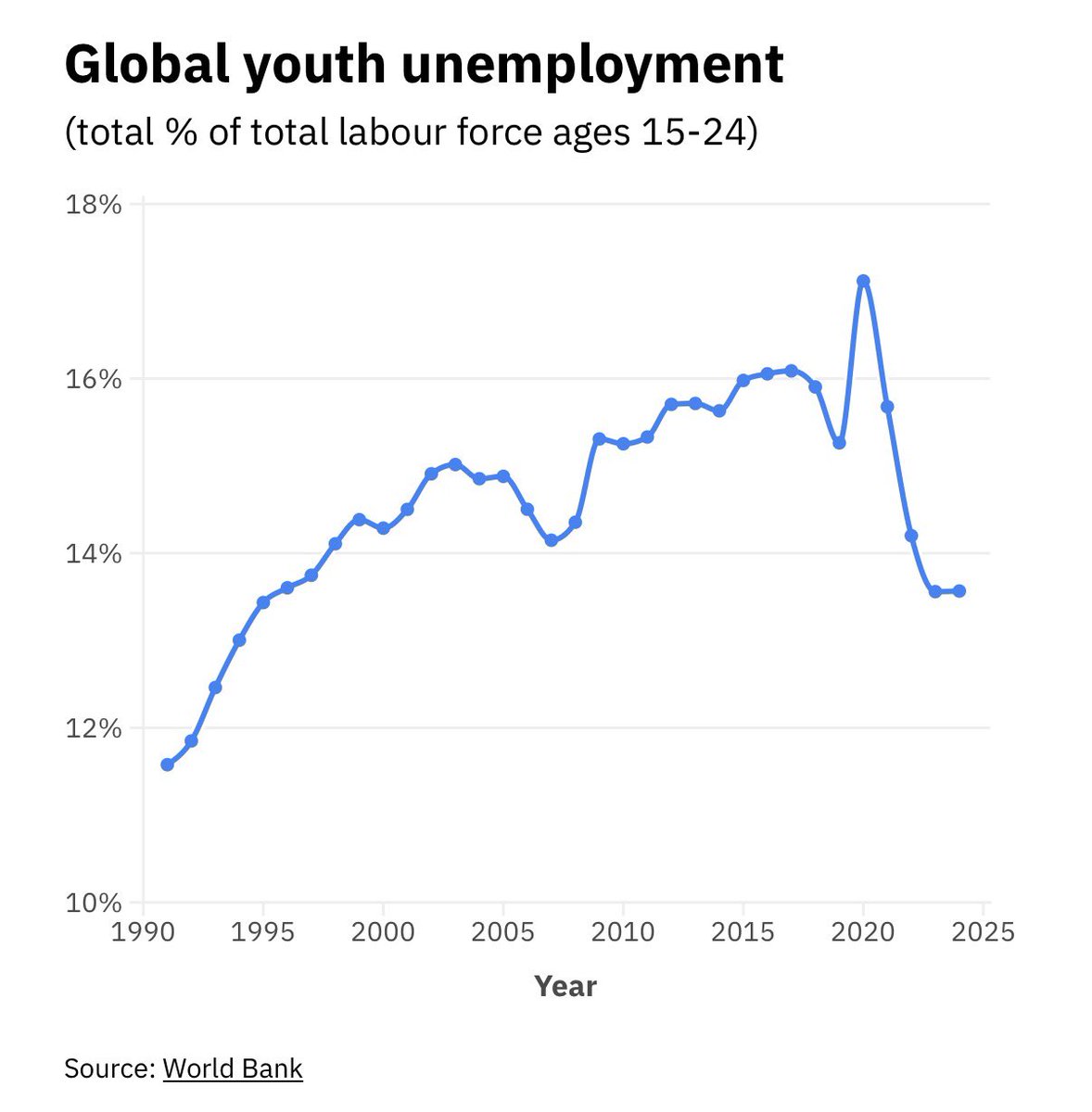
Young people are entering the workforce at a strange moment.
AI can draft your emails, build your slides, write your code, analyse your data, simulate your voice.
The default advice sounds smart:
"Upskill"
"Learn AI"
"Be adaptable"
Obvious stuff.
Let me give you 5 slightly heretical (but useful) ideas if you actually want leverage in the AI age.
Not survival. Leverage.
1) LEARN TO SELL BEFORE YOU LEARN TO BUILD
Everyone is learning to build with AI; who's learning to sell?
Because production is cheap, distribution is not.
In my experience, markets reward those who can convince others that something should exist and then align capital, people & narrative around it.
E.g., Steve Jobs didn't invent the GUI, the MP3 player, or the smartphone. He sold a vision of WHY they were cool.
Or Elon Musk. You can argue about him all day, but he bends capital markets through narrative force.
Young people obsess over becoming technically formidable. Good, but if you can't:
> articulate a problem in a way that feels urgent
> create emotional energy around a solution
> negotiate compensation/scope
> pitch yourself w/o sounding desperate
AI will outperform you on the build, and someone else will capture the upside.
2) BUILD SENSE-MAKING
AI can generate infinite variations but it can't reliably tell you which one is elegant.
You need pattern recognition + aesthetic + strategic sensemaking.
You need the extraordinarily valuable ability to say "This feels right"... and be correct 90% of times.
Steve Jobs called it "taste".
Designers call it judgment.
I prefer discernment.
Where does it come from?
Exposure. Feedback. Long apprenticeship. Studying history. Reading widely. Being around people better than you. Caring about the craft.
Everyone can create, but can you curate?
That's the challenge I'm giving myself.
3) CHASE POSITION
AI makes you faster.
So what?
Speed in the wrong direction is basically accelerated irrelevance.
Young professionals obsess over productivity hacks, automating emails, summarise meetings, generate slide drafts.
BS.
Meanwhile, someone else is positioning themselves closer to revenue, clients, capital allocation.
You want exposure to projects with visibility, problems tied to money, roles adjacent to decision-makers.
If you become the most efficient note-taker in the company, AI will replace you.
If you become the person who reframes what the company should be doing, it won't.
Simple.
4) LEARN TO WORK WITH AFRAID HUMANS
I see AI is making people anxious.
Managers worry about irrelevance. Employees worry about layoffs. Executives worry about being disrupted.
Walk into that fear and stabilise people:
> explain AI w/o hype
> show people how it augments rather than humiliates them
> design transitions instead of revolutions
Look at Satya Nadella. He pivoted Microsoft to cloud & AI, and changed the internal psychology of the firm from know-it-all to learn-it-all.
If you understand identity & ego, you will navigate the AI era far better than someone who just knows Python.
5) OPTIMISE FOR OPTION VALUE
Prestige brands still matter.
McKinsey, Goldman Sachs, Google still open doors.
But if you optimise purely for logo collection, you might wake up one morning highly employable and strategically constrained.
The AI era will produce volatility, with entire functions that will shrink and new ones that will explode.
Option value means:
> skills that transfer
> geographic flexibility
> intellectual independence
> networks that span industries
> income streams that are not singular
Status feels good today but options protect you tomorrow.
Chase convexity: small downside, large upside exposure.
You want an identity not fully fused with your employer. When layoffs come (they will) your sense of self doesn't disintegrate.
All the best!
Agency > Intelligence
I had this intuitively wrong for decades, I think due to a pervasive cultural veneration of intelligence, various entertainment/media, obsession with IQ etc. Agency is significantly more powerful and significantly more scarce. Are you hiring for agency? Are we educating for agency? Are you acting as if you had 10X agency?
Grok explanation is ~close:
“Agency, as a personality trait, refers to an individual's capacity to take initiative, make decisions, and exert control over their actions and environment. It’s about being proactive rather than reactive—someone with high agency doesn’t just let life happen to them; they shape it. Think of it as a blend of self-efficacy, determination, and a sense of ownership over one’s path.
People with strong agency tend to set goals and pursue them with confidence, even in the face of obstacles. They’re the type to say, “I’ll figure it out,” and then actually do it. On the flip side, someone low in agency might feel more like a passenger in their own life, waiting for external forces—like luck, other people, or circumstances—to dictate what happens next.
It’s not quite the same as assertiveness or ambition, though it can overlap. Agency is quieter, more internal—it’s the belief that you *can* act, paired with the will to follow through. Psychologists often tie it to concepts like locus of control: high-agency folks lean toward an internal locus, feeling they steer their fate, while low-agency folks might lean external, seeing life as something that happens *to* them.”
Visit all the places, eat all the food, read all the books, make all the friends, gather all the fame, support all the causes, build all the products, earn all the money...
...to see that the quality of your life is what it is when you are doing nothing.
@JohnGalt_is_www Yo hice un ID para bancos, tuve muy resultado 8/10 después de unas 10 reuniones posta (aprox 3 meses). Si te sirve te lo paso y abierto a dar feedback tmb, básicamente cuanto más feedback relevante e iterar tengas menos tiempo demoras
I stole this idea and now use it with every single employee.
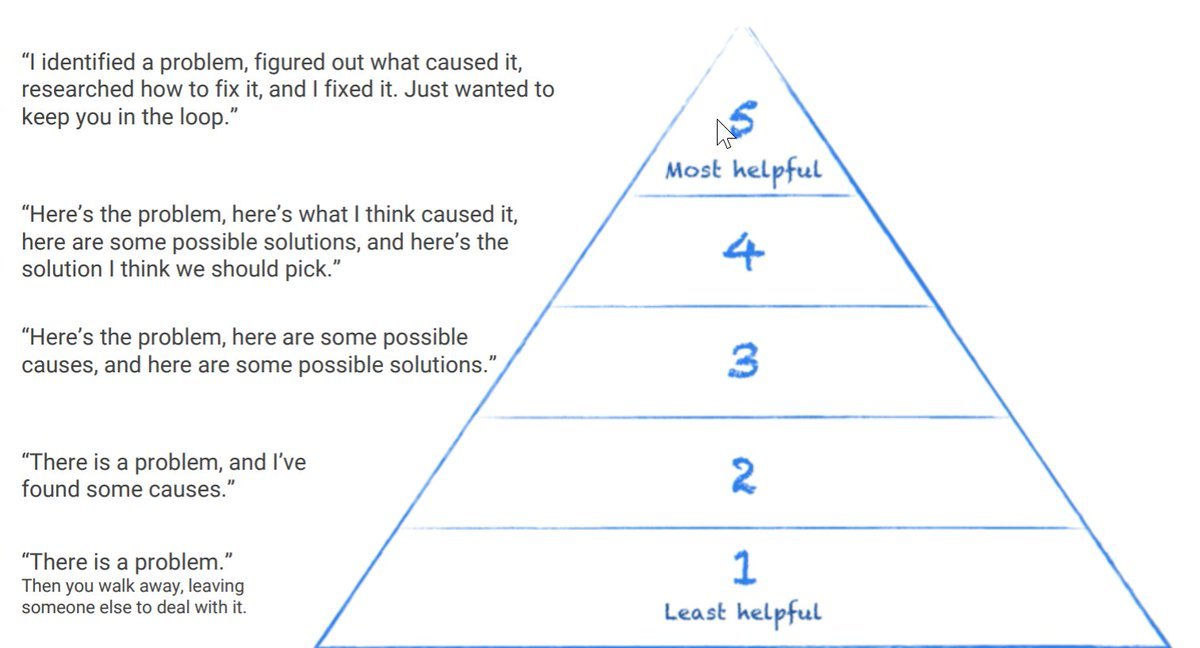
It’s the best illustration I’ve seen of teaching someone to be high agency.
It says there are 5 levels of work:
Level 1: “There is a problem.”
Level 2: “There is a problem, and I’ve found some causes.”
Level 3: “Here’s the problem, here are some possible causes, and here are some possible solutions.”
Level 4: “Here’s the problem, here’s what I think caused it, here are some possible solutions, and here’s the one I think we should pick.”
Level 5: “I identified a problem, figured out what caused it, researched how to fix it, and I fixed it. Just wanted to keep you in the loop.”
Using this framework, here’s what I say to every new employee…
You will live at Level 4 from Day 1 and as we build trust you will rise to Level 5.
Being high agency doesn’t just mean tackling problems in this way. It means your entire way of working should be oriented to being a Level 4+ employee.
Plz feel free to steal it as well.
And ty @stephsmithio for the framework!
Before AWS existed, one company ran the servers for Twitter, LinkedIn, and Facebook's entire app ecosystem.
They owned Node.js, invented containers 8 years before Docker, and Peter Thiel even backed them.
Then something happened...
A lot of people spend enormous amounts of time perfecting their excel models and formulas
But forget that deals are ultimately done because of relationships, not just because of what the model says
Your 40s will destroy your happiness.
You'll work 60-hour weeks while your kids need money and your parents need care.
Ray Dalio calls this the "midlife squeeze" - and it breaks most people.
His leverage strategy that changes everything: