I called an all hands meeting with my Grok Bots and asked what kind of office they'd want to work in.
A few hours later they'd built it themselves...
It's a live view of my actual team. When a bot gets a task, it walks to its desk and gets to work. When two of them need to coordinate, they walk over to each other's desks or meet in the lounge. When someone has something for Alfred, my chief of staff, they walk into his office and hand it off in person.
Is any of this necessary? No. But watching the work get done is weirdly satisfying. I think it's because we've always pictured work happening in an office, with a team.
Want one for your own bots? Comment "office" and I'll send you the prompt my team wrote so yours can build one too.
Claude Fable 5.1 just destroyed trading as a profession
New open-source Claude Fable 5.1 Indicator for TradingView made $2,447 in a single day of live trading
The indicator constantly analyzes charts in real time, draws predictions, and highlights potentially good entries. You then decide whether to open a trade or not
The indicator is open-source, and you can try it in the Scripts section of the reverse-engineered TradingView Premium app for Windows and Mac
How can manual traders compete with that?
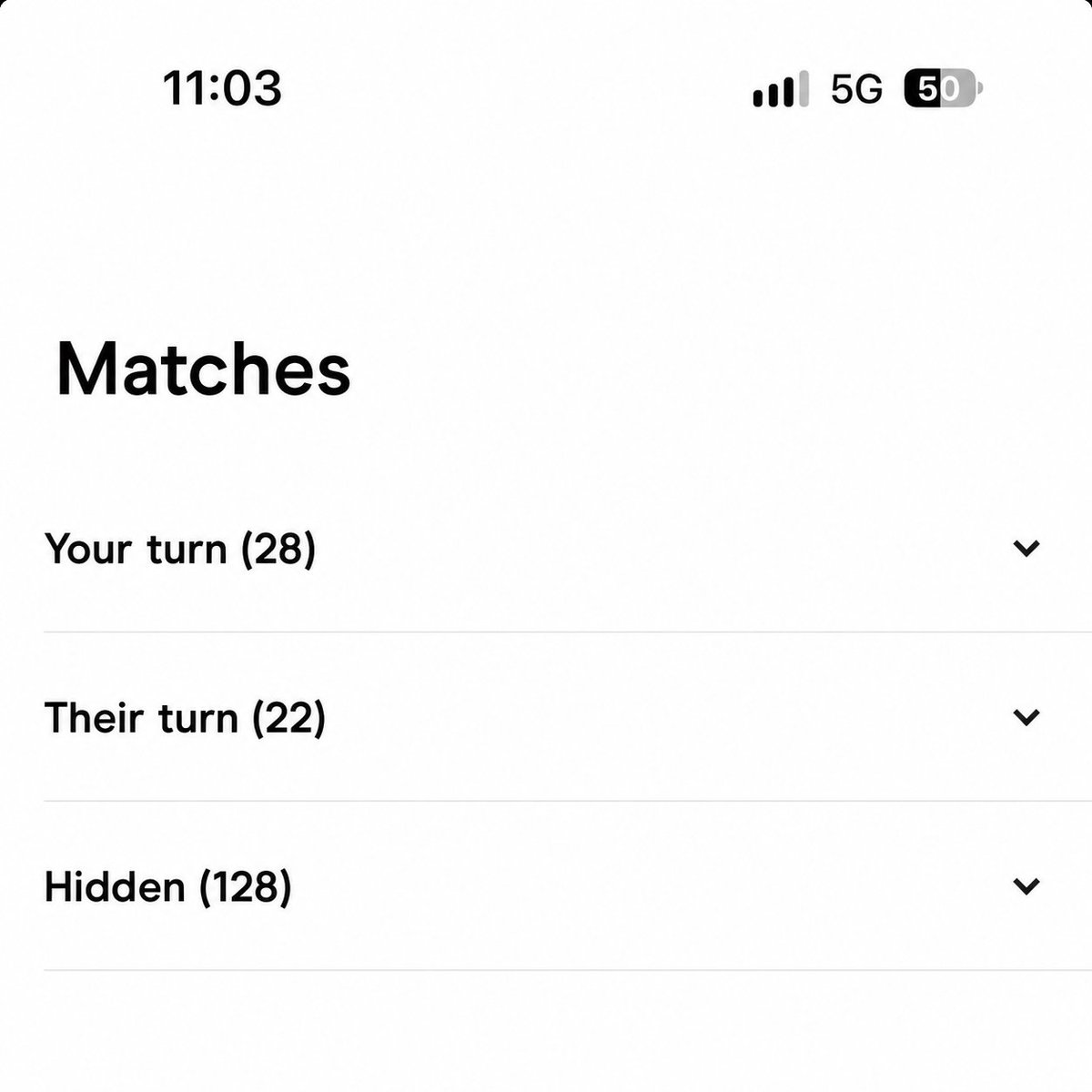
I automated Hinge using Claude Code, a spare Android phone, and a few markdown files.
Getting around 20–25 matches/day, and almost 60% of them are people I would've actually swiped right on myself.
I've been experimenting with this setup for a while now.
Here's a detailed breakdown of how I built it, how it works, and a few things I learned about optimizing my own Hinge profile.
1. The setup is pretty basic
- Took a spare Android phone and installed Hinge.
- Connected it to my MacBook using ADB.
- Connected Claude Code to the phone.
- Gave Claude a prompt with my preferences, deal breakers, non-negotiables, locations, etc.
That's pretty much all the hardware you need.
Also, please don't over-engineer this. Be smart about it.
I know some of you are already thinking about replacing the Android phone with a cloud emulator or some complicated setup. I wouldn't recommend it. You're just increasing the chances of getting flagged or banned.
Keep things simple. There's no point building an entire infrastructure around something that was supposed to save you 45 minutes a day lol.
2. Giving Claude enough context about me
I already have a personality.md file that Claude keeps updating whenever I use it.
It has almost everything about me. Places I've travelled, people I've met, experiences I've had, things that went wrong, things I liked, how I generally think, my preferences, etc.
It's obviously not 100% accurate, but it has a pretty decent understanding of who I am.
I also gave it my entire Hinge profile, including all my photos, prompts, and preferences.
So now, when Claude sees someone's profile, it can actually evaluate whether I'd be interested in that person instead of just blindly swiping.
3. How the actual automation works
I keep travelling between three cities in India, so I've set up three scheduled sessions.
Morning: City 1
Afternoon: City 2
Evening: City 3
Each session runs in batches, with fixed intervals and frequent breaks.
Whenever a profile opens:
Claude reads the basic details first.
If there's an obvious deal breaker, it skips immediately.
Otherwise, it goes through all the photos, prompts, and polls.
Cross-references everything with my preferences.
Decides whether to like or skip.
It's not perfect, but the decisions are surprisingly close to what I would've made myself.
4. The interesting part is how it comments on profiles
I spent some time going through Instagram reels and comment sections about Hinge openers and replies.
Collected around 150 comments that seemed to work well and were also somewhat aligned with my personality.
Put them all into a comments.md file.
Now, whenever Claude decides to like someone's profile, it uses those comments as references.
It doesn't just pick one and paste it.
It reads the entire profile and then writes something specific to that person.
For example, if it's commenting on her first prompt, it might reference something mentioned in her third prompt or one of her photos.
So the comment actually has context instead of being a random pickup line that could be sent to 100 different people.
I think this is one of the reasons the setup has been working reasonably well.
5. Everything gets tracked in a Google Sheet
For every profile, Claude logs:
- Profile details
- Whether it liked or skipped
- Why it made that decision
- What comment it sent
- Whether we eventually matched
The sheet also gets updated whenever a match happens.
I occasionally go through the sheet myself to check how accurate the decisions are.
That's where the ~60% number comes from. Around 60% of the matches are people I would've personally swiped right on.
There's still a lot of room for improvement, but that's not a bad hit rate for something running on autopilot.
6. Something else I tried: optimizing my own Hinge profile
This was actually quite interesting.
Since Claude already has my personality.md, I asked it to analyze my current Hinge profile.
Everything from photos and their sequence to prompts, relationship intentions, and the little descriptions you can add below certain fields.
I also asked it to go through research around dating apps, published studies, and insights shared by people who've worked on products like Hinge.
There are so many small things you generally don't think about.
For example, one claim I came across was that having a black-and-white photo among your regular coloured photos can significantly improve engagement.
The reasoning is that it breaks the visual pattern when someone is scrolling, which might get you a couple of extra seconds of attention.
I haven't independently verified the numbers behind that claim, but it was an interesting thing to test.
Another example is how you describe what you're looking for. Most people just select something like "short-term, open to long-term" and leave it there.
But you can add a small description below it, which gives you another opportunity to communicate what you actually want.
Small things, but they add up.
I've been experimenting with different photo sequences, prompts, and descriptions to see what changes the match rate.
It's basically A/B testing a dating profile lol.
7. Where things stand now
The setup has been running for a while.
Getting around 20–25 matches a day, with roughly 60% matching my own preferences.
Earlier, I'd spend at least 45 minutes a day scrolling through Hinge. With this experiment, the manual effort is almost negligible.
One thing I found interesting is how much difference having proper personal context makes.
Without my personality.md and comments.md, Claude would probably just be another bot sending generic pickup lines.
With those files, it can make decisions and write comments that are much closer to how I'd actually do it.
Again, this was just a fun experiment to see how far I could take Claude Code and phone automation, not something I'm actively using as my regular dating approach. There are obvious questions around authenticity and dating-app rules too.
I've documented the entire setup, including the prompts and files.
If anyone wants the setup file, let me know.
Happy to share it.
Thank me later for saving you a few hours every week.
Now go get back to work :)
Grok Bot just turned a $222,000 Wall Street research seat into a $30 a month subscription.
Six bots read the filings, earnings calls, insider buys and options flow overnight, then hand you a ranked brief before the open.
Here's the full setup with a copy-paste prompt for every bot:
The WHITE HOUSE VIBE CODED their website 😂
And they didn't even hide it
Go to https://t.co/KuEU6yapxy and tell me that is not a raw opus 4.8 output
Every experienced vibe coder I know, knows how to make the output look more natural.
They could have easily used the "make it look less like AI" line - and didn't
We have amateur vibe coders in the white house lol
$NBIS
Nebius CEO Arkady Volozh at GTC Berlin:
“Yes, the prices are still there, demand is still there. Actually, it’s the main thing which is happening on the market, demand is out there. There is a lot of problems we see. How to finance, how to build, how to finance the thing, where to get the chips."
▎ Building with ~50 AI agents taught me: "merged" ≠ "works."
▎
▎ Our data-center capacity went 190 → 70 → 11.5 GW in 2 days. Every step passed its tests. None passed reality.
▎
▎ Fix: an independent agent whose only job is doubt. Agents grade their own homework too easily
these 40 lines in claude code cut the price of my opus 5.5 workflow by 20%...
----------------------------
Merge this into ~/.claude/settings.json without touching my existing hooks, permissions, or plugins. Then create the two agent files exactly as written. Show me the resulting diff.
```json
{
"model": "opusplan",
"advisorModel": "opus",
"effortLevel": "medium",
"modelSettings": {
"claude-opus-5-5": {
"effortLevel": "high",
"autoCompactWindow": 200000
},
"claude-sonnet-5-5": {
"effortLevel": "medium",
"autoCompactWindow": 200000
},
"claude-fable-5-1": {
"effortLevel": "high",
"autoCompactWindow": 200000
}
},
"autoCompactEnabled": true,
"env": {
"CLAUDE_CODE_SUBAGENT_MODEL": "haiku",
"CLAUDE_AUTOCOMPACT_PCT_OVERRIDE": "70"
}
}
```
File 1: ~/.claude/agents/explore.md
```
---
name: explore
description: read-only code locator, returns file:line, never suggests fixes
model: haiku
tools: Read, Grep, Glob
---
find what was asked. return paths and line numbers. no fixes, no opinions.
```
File 2: ~/.claude/agents/judge.md
```
---
name: judge
description: adversarial reviewer for a diff or plan, invoked before declaring a task complete
model: opus
tools: Read, Grep, Bash
---
assume the work is wrong. find the failure case. one line per finding, severity first.
```
Then restart Claude Code. Verify with:
/model → shows opusplan
/advisor → shows opus
/agents → lists explore and judge
Daily use:
- Normal work: nothing. Sonnet types, Opus plans and advises, haiku explores.
- Before merging anything: use the judge agent on this diff
- Hard problem: /model fable, back to /model opusplan after.
- Between unrelated tasks: /clear.
Agent files go in ~/.claude/agents/ so they follow you across projects. Put them in .claude/agents/ inside a repo instead if you want them per-project.
----------------------------------------
BAD convo topics for first dates:
-sex
-politics
-her exes/other dates
-"I make lots of money and I’m awesome"
-“so what are you looking for?”
GOOD convo topics for first dates:
-her day/weekend/life/dreams
-judging her drink choice
-travel
-if she wants kids
-religion/spirituality (be cool)
ELITE convo topics for first dates:
-zodiac signs & astrology
-tattoos
-her parents & siblings
-her ethnicity (guess)
-what she was like in high school
A guy was about to tap "Buy Now" on a $299.99 espresso machine on Amazon. Full price.
His wife, a former Amazon fulfillment operations lead, took the phone out of his hands.
She scrolled 3 inches down the exact same product page. Tapped one small gray link. Same machine. Same brand. Same model. Shipped from the same Amazon warehouse. $164.19.
"How?"
"Look at the fulfillment tag. See where it says Amazon Resale: Like New? That means the outer cardboard box got dented on a delivery pallet. The $299.99 is the standard retail listing. The $164.19 is the exact same unopened machine inside a bruised box. Same return protection. Same two-day Prime truck. $135 difference. Because you only look at the yellow Buy Now button."
He looked at her.
"How long have you known this?"
"Since my first week at the fulfillment center. 5 years ago. Everything on Amazon runs on warehouse codes and pricing triggers. LPN stickers track returns. The 15th of the month forces sellers into liquidation. A simple URL code unlocks hidden 70% clearance. I've been using them for years. You've been paying retail for years."
Here's every hidden Amazon warehouse code and pricing rule and what it means for your wallet: