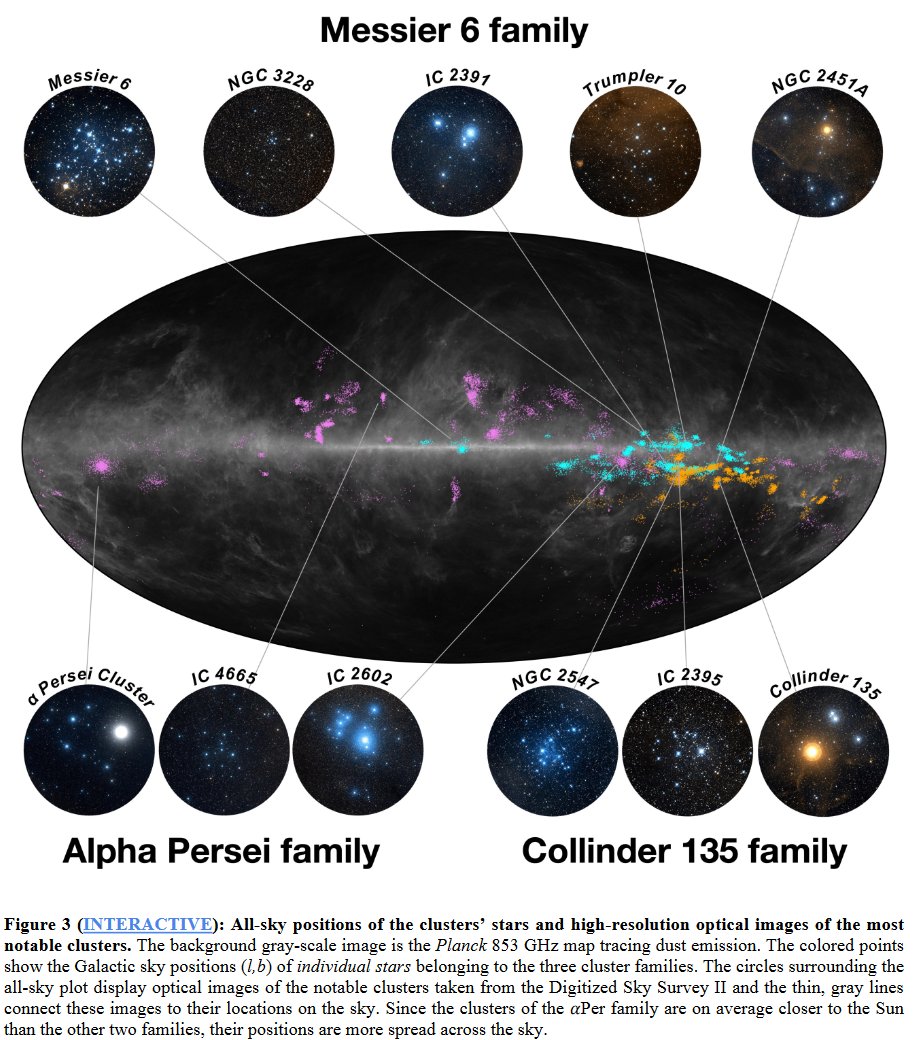
Astronomers have pressed rewind on a cosmic video of the solar neighborhood, tracing the origins of young star clusters within 3,000 light-years of the Sun.
https://t.co/y5PBLvKXR5
Over a hundred young star clusters near to the Sun can be traced back to just *three* distinct star-forming regions. This is a *huge* result for studying our own galaxy!
The work is out today in Nature, led by Cameren Swiggum in Vienna: https://t.co/P7hTOyd3Mg
Die Forschung, unterstützt von der @esa und @NASA, wurde in @Nature veröffentlicht. Mehr über die Sternenfamilien hier: ⤵
https://t.co/vNrkfsFWcp
#Astronomie
Ein internationales Astronom*innenteam, unter Leitung von @mac0598 und @joaoalves der #univie, hat herausgefunden, dass nahegelegene Sternhaufen von nur drei „Familien“ stammen. Supernovae aus diesen Regionen haben vermutlich auch die Gasverteilung in der Milchstraße beeinflusst.
Benachbarte Sternhaufen bewegen sich als Welle! ✨🌊 @joaoalves der #univie und Forscher*innen von @Harvard und @LMU_Muenchen entdeckten, dass die geheimnisvolle "Radcliffe-Welle" nicht nur wie eine Welle aussieht, sondern sich auch so bewegt.
https://t.co/BNOVBlbYjP
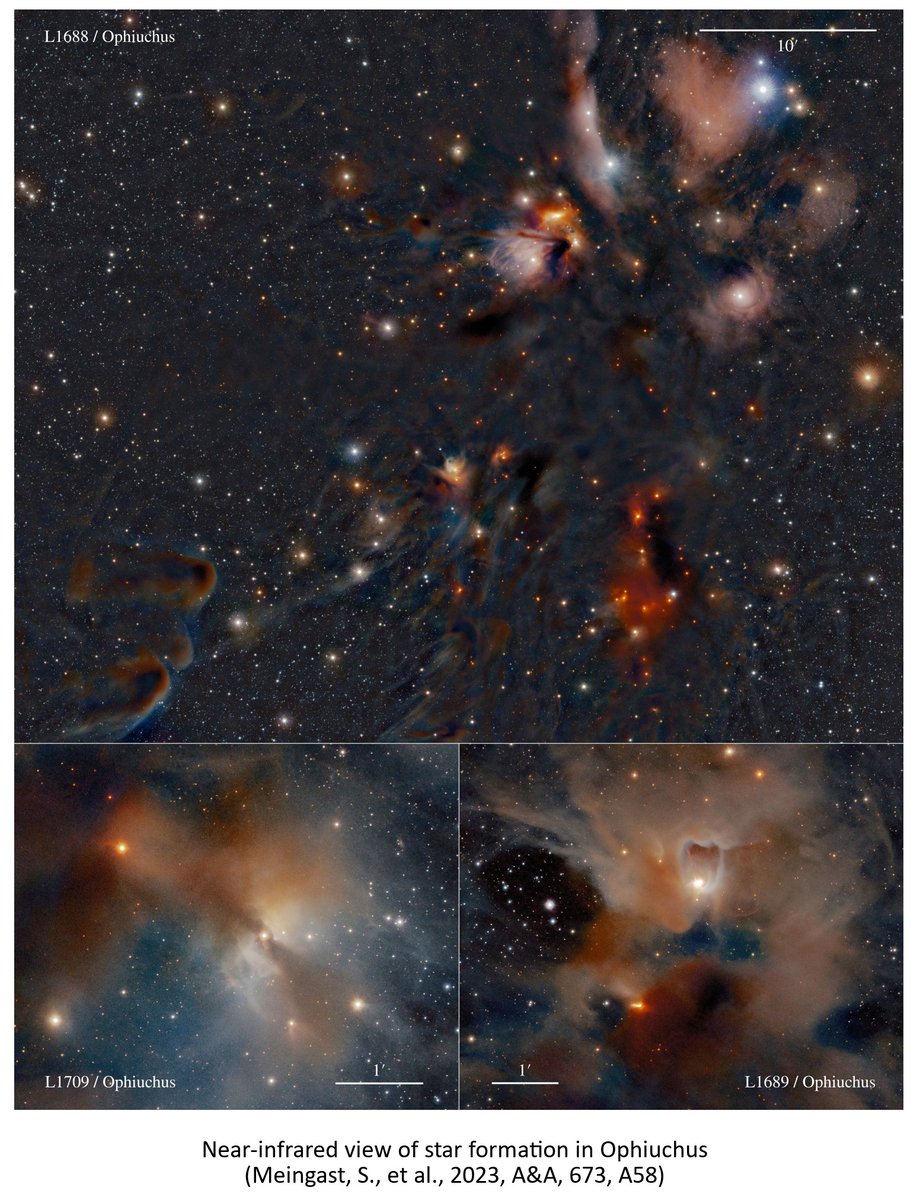
Did you see the new infrared images of star-forming regions we just released? One of them has 520 megapixels! 🤯
Here's a game:
🔍 zoom all the way in with the link below
🖼️ take a screenshot of an interesting area
🗨️ and post it as a reply below
🔗 https://t.co/VHadVOpj7F
From @perryhelion: Dust mapping with Gaia has changed our perspective on the sun's neighborhood, but how do revelations about the nearby structure of dust fit in with our understanding of the Milky Way's large scale skeletal structure? https://t.co/YYQiKwzfdT
Vier @ERC_Research Advanced Grants gehen an Wissenschafter*innen der #univie! 🥳 Wir gratulieren Astrophysiker @joaoalves, Wissenschafts- & Technikforscherin @Ulrike_Felt, Politikwissenschafter Oliver Marchart und Kommunikationswissenschafter Jörg Matthes! https://t.co/VCLtY3pLXX
This picture is reminiscent to the arms of external spiral galaxies, indicating that the Radcliffe Wave and its individual star-forming regions are a great laboratory for studying density-wave theories in the Milky Way.
New student-led paper by @uwastro astronomers, exploring a vertical undulation in Milky Way structure known as the “Radcliffe Wave”. N-body simulations indicate it could arise from impact by a satellite galaxy; DR3/DR4 from @ESAGaia will confirm. https://t.co/6KEHaIJOc8