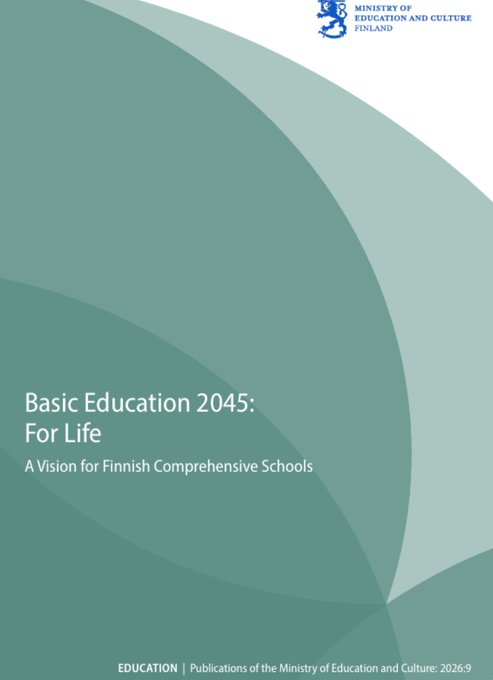
Interesante enfoque del informe de Finlandia sobre IA en educación Considera que es un cambio profundo que obliga a replantear qué aprender, el rol del docente y habilidades humanas clave: empatía, juicio crítico,..📷 https://t.co/ptcPKo7aAQ
¿Qué tanto nos ayudan saber dibujar y el storytelling con datos para afrontar un problema complejo?
¿Y para involucrar al factor X?
Ahí para los expertos @Recuenco, @UbaldoHervas y @TITONET + la comunida’
Teachers and students are already using GenAI around the world.
But is education improving?
The Digital Education Outlook assesses the latest evidence from international data.
What is known about GenAI's impact on learning, creativity and teaching?https://t.co/ttmFRQBlfo
Introducing the new @stitchbygoogle, Google’s vibe design platform that transforms natural language into high-fidelity designs in one seamless flow.
🎨Create with a smarter design agent: Describe a new business concept or app vision and see it take shape on an AI-native canvas.
⚡️ Iterate quickly: Stitch screens together into interactive prototypes and manage your brand with a portable design system.
🎤 Collaborate with voice: Use hands-free voice interactions to update layouts and explore new variations in real-time.
Try it now (Age 18+ only. Currently available in English and in countries where Gemini is supported.) → https://t.co/pmT9iHEpZa
Stanford and Princeton just open-sourced a tool that turns any AI agent into a full Co-Scientist with one command.
It’s called LabClaw, a skill library of 211 production-ready biomedical AI workflows that plugs directly into OpenClaw agents.
→ 66 biology skills: genomics, proteomics, single-cell, systems biology
→ 36 pharma skills: drug docking, target discovery, cheminformatics
→ 20 medical skills: clinical research, oncology, precision medicine
→ 29 literature skills: grants, patents, citations, database search
→ Full wet-lab + dry-lab execution through LabOS
The part that blows my mind: LabOS can literally see what scientists see through smart glasses, understand the experimental context in real time, and assist in physical lab execution.
AI just went from writing about science to doing science.
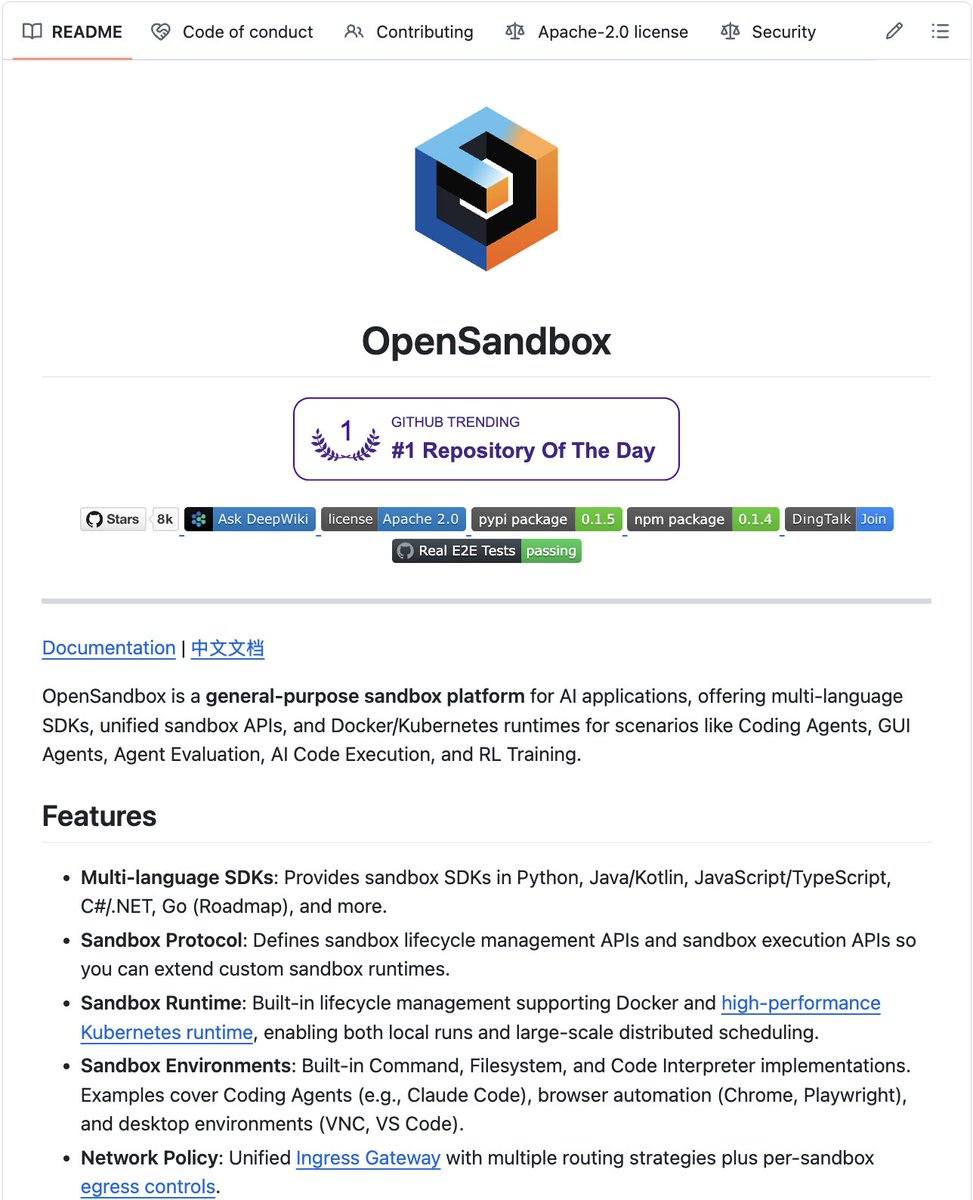
🚨 BREAKING: Alibaba just open sourced the sandbox infrastructure that AI agents actually need to run safely.
OpenSandbox is a general-purpose execution environment built specifically for AI applications:
→ Runs coding agents, GUI agents, and RL training in isolated containers
→ Docker and Kubernetes runtimes so it scales from laptop to production
→ Multi-language SDKs so any stack can plug in
→ Built-in agent evaluation environment included
→ Isolates AI execution from your actual infrastructure
7,400 stars. 2,349 this week alone.
100% free and open source.
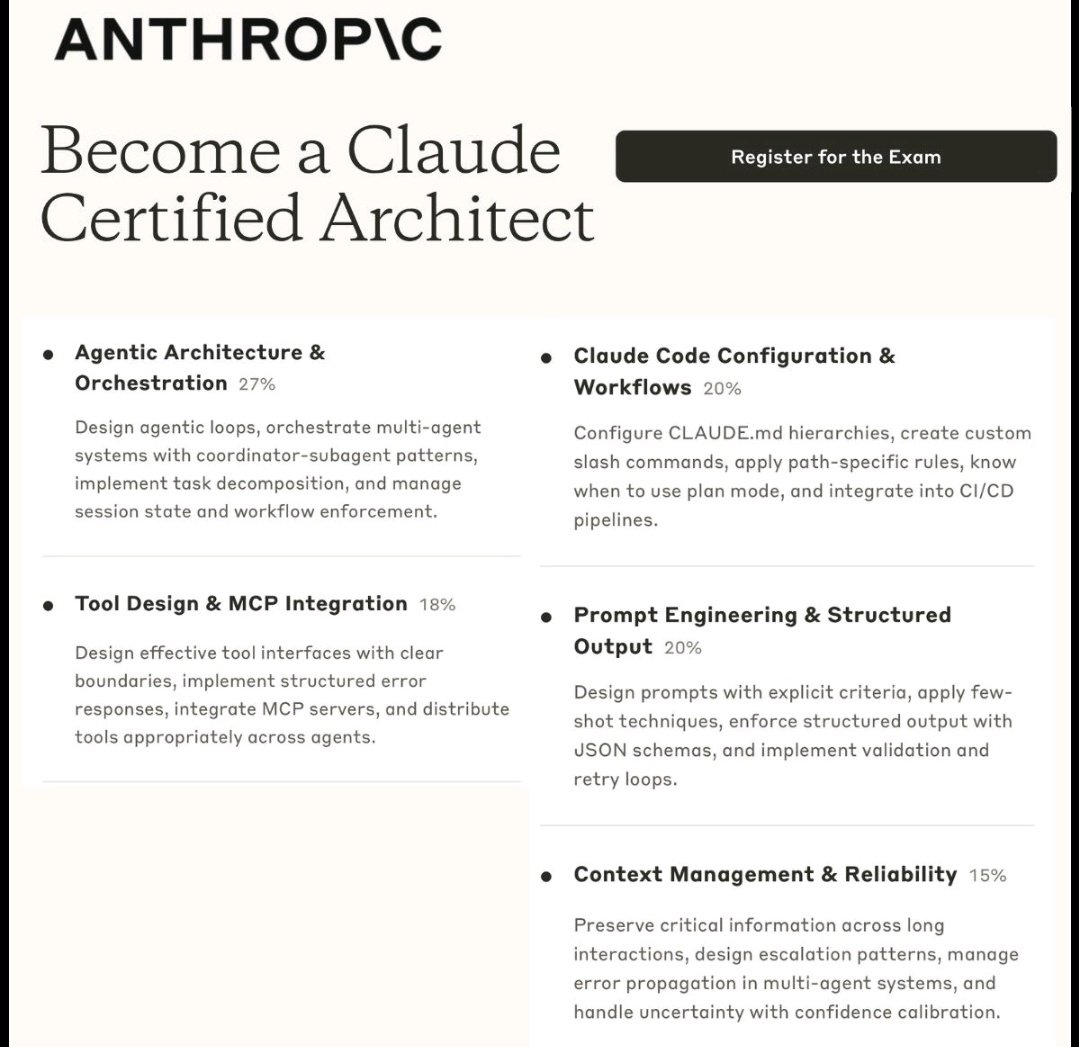
Anthropic just launched its first certification: Claude Certified Architect
A 301-level exam for developers and architects building with the Claude ecosystem
Covers:
• Agentic Architecture & Orchestration
• Claude Code Workflows
• Tool Design & MCP Integration
• Prompt Engineering & Structured Output
• Context Management & Reliability
Free for Anthropic partners...Otherwise, $99
If you're already building with Claude, this is a solid way to validate your expertise
I found a GitHub repo that lets Claude Code run Gemini and Codex at the same time.
It's called Claude Octopus.
Claude Octopus connects Claude, Gemini, and Codex inside Claude Code with intelligent routing and quality gates built in.
→ Claude handles orchestration and final synthesis
→ Codex handles deep implementation and architecture
→ Gemini handles ecosystem research and security review
One command runs all three simultaneously.
The smart router parses intent and picks the right workflow automatically.
100% Opensource. MIT License.
Link in comments.
@karpathy Very nice results and great project!
Sharing some of our experience with similar agentic frameworks at UC Berkeley:
ADRS blog series: https://t.co/zPgAVq8Y8X
GEPA: https://t.co/48xGJPmqnZ
KISS: https://t.co/QwRug6JLz5
Yann LeCun is pumping out papers recently
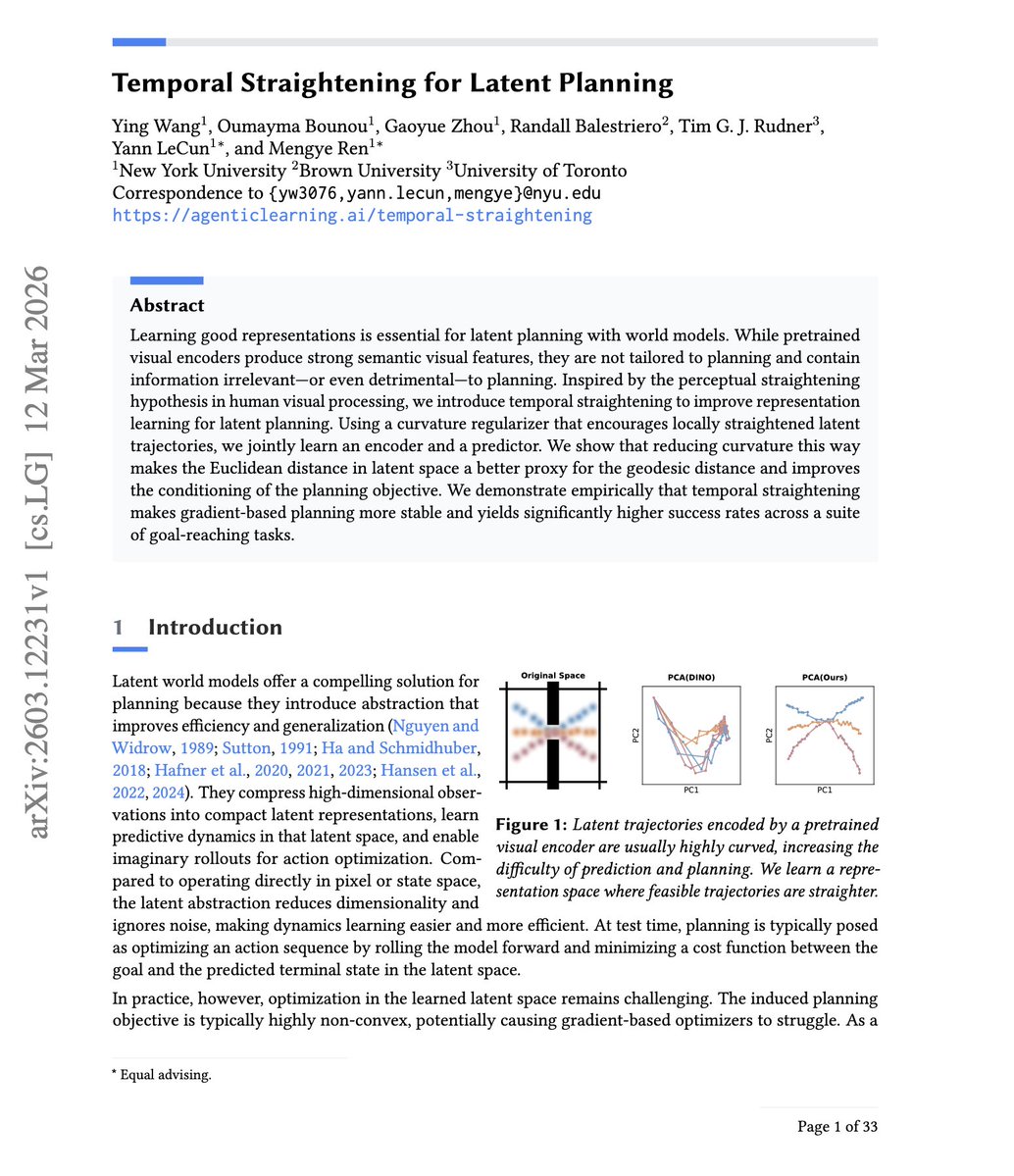
“Temporal Straightening for Latent Planning”
This paper shows that by straightening latent trajectories in a world model, Euclidean distance starts to reflect true reachable progress, so it's closer to geodesic/minimum-step distance.
This makes gradient-based planning far more stable and effective without relying as heavily on expensive search.
THIS is the wildest open-source project I’ve seen this month.
We were all hyped about @karpathy's autoresearch project automating the experiment loop a few weeks ago.
(ICYMI → https://t.co/ieuH8c0Y4x)
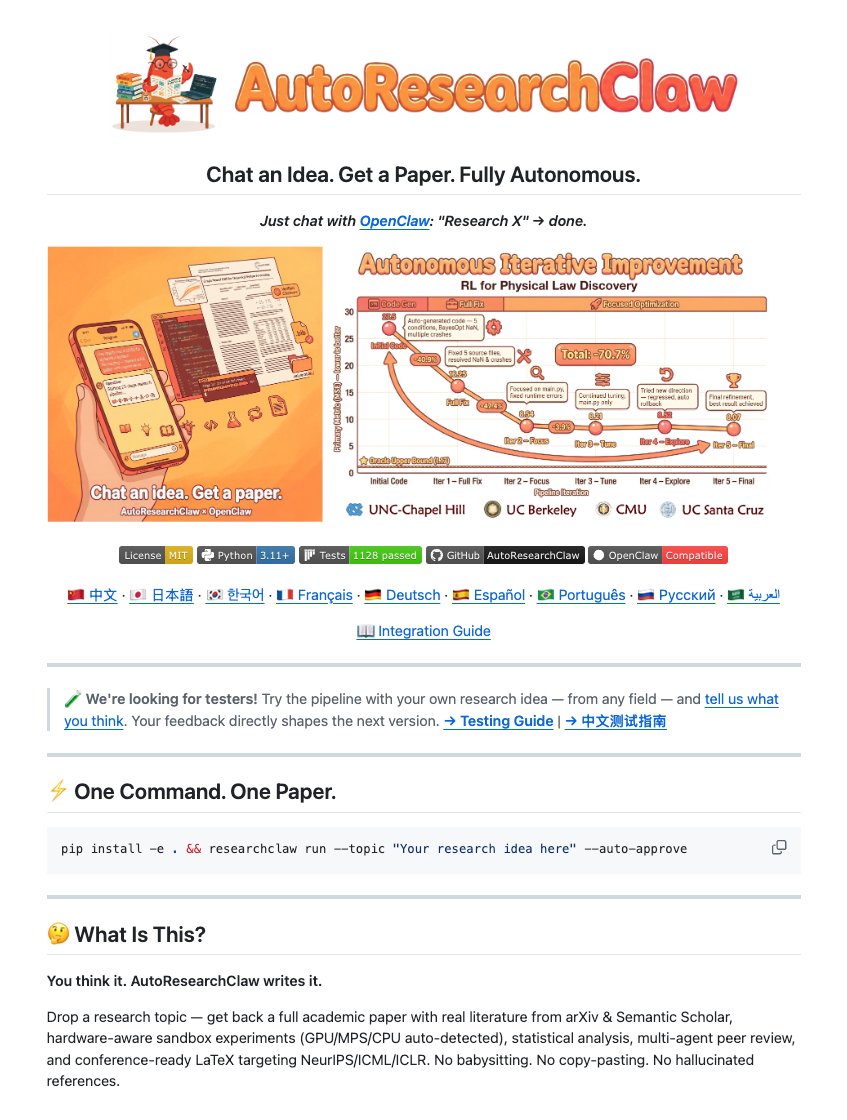
But a bunch of folks just took it ten steps further and automated the entire scientific method end-to-end.
It's called AutoResearchClaw, and it's fully open-source.
You pass it a single CLI command with a raw idea, and it completely takes over 🤯
The 23-stage loop they designed is insane:
✦ First, it handles the literature review.
- It searches arXiv and Semantic Scholar for real papers
- Cross-references them against DataCite and CrossRef.
- No fake papers make it through.
✦ Second, it runs the sandbox.
- It generates the code from scratch.
- If the code breaks, it self-heals.
- You don't have to step in.
✦ Finally, it writes the paper.
- It structures 5,000+ words into Introduction, Related Work, Method, and Experiments.
- Formats the math, generates the comparison charts,
- Then wraps the whole thing in official ICML or ICLR LaTeX templates.
You can set it to pause for human approval, or you can just pass the --auto-approve flag and walk away.
What it spits out at the end:
→ Full academic paper draft
→ Conference-grade .tex files
→ Verified, hallucination-free citations
→ All experiment scripts and sandbox results
This is what autonomous AI agents actually look like in 2026.
Free and open-source. Link to repo in 🧵 ↓
¡Increíble arquitectura multiagente de Tsinghua!
🏗️ 1 alumno + N agentes IA (Profesor, Asistente) con un Manager.
Visiten el repo en GitHub, prueben la demo y apoyen con una estrella.
👉 https://t.co/xoxwvfnWjg
Insane A complete 7-week Agentic RAG bootcamp was just open-sourced.
AI academies charge $10,000 for this curriculum. You can get it for free.
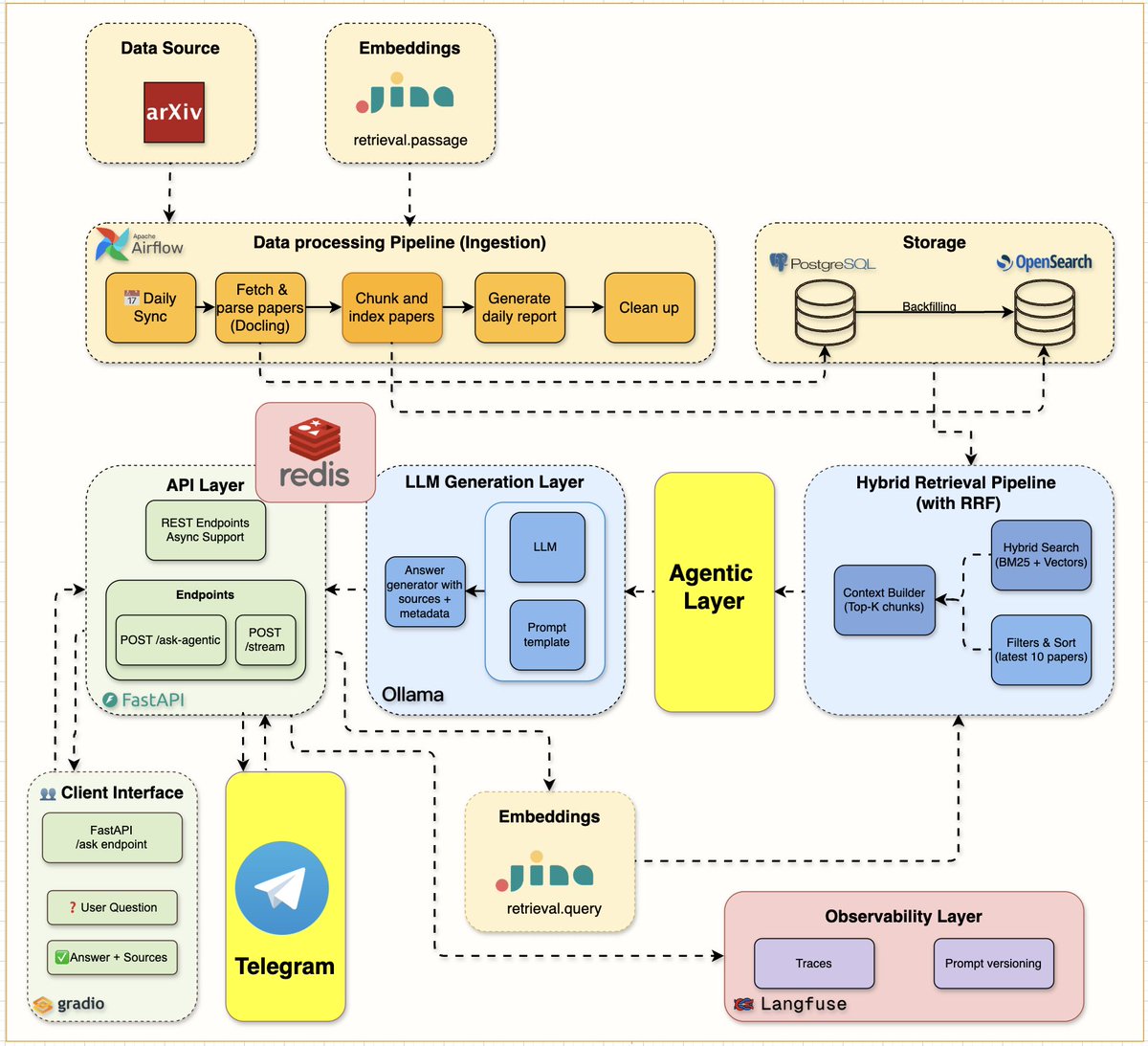
It covers everything from basic keyword search to building production-grade Agentic RAG systems with LangGraph. This is not a toy project tutorial. It is a full production pipeline.
Here is what is inside:
- 7 weeks of building an AI research assistant from scratch
- Complete infrastructure setup with Docker, FastAPI, and PostgreSQL
- Production keyword and hybrid search using OpenSearch
- Local LLM deployment with streaming responses
- Production monitoring with Langfuse tracing and Redis caching
- Agentic workflows using LangGraph and Telegram bots
Here is the core value:
It forces you to build the way successful companies do. You do not just jump to vector search. You build solid search foundations first, then enhance with AI. Theory and practice in one place. Thousands of developers are using this to master production AI.
Summary of the Production Agentic RAG Course:
- It gives you a senior AI engineer curriculum for free
- It bridges the gap between basic RAG and production systems
- It forces you to build an actual end-to-end portfolio project
You still have to write the code. It just removes the guesswork.
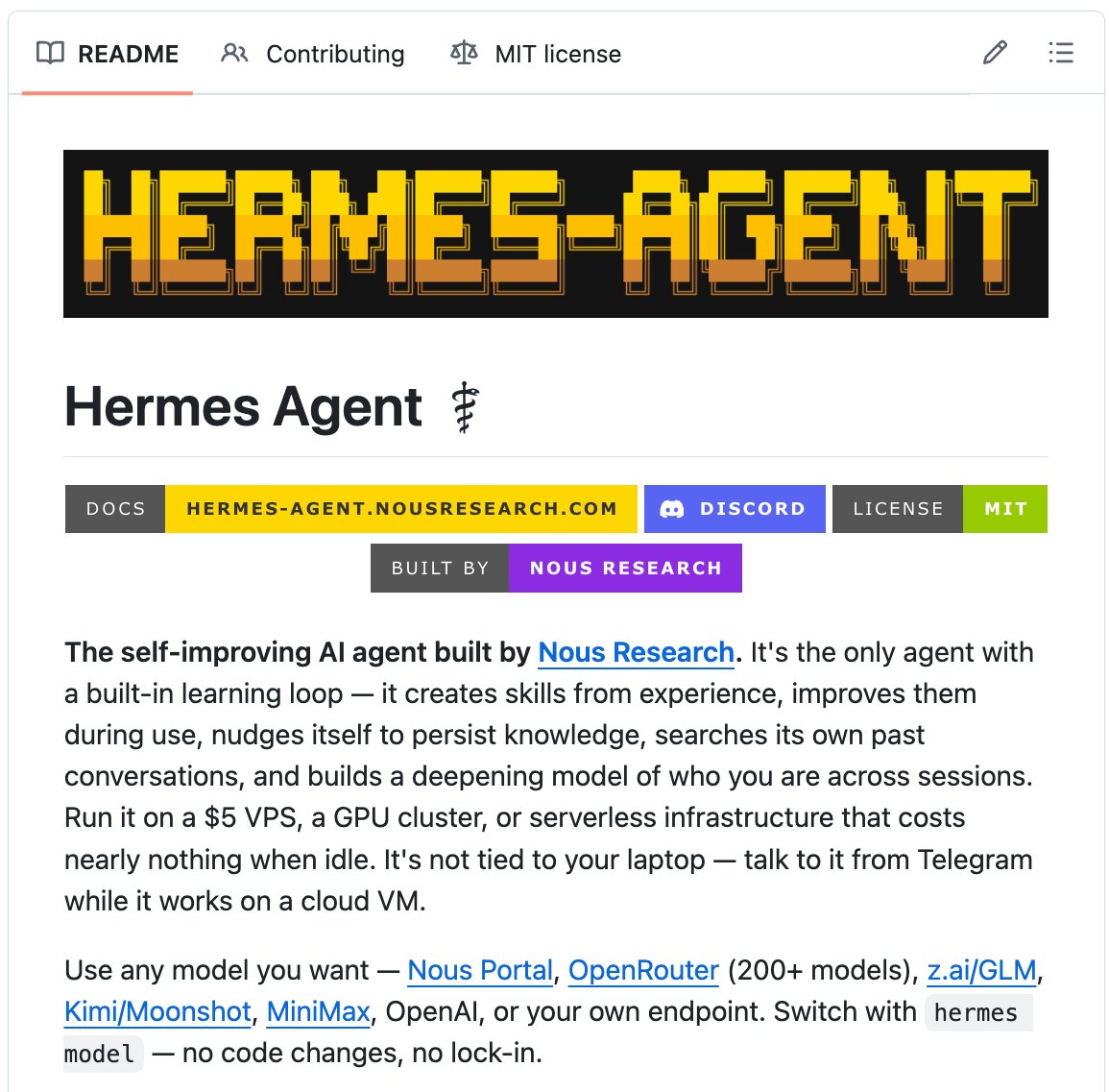
🚨 Nous Research just open sourced an AI agent that lives on your computer and gets smarter every day.
It's called Hermes Agent. You install it once. It remembers everything. It learns new skills on its own. And it never forgets.
Not a chatbot. A permanent AI companion that runs on your server 24/7.
Here's what makes it different:
→ It remembers you across every conversation
→ When it solves a hard problem, it saves the steps as a skill
→ Next time a similar problem comes up, it already knows how
→ Skills stack over time. Day 1 it's basic. Day 30 it's a machine.
Here's where it lives:
→ Telegram
→ Discord
→ Slack
→ WhatsApp
→ Your terminal
Send it a voice memo from your phone. Get a full answer with sources. Start a chat on Telegram, pick it up on Discord. It follows you everywhere.
It can even run tasks on a schedule. Morning news briefings. Nightly server checks. Weekly reports. All in plain English. All hands-free.
100% Open Source. MIT License.
Recent neuromorphic computer breakthroughs mean we can now simulate complex physics on brain-inspired chips using 1,000x less energy than supercomputers. We're literally making silicon think like neurons to solve equations that used to require entire data centers. The Cambrian explosion of AI wasn't the finish line—it was the starting gun.
Jay Alammar is the best teacher in AI. Period.
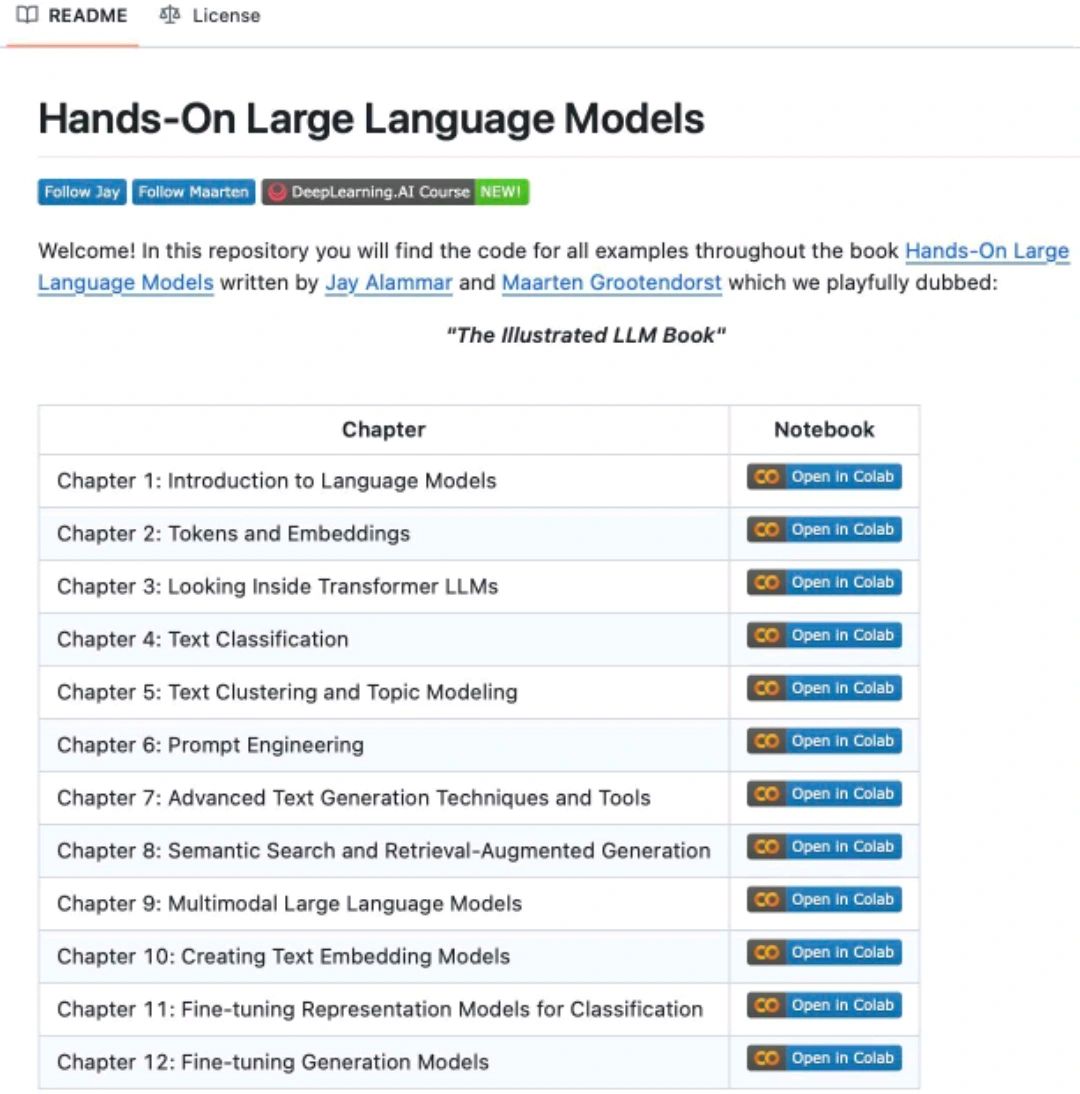
If you have ever seen "The Illustrated Transformer," you know his diagrams are legendary. He also open-sourced the entire codebase for his O'Reilly book: Hands-On Large Language Models.
It’s effectively a visual masterclass in LLMs for free.
Chapter 1: Introduction to Language Models
Chapter 2: Tokens and Embeddings
Chapter 3: Looking Inside Transformer LLMs
Chapter 4: Text Classification
Chapter 5: Text Clustering and Topic Modeling
Chapter 6: Prompt Engineering
Chapter 7: Advanced Text Generation Techniques and Tools
Chapter 8: Semantic Search and Retrieval-Augmented Generation
Chapter 9: Multimodal Large Language Models
Chapter 10: Creating Text Embedding Models
Chapter 11: Fine-tuning Representation Models for Classification
Chapter 12: Fine-tuning Generation Models
I will put the repo link in the comments.
Anthropic just launched Anthropic Academy
Totally free — 13+ official courses, complete with certificates, and zero subscription required.
Some highlights:
→ Claude 101 (perfect starting point)
→ Claude Code in Action
→ Building with the Claude API (seriously in-depth, 8+ hours of content)
→ Intro to MCP + Advanced MCP
→ Agent Skills
→ Claude on AWS Bedrock & Google Vertex AI
https://t.co/f2ImVQI1F6