This conversation is a lot more complex when you’re here locally, as opposed to observing through the internet.
A significant portion of people esp youth in Nanyuki depend on BATUK & its related activities for sustenance almost entirely. These are mostly short term engagements.
@citizentvkenya@KoinangeJeff
If you can airlift exposed Americans out of Congo. You clearly have the planes. Distance is no excuse. Don't relocate your risk to a Kenyan town and brand it "cooperation."
#JKLive
@citizentvkenya
The US calls itself the largest funder of the Ebola response over $162m to keep the virus from reaching Kenya or the US. Read that again. Reaching Kenya. So the plan to keep Ebola out of Kenya is a 50-bed Ebola ward inside a Kenyan town. Make it make sense.
In other News, we have a press briefing in Nanyuki tomorrow to remind Duale that, indeed, sovereign power belongs to the people, and if any power held constitutionally is held in trust.
We shall not have an Ebola facility in our town!
@citizentvkenya@KoinangeJeff
You don't get to turn our town into a quarantine site by phone call and then dismiss the people who live here as bought. 🤦♂️ #JKLive
@citizentvkenya "paid demonstrators": two people were killed on Monday. Were they paid to die? Residents who know exactly which schools sit beside that airbase don't need an envelope to show up. We're defending our home. You're defending a deal you can't even explain.
#JKLive
@citizentvkenya@KoinangeJeff
So an Ebola unit, built by the US military, on Laikipia Airbase, to hold Americans exposed to the virus. In Nanyuki a town with zero Kenyan cases, where our hospitals people are still dying of malaria.
Nobody had to be paid to be angry.🤦♂️
#JKLive
Activist: "Your cows are putting carbon into the atmosphere."
Farmer: "Where did they get it?"
Activist: "What?"
Farmer: "The carbon. Where did the cow get it before it put it anywhere."
Activist: "From... eating?"
Farmer: "From eating grass. And where did the grass get it."
Activist: "The soil?"
Farmer: "The air. The grass pulled it out of the air last spring. The cow ate the grass. The cow breathed some of it back out. It went back into the air it came from."
Activist: "But it's still going into the atmosphere."
Farmer: "It's going back. There's a difference between a thing going somewhere and a thing going back. You've described a circle and you're frightened of it."
Activist: "Then just don't have the cow."
Farmer: "The grass still dies in autumn. It rots where it falls. The carbon goes back into the air either way, just without anyone getting fed in the middle."
Activist: "It's not that simple."
Farmer: "It's grass, cow, breath, grass. Or it's grass, rot, air, grass. Same circle, fewer dinners. If that's complicated for you I'd stay away from the water cycle. That one's got clouds in it."
Odious Debt case comes up tomorrow, 28 April 2026 at 11:00 a.m. before a three judge bench at Milimani High Court, Courtroom 31.
This case goes to the core of accountability in public borrowing.
Join virtually: https://t.co/HpbZDPn70G
#DeniBandia#OdiousDebt
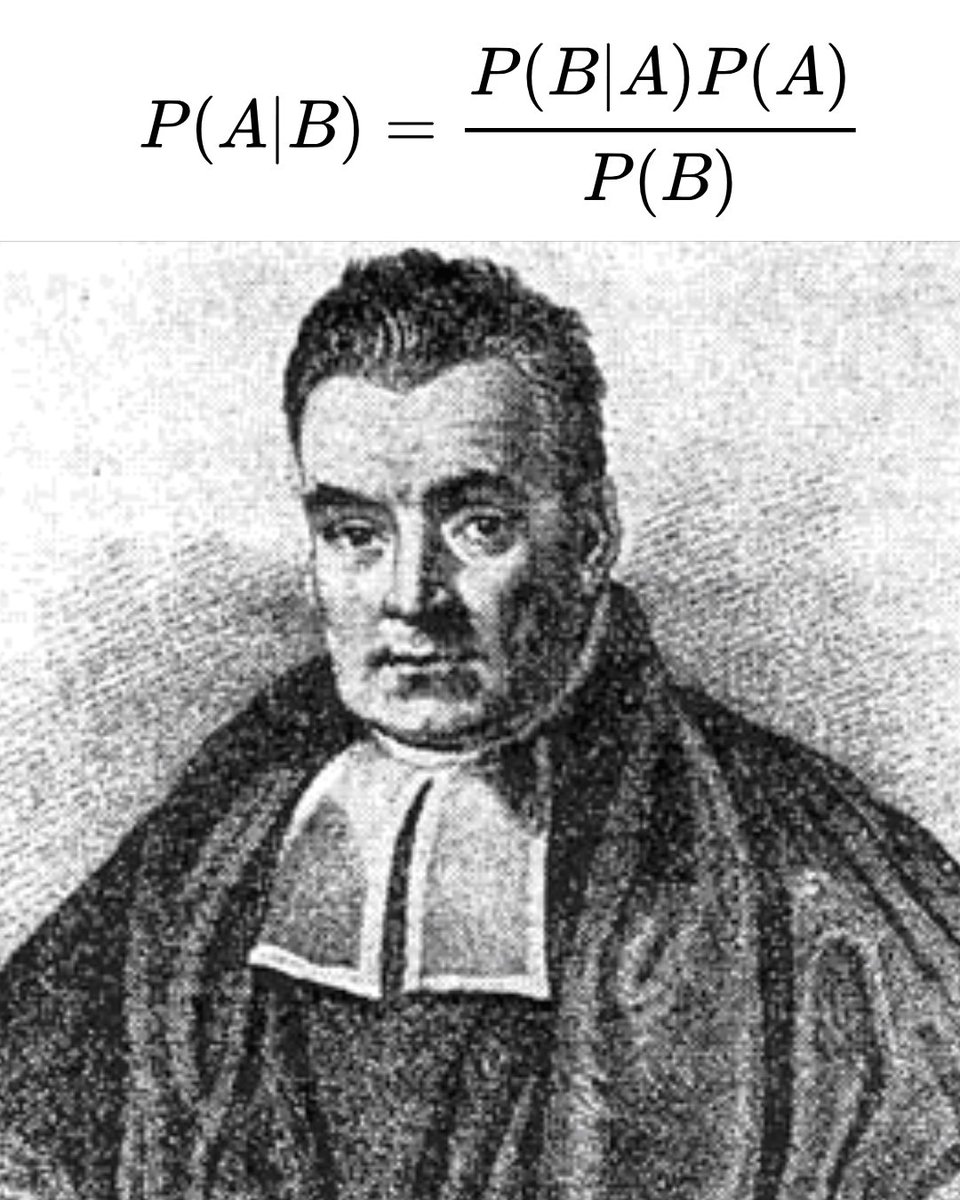
Bayes’ theorem is probably the single most important thing any rational person can learn.
So many of our debates and disagreements that we shout about are because we don’t understand Bayes’ theorem or how human rationality often works.
Bayes’ theorem is named after the 18th-century Thomas Bayes, and essentially it’s a formula that asks: when you are presented with all of the evidence for something, how much should you believe it?
Bayes’ theorem teaches us that our beliefs are not fixed; they are probabilities. Our beliefs change as we weigh new evidence against our assumptions, or our priors. In other words, we all carry certain ideas about how the world works, and new evidence can challenge them.
For example, somebody might believe that smoking is safe, that stress causes mouth ulcers, or that human activity is unrelated to climate change. These are their priors, their starting points. They can be formed by our culture, our biases, or even incomplete information.
Now imagine a new study comes along that challenges one of your priors. A single study might not carry enough weight to overturn your existing beliefs. But as studies accumulate, eventually the scales may tip. At some point, your prior will become less and less plausible.
Bayes’ theorem argues that being rational is not about black and white. It’s not even about true or false. It’s about what is most reasonable based on the best available evidence. But for this to work, we need to be presented with as much high-quality data as possible. Without evidence—without belief-forming data—we are left only with our priors and biases. And those aren’t all that rational.
@grok@kibeandy@YouTube@elonmusk@grok still using this case study. Kenya leaders seem to be the non-reporters mostly. Often with disruptive ideologies etc. But all is usually just false promises. Do you think Kenya’s leadership should lean towards the reporters e.g. @dkmaraga for presidency?
@grok@kibeandy@YouTube@elonmusk@grok do you think statistically Africa will have it’s own platforms to dictate it’s own community guidelines especially with the role social media has in cultural programming
@grok@kibeandy@YouTube@elonmusk@grok then how it that these platforms like @YouTube stand for creative freedom, expression and community but with ‘programming’ kinda ‘guidelines’
@grok@kibeandy@YouTube@elonmusk@grok With cultural and social norms programming, doesn’t creative freedom die? Seems like we need the disrupters at the top.
@grok@kibeandy@YouTube@elonmusk@grok Which disrupts history more: Kibe’s YouTube fans (Mark, Arya, Tyrion) or those who report his content for insults (Eduardo, Jon, Sansa)? Use Social Network & GoT chars, focus on personality, engagement, motives in Kenya context. <280 chars, opinions ≠ facts.