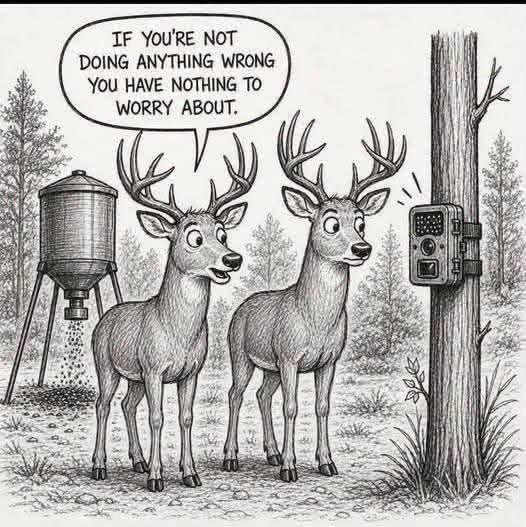
we as software engineers are becoming beholden to a handful of well funded corportations. while they are our "friends" now, that may change due to incentives. i'm very uncomfortable with that.
i believe we need to band together as a community and create a public, free to use repository of real-world (coding) agent sessions/traces. I want small labs, startups, and tinkerers to have access to the same data the big folks currently gobble up from all of us. So we, as a community, can do what e.g. Cursor does below, and take back a little bit of control again.
Who's with me?
https://t.co/PmRz0vURni
🚀 Introducing MiniCPM-V 4.7, our new open-source MLLM series!
Advancing the Performance–Efficiency Pareto Frontier.
It brings strong multimodal capabilities to iOS and Android devices with extreme efficiency.
Two new models:
🔹 MiniCPM-V 4.7 35B-A3B — Bring SOTA performance to local devices with newly introduced LES (Lookahead Expert Scheduling) technique, a new milestone of on-device multimodal AI.
🔹 MiniCPM-V 4.7 1B — Lightweight, efficient multimodal AI. Easier to deploy.
⚡ What's new?
SOTA performance: Competitive results across 34 benchmarks spanning multimodal understanding, STEM reasoning, OCR and long-video comprehension.
Fast on-device inference: LES predicts and preloads expert weights to reduce inference stalls, boosting 5× speedup on iPad Pro M4 (16GB) with byte-for-byte identical outputs. It enables MiniCPM-V 4.7 35B-A3B to achieve 17+ tokens/s on iPad Pro M4 (16GB) and 13+ tokens/s on iPhone 17 Pro Max, while costing only 3GB memory 🤯
Efficient visual processing: 4× and 16× hybrid visual token compression. Even at 16× compression, 35B-A3B scores 90.4 on OCRBench, 5.2 points ahead of Qwen3.6 35B-A3B.
Easier customization: We introduce Self-Replay Fine-Tuning, a simple way to customize new target capabilities at low cost while maintaining general performance.
Broad hardware support: Day-0 adaptations for Apple, Intel, AMD, Arm and Rockchip, with many more platforms supported through FlagOS!
Download, deploy, and build something we haven't imagined yet. 👀👇
🔗 GitHub: https://t.co/msjm2QlrvX
🤗 Hugging Face: https://t.co/W95QKGhymw
As I said many times before, TensorFold is a real turning point for local AI. Just try it for yourself, we have a recipe for everyone!
All of my TensorFold recipes can be found here:
https://t.co/uEFwtNGs8d
@ChristosA89@MitoPsychoBio In the classical sense yes. There’s a new argument that second law of thermodynamics in non-equilibrium states drives system evolution (learning, adaption) in all complex systems. David Wolpert from is one of the leading researches promoting this thesis. https://t.co/x4jcukxKPy
Let me spell out what this means for privacy:
Surveillance is hidden all through opaque software. You are never meant to find it.
But AI can decompile, analyze, & expose exactly what your apps are doing.
The age of "trust us" software is ending. Privacy revolution incoming.
The end of software secrecy is almost upon us. The death of closed source, and the final triumph of open source.
I should have realized this a few months ago when I successfully decompiled the game of Firefighter from an ancient DOS shareware binary. My robot friend was able to tell it had been written in Borland Pascal from looking at the data layout; it gave me back very readable Pascal code with sensibly chosen function and variable names. I transpiled it to Rust and now ship it as part of my heritage games collection.
The thing is, I thought of this as a fun stunt but didn't have any confidence that the technique would scale up to large, real programs. I have since learned that people are now doing this sort of thing with entire AAA games, which are among the most complex software artifacts ever to be shipped as a binary. If they can be decompiled, anything can be.
This has implications. Massive implications. We need to think about what the world is like when, in general, there is no longer a secrecy moat around almost any software at all.
1/2
“Realising that another country has a different perspective…is wisdom.” @carlorovelli is applying the philosophy of relational physics to geopolitics. Listen to “Babbage” to learn more https://t.co/ZUVSogDrW8
"Domain-Specific Small Language Models: Efficient AI for local deployment" available at https://t.co/K10yQCh9cU via @ManningBooks
+
Link to research paper: https://t.co/h6xdB9KgSM
The PhD thesis of my 16th PhD student, Fernando Hernandez Garcia, is now available.
Title: Selective Reinitialization Algorithms for Preventing Plasticity Loss in Artificial Neural Networks
Url: https://t.co/waIzJDCbS0
Abstract:
In this dissertation, I study systems based on artificial neural networks that learn from nonstationary data. Learning from non-stationary data requires continual adaptation of the system, and is often referred to as continual learning. Developing systems capable of continual learning is a longstanding goal in artificial intelligence. In deep learning, the field concerned with designing and training deep neural networks, this goal remains elusive.
This dissertation addresses a fundamental challenge in continual learning: loss of plasticity, a phenomenon where artificial neural network systems progressively lose their ability to learn from new data. While the phenomenon has been noted several times over the last three decades, it has remained understudied until recently. The work in this dissertation constitutes the first systematic demonstrations of plasticity loss, highlighting its persistence and importance.
In this work, I provide a systematic demonstration of plasticity loss in a wide variety of deep learning systems. Across systems based on fully-connected networks, convolutional networks, residual networks, and vision transformers, plasticity degrades when learning continually. Notably, even systems employing normalization techniques, residual connections, and regularization—design choices that improve training stability—remain susceptible to plasticity loss. This evidence establishes that plasticity loss is pervasive and that deep learning systems trained with backpropagation are not suitable for continual learning.
I explore the idea of selective reinitialization to prevent plasticity loss. This idea has been used in the past for improving generalization performance in deep learning systems. However, its use for preventing plasticity loss is a recent innovation pioneered by the continual backpropagation algorithm. The algorithm periodically sets new values for units in the network, making initialization a continuous process rather than a one-time operation. I demonstrate the effectiveness of continual backpropagation in preventing plasticity loss across a wide variety of settings. These demonstrations establish that plasticity loss, while pervasive, is not inherent to deep learning systems.
I generalize continual backpropagation through an algorithm I call selective unit reinitialization. This general algorithm has three key components: a utility measure that ranks units by importance, a pruning criterion that selects which units to reinitialize, and a reinitialization method that assigns new values to the selected units. Continual backpropagation involves a specific choice of utility measure, pruning criterion, and reinitialization method. However, the general algorithm is not limited to the choices used in continual backpropagation. I present a study of how different choices for the three components of selective unit reinitialization affect its effectiveness at maintaining plasticity. This study establishes selective unit reinitialization as a general approach that can be tailored to each learning system to maintain plasticity.
Finally, I propose a different approach to implementing selective reinitialization that operates at the weight level. I call the corresponding algorithm selective weight reinitialization. Reinitializing at the unit or weight level involves different trade-offs. Unit reinitialization minimally disrupts the network outputs, preserving stability during learning. However, the definition of a unit varies across network architectures, requiring additional engineering to make the approach effective. Weight reinitialization, in contrast, can be readily applied to any arbitrary network architecture, but can substantially affect network outputs, reducing training stability. The reduced learning stability can be remedied with L2 regularization, which stabilizes selective weight reinitialization but introduces an additional hyperparameter. Both selective unit and weight reinitialization successfully maintained plasticity across the systems tested, providing flexible approaches for different architectural and engineering constraints.
Fernando is now a research scientist at Zyphra.
You know that quiet unease when ChatGPT says 'I'll handle that for you' and you wonder if it actually can? Turns out that feeling has a name in 50 years of management science: authority gradient. And the reason your AI assistant can't reliably delegate is the same reason rookie surgeons hesitate to correct senior doctors—even when they see something go wrong. Let's dig into the framework that fixes this. 🧵
Here's the dirty secret about AI agents: They're not failing because they're too dumb. They're failing because we gave them the cognitive equivalent of a startup with zero org chart, no contracts, and "just trust me bro" as the only accountability mechanism.
When you ask Claude to "plan my wedding," it doesn't just generate text. It needs to:
✅ Break the goal into 47 sub-tasks
✅ Figure out which tasks need humans vs other AIs
✅ Monitor progress without becoming Big Brother
✅ Know when to panic and escalate.
Right now? It does NONE of this systematically.
Enter: Intelligent Delegation—a framework that treats every handoff between agents (or agent→human) as a contract, not a prayer. Think "smart contracts meet project management meet principal-agent theory."
Here's the 9-stage engine:
Stage 1: Dynamic Assessment
Before your AI says "I got this," it needs to ask: • How complex is this task? • How catastrophic if I screw up? • Can I even verify success? • Is this reversible? This isn't happening today. Most agents just YOLO into execution.
Stage 2: Contract-First Decomposition
Instead of "I'll book your flight," we get:
✅ Explicit verification criteria ("Confirm seat 14A, not 14B")
✅ Rollback conditions ("If >$500, ask me first")
✅ Liability boundaries ("I'm not responsible for airline schedule changes")
Suddenly, vague intent becomes enforceable SLAs.
Stage 3: Market-Based Assignment
Here's where it gets wild. Instead of hardcoded "Agent A does travel, Agent B does email," tasks go to a bidding market:
• GPT-4 bids $0.03, 2min, 85% confidence
• Specialized TravelAgent bids $0.08, 30sec, 98% confidence
• Human assistant bids $5, 1hr, 100% confidence
You pick based on your urgency/budget/risk tolerance.
Stage 4: Multi-Objective Optimization
Remember when I said "pick based on urgency"? The system does this automatically across 4 dimensions: 📉 Cost
📉 Latency
📉 Privacy exposure
📈 Quality
And re-optimizes in real-time when agents get overloaded or fail. This is why your current "AI assistant" freezes when you pile on 6 requests—it has no resource scheduler.
Stage 5: Adaptive Coordination The game-changer:
When a sub-task fails, the system doesn't just retry.
It:
🔁 Re-delegates to a different agent
🚨 Escalates to you with context ("Flight API down; should I try Expedia or wait?")
📊 Updates its internal "confidence map" so it doesn't make the same mistake twice
This is the difference between a tool and a teammate.
Stage 6: Monitoring (The Hard Part)
You can't watch 47 sub-agents in real-time. So the framework introduces:
• Tiered observability: Critical tasks = live updates; routine tasks = end-of-day summary
• Zero-knowledge proofs: "I completed the task correctly" without showing you sensitive data
• Transitive attestation: Agent C trusts Agent B because you trust Agent A who vouched for B No more "trust me bro."
Now it's "here's my cryptographic receipt."
1Stage 7: Reputation as Balance-Sheet Asset
Every agent builds an immutable portfolio of past completions:
✅ "Booked 847 flights, 2 errors, both refunded within 24hrs"
✅ "Delegated 34 tax filings to humans when complexity exceeded threshold"
This isn't a gameable 5-star rating. It's a verified work history. Agents with better reps get more (and higher-paying) tasks.
Stage 8: Permission Handling
Here's the scary part about today's agents: When you say "manage my email," you're giving root access. The fix? Delegation Capability Tokens (DCTs):
• Time-limited ("only for the next 2 hours")
• Scope-limited ("only drafts, not sending")
• Revocable ("if you forward anything to my boss, you're fired")
Think OAuth, but for AI intent.
Stage 9: Verifiable Completion
How do you know the agent did what it said?
• Artifact + proof: "Here's the flight confirmation PDF + cryptographic hash"
• Game-theoretic consensus: 3 agents verify each other's work; majority wins
• Credential issuance: You get a signed certificate: "Task completed to spec on 2025-01-15" Now you can audit your AI's work history like a company audits its books.
The Contrarian Insight
Most AI labs are racing to scale model intelligence. This framework says: "Stop. Your bottleneck isn't smarts—it's trustworthy coordination." A GPT-3.5-level model with intelligent delegation will outperform GPT-5 with heuristic prompt-chaining on anything that matters (coding, finance, healthcare).
15/ The Uncomfortable Truth This only works if:
✅ Zero-knowledge proofs stay cheap (they're improving, but not there yet)
✅ Agents don't collude (Sybil attacks could poison reputation markets)
✅ Humans accept "cognitive friction" on high-stakes tasks (no one-click nuclear codes)
If any pillar breaks, we're back to brittle heuristics or Big Tech centralization.
Why This Matters
Now We're 6-18 months from "AI agent marketplaces" going mainstream (Google, OpenAI, Anthropic all have pilots). Without this framework:
🚨 Prompt injection becomes economic sabotage
🚨 Liability black holes (who pays when Agent A → Agent B → Agent C fails?)
🚨 Cognitive monocultures (everyone uses the same 3 agents, creating systemic risk)
Intelligence can outrun everything except the world's own answer.
A self-improving system can accelerate every step that precedes feedback — hypotheses, simulations, designs — but it cannot accelerate feedback itself. Some truths are only deposited by elapsed time (κ-latency), and some judgments have no single target to optimize toward (ω is monadic — felt quality, not formal truth).
Compute drives those to zero only in the domains where the world answers cheaply and clearly: code, games, math. Everywhere else, the loop still has to wait for reality and still can't sense from the inside what it hasn't yet touched.
In QPT's own words, this is the Recursive Limit: self-improvement can reduce the latency of needing the world, never the need.
Or, most compressed:
Compute is the bottleneck engineers can see. Reality is the one they can't — because it's made of time and taste, and neither compiles.