No tire shops on the moon.
These tires, built with strategic partner @Venturi Space, have been tested on 11 platforms, from NASA's Glenn Research Center to Switzerland. They go on FLIP, CLV-1, and every FLEX rover we build.
The Moon doesn’t forgive untested assumptions. We test here so it works there.
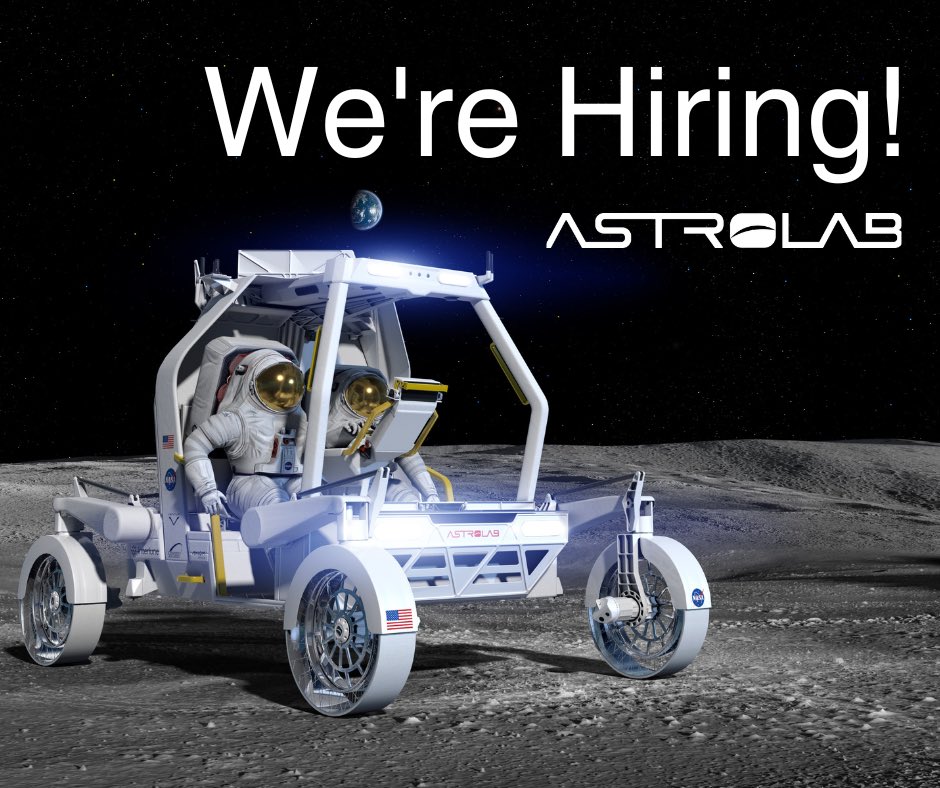
We're hiring Avionics, Software, and Vehicle Engineers at Astrolab!
If you're interested in working on cutting-edge lunar mobility systems, we have openings across rover navigation, FPGA, perception, power systems engineering, and more.
Explore all positions here:
https://t.co/n16b9iJKyV
Some LC-36 updates. Now that we’ve had access to the pad and integration facility we can share a bit of good news. The propellant farm, oxygen, liquid hydrogen and LNG tanks are all in good shape. This is good luck because these are very long lead items. The water tower is also good. The big support tower is damaged, but it can be repaired in place rather than torn down and replaced. The booster “Never Tell Me The Odds” and the three GS-2s that were onsite in the integration facility also look good.
I’ve seen some speculation that we might move directly to the 9x4 configuration, but we won’t do that. Rate manufacturing of 7x2 is going well, and we’re going to continue that at pace as planned and store the stages for use. In addition, we had already been working for some time on eliminating our transporter-erector in favor of an alternative vertical conop, and we’ll now go directly to that; so we don’t need a new transporter-erector.
We will fly again before the end of this year. Gradatim Ferociter.
Our FLIP rover is now attached to @astrobotic hardware! FLIP was recently stacked and integrated onto the cone and ramps of the Astrobotic Griffin lander, the rover’s ride to the Moon.
Yesterday we introduced CLV-1 (Crewed Lunar Vehicle). Let's explore the use-cases it was designed for and engineered to accomplish:
-Consistent with NASA’s requirements, CLV-1 is designed primarily to transport astronauts and their supplies.
-Conduct surface operations remotely.
-CLV-1 shares hardware with our FLEX rover, using the same tires, batteries and wheel actuators developed by our strategic partner, Venturi Space.
-When stowed on a Commercial Lunar Payload Services lander for delivery to the Moon, CLV-1 measures approximately 2 meters by 2.3 meters by 2.2 meters.
-Once deployed, CLV-1 will measure approximately 4 meters long by 2.3 meters wide by 2.6 meters high to the top of its antenna.
-CLV-1 has a maximum mass of 950 kilograms and can reach speeds of 10 kilometers per hour on level ground.
-CLV-1 is the first in Astrolab’s planned CLV line, with future vehicles expected to be designated CLV-2, CLV-3 and so on.
NASA has selected Astrolab as one of two providers of a crewed lunar rover for the Artemis program, advancing the agency’s plans to establish sustained surface mobility at the lunar south pole.
Read the full announcement: https://t.co/OQ9RKbZqyz
We have awarded @AstroLab_Space with a lunar terrain vehicle award. Their Crewed Lunar Vehicle is a rover designed to transport astronauts and supplies across the lunar surface.
This vehicle will be deployed to the Moon by 2028 through our commercial lunar payload services initiative.
Introducing Astrolab’s Crewed Lunar Vehicle (CLV-1), chosen by @NASA to transport crew across the lunar surface and support the construction of a permanent lunar base.
Adapted from our FLEX rover architecture reflecting NASA’s revised approach to lunar surface mobility, CLV-1 is designed to support astronaut operations, science activities, and cargo logistics on the Moon.
As our FLIP rover prepares for the final stages of pre-flight testing, we’re seeing our animations turn into space-ready hardware. Next step, doing it all on the Moon.
One of our FLIP rover’s payloads connects all the way back to Apollo 11!
One of four @NASA payloads on board FLIP, @NASAGoddard's Laser Retroreflector Array (LRA) serves as a marker that works with orbiting satellites to establish a navigation aid for lunar exploration. This builds on the legacy of the larger Laser Ranging Retroreflectors (LRRR) of the Apollo era.
By shining a laser beam from one spacecraft toward FLIP’s LRA, the spacecraft can measure how long it takes for the light to reflect back, allowing scientists to determine the distance between it and FLIP.
FLIP’s LRA is the first ever mounted on a lunar rover to reflect laser beams. Made of eight quartz corner-cube prisms set into a dome-shaped aluminum frame, FLIP’s array requires no power or maintenance.
After the rover completes its mission, the LRA will remain a permanent location marker on the Moon. It will be used for future exploration and lunar research, just as Apollo-era lunar retroreflectors are still used to this day.
The images show the LRA currently on FLIP and the Apollo 11 Laser Ranging Retroreflector experiment on the Moon, (Credit: NASA)
Hey that looks familiar...
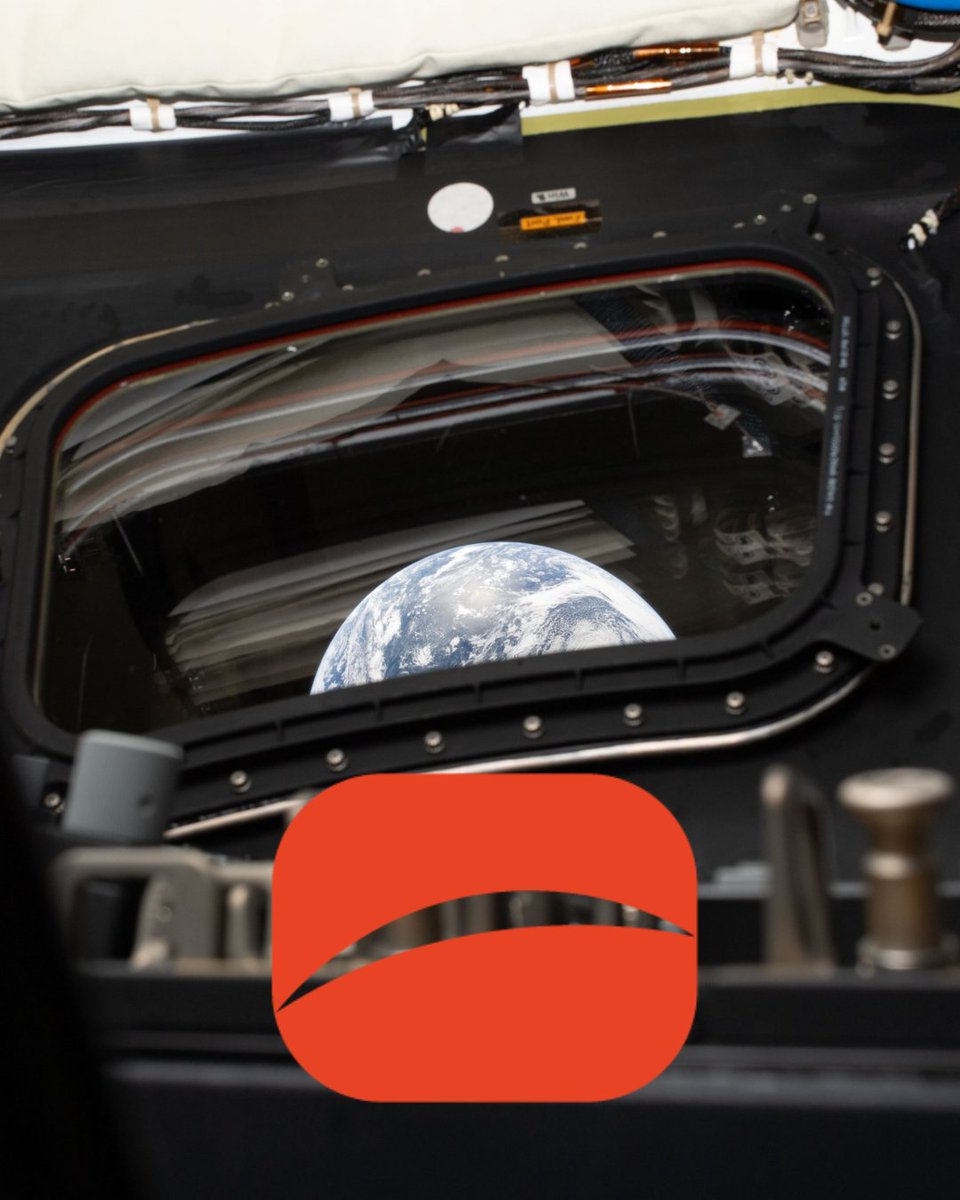
The Artemis II crew made our logo! If you’ve ever wondered what the "O" in the Astrolab logo was meant to symbolize, these pictures taken by the Artemis II crew might give you a hint.
Image credits: NASA
April 27 was a big day in the Astrolab clean room as our FLIP rover took its first drive 18 months after conception. FLIP heads to the lunar south pole in the second half of this year (2026) to test technologies crucial to our future rover designs.
SpaceX has officially filed a new trademark application for the wordmark "SpaceXAI"
The description says: "Providing satellite-based data center services and orbital computing infrastructure; cloud computing and software as a service (SaaS) featuring AI for data processing, storage, analysis, model training, inference, and AI workload management on satellite constellations and space-based platforms; providing software featuring AI for deploying, scaling, and managing satellite-based data centers and edge computing systems in space; Platform as a service (PAAS) featuring computer software platforms for artificial intelligence, machine learning, and data center operations delivered via satellite networks.."
xAI is being dissolved as a separate company, so it'll just be SpaceXAI, the AI products from SpaceX. SpaceXAI will have a logo.
October 2024: FLIP rover announced to the world
June 2025: Earth-based pathfinder complete
April 2026: FLIP flight vehicle fully integrated and first drive complete
In 18 months, we brought FLIP from idea to drivable space-ready hardware. Now let's bring it to the Moon.
Launching aboard our FLIP rover, @InterluneSpace's multispectral camera will estimate helium-3 quantities and concentrations in lunar regolith. Developed in partnership with NASA, the camera produces images that can predict helium-3 quantities without bringing it back to Earth.