Larry is as pro gun as they come, but the quote he's quoting deserves a real response:
No, I don't want multiple idiots with no situational awareness carrying loaded guns around me or my family.
The thing is, I don't get a say.
They have a right to do so. That's how rights work.
You dont have to convince me that you're smart, competent, or responsible before you're allowed to exercise a right. You have to actually do something wrong before we hold you accountable.
That’s how a free society works.
I dont get a say, even if my argument for why you shouldn't do it is a really good one.
And neither do you.
A government should be structured so that no single elected official holds enough power to dramatically change the course of our lives. The presidency should be limited enough that it doesn't matter who's sitting in the Oval Office.
Freedom is strongest when power is decentralized, government is restrained, and individual liberty doesn't depend on the outcome of one election.
Rules Committee advanced HR139 Sunshine Protection Act (permanent Daylight Saving Time mandate and repeal of exemption). Tell your reps to oppose and sponsor HR9638 Sunshine for Our Kids Act (permanent Standard Time restoration with expansion of exemption)! https://t.co/zpWXnpyJff
This is a popular joke in IT -- but it's also seriously true.
In the original "Jurassic Park" movie, Hammond brags about "sparing no expense" in all the features of the park, but then underpays/understaffs the IT department.
This is then the cause of the downfall of the park.
Such is also true of ransomware. Companies cheap out on IT security: underpaid, understaff, and mostly, undervalued, nobody listens to them. As a result, they get ransomware which sometimes bankrupts the company.
Jurassic Park is a cautionary tale of how not to treat IT.
Spirit Airlines died tonight at the hands of the socialist crusader, Elizabeth Warren
She must be so proud to add another casket to her achievements.
Tonight at 3am, Spirit turns off the lights. 14,000 jobs gone. 30+ smaller airports lose service.
JetBlue offered $3.8 BILLION in cash to buy Spirit in 2022. Shareholders, flight attendants union, literally everyone voted yes.
The combined company would have held 9% of the US market against a Big 4 that already owned 80%.
For anyone who understands numbers: 9% isn’t a monopoly against 80%.
Warren said no.
She wrote letters. She pressured Buttigieg. Biden’s DOJ sued. A federal judge killed the deal in January 2024.
Her argument: the merger would cost consumers $1 billion a year.
Now look at her collateral damage she dusts under the rug.
510 pilots gone in the months after. 1,800 flight attendants furloughed in December.
14,000 jobs in 2023. 7,500 last week. Zero tonight.
And that’s just the people in Spirit uniforms.
Catering goes. Fuel guys go. Baggage crews, gate agents, airport coffee shops, hotels and rental cars in 70 cities Spirit flew to. Every airline job carries 3 more on its back.
40,000 people out of work because of one woman’s moronic crusade against the market.
And the math ain’t mathing.
Spirit abandoned 90 routes during the death spiral. Fares on those routes are up 14% on average. Oakland to Newark: $135 to $288. Fort Myers to San Juan: $92 to $219. Kansas City to Newark up 66%.
That’s reality. Not some BS number from a “study.”
So @SenWarren tell me how this saves the consumer money?
Cheap carriers in a market drop fares 21% across the board. Southwest did this in the 90s and saved Americans $68 BILLION over 20 years.
Warren killed it. That’s what moronic politicians led by socialism do.
Then with her own blind arrogance, she tweeted Spirit’s collapse is “a Biden win for flyers.”
A win.
14,000 people are reading termination letters tonight.
And she’s taking credit.
This is socialism in 2026.
A senator who’s never made payroll thinks she knows how to run a market better than the people who own and work in the company.
She saved you a billion on imaginary paper.
She cost you ten times that in real life.
She didn’t protect consumers from anything.
14,000+ will go from working to welfare.
She will make sure to blame billionaires, hardworking tax payers, AI, capitalism and whatever monster they will make up tomorrow hiding under your bed.
Higher taxes. Fewer jobs. More expensive everything.
She called it a win. I hope you enjoy winning.
Only one chance in this lifetime…
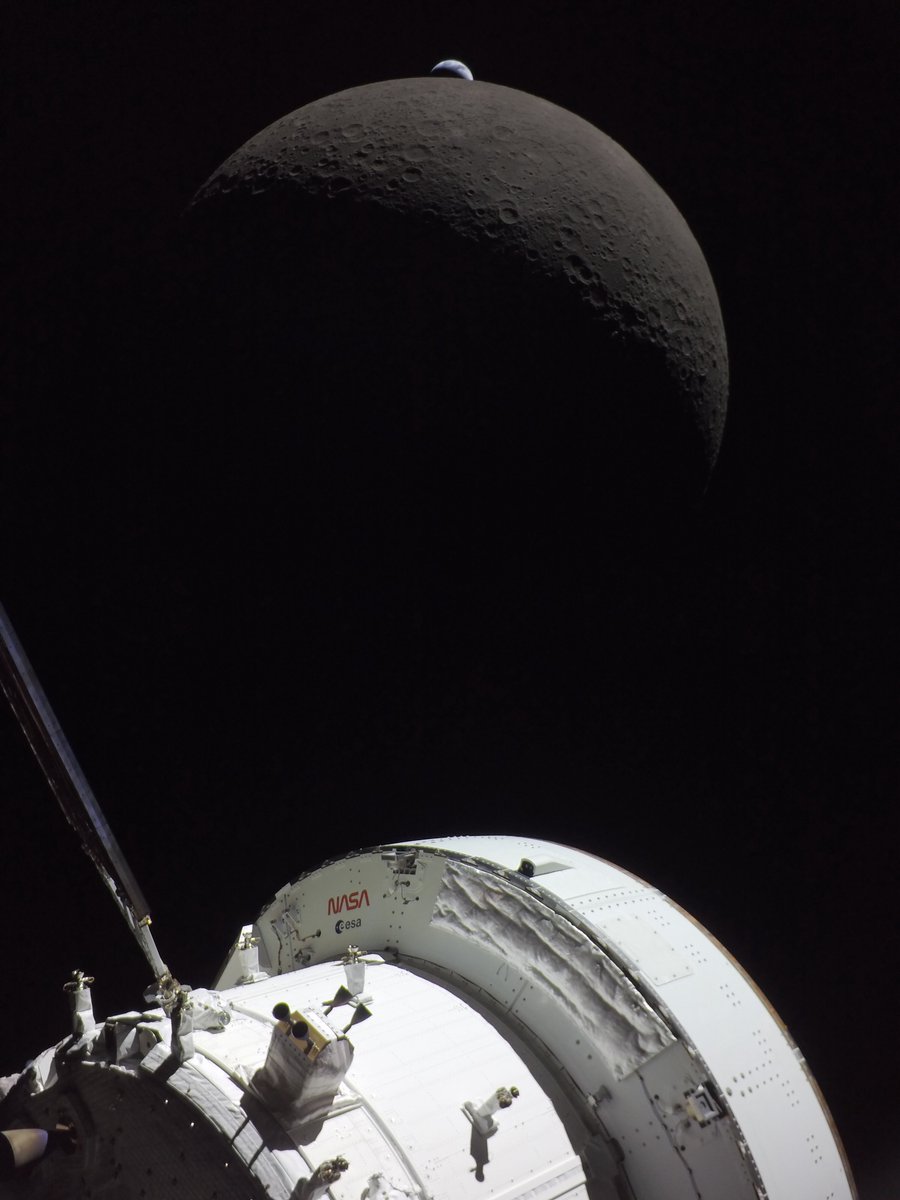
Like watching sunset at the beach from the most foreign seat in the cosmos, I couldn’t resist a cell phone video of Earthset. You can hear the shutter on the Nikon as @Astro_Christina is hammering away on 3-shot brackets and capturing those exceptional Earthset photos through the 400mm lens. @AstroVicGlover was in window 3 watching with @Astro_Jeremy next to him.
I could barely see the Moon through the docking hatch window but the iPhone was the perfect size to catch the view…this is uncropped, uncut with 8x zoom which is quite comparable to the view of the human eye. Enjoy.
These photos are a good reminder that Photographers argue about gear way more than history does.
Some people will cheer because they were shot on Nikon. Some will say they would’ve looked better on Sony. Some will say the astronauts should’ve taken a Hasselblad and it would have been perfect.
But that misses the point completely.
These images, Earth, the Moon, Earth setting behind the lunar horizon, a close-up of a crater, were made on a journey around the Moon with 10-year-old Nikon DSLRs.
And they’re stunning. And would have been stunning with a Lecia too, or a Canon, with similar focal lengths and sensor.
Because great photographs are rarely about having the newest camera. They’re about having the right tool, knowing how to use it, and being ready when the moment happens.
The brand didn’t make these images.
The age of the camera didn’t make these images.
The astronauts did.
Their eye, their preparation, their connection to what they were seeing, and their ability to use the gear they had in one of the most extraordinary places humans have ever gone.
Shoot, just hearing that they had proper shrouds over the windows and dimmed the lighting in the cabin to cut reflections, my photographer soul rejoiced! They thought through how to best capture the moments!
Yes, being in the right place at the right time matters. In a moment like this, it may matter more than anything.
But when that moment comes, what matters next is knowing your gear well enough to make the picture and being setup with the right gear to make it happen.
Not chasing the newest model.
Not arguing over logos.
Not pretending the camera is the artist.
Vision matters. Passion matters. Timing matters.
But when that moment comes, what matters next is knowing your gear well enough to make the picture and being set up with the right gear to make it happen. moment happens. (now let the silly camera model debates start...)
Photo Credit: NASA
Pleased to share my favorite high-resolution capture of the Artemis II launch- the moment the SLS is clearing the tower, captured by a sound-triggered camera placed near the pad.
I'll have prints linked in my bio for this one, and here's a short thread about how it was captured
If you use a personal phone/laptop for your work, pay very close attention to this little detail.
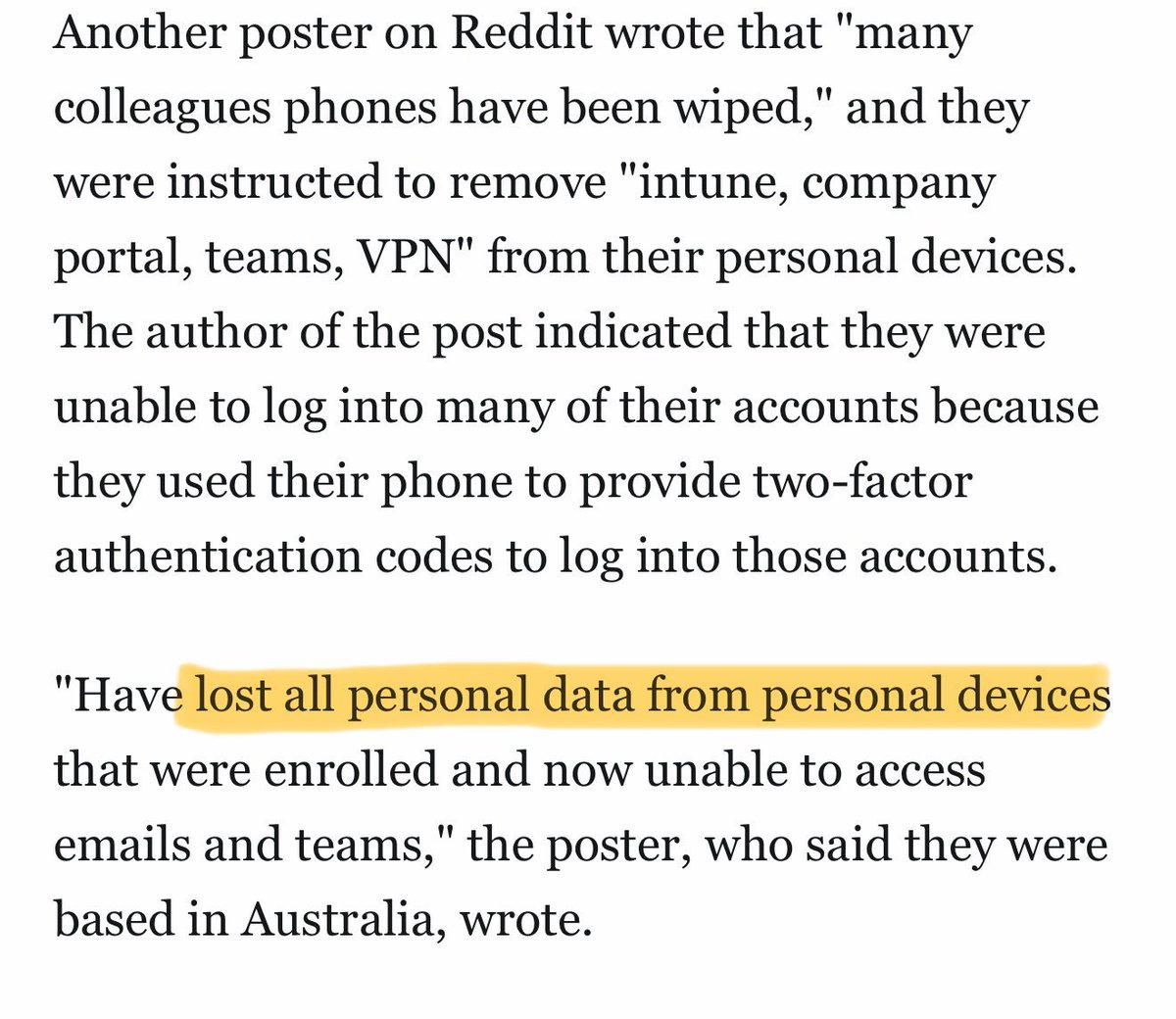
Iran attackers wipe 200k devices at a company called Stryker. Within those devices appears to be employees PERSONAL devices.
The attackers used the company’s MDM software, which is basically IT management software running on everything. It’s an incredibly attractive backdoor to an attacker. I successfully targeted MDM software for several Red Team engagements. It’s… lots of fun :)
Anyway, a lot of companies require you to install their MDM software on your personal devices before you can access resources like Corp email. It’s used to keep devices updated, lock things down if they get stolen, etc. The company often promises that they won’t access personal data, erase any personal data, etc. But this is often ONLY POLICY. If a bad actor gains access to the MDM tool, as was the case here, then anything can happen.
People should be aware of these risks. I refused to run MDM software on any of my personal devices. The company needs to provide me with hardware if they want that. I personally isolate all corp devices to their own network too. If an adversary can get into the corp laptop, then can then get inside my network… there have been cases of it happening in the past.
I don’t have hearing loss. I have high ping.
Me: "What?"
Friend: "I said –"
Me: "–Yeah, pizza sounds great."
My ears captured the audio instantly, but my brain needed 3-5 business seconds to unzip the file.
Please hold. Your conversation is loading.
Just encountered one of the most convincing Google account takeover scams I’ve seen.
Perfect American accent. Calm. Professional.
They start the call by saying someone tried to hack your Google account using a fake death certificate, then ask if you recognize a recovery email or phone number.
They ask if you’ve received any recent Google emails about an account you don’t recognize trying to recover access.
And sure enough, there’s a legit Google security email.
Here’s the trick.
The attacker isn’t trying to hack your account.
They create a throwaway Google account, set your email as the recovery email, then try to recover that account. Google sends you a real security email.
The scammer calls you live, references the email, and even tells you to verify the headers since it comes directly from Google.
The headers are real. That’s the point.
Then they tell you they’re locking down your account and that you’ll get a recovery prompt on your phone. You just need to approve it to stay safe.
The giveaway was the device and location in the prompt didn’t match me. When I pushed back, they claimed it was from their servers, which obviously makes no sense.
At that point I hung up. I have a personal rule to never approve anything I didn’t initiate, especially while on the phone.
Extremely well executed social engineering. I’m sure this works on a lot of people.
And if someone calls you about account security, assume it’s a scam
If politicians were serious about helping people, they wouldn’t be whining that citizens “aren’t paying enough.” They’d be explaining why the money already taken made things worse.
We were told higher taxes would fix healthcare. Costs exploded.
We were told more spending would reduce poverty. Dependency grew.
We were told bigger government would stabilize the economy. Crises multiplied.
At some point the pattern stops being coincidence. To the extent politicians take more, the exact problems they promise to solve intensify. That’s not failure. That’s predictable consequence.
So the complaint shouldn’t be “we need more revenue.” It should be “why does every dollar you seize buy less progress, less accountability, and more power for you?”
When a doctor’s treatment makes the patient sicker, you don’t demand a higher dosage. You stop trusting the doctor. Politicians demanding more taxes after decades of worsening outcomes aren’t offering solutions. They’re asking for a larger cut of the damage.
The problem isn’t that citizens won’t give enough. It’s that politicians have proven they can’t be trusted with what they already stole.
If size alone created permanent barriers, capitalism would freeze into old monopolies. It doesn’t. The opposite keeps happening.
Examples where “untouchable” giants were beaten by newer firms:
IBM → Microsoft → Google/Amazon IBM once dominated computing. Microsoft displaced it. Google and Amazon later undercut Microsoft’s dominance in search, cloud, and infrastructure.
AT&T (Bell System) The most literal monopoly imaginable collapsed. Long-distance carriers, mobile providers, and internet telephony shattered it. Not by being bigger, but by being better and cheaper.
MySpace → Facebook → TikTok Network effects didn’t save MySpace. Facebook killed it. TikTok is now eating Facebook’s lunch. Entry costs were tiny compared to the incumbents.
Blockbuster → Netflix Blockbuster had capital, stores, brand power, and political influence. Netflix entered with fewer resources and destroyed it by changing the model.
Yahoo → Google Yahoo had scale, users, money, and first-mover advantage. Google won with a superior product.
Sears → Amazon Sears had logistics, real estate, suppliers, and brand loyalty. Amazon entered later and replaced it entirely.
What critics call “barriers to entry” are usually costs of inefficiency. Large firms get large because they deliver value. When they stop, they become vulnerable.
The real barriers that protect incumbents are not size or capital. They are government protections: licensing, regulation, zoning, compliance costs, and political favoritism.
That’s why actual permanent monopolies are almost always:
-state utilities
-regulated cartels
-government-protected incumbents
Capitalism doesn’t kill competition. It kills complacency.
I really want you guys to think about this, please:
If Congress truly had the power to prohibit anything under the Commerce Clause, the federal government would not have needed the 18th constitutional amendment in 1919 to ban alcohol.
That amendment happened because Congress did not possess a national police power. And when the 21st Amendment repealed Prohibition in 1933, the prohibition authority disappeared with it.
It did not migrate to drugs. It did not migrate to farmers. It did not silently attach itself to plants, livestock, or private property. The same federal government that now raids farms, seizes animals, criminalizes plants, and claims sweeping authority over private land already confessed — through the amendment process — that it never had that power in the first place.
The contradiction is the problem: Congress needed an amendment to prohibit alcohol, yet today it prohibits far more without one. Once you see that inconsistency, the entire legal foundation of the War on Drugs and the federal war on farmers starts to look exactly like what it is: an expansion of power the Constitution never granted, built on the hope that the public would forget what those two amendments actually revealed.
Just about EVERY complaint people have about the American healthcare system, whether it's affordability, access, quality, etc can be chalked up to a previous government intervention.
The government has made the system worse, then offers itself as the solution and people buy it.
Imagine we mandated everyone have car insurance that covers new tires, oil changes, and wiper fluid.
People would use more of those services. Sure, some people driving on dangerously bald tires would finally get new ones. You might even prevent the occasional crash. But you’d also get people wanting brand-new, top-of-the-line tires every few months. Why not? It’s free.
So you’d need to create a bureaucracy to determine when people were allowed to get new tires and what kind they could have. Auto shops would have to expand the amount of documentation required to justify new tires for their customers.
Because more people are getting tires than need them, and because you’ve added layers of bureaucracy, the cost of new tires goes up. Which means the cost of insurance to pay for those new tires also goes up. Consumers wouldn’t see that cost increase when they get the tires, but they would when they pay their premiums.
So they demand subsidies. Car insurance is just too expensive for the average family. The subsidies blunt the cost of premiums for families but do nothing to control the actual cost of new tires. In fact, they inflate it further.
Car insurance companies respond by creating more rules limiting how often people can get tires. Auto shops hire more people to navigate those rules. Wait times for tires increase. So now tires cost more in both time and money. People who truly need tires have to wait in line with people who just want new ones because they qualify. The auto shops that thrive are the ones best at navigating regulations, not the ones that provide the best tires at the best price. More resources are misallocated. Insurance costs climb further. More people demand subsidies.
Soon people scoff at the idea of paying cash for tires. How could the average American afford that? We don’t even know the cash price. Some auto shops quote $200,000 for a set of tires, but most won’t even post their prices anymore. Why would they? They have multiple contracts with insurance companies and don’t even sell directly to consumers anymore. Prices continue to rise because nobody actually sees them. More subsidies are demanded.
Prices keep climbing. But people don’t actually have access to tires.
What they do have is access to a very expensive car insurance product that covers tires.
So, do you see why subsidizing health insurance doesn’t actually increase access to healthcare?