@Alan_Couzens The real solution is building a fitness base that allows you to easily burn 600+ kcal/hour in Zone 1. We need to build bigger engines, not just restrict the fuel.
This isn't about aesthetic preference; it's about health.
@Alan_Couzens Spot on. In a sedentary world with low VO2 max, continuous caloric restriction is a losing battle that leaves people dependent on GLP-1 drugs.
@Alan_Couzens I agree! I’ve been checking my HRV every morning for years. If it’s good, I will do my goal session; otherwise it will be rest/short Z1 session. I only push when my body shows me it's ready to handle it. I always weigh whether alcohol is worth the stress... and at 48 it rarely is
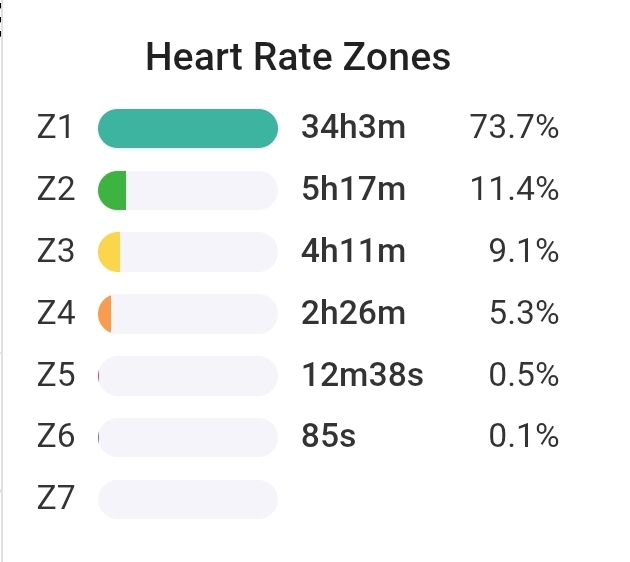
@Alan_Couzens Completed 8 weeks of training since Feb. Garmin VO2max est. went from ~56 to ~64. HR intensity distribution from the same period. Just an estimate, but confirms your point.
@DanielBerglind It's hard to evaluate anything properly... by the time a study is published, we are already 2 models ahead of the one used in the research.
@inaki_delaparra@Garmin They offered a security deposit option: they sent the new watch, I returned the old one after, and got my deposit back days after they received it.
@inaki_delaparra@Garmin Initially, they asked me to send the old one first, but I explained I used it daily and was training for a race & couldn't be without it.
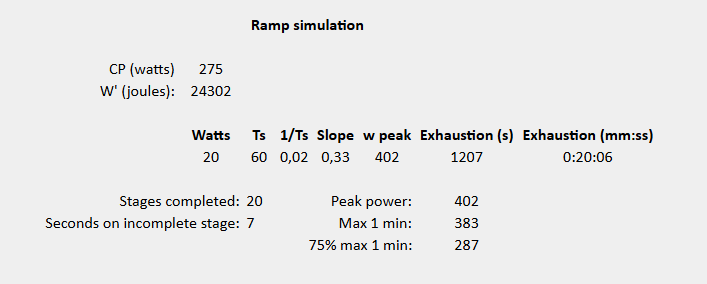
Expected peak power: 402 watts
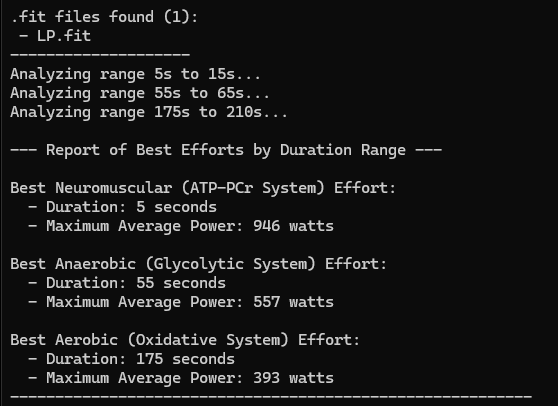
Expected best 1-minute power: 393 watts
The power achieved in the last stage aligned very closely with the power predicted for this ramp protocol, given the athlete's CP and W'.
(The platform uses 75% of best 1 min power as FTP)
If you calculate when an athlete with a CP of 275 watts and W' of 24302 joules should fail when performing a 20 w/1 min ramp test, we find that failure should occur 7 seconds into the 400w stage.
https://t.co/LJYJvssDSy
Hey everyone who loves to tinker with physiological models! I've built a personal project to estimate CP & W' from intervals under 3 minutes. (1st webapp - excuse any beginner's quirks!)
Check it out: https://t.co/CVPG2jxXrY
@SeanSeale@jem_arnold@MedBonnevie@StephenSeiler
The tool has already helped me come up with ideas about the impact of various changes, such as athlete position, fatigue, and nutrition, on my power curve.
Regardless, feel free to play around with the tool and assess how a few extra watts in a sprint, or in the 60-second and 3-minute efforts, affect the curve's shape.