On the surface, fear and humor seem like polar opposite states of mind, yet throughout our lives they continually interact.
In a new (open access!) paper out in Evolutionary Psychology, @MathiasClasen, B. Boutwell, @JensKC, and I offer an explanation 🧵⬇️ https://t.co/HXJ9RN5igt
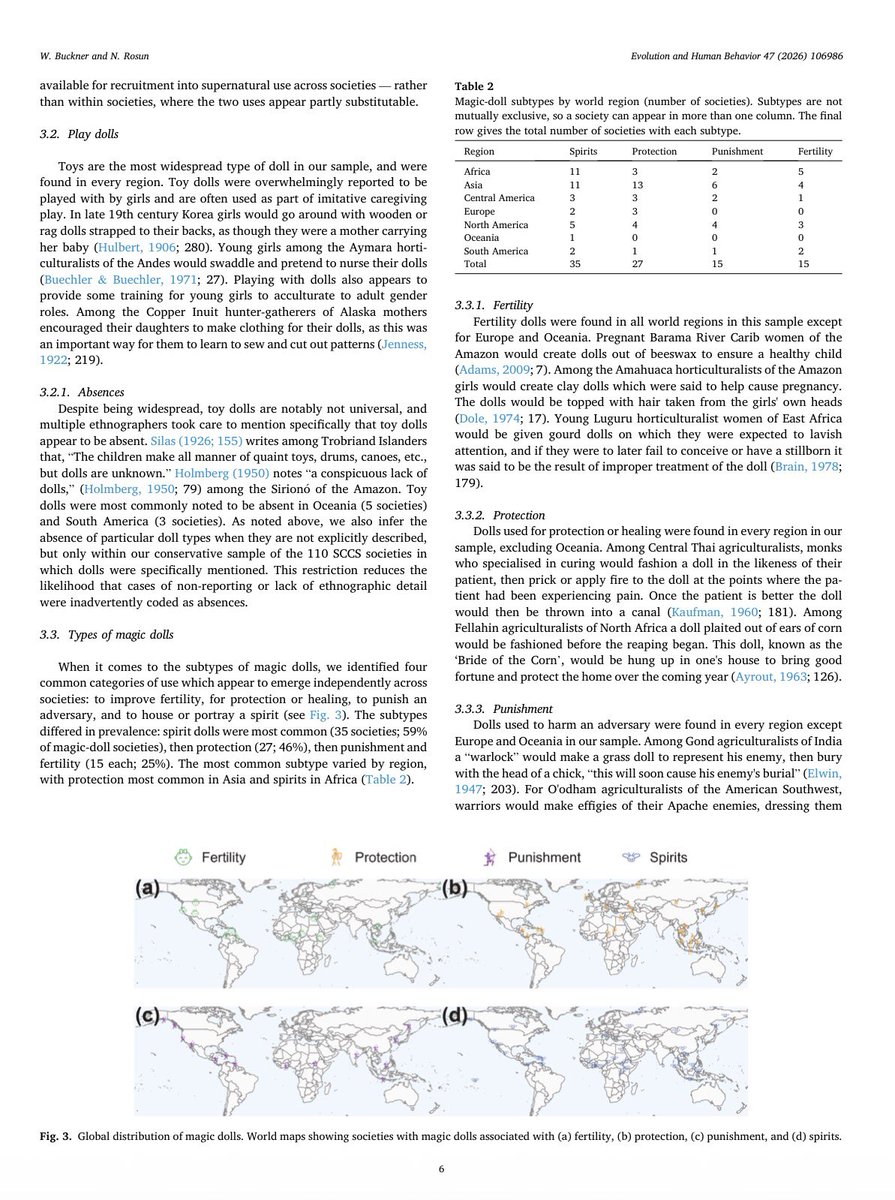
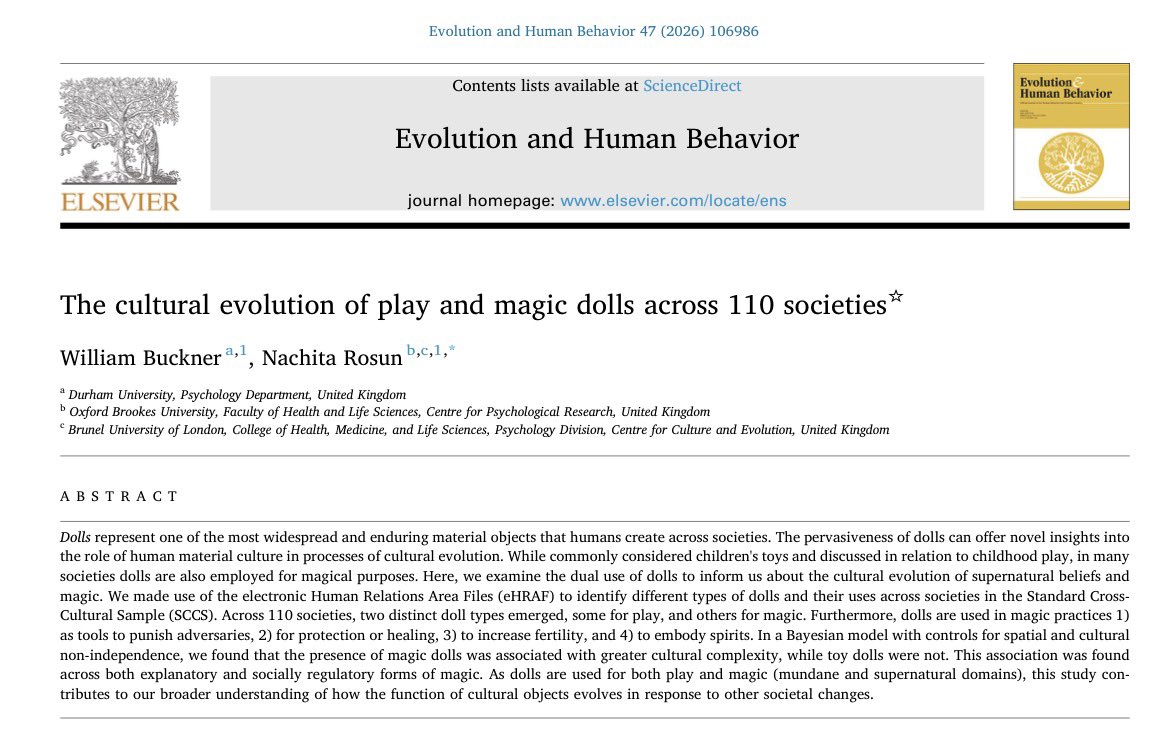
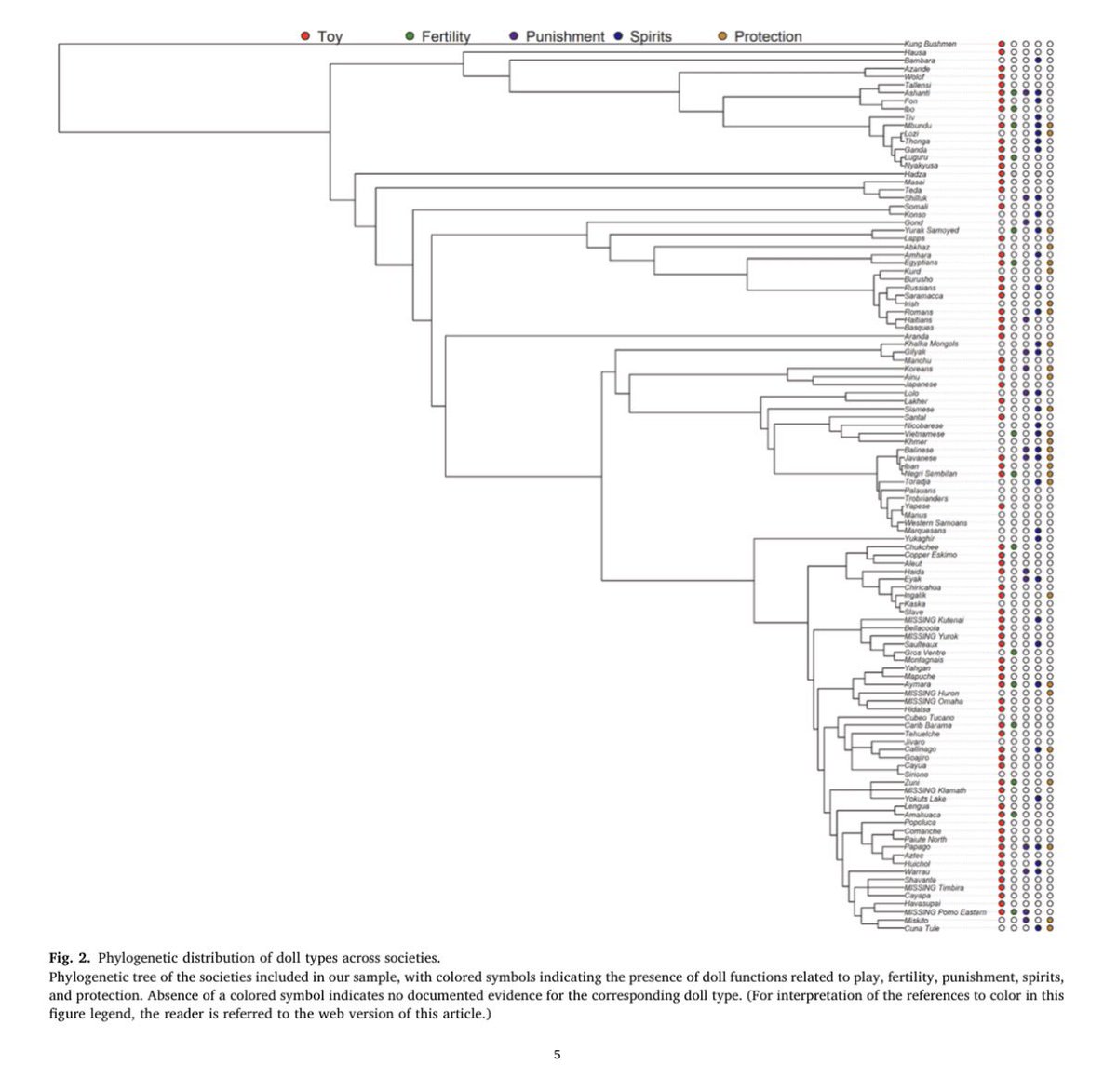
Dolls are incredibly widespread but not universal cross-culturally. In addition to functioning as toys, dolls are commonly used for supernatural purposes to punish enemies, heal or protect, increase fertility, or embody spirits. New paper in EHB with @NachitaRosun.
Humour <huh!> what is it good for!?
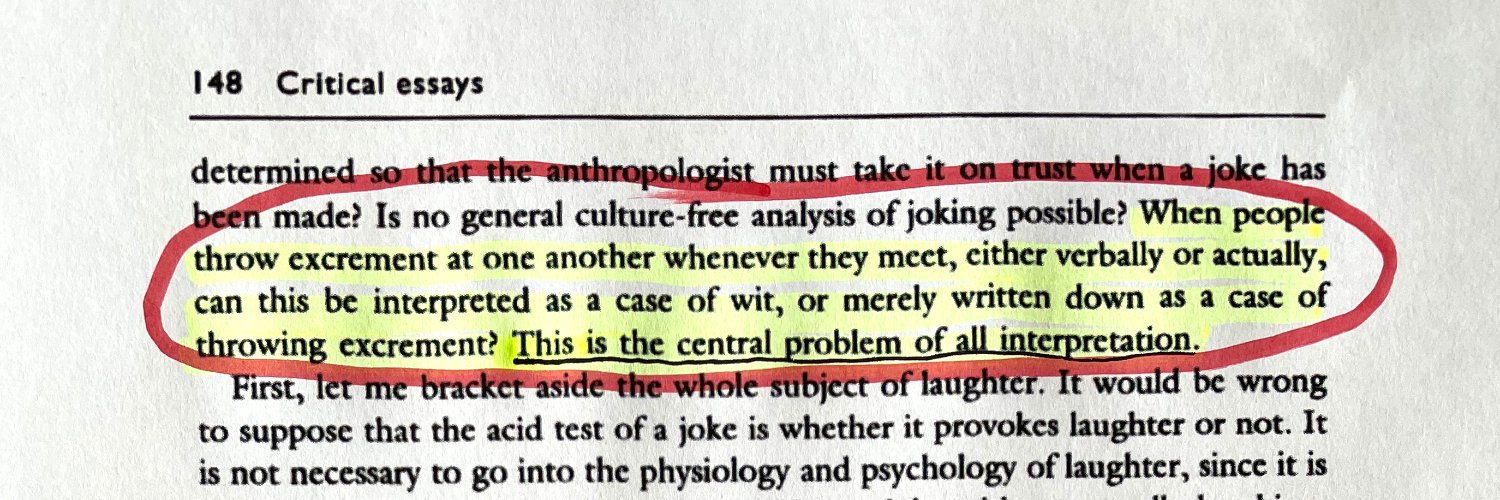
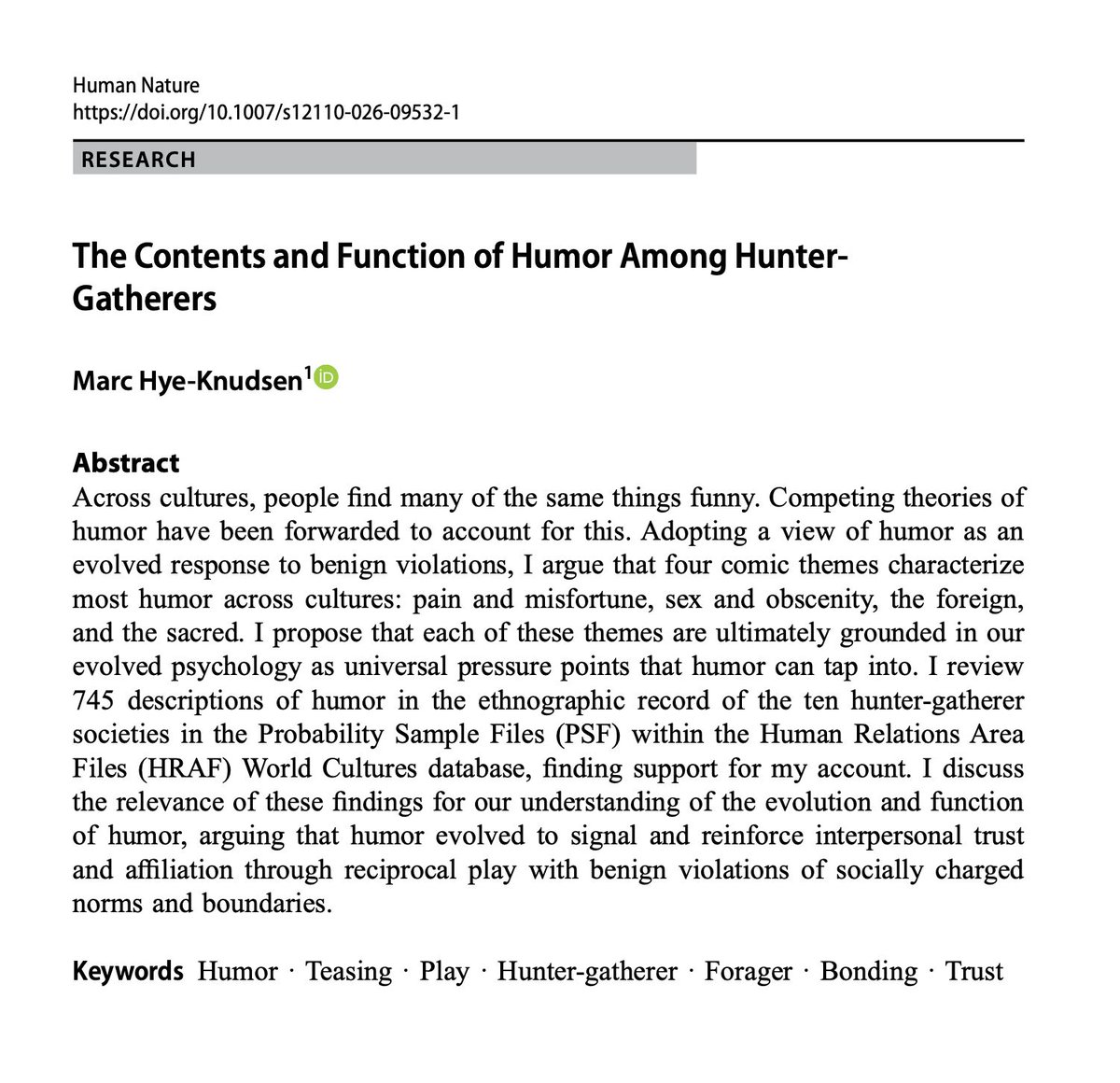
Well research by @marchk identifies four common comic themes across hunter-gatherer communities, suggesting it represents a response to benign violation of norms, evolved to signal and reinforce mutual trust:
https://t.co/f5nOIEGb1j
What exactly is the point of humor?
I mean: Why do we have it, as a species? What is its evolutionary purpose?
In a new (open access!) paper out now in Human Nature, I propose a theory and offer evidence from hunter-gatherers in support of my account.
Lots of fun tidbits like this ↓ + you’ll learn why almost all humor everywhere seems to come down to four basic themes: pain and misfortune, sex and obscenity, the foreign, and the sacred. https://t.co/8yux9igIcj
😸"Multiple observers report being bashfully taken aback when finding themselves on the receiving end of raunchy overtures from natives couched in humor" https://t.co/9d8GtdnoNX
@langofmind Specifically, it was involved in 14% of all humor descriptions. Part of that could be because of ethnographers, working in a second or third language, not picking up on subtler instances of language-based humor, but still a stark contrast to how common the other coded themes were
@langofmind In the study, we actually coded all instances where humor relied on a linguistic quality of what was said, such as puns and wordplay. It was found across all ten societies in the sample (so "universal" here), but much less common than the other themes
Obsession is making audiences scream in terror and howl with laughter.
How come?
And why do so many of the currently most interesting horror film directors have a background in comedy?
New blog post by @marchk: https://t.co/WqVOdd1xct
Today’s popular fictions can be extremely far from reality: The Lord of the Rings, Avatar, The Legend of Zelda, Avengers: Endgame. But has this always been the case?
🚨 Kids LOVE fear?!🚨 Our new study led by Mihaela Taranu from the Recreational Fear Lab uncovers something surprising: Children across all ages actively seek out scary experiences - for fun! 📄https://t.co/Ih15DHj22O
We often have to judge who is knowledgeable—precisely when we are not. Can humans really do that? Our new paper in Psychological Science shows that, surprisingly, we can. https://t.co/hhXtIWbkCo
Alright, all these talks about academic fraud inspired me to do a silly little week-end project: a p-hacking simulation game for quantitative social scientists in #RShiny . You can run it here:
https://t.co/kVhkldoTWF
In 2023, I wrote about the psychology of dad jokes for @psychmag (and made it onto the cover of the magazine!) Two years on, they’ve asked me to reflect back. I write about the experience of having my piece go semi-viral and my favourite relevant research that has come out since.