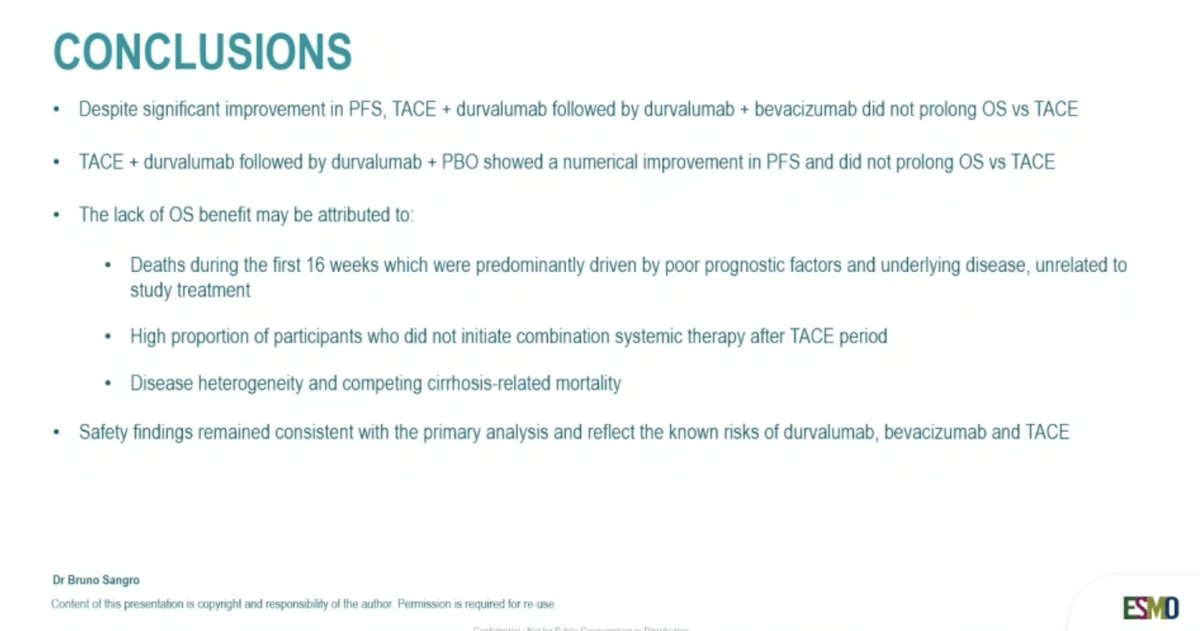
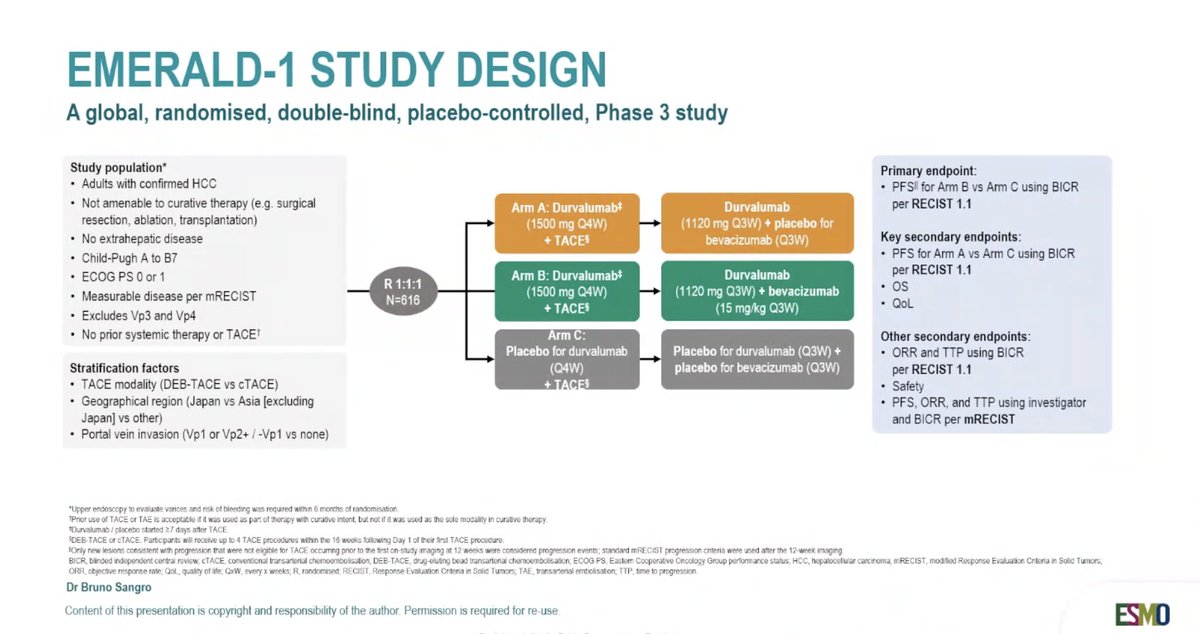
OS in EMERALD-1: A phase III study of durvalumab ± beva and TACE in unresectable embolisation-eligible HCC
👉OR & PFS improved
👉no OS benefit
🧐No safety concerns, but also not strongly supporting the combination
@myESMO@EASLedu@ILCAnews
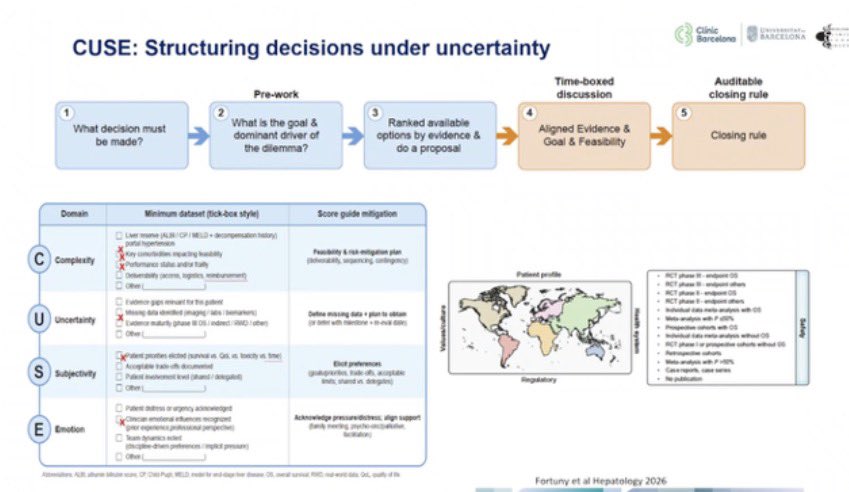
Selecting appropriate strategy #HCC@ma5RN giving fabulous BCLC overview- navigating early/intermediate
➡️combos no OS benefit to date
➡️Using CUSE & available evidence to help select tools at MDT
➡️noting the ‘real world’ patient & the patient preference
#ESMOGI26@OncoAlert
New drugs on horizon #PDAC#ESMOGI26
➡️we can go beyond RAS! Profiling for all! inspiring overview @EileenMOReilly
➡️novel approaches TP53
➡️the Claudin 18.2 story builds- bispecifics; ADCs
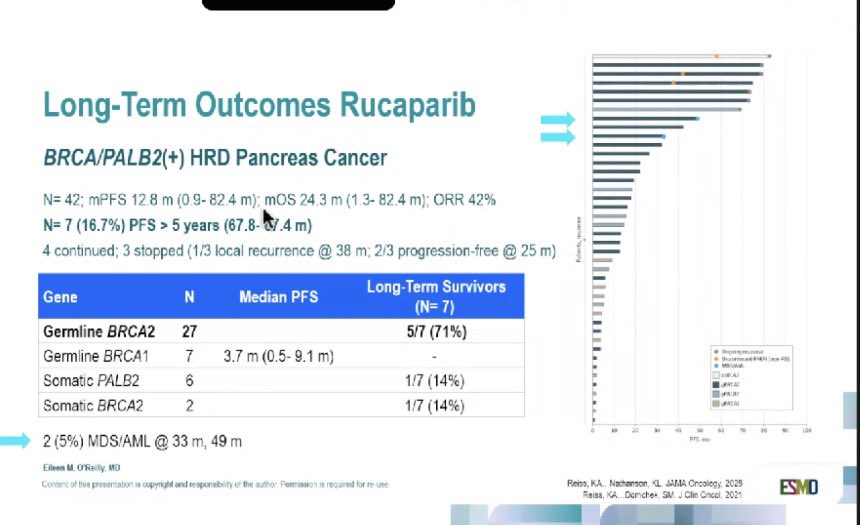
➡️HRD nb long term rucaparib data
➡️MTAP loss & PRMT5i(nb RASi)
@myESMO@OncoAlert
#ASCO26
Observation vs maintenance PD-1 after cCR in dMMR/MSI-H CRC managed nonoperatively
Abstract #3502
Presentation: May 31, 2026
This is absolutely essential data.
MSI-H CRC has rapidly evolved from aggressive and hard to treat to curable without surgery.
We are suddenly dealing with questions that would have sounded absurd a few years ago:
If a patient with dMMR/MSI-H CRC has a clinical complete response after PD-1 therapy, do we need to keep treating?
This Chinese multicenter cohort looked at exactly that.
Quick hits:
📌 Study design
318 patients with dMMR/MSI-H CRC treated with PD-1 therapy
191 achieved cCR in the presented flow 129 entered non-operative management
👀 Groups
Observation: n=66, stopped PD-1 after cCR
Maintenance: n=63, received ≥2 post-cCR PD-1 cycles
🧬 Included both rectal and colon cancer
Rectal: 58
Colon: 61
Synchronous dual primaries: 10
🔎 cCR assessment was not casual
Endoscopy + imaging: 100%
Confirmatory biopsy: 80/129, 62%
Rectal cancer: DRE 100%, pelvic MRI 89.7%
⏱️ Time to cCR
Median cycles to cCR: 8 in both groups
Median treatment duration to cCR: 6 months
69.8% reached cCR within 8 cycles
93.8% reached cCR within 16 cycles
📈 3-year DFS
Observation: 96.4%
Maintenance: 98.2%
P=0.560
🙌 3-year OS
Observation: 100%
Maintenance: 98.4%
P=0.313
🔥 Consistent sensitivity analyses
Overlap-weighted 3-year DFS: 98.5% vs 99.6%
6-week landmark 3-year DFS: 96.0% vs 98.2%
⚠️ The toxicity tradeoff matters
Maintenance did not clearly improve outcomes, but continuing PD-1 means continuing exposure, cost, visits, and immune toxicity risk.
This is the kind of dataset that changes conversations in clinic.
Not definitive. But incredibly useful.
For a patient with dMMR/MSI-H CRC who achieves a high-quality cCR and is being followed closely, observation after stopping PD-1 looks very reasonable.
The remaining question is duration.
Does it depend on colon vs rectum? Localized vs metastatic? Disease burden? Quality of cCR assessment? Patient anxiety?
Almost certainly yes.
But the big message is clear:
In dMMR/MSI-H CRC with cCR after PD-1, more treatment is not automatically better.
Sometimes the win is knowing when to stop.
Plenary-worthy.
@TheGutonclab@UGrewalMD@TimothyJBrownMD@OncoAlert@Onco_Nexus@ASCO@NazliDizman@LauraAlderMD@DVAraujoMD@DrBarbiOnc@LauraEsfeller@FunchainMD@YGaritaonaindia@DrSAHaddad@jgong15@iandresmeraz@SakditadMD@RamilaShilpakar@RohitBanwar@lungoncdoc
Day 3 #ASCO26 5 plenary highlights:
1. #PROTEUS: PeriOp/PostOp Apa in Prostate Ca
2. #SARC041: Adj Abema in dediff liposarcoma
3. #LIBRETTO432 : Adj Selpercatinib in NSCLC
4. #HARMONi6: 1L Ivonescimab in Sq mNSCLC
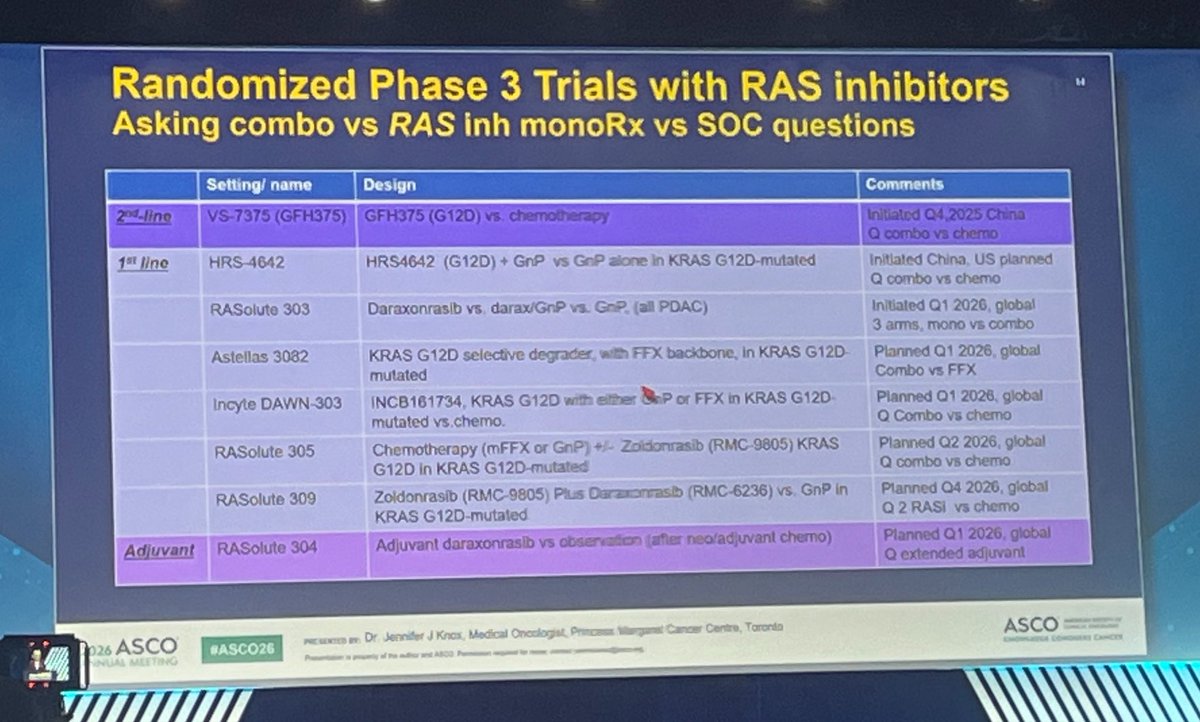
5. #RASolute302: 2L Daraxonrasib in Panc Ca
@ASCO
1/6
Beautiful discussion by #DrJenniferKnox
👉New standard of care, at last!
🫂Delay in QoL worsening
🧴Skin toxicity - we need dermatology friends
🤝We must work together: researchers, pharma, patients and regulatory agencies
🔮Many trials - 1stL/adjuvant
@myESMO@ASCO@AACR
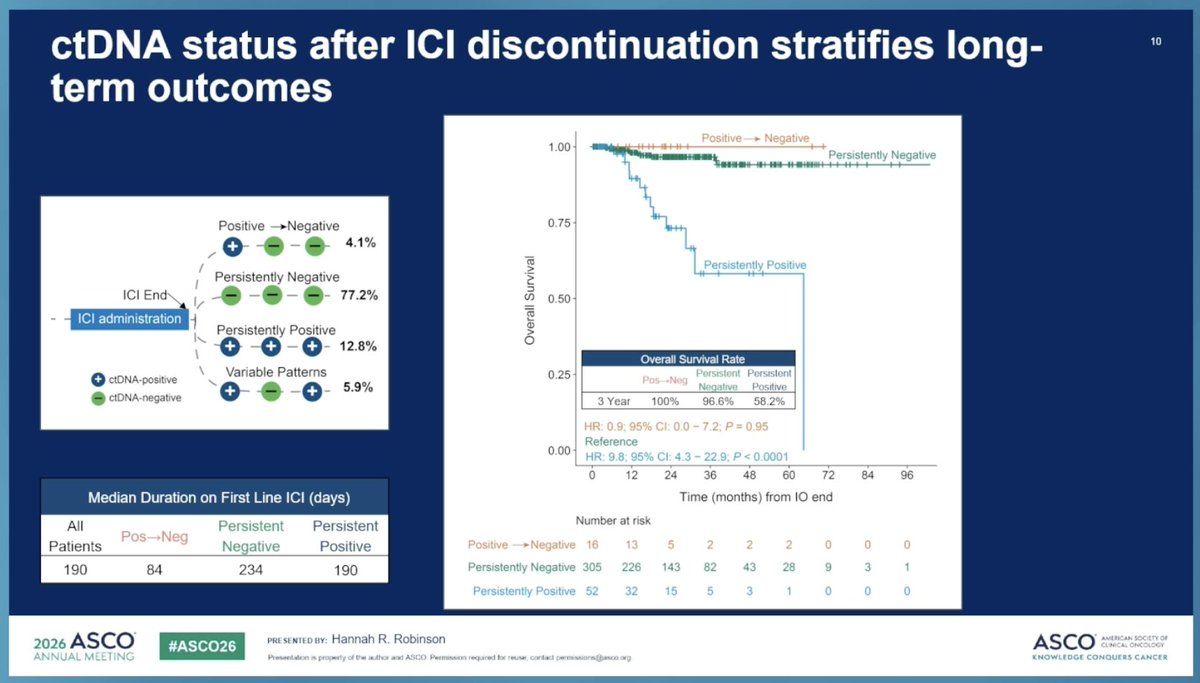
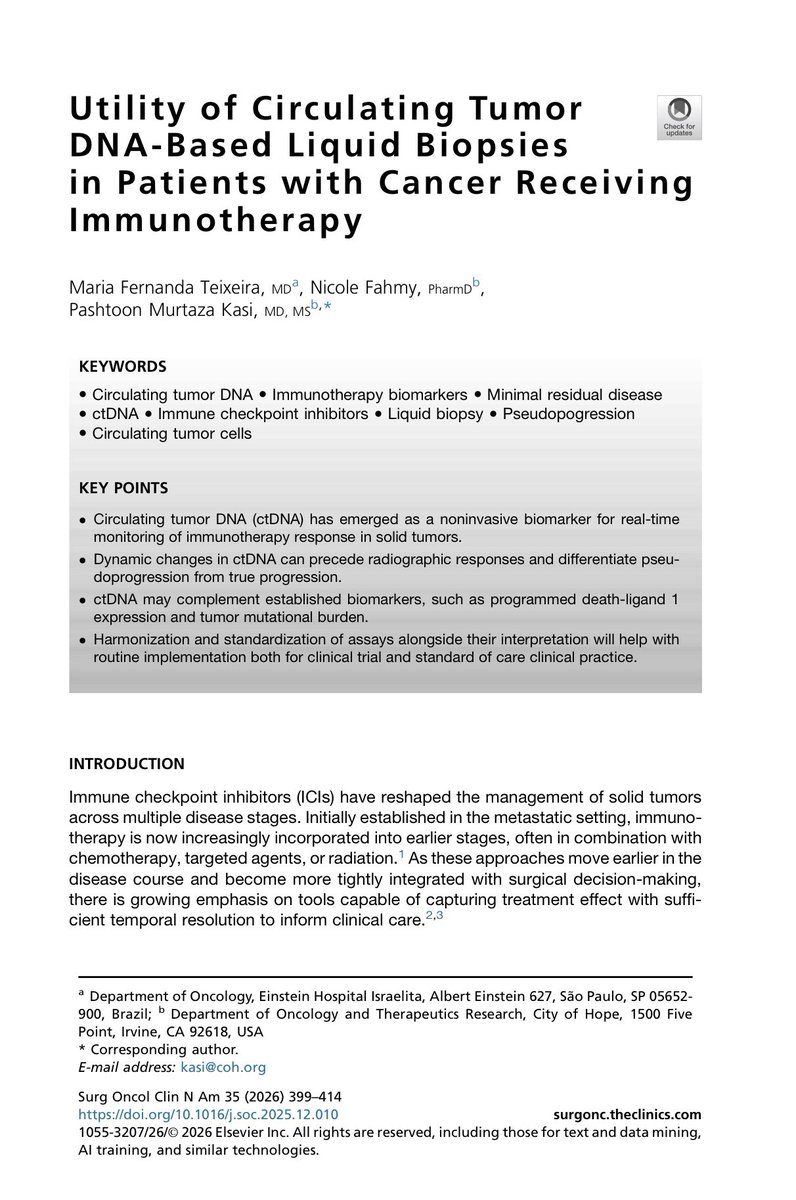
Informing optimal duration of adjuvant chemotherapy in resected stage I-IV CRC based on early ctDNA dynamics
#ASCO26
👉ctDNA dynamics @ 3mo highly prognostic
👉pts with detectable ctDNA may benefit from longer CTx
🧐Supports ctDNA guided adj. treatment
@myesmo@ASCO
Observation vs maintenance PD-1 inhibitor therapy after clinical CR in dMMR/MSI-H CRC treated with non-operative management
#ASCO26
👉Excellent outcome with ICI
👉Longer treatment: No benefit & More ICI-tox
🧐Supports stopping ICI within 2 years after CR with close surveillance
@myesmo@ASCO
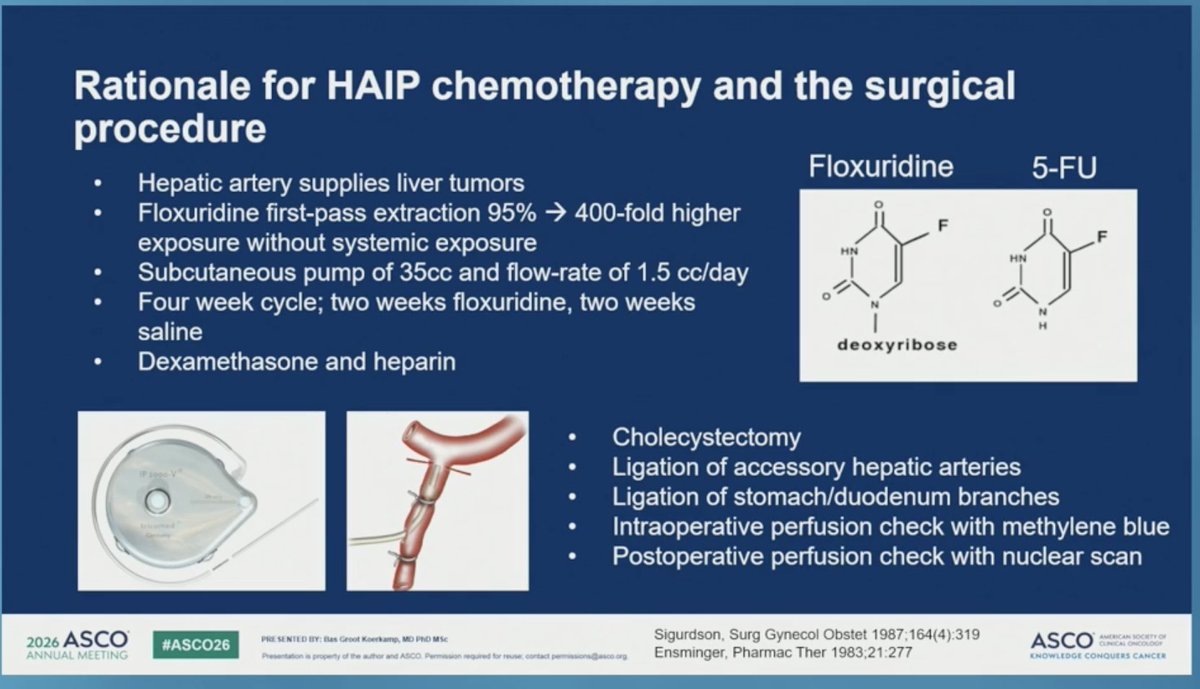
Adjuvant hepatic arterial infusion pump CTx with floxuridine for resectable CRC metastases and a low clinical risk score: A randomized controlled trial—The PUMP trial.
#ASCO26
👉mPFS 15 vs 15.5 mo
👉similar 5-yr OS rate
🧐no benefit for HAIP...
@myesmo@ASCO
1/n
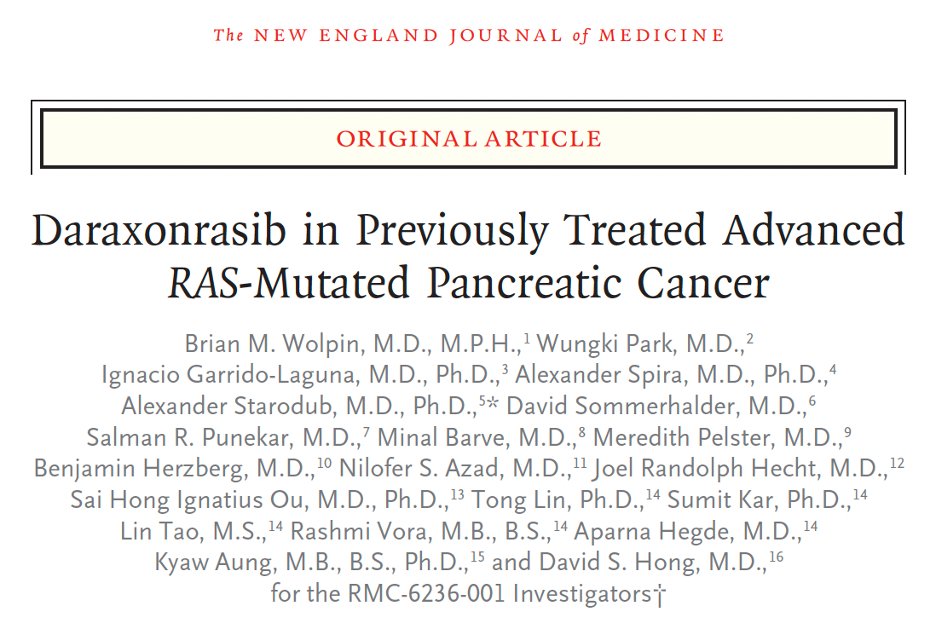
Daraxonrasib (RMC-6236), the first-in-human oral 💊RAS(ON) multi-selective tri-complex inhibitor, in previously treated RAS-mutated pancreatic cancer phase I/II study is now published in the New England Journal of Medicine @NEJM
A novel💡 way to shut down ⚔️RAS, one of the most important oncogenic drivers in cancer that had long been considered “undruggable.”
🔗https://t.co/ptfNVcxrb4
Shout out to Brian Wolpin, @CentralParkWMD@GarridoLagunaMD@AlexSpiraMDPhD@salmanpunekar@MeredithPelster@bherzbergmd Nilo Azad Aparna Hegde @DavidHongMD and the whole team who dedicated to this study. @EileenMOReilly
#HBP #HumansBeyondPatients
#AACR26 highlights #CommunityOnc:
1. #CM77T: PeriOP/PostOP Nivo in NSCLC
2. #TRUST: ROS1 1L NSCLC
3. RAS Inhibitor
- Zoldonrasib in 2L and beyond NSCLC
4. RAS Inhibitor in Panc Ca
- Daraxonrasib monotherapy in 1 L
- Daraxonrasib + chemo in 1L
#OncTwitter#MedX
1/6
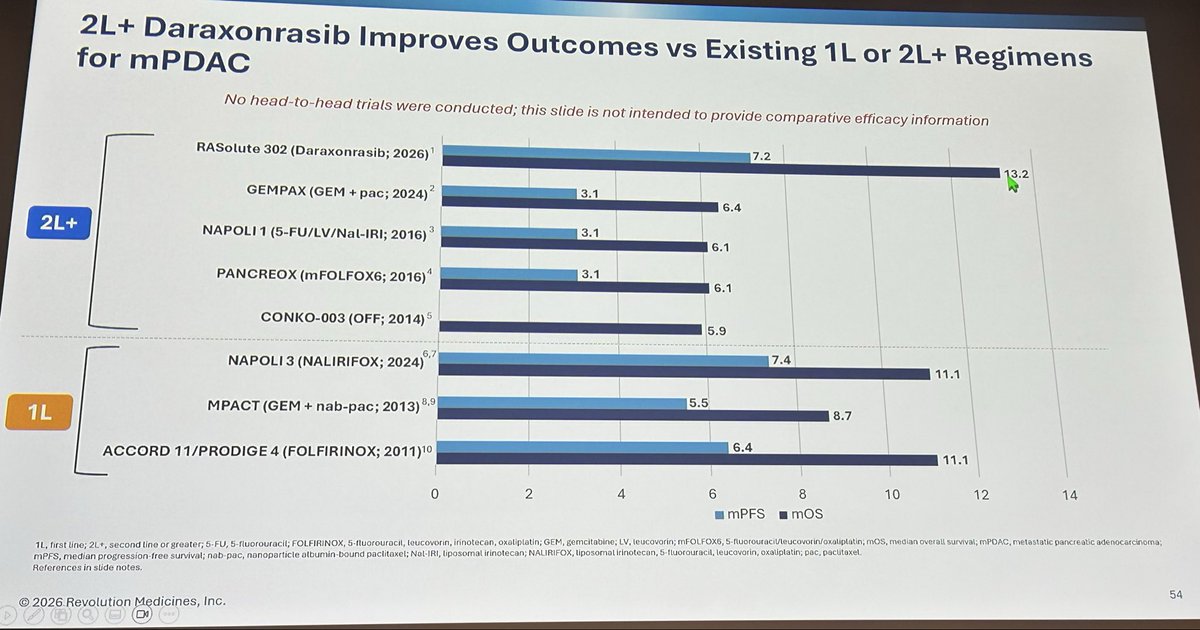
RevMed with huge news for pancreatic cancer (daraxonrasib).
The headline is hard to ignore 👀
• Median OS 13.2 vs 6.7 months
• HR ~0.4 📉
• Activity across KRAS variants (not just G12C)
• Manageable safety
If that signal is real, this isn’t incremental. It changes how we think about KRAS.
But—caveat applies ���️
This is a press release! PR as a rule is rosier than real data.
Still… an OS HR like that gets your attention.
Feels like we may be moving from mutation-specific inhibition → broader KRAS control.
That’s the difference between niche utility and something that touches CRC, pancreas, lung… everything we see.
Now we wait for the data behind the headline.
@TheGutOncLab @OncoAlert @Onco_Nexus
https://t.co/MBsxalyQT3
🚨 Up to 40% of rectal cancer patients may not need surgery.
In dMMR disease (with proper testing)
Immunotherapy → ~90-100% CR
In MSS
TNT: ~1 in 3 achieve cCR
With watch-and-wait:
~85% keep their rectum
>95% remain metastasis-free
Local regrowth ~15%, mostly detected early and successfully salvaged
It’s smarter upfront intensification then personalized decisions.
But this isn’t a simple algorithm.
It requires clinical judgment, proper testing, careful selection and intensive surveillance.
What once seemed unthinkable is now part of evolving clinical practice; the state of the art care
https://t.co/qM4gjtik8v
1/n
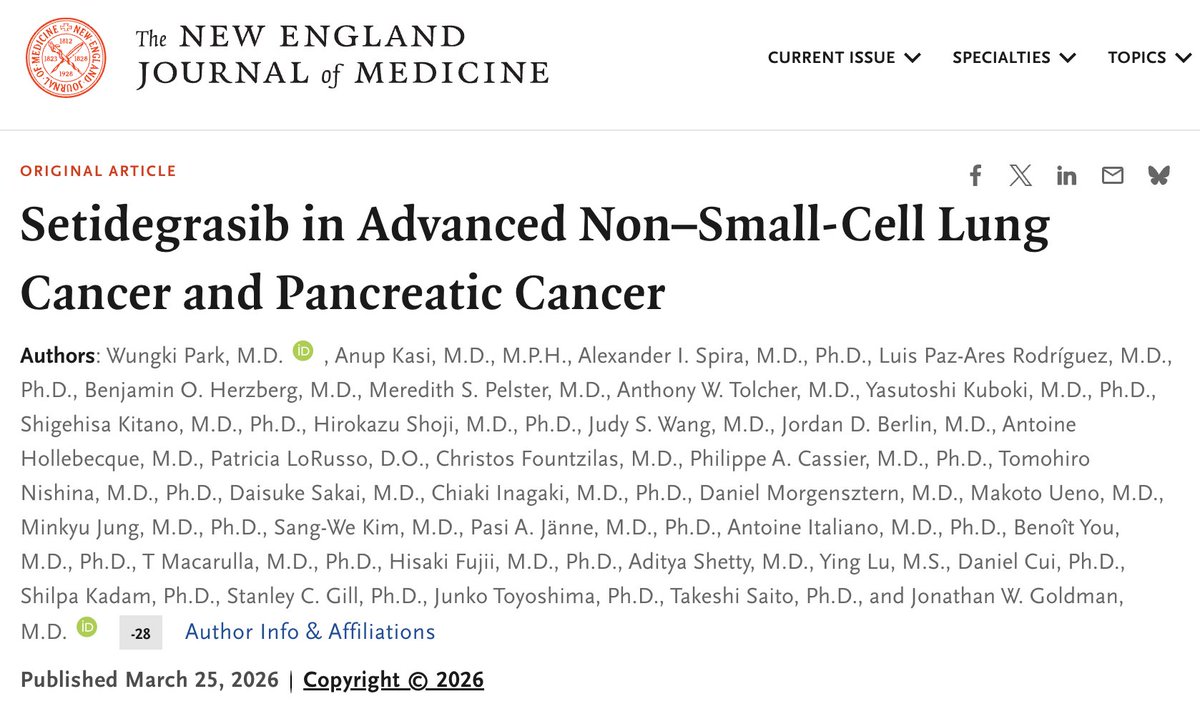
Setidegrasib the first-in-human, first-in-class, KRAS G12D-targeted protein degrader #TPD
Our KRAS G12D degrader study is now published in the New England Journal of Medicine @NEJM
https://t.co/8Juil6VN42
A new way to target KRAS G12D - one of the most common oncogenic drivers across cancers.