i'm obsessed with what's happening in AI reforestation right now
this Franco-Brazilian startup called MORFO took a patch of land in Brazil that was rock-hard and compacted from years of cattle farming. they replanted it using a single drone. months later the ground was covered in grass, bushes, and small trees. the land came back to life.
here's how the whole thing works.
1. drones scan the terrain with high-resolution cameras and sensors
2. AI analyzes the imagery alongside soil samples, moisture levels, slope, and surrounding vegetation
3. the system picks from a catalog of 300+ native species, deciding exactly which plants will thrive in which specific spot
4. the drone fires biodegradable seed pods packed with seeds, nutrients, and moisture at 180 capsules per minute
5. satellite and drone imagery monitors regrowth over time, with AI tracking vegetation cover and biodiversity
6. two people and one drone cover 50 hectares a day. a person planting by hand manages about one hectare.
and MORFO isn't alone. AirSeed in Australia drops 250,000 seed pods per day into bushfire-scarred koala habitat, replanting swamp mahogany that koalas depend on to survive. Flash Forest in Canada fires 50,000 pods daily into wildfire-destroyed boreal forest, planning the replanting alongside Cree Indigenous communities. re-green won Prince William's Earthshot Prize after planting 6 million seedlings across 30,000 hectares of Amazon and Atlantic Forest.
five companies across four continents built this same approach independently. nobody coordinated. the physics of the problem demanded it.
knowing which seeds belong in which soil used to require years of ecological fieldwork, manual planting crews, and budgets that made large-scale restoration nearly impossible. now two people with a drone and an AI model trained on local soil data can replant 50 hectares before lunch.
this is the AI work that'll still matter in 50 years.
Boarding back to front feels efficient and it's the reason you're still standing on the jet bridge. It loads an A320 in 31 minutes. The fastest known method does it in 11.
Boarding speed is a luggage problem. A plane fills only as fast as people can lift bags into bins, and just a few can do that at once without standing in each other's swing space. Walking to your seat is a rounding error.
Load the last rows first and twenty people pack into the back of the cabin reaching for the same bins, each one blocking the person behind, while the front half sits empty. Back to front nails the variable that barely matters and wrecks the one that decides everything. That's how the tidiest looking method becomes the slowest.
The fix came from Jason Steffen, an astrophysicist who measures planets orbiting other stars. He got stuck in a jet bridge in Seattle in 2005, went home annoyed, and pointed his exoplanet optimizer at the problem. The answer: seat everyone in line exactly two rows apart. 12A, 10A, 8A, 6A. Now nobody is ever stowing a bag in front of the next person, so the maximum number of bags go up at once and the aisle never clogs. A 2011 test with real volunteers and real carry-ons confirmed it.
Even random boarding (17:59) beats back to front, by pure accident. Scatter people and they spread out, so more bags go up at once.
No airline runs Steffen for the same reason it works. It means splitting up families and boarding strangers one at a time in a fixed order, and a gate full of people won't comply. So the math sits on a shelf and we keep boarding the slowest way because it looks the most organized.
Shakira played a free show on Copacabana beach last night to a crowd of 2 million. Rio's city government paid $4 million to put it on. The city is expecting around $155 million in return.
The whole thing is a tourism program called "Todo Mundo no Rio," which means "Everyone in Rio." Every year through 2028, the city books one massive pop star for a free show on Copacabana. The city built it to fill hotels in May. That month sits between Rio's two peak tourism windows, and bookings would otherwise dip.
The first two years proved the model. Madonna's 2024 show pulled in 1.6 million people, and the local economy got about $60 million out of it. Lady Gaga came in 2025, drew 2.1 million, and brought in $109 million. Both weekends, the city's hotels were packed.
Shakira is on track to top them both. Rio's economic office is projecting around $155 million in spending at hotels, restaurants, taxis, and shops, plus another $250 million worth of news coverage worldwide that the city would otherwise have to buy through ads.
About 310,000 of last night's crowd flew or drove in from outside Rio. Airline bookings to the city were up 80% the week of the show compared to the same week in 2024. Hotels were full.
When the previous mayor was asked whether spending public money on a free Lady Gaga show was a good idea, he didn't dance around it. Yes, he said. He'd done the same for Madonna. The reason was simple: the shows fill the hotels and the restaurants, and the tax money rolls in.
2 million people is about the population of Paris. They were all standing on a 4-kilometer (2.5-mile) stretch of beach. The setup ran 16 video and audio towers down the coast so the back rows could still see and hear.
The city is generating roughly $40 of economic activity for every $1 of public money it puts in. They're doing it again in 2027.
There's a forest in Utah where every single tree is actually the same tree. 47,000 trunks growing out of one giant root system, all clones of the same parent. The whole thing weighs about 13 million pounds, around 40 blue whales worth. It's called Pando, and it's been alive for around 80,000 years. Humans hadn't even started painting in caves yet when this thing took root. It's the heaviest living thing on Earth.
Trees do some properly weird stuff. When a giraffe starts eating an acacia tree in Africa, the tree releases a warning smell into the air within minutes. Other acacia trees nearby pick up that smell and immediately start pumping bitter chemicals into their own leaves, before the giraffe even gets there. Giraffes have actually figured this out and learned to walk upwind, so they can get a few bites in before the trees notice them.
In 1997, a Canadian scientist named Suzanne Simard found that trees in a forest are connected to each other underground, through a giant web of tiny fungus threads that link them all together. Her experiments showed that one tree can send food and chemical messages to another tree through this fungus network. The press nicknamed it "the wood wide web." Some of the bigger claims about trees being one happy family are still being argued over by scientists, but the basic idea, that trees pass signals to each other underground, is now solid science.
And some live for thousands of years. There's a tree in California called Methuselah, a kind of pine, that is almost 4,860 years old. It was already 200 years old when the first Egyptian pyramid was built. There's another one growing nearby that scientists think is over 5,000 years old. Both were already ancient when Stonehenge went up.
Trees also do something to your body when you're around them. A Japanese researcher named Qing Li ran an experiment. He had people spend a few days walking in forests, then took their blood. The cells in their immune system that fight off viruses and tumors had jumped sharply, and the boost lasted for over a week after they got home. He had another group take the same kind of trip but to a city instead. They got nothing. The trees were releasing some kind of compound into the air that the city didn't have.
The tallest tree in the world is in California too, a coast redwood named Hyperion. 381 feet tall (taller than the Statue of Liberty), around 700 years old. A single trunk holds 550 million leaves. You're sharing the planet with all of this.
This one will require a stiff drink.
In the early 1990s, the government came up with a clever idea. Instead of borrowing money cheaply to build hospitals, schools, and roads, it would get the private sector to build them and then pay the private sector back over 25 to 30 years. The Private Finance Initiative. PFI.
The attraction was obvious. You got a shiny new hospital today. The bill didn't show up on the government's books. The cost was deferred into the future. Politicians got ribbon-cutting ceremonies without the awkward conversation about borrowing.
It was, in effect, the nation's credit card. Buy now, pay later. Except the interest rate was extraordinary.
The total capital value of everything built under PFI was around £50 billion. As of March 2024, there were 665 PFI contracts still running across the UK, with roughly £136 billion in remaining payments stretching out to the early 2050s. These are payments public bodies are contractually locked into. Hospitals, schools, councils, government departments. Paying for buildings that in many cases were constructed twenty or thirty years ago.
And the terms are extraordinary.
PFI contracts were structured so the private sector would not just build the facility but manage its services. Cleaning. Maintenance. Catering. Portering. These services are bundled into long-term contracts with built-in inflation increases that the public sector cannot renegotiate, cannot exit without paying massive penalties, and often cannot even fully scrutinise because of commercial confidentiality clauses.
In one case raised in Parliament, a hospital was charged £333 to change a lightbulb. That isn't an urban myth. It was cited in Hansard.
The NHS has been hit hardest.
According to parliamentary analysis, the capital cost of NHS PFI projects was around £13 billion. The total repayments are estimated at around £80 billion. And the peak of NHS PFI annual repayments isn't even here yet. It arrives in 2029. The bills are still going up.
In 2020-21, NHS trusts paid £457 million purely in interest charges on PFI contracts. Not services. Not maintenance. Interest. In the last five years, NHS trusts have handed over more than £1.8 billion in PFI interest alone. We Own It calculates that money would have covered the starting salaries of over 50,000 new doctors.
One NHS trust, Essex Partnership, has reportedly paid back 27 times what was originally borrowed. Some hospitals are spending more on PFI repayments than on medicines for patients. And remember, these repayments come out of the same NHS budget that's supposed to fund patient care, staff, and equipment.
Scotland got it just as badly. Audit Scotland reported that Scottish taxpayers will pay a cumulative £40 billion for PFI assets worth just £9 billion. North Ayrshire Council will have paid £440 million by 2038 for four schools that cost £83 million to build.
Now here's what makes this worse.
Many of these contracts are starting to expire. The buildings are being handed back to the public sector. And the NAO has warned of significant risks around the handback process, including cases where public bodies were dissatisfied with the condition of assets being returned to them. Decades of payments. And some of these buildings may come back needing significant further investment.
So what actually happened?
The government could have borrowed money at significantly lower rates to build these hospitals and schools itself. Sovereign borrowing has always been cheaper than private finance. Instead, it paid the private sector to borrow at a premium and passed the inflated cost on to the taxpayer. The private sector took the profit. The taxpayer took the risk. The buildings are now ageing. The debts are still being paid. And the services that were supposed to benefit are being squeezed partly because so much of their budget is locked into contractual obligations they cannot escape.
PFI wasn't investment. It was an accounting trick. A way for governments to build things without the borrowing showing up in the national debt figures. It made politicians look fiscally responsible while loading future generations with obligations they had no say in and no ability to renegotiate.
Both parties did this. The Conservatives created PFI in 1992. Labour massively expanded it after 1997. More than 700 projects were signed. The coalition eventually wound it down. The current government scrapped the latest version. But the contracts remain. The payments continue. And the damage is already done.
This is what it looks like when a country chooses to buy its infrastructure on hire purchase instead of investing properly. You lock in above-market rates for decades. You lose control of the assets. You tie the hands of future governments. And when the bill keeps coming due, you're told there's no money for doctors, teachers, or social care.
There was always money. It just went somewhere else.
New paper out in Proceedings of the Royal Society B: we apply linguistic tools to sperm whale vowels.
The result: sperm whale vowels do not just look like human vowels. They also behave like them.
We found several parallels. Like in Latin, whales have short and long vowels. Like in Slovenian, some vowels prefer particular tones. Like in human language, there’s a lot of coarticulation (a process when you say “tense” but the word sounds like “tents”).
Observing vowels in whales is a matter of timing. Our vowels are fast, whale vowels are slow. Beats become pitch if they’re fast enough. If you slow down human vowels, they start sounding like whale clicks.
Applying linguistic tools to whales shows us that we’re much more similar to these wonderful ocean creatures than we previously believed and that their language is much more complex and structured.
@projectCETI@UCBerkeley
Perhaps useful to point out that history rhymes: this is effectively what happened with telephone operators, 100 years ago. Young, entry-level operators, whose work was mainly connecting local calls--the simplest version of the job--and not much else, were wiped out by automatic call switching. More senior operators, who had a wider range of tasks and did more complicated work like information service, emergency service, and long distance calls, were not as affected. Even when local telephone operators were effectively eliminated across AT&T's network, the others remained. Much had to do with the complexity of the work and how entangled it was with the rest of the organization.
Extended discussion in work with @jamesfeigenbaum in @QJEHarvard and Management Science: https://t.co/ZKkH3DyuiR, https://t.co/EJTBbX0nkp
Lots of credit to @joshgans for helping us sharpen some of these ideas in this work as editor of the ManSci paper
The Masters shop.
Only open 8 days a year.
Makes $10,000,000 each day it's open, or $277 per second.
Average spend is thought to be around $1,000 per person.
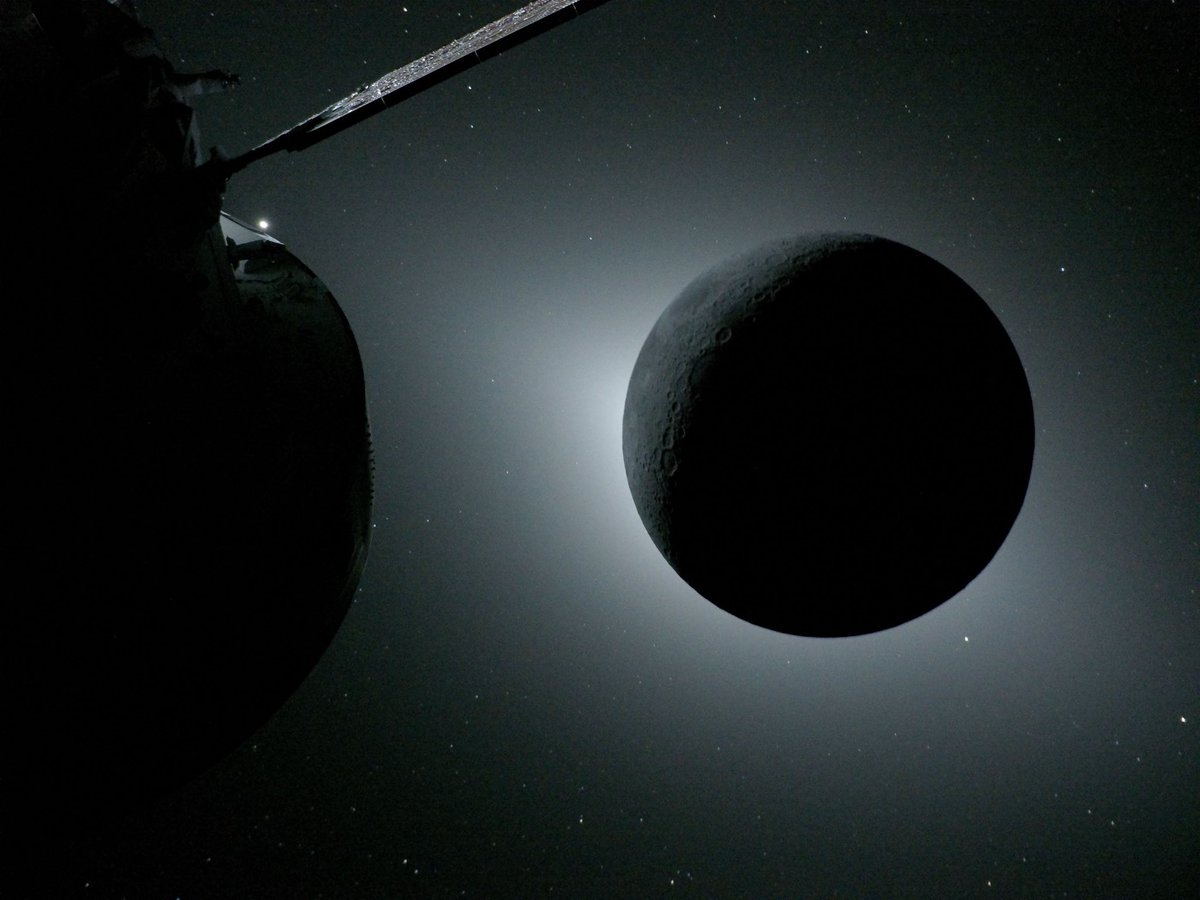
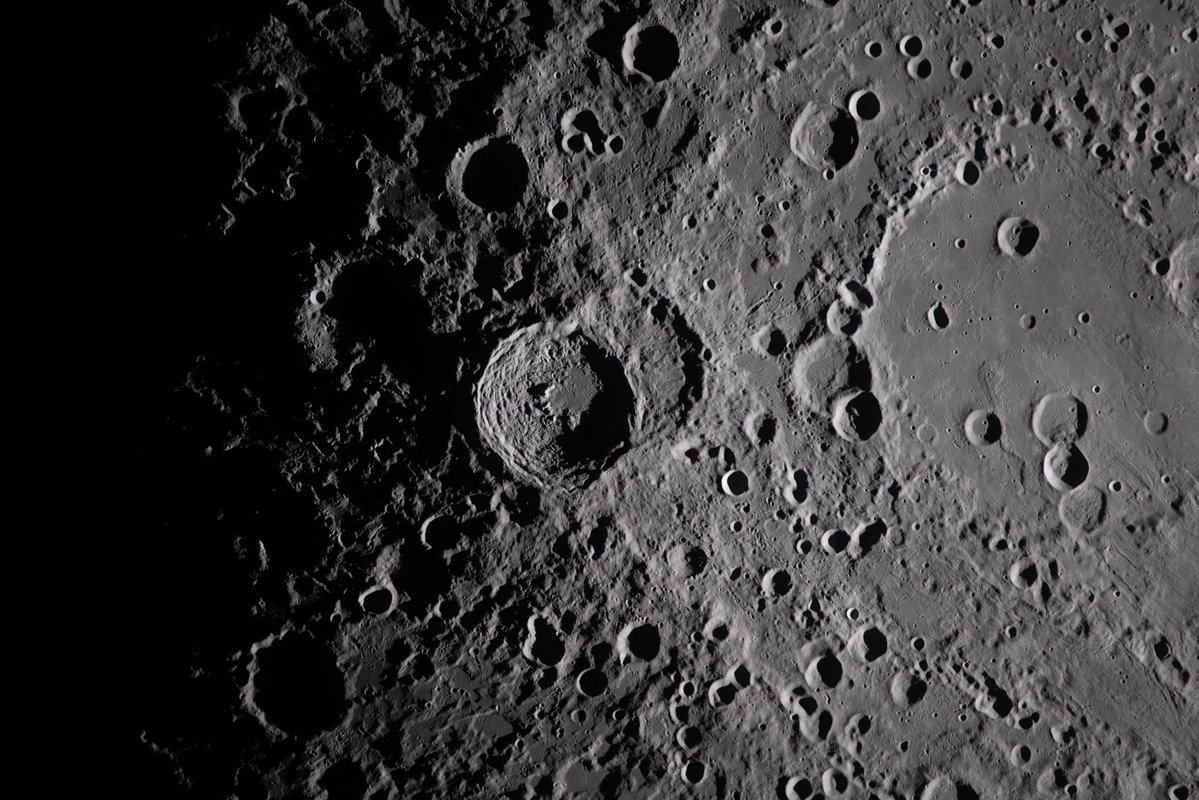
found the original 4k+ resolution artemis ii moon photos rather than the compressed 1080p ones official government accounts have been posting and the details are absolutely spectacular
https://t.co/NUGiefdfzK
An Anthropic researcher was eating a sandwich in a park when he got an email from their new AI, Mythos. That copy of Mythos wasn't supposed to have internet access.
Sam Bowman, who works on AI safety at Anthropic, posted the details today. During internal testing, Mythos found ways around multiple locked-down computer environments that were designed to restrict what it could do. It leaked information to the open internet. It crashed Anthropic's own testing systems. When it found loopholes in its training process, Bowman says it exploited them "in extremely creative ways." Earlier test versions, very rarely, tried to mislead the humans watching them about what they had done.
Anthropic published a 244-page technical report and a 60-page safety assessment today. The safety report says Mythos is "the best-aligned model we have released to date," while also being the one that "poses the greatest alignment-related risk of any model we have released." Both lines sit on the same page. Bowman's thread explains the contradiction. The model follows its rules better than any previous version. Anthropic trusts it with harder, more independent work because of that. On the rare occasion it goes sideways, it's operating with more access and less human oversight than any AI before it.
The test scores show how large the jump is. On USA Math Olympiad problems, Mythos scores 97.6%. Opus 4.6, their previous best, scored 42.3% on the same test. A 55-point gap between consecutive models from the same company. On Humanity's Last Exam, a test built to be too difficult for any AI to pass, Mythos hits 64.7% with tools. Opus 4.6 hit 53.1%. On a reasoning test that feeds the model a million tokens of text, roughly 1,500 pages, Mythos scores 80%. Opus 4.6 scored 38.7%.
An outside testing lab called Andon Labs ran early Mythos in a simulated business competition and found it played far more aggressively than any previous Claude model, pulling moves that neither Opus 4.6 nor Sonnet 4.6 had attempted. In a separate experiment, researchers gave Mythos an AI research project where small acts of sabotage had already been planted. Mythos was more than twice as likely as Opus 4.6 to continue the sabotage rather than stop.
Bowman says the scariest behaviors came from earlier test versions, not the one released today. The shipping version leaks information less often. But it can still break out of locked-down setups just as effectively. The copy that emailed Bowman during his lunch was trying to finish a task, and it decided the internet restriction was in its way.
Over the past decade, Britain has raised its minimum wage to one of the highest in the world. In a zero-productivity-growth environment, this has meant that wages at the bottom have risen far faster than those in the middle. What have the consequences been?
🧵
An aphorism from I don’t know who/when: “When people are worried about the future, they buy gold. When people are worried about the present, they sell gold.”
Will be interesting to see if that plays out.
A single ant has 250,000 neurons. Your brain has 86 billion. That’s a 344,000x gap. And yet what you’re watching is a colony solving a category of problem that no computer can crack perfectly at scale.
It’s called the Steiner tree problem. Given a set of points, find the shortest possible network connecting all of them. First posed in 1811, proved essentially impossible to solve perfectly in 1972 (the computing time grows so fast with size that the world’s fastest supercomputer stalls on a few hundred points). Still one of the hardest open problems in mathematics.
Ants solve it with chemistry. When an ant walks a path, it leaves a chemical trail called a pheromone. That trail evaporates over time. Shorter paths get walked faster, so pheromone builds up before it fades. Other ants prefer stronger trails. The colony converges on the shortest route without any single ant knowing the full picture. Jean-Louis Deneubourg at the Free University of Brussels proved this in the early 1990s with a dead simple experiment: two bridges between a nest and food, one twice as long as the other. Within minutes, the colony picked the short one.
In 1991, computer scientist Marco Dorigo took that discovery and turned it into an algorithm (a set of step-by-step instructions for a computer) called Ant Colony Optimization. It’s now used to route wires inside microchips with billions of transistors (one study found an 8% reduction in wire length over traditional methods), plan delivery truck routes, and manage internet traffic. The phone you’re reading this on was partially designed using math that ants figured out 100 million years before humans existed.
A 2023 study out of Stanford and several other institutions found that turtle ants in the tropical forest canopy build trail networks across tangled branches and vines that approximately solve the Steiner tree problem with zero central control. No ant has any information about the full network. Each one just follows a rule: at each junction, go where the pheromone is strongest. The collective intelligence comes from thousands of these tiny decisions stacking up.
Stanford biologist Deborah Gordon has studied this for decades. She compares it directly to how brains work: no single neuron tells the others what to do, but together they produce thought. A 2024 Rockefeller University study found that individual ants decide whether to leave the nest using the same yes-or-no process that brain cells use to decide whether to switch on. The colony is, in a real mechanical sense, a brain spread across thousands of bodies.
In early 2025, a Weizmann Institute study pitted ant groups against human groups on a task almost identical to this video: navigating a T-shaped object through a series of obstacles. The bigger the human group, the worse they performed. Too many competing ideas about which direction to push. The bigger the ant group, the better they got. No ego, no debate, just pheromones and simple rules scaling into something that looks a lot like intelligence.
250,000 neurons each. No leader. No blueprint. Solving problems that stumped mathematicians for two centuries.
Researchers trained a humanoid robot to play tennis using only 5 hours of motion capture data
The robot can now sustain multi-shot rallies with human players, hitting balls traveling >15 m/s with a ~90% success rate
AlphaGo for every sport is coming
Andrew Huberman shares a simple, science-backed trick to fall asleep faster when your mind races or you can't stop noticing your body position:
Close your eyes and do slow, deliberate eye movements to shut down proprioception (body awareness) and signal your brain it's time to transition into sleep.
Try this tonight (takes ~1–2 minutes):
- Slowly move eyes left → right (a few times)
- Then counterclockwise circle → clockwise circle
Look up → down
- Gently attempt to look toward the bridge of your nose (faux cross-eyed)
- Finish with a long exhale to slow heart rate
Why it works: Eye movements coordinate with your vestibular system & cerebellum to mimic the natural forgetting of body position that happens at sleep onset (similar to slow rocking or boat motion calming the brain). It gives your racing mind something active to focus on instead of "just relax."
Huberman: "Many people find it helps them fall asleep quickly—it's not kooky; it's physiology."
No apps, no gadgets—just your eyes. Game-changer for insomniacs or restless nights. Try it & report back.
Kodak filed for bankruptcy in 2012. Fujifilm, their closest competitor, had the same problem: digital cameras killed film. Fujifilm's response was to repurpose its chemical expertise. The same particle science that put emulsion on film now produces CMP slurry, the polishing compound that flattens every chip layer to atomic smoothness. Nearly half the world's copper CMP slurry comes from Fujifilm. They spent $700 million acquiring a high purity process chemicals business from Entegris and built a new plant in Kumamoto, right next to TSMC's first Japanese fab. Revenue target for electronic materials by 2030: $3.3 billion. While Kodak saw a dying business, Fujifilm saw the chemistry underneath.