At last! Someone who actually understands the connection between Bayesian inference and Popper's epistemology!
(Not that I ever doubted Gelman. The man is the bomb!)
Seriously, this is an absolutely excellent paper. Go read it and unconfuse yourself.
https://t.co/idB4aDfSyE
Bryan Cranston has written a tribute for his ‘Breaking Bad’ on-screen son RJ Mitte who tragically passed away due to suicide.
“We were texting each other just a few weeks ago - figuring out when we could meet for lunch. I don't know if that lunch would have changed his future... But I do know that I loved him.”
Perseverance has set a new off-world record! 🏅
On Oct. 11, the rover's odometer hit 28.10 miles (45.22 kilometers), eclipsing the distance record set by NASA's Opportunity rover. 1/2
@engineers_feed Poor thing. The horrible pain she was put through... The disgusting people celebrating this as "advancing science" should get a taste of it too.
If all behavior is "caused" by our neurobiology (i.e., a miracle does not occur every time we make a choice), does that mean no one is responsible for their choices? @DamienMorris reveals the fallacies here.
Capitalism works if and only if all members see themselves as "pre-rich" or "feasibly-rich-if-they-wanted-it-badly-enough". Remove that and the system collapses.
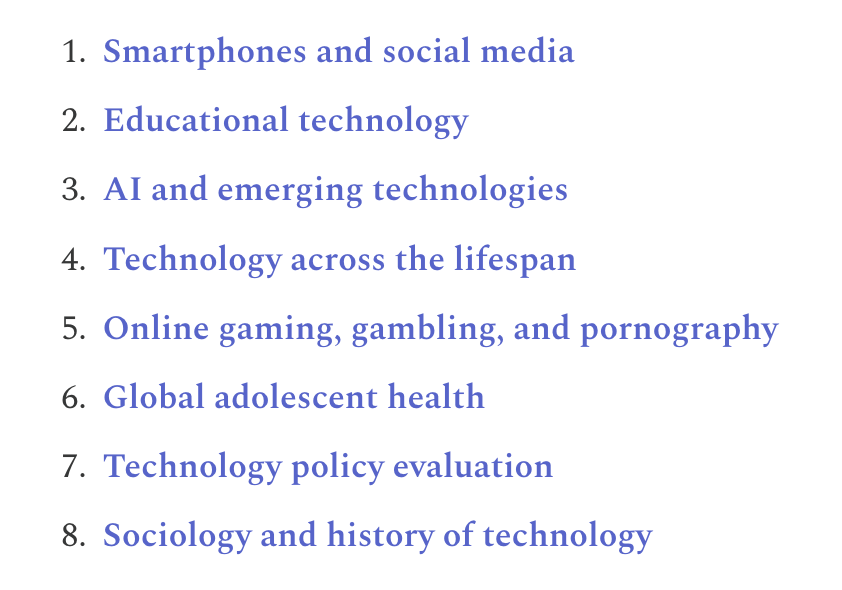
At the Tech and Society Lab at NYU-Stern, we have been studying the effects of many kinds of technology on kids & teens.
For the first time, we have posted all of our academic publications, tools, and data-related essays in one place. Start here:
https://t.co/BJkOoTbvso
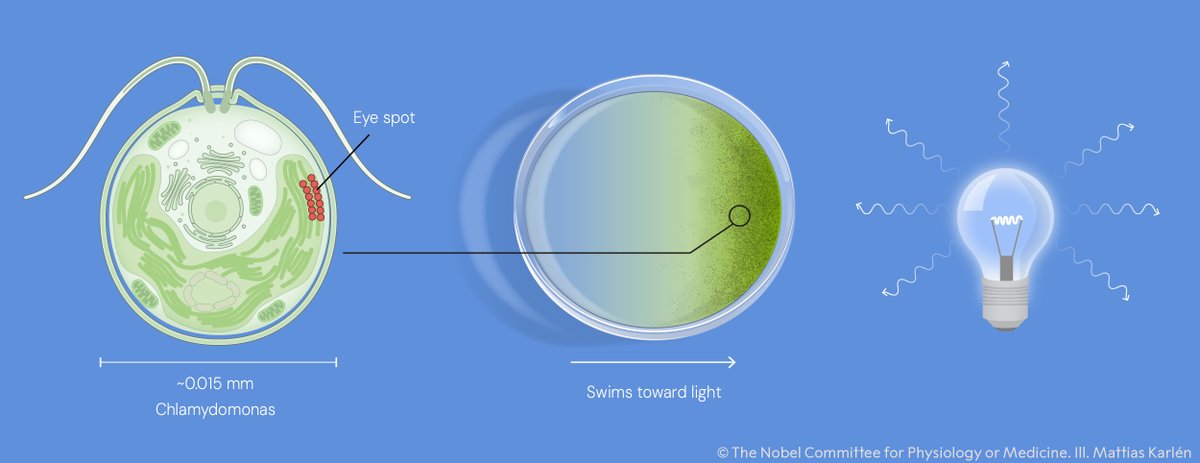
Peter Hegemann and Georg Nagel – awarded the 2026 medicine prize – discovered a remarkable protein, channelrhodopsin, in a single-celled alga.
Hegemann wondered how Chlamydomonas, a single-celled alga, is able to swim towards a light source. In the early 2000s, he and Georg Nagel discovered channelrhodopsin, an algal protein with unique properties, found on the surface of the cell. When it is illuminated by blue light, a channel opens through the protein. Charged ions then flow into the cell, creating an electrical impulse. They found that regardless of which cell they put the protein in, those cells became light sensitive.
#NobelPrize
Analyses of the downsides of AI, whether in self-driving cars or bot psychotherapists, should not fall prey to the status quo bias and overlook the downsides of current practices. | Charlotte Blease @crblease notes: We’re right to worry about AI therapists. But what about human ones? https://t.co/oErEmztXV1
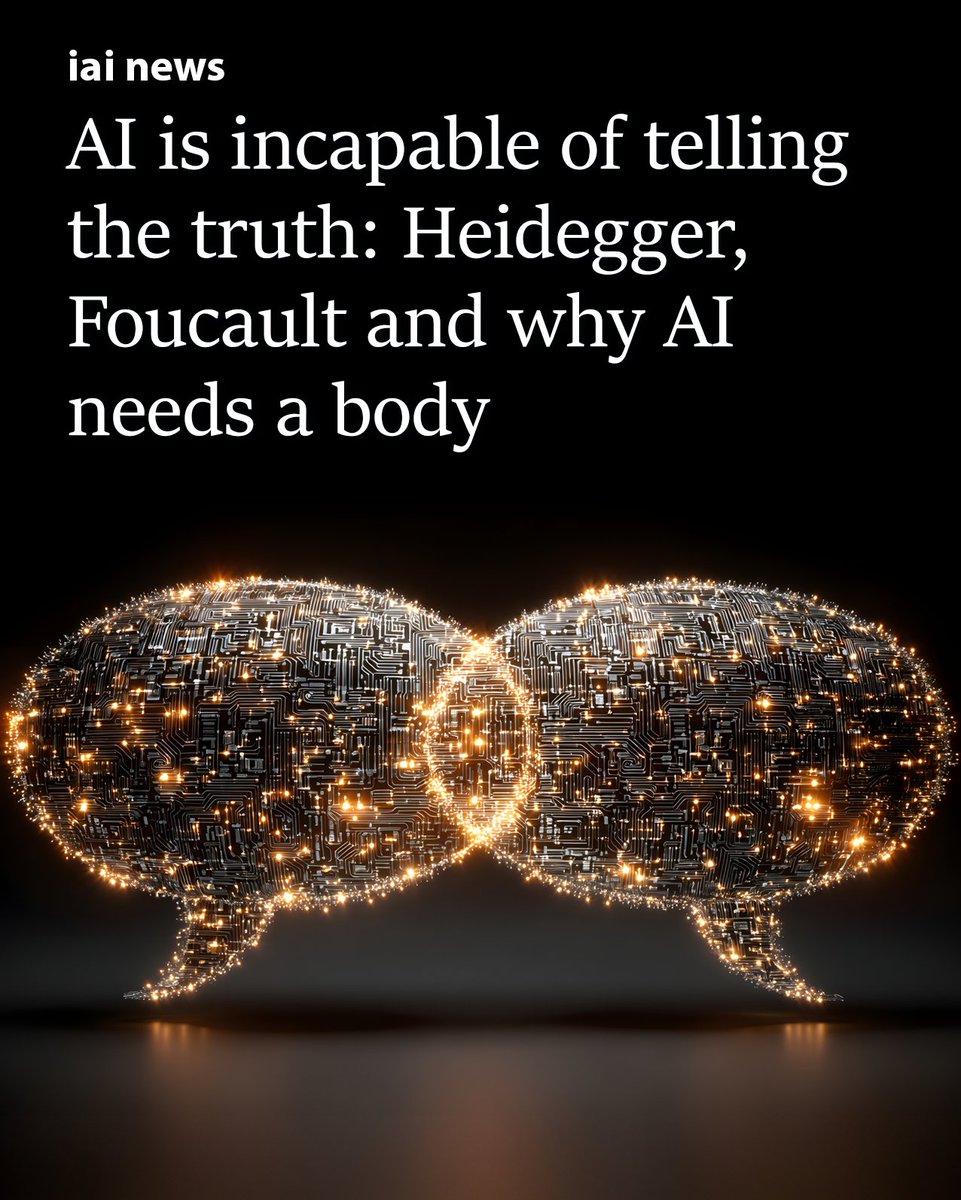
While we worry about AI spreading misinformation, the deeper problem is that AI may be incapable of telling the truth at all.
Philosophers Bun-Sun Kim and Hongjoon Jo argue that humans speak truthfully because something is genuinely at stake when we do: our finite, mortal existence.
It has no body, no anxiety, no conscience. It simply recombines the internet's idle chatter into statistically plausible text, with no self behind it to reveal or risk anything.
Outsourcing communication to AI traps us in a loop of mimicry, and threatens our own capacity for genuine thought.
Read the full article here. https://t.co/ywicONR4x9
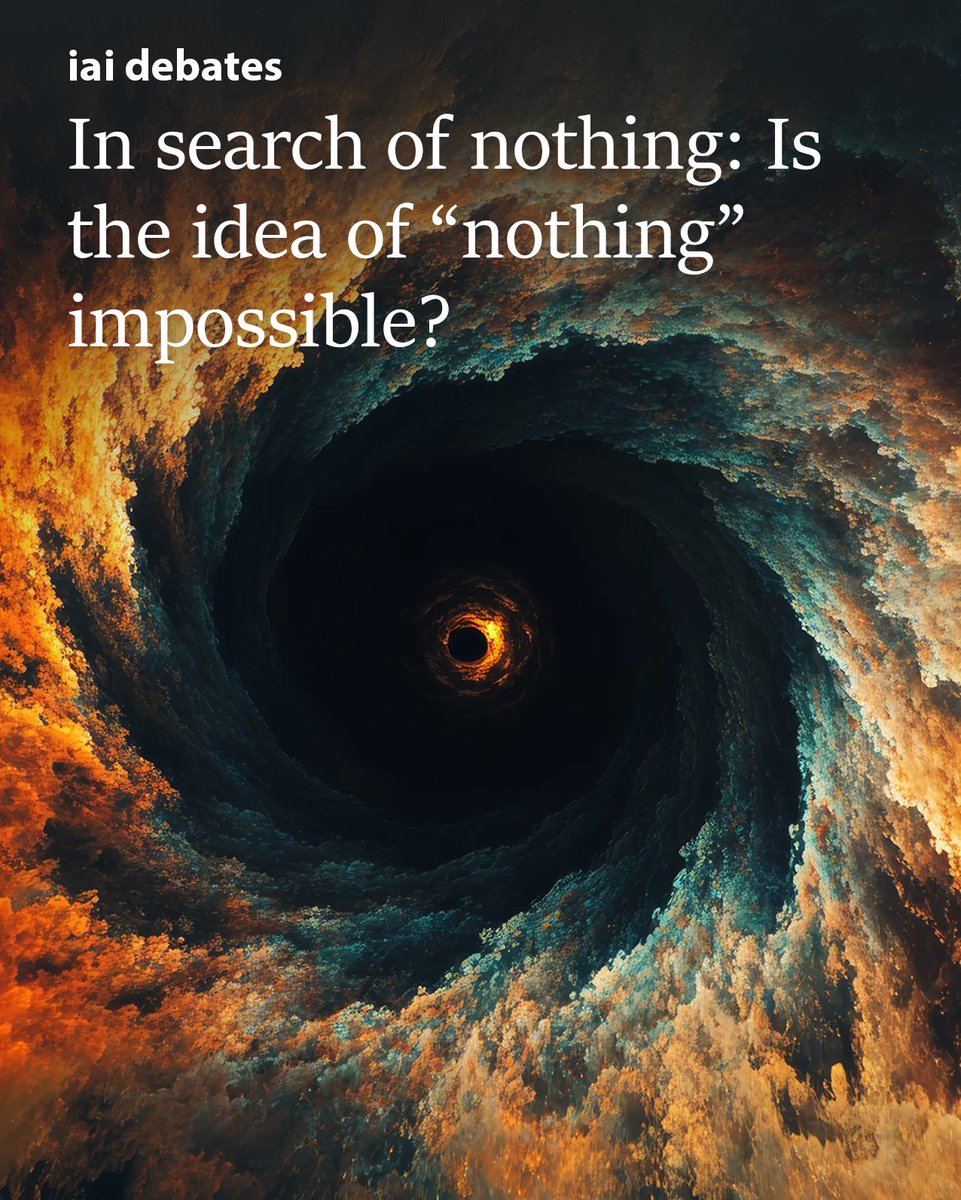
'Nothing' is an absence so absolute that even defining it becomes problematic.
We might imagine ‘nothing’ as the void, the empty vacuum of space, but in contemporary physics 'nothing' is nowhere to be found. In quantum field theory, even the vacuum of space is teeming with quantum fluctuations, and in general relativity, empty space still retains a minimum energy.
But to be true nothingness, our possible candidate would need to lack time, space, matter, energy, and relation to the rest of the universe.
Should we conclude that 'nothing' is an impossibility, and if so, that 'something' is inevitable? Or can we uncover the true nature of nothing, and with it, other mysteries of the universe as well?
Pioneering theoretical physicists David Deutsch and Lee Smolin, celebrated science writer Amanda Gefter debate. Tap here to watch now. https://t.co/lY5Iuh7Ogr
Voyager 1 and its twin, Voyager 2, are the only spacecraft to have operated beyond the heliosphere, which is the protective bubble of particles and magnetic fields created by the Sun. Voyager 1 crossed into the interstellar boundary in 2012, whereas Voyager 2, moving at a slower pace and in a different direction, reached that boundary in 2018. ✍️
In her new book, “Artificial Intimacy: Who We Become When We Talk to Machines,” MIT Prof. @STurkle offers a sharp critique of chatbots, which offer a kind of “pretend empathy” that may damage human relationships. @mit_shass@MITPSTS
https://t.co/9a5scoZjTJ