Expectations impact pain perception. The role of expectations on the development of mechanical hypersensitivity is poorly characterized. Here we compared a placebo, nocebo and control group measuring behavior and ERPs, finding effects on behavioral outcomes, but not ERPs.
One of my PhD babies. 🫢👶🏻
Despite ongoing and interesting discussions on (central) sensitization (thanks @DianaTorta for the tweet, enjoyed the review by Velasco! 📖), we think that psychophysics can be useful to identify signs of sensitization.
Do you agree? Take a look ⬇️
Check out articles like “The effects of virtual reality neuroscience-based therapy on clinical and neuroimaging outcomes in patients with chronic back pain: a randomized clinical trial” by @martaceko et al. in #PAIN https://t.co/TTacfv2Poe
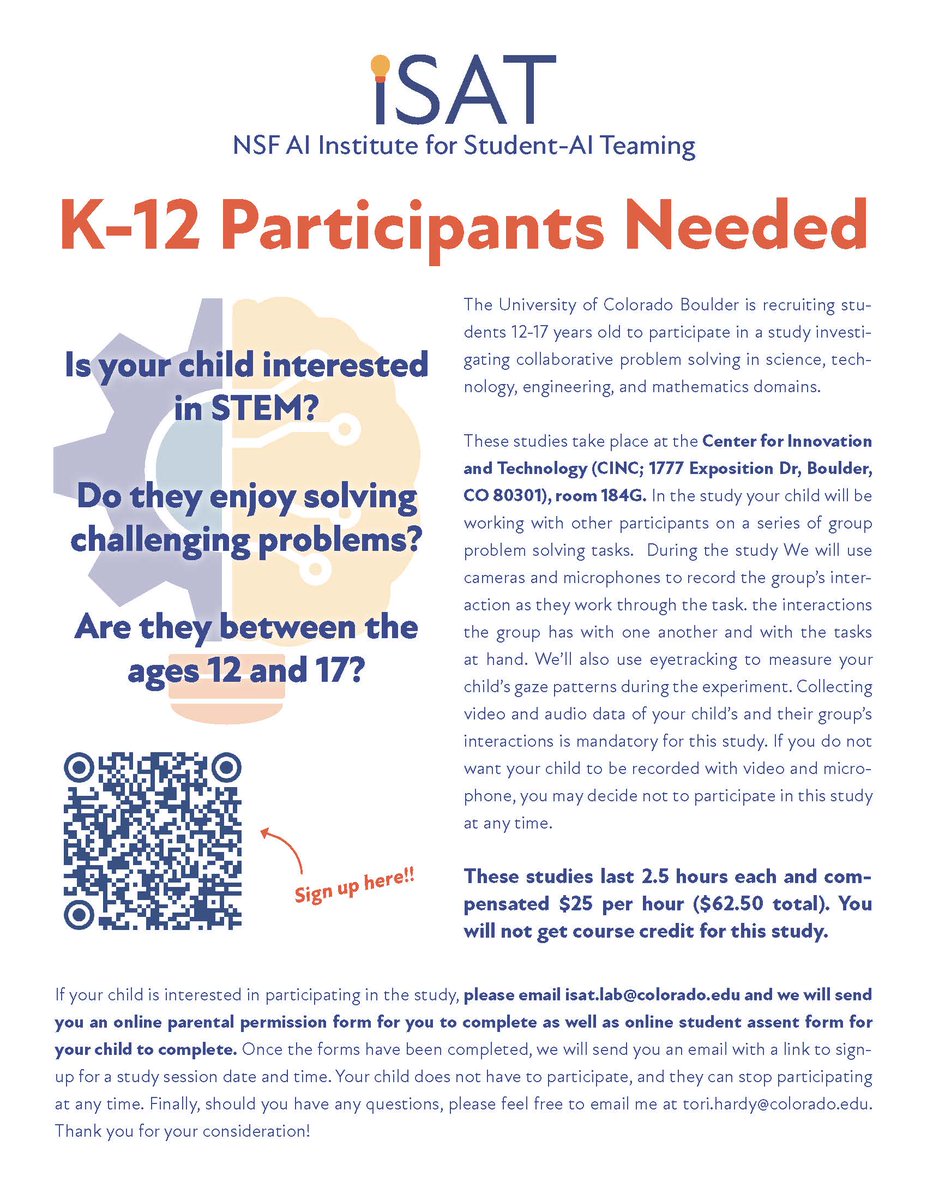
We are still recruiting 12-17 year olds to participate in our study at CU! We are studying small group collaboration and need 2-3 participants per session (share with your friends!). Participants will receive $62.50 in an Amazon giftcard. #boulder#stem@NSF_iSAT
Main thread:
My first project in CANlab @torwager has finally been published in @NatureNeuro ! In this work, we aimed to take a new look at the brain mechanisms underlying emotion regulation from a slightly different perspective:
https://t.co/vtiGlZOATc
Our Cognitive Security research team visited
@MDRSupdates last week. We participated in a full astronaut mission simulation to explore the physical and psychological challenges that astronauts face. We also got to test our neurophysiological sensors in the field!
Paper alert 🚨🗞️! IBG grad student @LydiaRader and faculty @Na_Friedman examine the theory that smoking causes pain chronification via strengthening of reward pathway connectivity in the brain. They do not find a mediation association but instead that the association is genetic
New study out, lead by @LydiaRader, where we show a shared genetic link between smoking and chronic pain.
https://t.co/8WrSxF4wju
Pain patients disproportionately smoke. Petre, Torbey, et al. 2015 HBM attributed this to shared striatal reward circuits without elaboration. 1/🧵
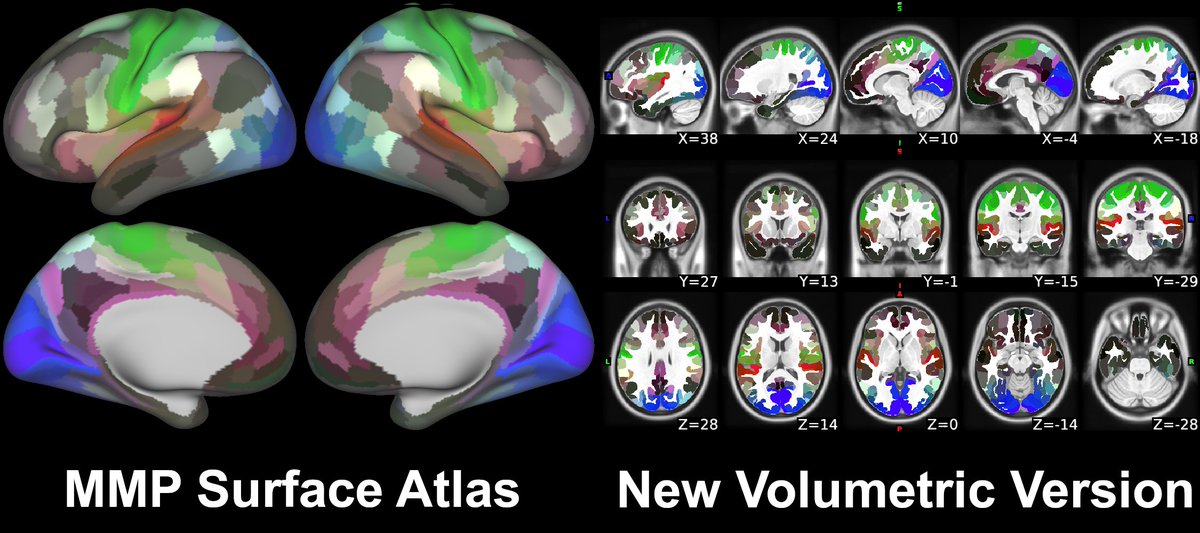
I've just projected the HCP Multimodal Parcellation (MMP, Glasser et al. 2016) to 2 popular stereotactic spaces (FSL's and fMRIprep's defaults) using registration fusion, the gold standard. This may be the best volumetric cortical atlas publicly available. https://t.co/BVQd9fcA8u
Academia is hard and is nonstop having an anxiety attacks by thinking that I am not good&competitive enough 😔 I am exhausted but at the same time freaking out not to stay in. Am I the only one who have consistently having these thoughts?
#AcademicTwitter@PostdocVoice
What is the brain basis of pleasure in humans? I’m excited to share work from my group at @EmoryPsychology with collaborators @TReAD_Lab, @DiegoPizzagalli, @RoeeAdmon combining predictive modeling and neuroimaging to shed light on this question. https://t.co/qo8UY8sHqL 1/4
Introducing https://t.co/zBDFUc48A0, a large language model (LLM) to assist neuroscience research. BrainGPT is trained on the vast neuroscience literature and can be used to optimize study design, detect anomalous results, and evaluate models against broad data patterns. (1/3)
ChatGPT has changed the world.
It does lack in some areas, but my favorite use case is leveraging it to teach me things twice as fast.
Here are the 10 best prompts to learn anything faster:
@NeuroIP@CSAN_LiU@MayoOnTheBrain what a great study using multiple complementary approaches in 4 participant groups (stress induction, emo conflict, behavioral measures, cortisol, endocann levels, fmri, surveys, skin conductance ... they did it all!)