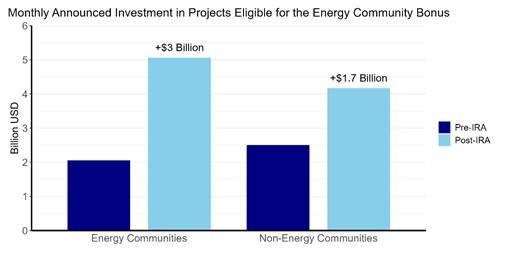
Our analysis, leveraging Clean Investment Monitor data from @MIT and @rhodium_group, shows that since the IRA passed, every month, an average of $5 billion of clean investment is announced in communities historically reliant on fossil energy.
https://t.co/EVjl1u7ovZ
Treasury’s new analysis on the impact of the Inflation Reduction Act shows how the law is driving clean energy investment to communities that have been left behind and at the forefront of fossil fuel production. https://t.co/0KghCjZbKl
Monuments are getting more support from both sides of the political spectrum, as well as from local communities. Which makes sense - there's mounting evidence that the environmental, economic, and cultural benefits outweigh the opportunity costs. Read all about it!
More National Monuments work! An awesome, comprehensive, accessible article by @margaretwalls1 published in @ReepAere. Discusses some history of the Antiquities Act, benefits and opportunity costs of monuments, and generally what all the hoopla is about
A new @ReepAere article by @MargaretWalls1 describes the history, status, and future outlook for #NationalMonuments and other protected #PublicLands in the western United States—and the conflicts and controversies that surround them. https://t.co/IS2nAPfrMl
ICYMI, @margaretwalls1 and I discuss how a conservation bill may serve as economic stimulus. We show jobs data for national park gateway communities, and draw analogies to natural disaster recovery #NationalParks#LWCF
With #NationalParks parks beginning a (limited) reopening this #MemorialDay weekend, RFF’s @mashenfarb & @margaretwalls1 write that directing funds toward the parks system could help rural communities hard hit by the decline in tourism driven by #COVID19. https://t.co/yfn6MH6j6X
Congress was poised to pass a #nationalparks and #LWCF funding bill in March. The bill has languished. Could it now be considered economic stimulus? @mashenfarb & I weigh in, showing jobs stats & drawing analogies from disaster recovery: https://t.co/y8aCEWfCDN
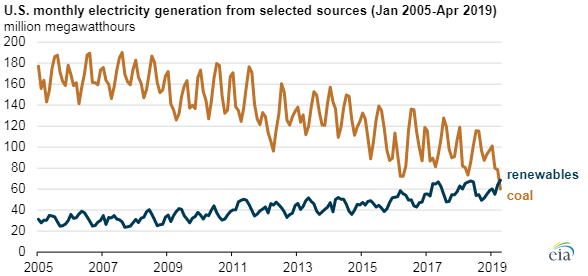
The May issue of Resources Magazine commemorates the 50th anniversary of #EarthDay with a compilation of environmental milestones, including implementation of legislation and policies that have contributed to the decline of US #AirPollution. Here’s a sneak peek. 🌎👀
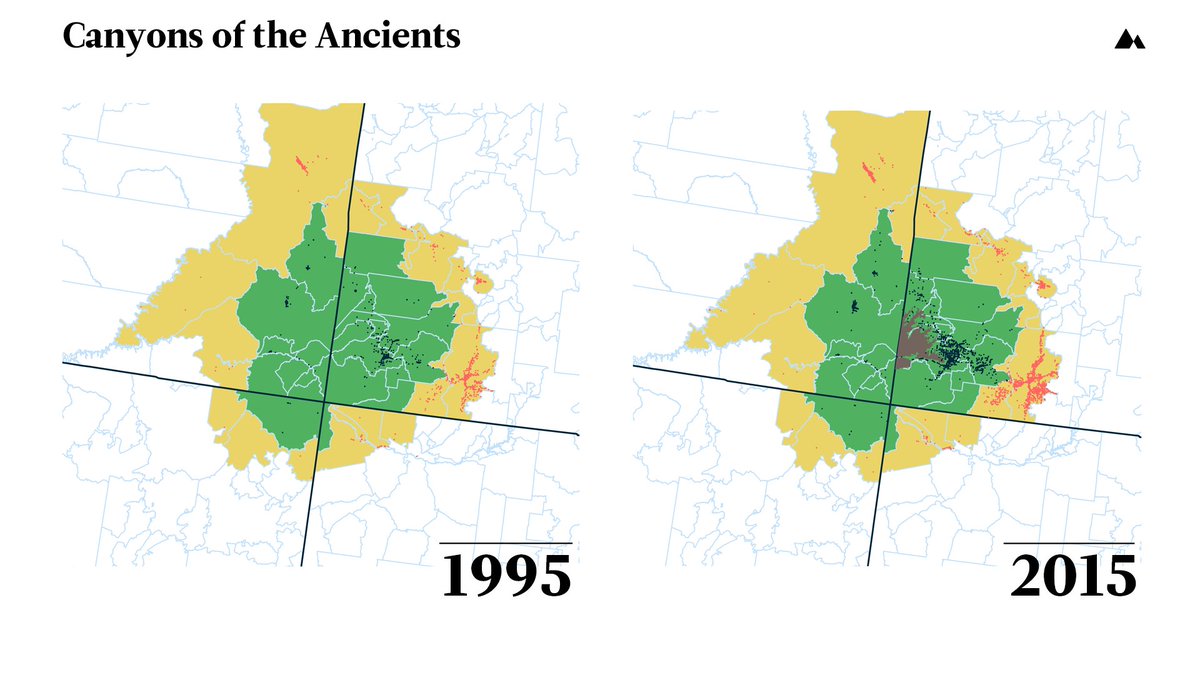
Declaring a national monument (🟤) can lead to an increase in nearby businesses (⚫) and total jobs. Here, the area within 25 km (🟢) of the monument outperforms the control area (🟡) in terms of number of new businesses. https://t.co/U4gPjeoykA
#ChartOfTheWeek
How do #NationalMonuments affect local economies? A new RFF study finds that declaring a national monument (🟤) leads to an avg increase in the total number of businesses (⚫) and jobs in areas within 25 km of the monuments (🟢). Learn more: https://t.co/4rBGK2s0FH
NEW: #NationalMonuments have had mostly positive effects on local economies in the #AmericanWest, according to a study in @scienceadvances by RFF researchers. Learn more about the groundbreaking research: https://t.co/5hmJJZi1YV
We dive into micro data to find nuanced answers to questions with direct policy relevance. On average, these 14 monuments increased the number of nearby establishments and jobs. Hopefully this paper makes a lasting contribution to public lands research and policy.
Margaret is a prolific researcher. Working alongside Margaret has been - and continues to be - a terrific opportunity for me to grow as a researcher. Her patience, attention to detail, and uncompromising commitment to rigor and policy impact come through in this paper.
We have a third presenter! @sarah_strochak from @urbaninstitute will talk about urbnmapr, an R tool for making mapping more accessible to researchers. Join us Wednesday night! RSVP: https://t.co/VAQolj0sDQ
Worth reading (I hope) -- my new article with @DickSchmalensee, "Learning from 30 Years of Cap-and-Trade," in the inaugural issue of the new and improved @ResourcesMag from @rff -- https://t.co/Jc0zqEKQzY
Check out this new blog post by me and @margaretwalls1 in RFF's @ResourcesMag. We are exploring the the reasons behind the seemingly low participation rates of people of color in #outdoorrecreation and visits to #NationalParks https://t.co/3TLUB0tie0