"The L2 Fee Vault: Pricing L1 Costs with Feedback Control", new post co-authored with @upavloff. Most L2 fee mechs today (e.g. OP Stack) price L1 costs using the L1 fee at sequencing time, not the realized cost at posting time, with no mechanism to correct when they diverge. 🧵👇
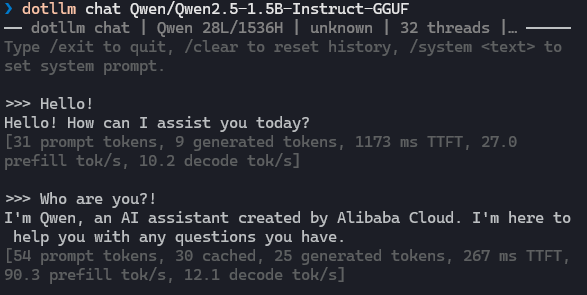
I've built a full LLM inference engine in C#/.NET 10. From scratch. Not a wrapper - native GGUF loading, BPE tokenizer, attention, KV-cache, SIMD-vectorized CPU kernels, CUDA GPU backend, OpenAI-compatible API. Solo dev, ~2 months, AI-assisted (not vibe-coded!). First preview is out.
Check it out for mode details at https://t.co/Bl5wAYalYY and https://t.co/rQWhKN0iVA
What you're watching: a swap on Gnosis mainnet routed through L2 liquidity on Surge. Bridge, swap, settlement, all in a single L1 transaction.
ZK proven by @ziskvm
https://t.co/uU4PJjBQlE
Anthropic just pulled the oldest trick in SaaS pricing.
I pay $200/mo for Claude Max. My limits have been noticeably worse this past week.
Now they announce 2x off-peak usage for two weeks. Sounds generous.
But here’s what actually happens: limits quietly drop, a temporary 2x makes the reduced limit feel normal, the promo ends, and you’re left at a baseline lower than where you started. You just didn’t notice the downgrade because the 2x absorbed the transition.
These AI plans are massively subsidized. The raw compute behind a heavy user costs multiples of the subscription price. Every move like this is the subsidy quietly correcting.
Very sneaky, Anthropic.
Six months ago, we said that client diversity should extend to Ethereum’s Distributed Validator layer.
Now, 100+ pull requests later, @Nethermind has made the Rust-based Pluto codebase public.
Go read the code, and see how you can contribute.
The most critical improvement for higher throughput on the EVM is gas pricing. @arbitrum is taking the right steps toward scaling.
This will unlock the full power of the @Nethermind client, which recently added support for Arbitrum.
https://t.co/kPLekVTNFd
I am stepping down from my co-ED role at the EF at the end of February 2026. Bastian Aue is taking over the co-ED role alongside Hsiao-Wei. The future is bright for builders, for Ethereum, for the EF, and for me.
I wrote a longer blog post (link below). I will answer all of your questions here, at ETHDenver, and during podcasts and AMAs that will be there over the next few days.
https://t.co/cV1ApqtrVO
🧵 Aztec entered the Ignition era. Nethermind is joining as a core contributor to the Aztec ecosystem, focused on blockchain engineering and research for the @aztecnetwork.
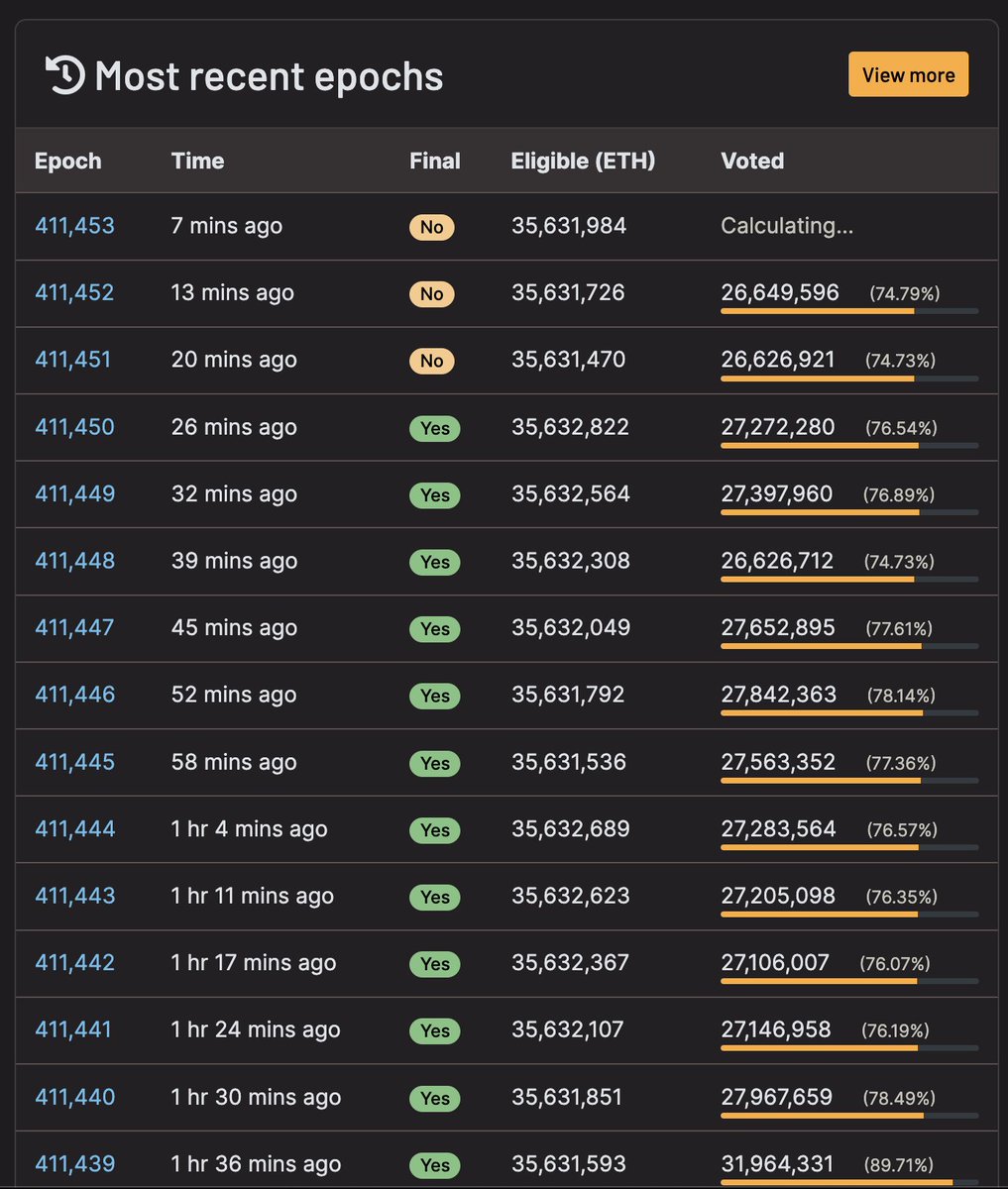
What you are seeing live, is client diversity keeping Ethereum afloat during network degradation. This is why we're built different. This is why we run multi-node implementations and this is why there are 11+ client teams that Build on Ethereum.
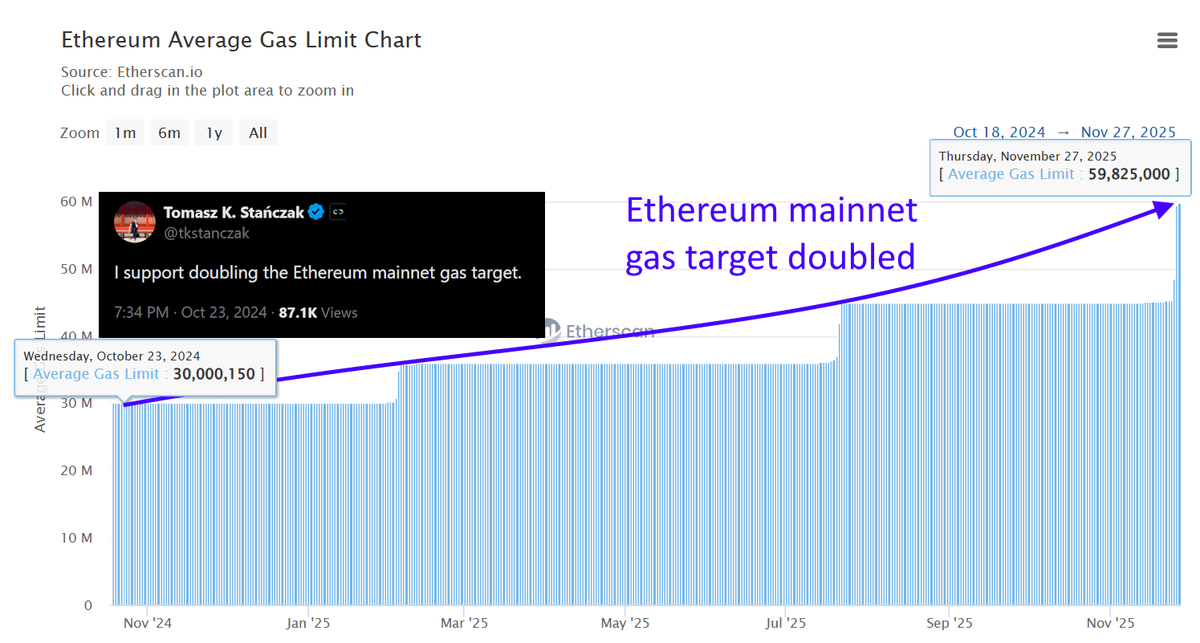
Remember when "double L1 gas" sounded spicy on Twitter?
The Ethereum gas limit debate went from "too risky" to "already live" in under a year.
Respect to @tkstanczak for backing the push; Ethereum devs for optimizing and validators for believing in somETHing
Had a few chats like this at Devconnect:
Me: “How do you like @Nethermind client? Any feedback?”
Node operator: (long, thoughtful silence…) “Hmm… no. It just works.”
Performance is good, but making running nodes boring is always goal #1🙂
Ignition Chain is live, bringing a fully decentralized consensus layer to the @aztecnetwork.
We are building with Aztec because we believe in bringing decentralized privacy to Ethereum.
See how decentralized Ignition already is: https://t.co/IKtJXE8dtC
https://t.co/ugZ2B3CHeq
Someone needs to finally say it: choosing Rust or any other language doesn’t make your software fast. @Nethermind is fast because we mastered engineering and built a strong team.
People tend to overestimate the influence of your language choice and underestimate other factors such as architectures, algorithms & data structures, how familiar your team is with the given programming language, your priorities, and how your QA processes work (extremely important if your client gets high adoption; I prefer software that works rather than software that breaks fast, and this is always our number one priority).
The fact that it works for us is because we hired super strong engineers and .NET legends into our team (plus QAs, leads, DevOps). Also, I think people underestimate C#.
C# has amazing tooling that makes your team more productive and allows you to write highly performant code and control the GC, and the main limitation is how well engineers know things. And it works the same with Rust, there is no way of skipping solid engineering. If I built a new team from scratch, I might pick Rust or C#, or something else; again, it depends on many factors.
There is still lots of space to keep improving Ethereum clients and blockchains on the design level. There is still not enough data gathered to describe EL performance fully. So about the labels of “the fastest client”: EL performance has many flavors and can’t be described with one metric (different RPC endpoints, syncing, archive, block building, and many more).
If we would like to simplify EL performance to one metric, it would be how much throughput you can handle, and I am proud that Nethermind is crushing it, and if simplifying it to one metric, I can proudly say that Nethermind is the fastest client.
ENS is moving Namechain to @Nethermind's Surge, a based rollup framework built on the @taikoxyz stack.
We have always believed that based sequencing and native rollups best support the core values of decentralization necessary for Namechain: fast finality, Ethereum-native settlement, and censorship resistance.