Our latest work is out now @naturecomms -- we engineered synthetic gate-based receptors for TIGIT/CD73 on iPSC-derived NK cells and used them in glioblastoma. Great effort by Kyle Lupo and a wonderful team! https://t.co/DVe92YAiM8
#ScienceSaturday Treating #neurological disorders like #brain tumors is difficult in part due to a protective “wall” called the blood-brain barrier, meant to block toxins from reaching brain cells.
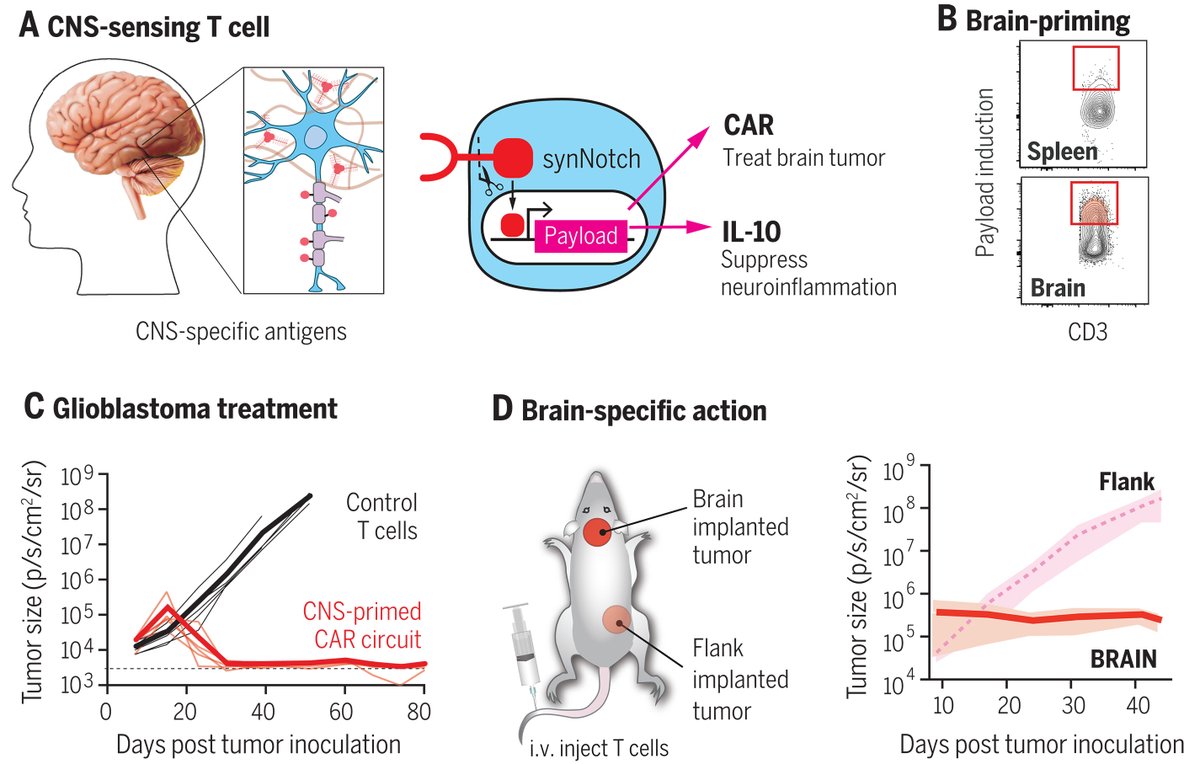
➡️ In this study, @DrMilosSimic, @NishRReddy, Et al. developed brain-sensing T cells, engineered to deliver brain tumor-specific chimeric antigen receptors upon sensing the brain tumor microenvironment.
➡️ This approach could pave the way for safer and more effective treatments for diseases like brain tumors, brain metastases, neuro-inflammation and more.
🔗 Here's a link to the full article: https://t.co/hcyBw881xB
Could one envision a synthetic receptor technology that is fully programmable, able to detect diverse extracellular antigens – both soluble and cell-attached – and convert that recognition into a wide range of intracellular responses, from transgene expression and real-time fluorescence to modulation of innate cell behavior (excitation or inhibition of neurons, induction of cell migration, etc.)?
Today we report in Nature a new technology platform that provides a step in that direction: PAGERs, for Programmable Antigen-gated G protein-coupled Engineered Receptors, convert recognition of extracellular soluble or cell-attached antigens into diverse user-selected responses. PAGERs are based on G-protein coupled receptors (GPCRs), which themselves are not structurally modular, but we were able to build in modular antigen gating by fusing an antagonist peptide to the extracellular N-terminal end, and then gating the antagonist with a fused antigen-binding nanobody. When antigen binds, it sterically interferes with the antagonist, leading to relief of receptor inhibition. Drug or agonist can then turn on PAGER.
https://t.co/Clt8yjyk2y
#CARTcells for #DIPG#DMG clinical trial (1st arm) results are out today. Full Tweetorial coming, but first want to share the story of a patient whose #DIPG has disappeared for over 3 years. It is a milestone and moment of hope on a journey filled with so much grief.
“There’s a lot of loss that led to this research,” Drew’s dad said. “I hope those families know that this success is because of them.”
https://t.co/rNnHkL6pQR
1/ This is the next chapter of a story about courageous patients and their families, of multidisciplinary teamwork, and hard-fought steps forward to effective therapy for #DIPG#DMG, a universally lethal cancer of the brain and spinal cord. 🧵https://t.co/hMe0XYplKz
Incredible to be in the north hills of Croatia to speak about immune cell modulation and immunotherapy at @SiC_2022 courtesy of the Croatian Chemical Society. Hope it’s the first of more trips back! #croatia
I've been on a Twitter moratorium for the last week given the.. news, but I'm happy to announce a new story from our group @NatImmunol describing a metabolic sensitivity of exhausted T cells to lactic acid in tumors! 1/ https://t.co/3xdR54q1AM
Thank you for highlighting our new approach to cancer immunotherapy using non pathogenic bacteria to surface display and deliver biologics to TME.. Eager to evaluate it in the clinic. Collaboration with Prof Jiahe Li’s group at @UMich@DanaFarber@Romee_Lab@NatureBiotech
So proud of Dr. Yao for graduating with a PhD from Purdue. We are already missing you in the lab but I’m so excited for everything ahead for you! Huge, deserved congratulations
🙌🧬It’s official: the first TCR gene therapy for the treatment of cancer received @US_FDA approval this evening. A milestone event for the oncology community and the 2nd cell therapy approved for solid cancers! @Adaptimmune#Tcellpower
https://t.co/VAaJmxTnBG
Proud of Purdue Summer Undergraduate Research Fellowship student Drake for a great presentation of his new research project. It was absolutely great having him in the lab for the past few weeks as a SURF student! @PurdueEngineers
Thrilled to announce the publication of our latest research in Nature Immunology. Joining forces with 20 laboratories in Europe and USA, we identified the three prominent NK cell subsets in human: NK1, NK2, and NK3: https://t.co/VMPTPpiLOV
The phrase ‘metastasis accounts for 90% of cancer deaths’ is one of the most widely used in cancer research, yet it is overly simplistic & imprecise. Here we dig deeper into the events leading to cancer mortality
https://t.co/aiajJ7X7Z4 1/2
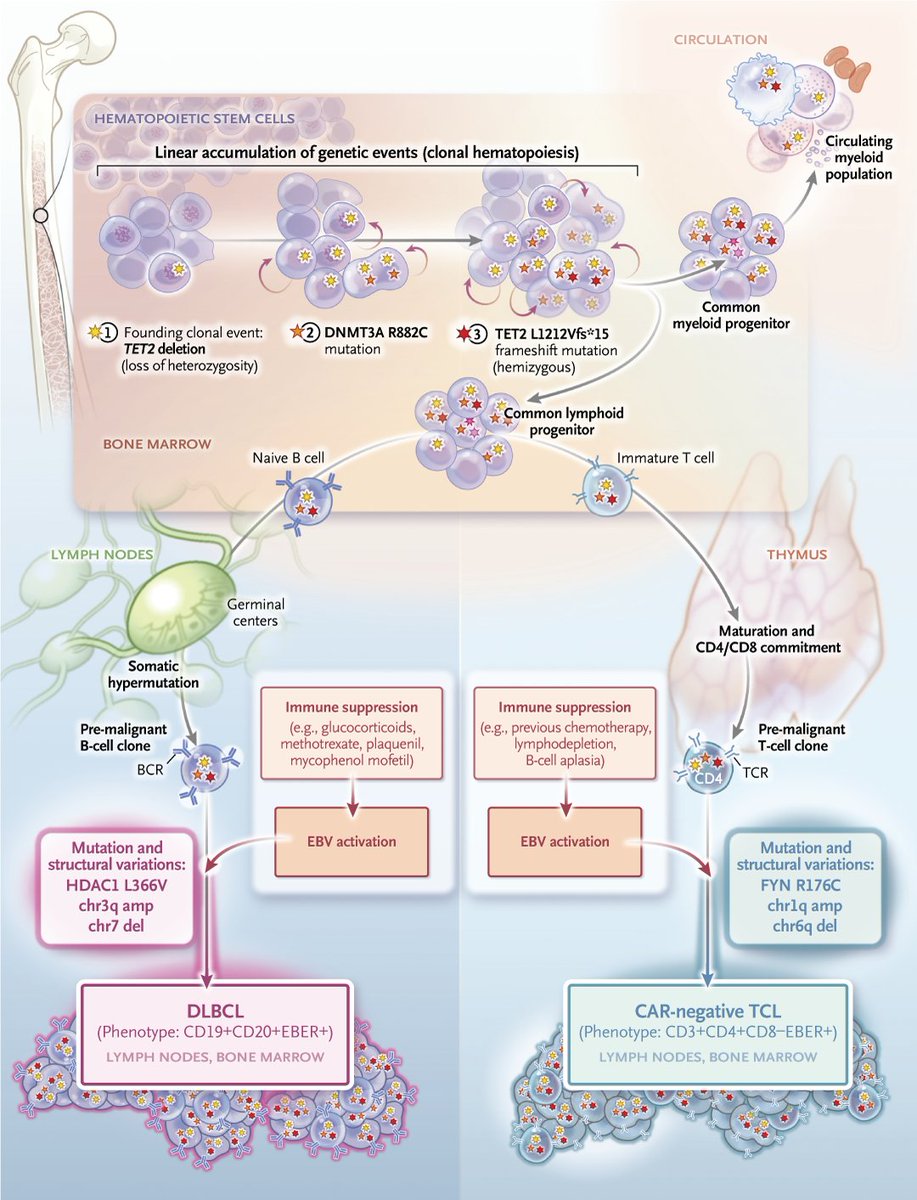
Second tumors after CAR T-cell therapy are rare, and in one case of a secondary T-cell lymphoma, detailed analysis showed that the genetic construct that was used to make the CAR T cells was unrelated to the second tumor. Read the full study results: https://t.co/mxGSRyPgV2