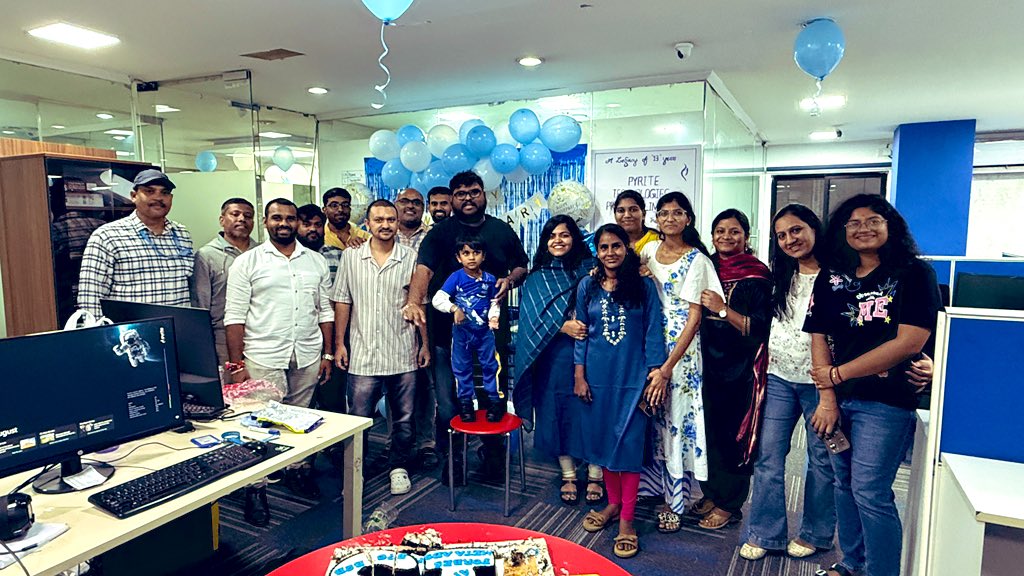
From a 2-member team in 2012 to almost 40 members in 2025, the journey of Pyrite Technologies (@pyritetech) has been nothing short of impossible for a budding entrepreneur and SEO freak like me.
On our 13th anniversary, I want to thank all our clients, families, friends, and well-wishers who’ve stood by us through every step. Your trust is the reason we are here today.
Here’s to 13 years of Pyrite Technologies—and to an even brighter future ahead. 🙏✨
@David_mduw So apparently the keywords with no volume and may be low volume are popping up. How much of this traffic has converted to leads or revenue. 🤔
In the last 6 months at @Ahrefs, we analyzed over 1 billion data points across 14 studies. Here's what we learned about AI search optimization:
1) "Best X" blog listicles are the single most prominent content format cited by AI chatbots. They make up 43.8% of all page types cited by ChatGPT specifically.
2) 67% of ChatGPT's top 1,000 citations come from sources marketers can't influence: Wikipedia (29.7%), homepages (23.8%), app stores (6.6%). Only 32.3% are influenceable content like educational pages, reviews, news, and blog posts.
3) 28.3% of ChatGPT's most-cited pages have zero Google organic visibility. These pages get cited repeatedly by ChatGPT despite not ranking in Google at all. A completely separate discovery layer.
4) ChatGPT only cites about 50% of the URLs it retrieves. It fetches dozens of pages per query but uses half as background context without attribution. This means that being retrieved and being cited are very different things.
5) Adding schema markup had zero meaningful impact on AI citations. AI Overviews actually dipped −4.6%, while AI Mode (+2.4%) and ChatGPT (+2.2%) showed changes indistinguishable from zero.
6) YouTube mentions have the highest correlation (0.737) with AI brand visibility out of all the factors we studied (including all the conventional SEO metrics like backlinks, page count, DR, etc). This held true for both Google-owned and OpenAI products.
7) AI Overviews reduce clicks to the #1 result by 58%. That’s up from 34.5% just 10 months earlier. The trend is accelerating.
8) 99.9% of AI Overviews appear on informational intent queries. Transactional, navigational, and local searches are almost entirely AIO-free. Shopping triggers AIOs just 3.2% of the time.
9) For a given search query, Google’s AI Mode and AI Overviews reach the same conclusions 86% of the time — but cite almost entirely different sources (only 13.7% citation overlap).
10) AI Overviews change every 2.15 days on average, with 70% of content differing between consecutive observations. But semantic similarity stays at 0.95. The words, sources, and entities constantly shuffle, but the actual meaning barely moves.
Why are B2B brands suddenly getting discovered through ChatGPT faster than Google?
Because AI search doesn’t work like traditional search anymore.
Platforms like ChatGPT scan and understand signals from review ecosystems such as G2, Trustpilot, TrustRadius, Capterra, Reddit, forums, customer feedback, brand mentions, and real user experiences across the internet.
The brands with stronger reviews, trust signals, authority, and consistent customer sentiment are getting cited more often inside AI generated answers.
Google ranks pages.
AI ranks trust.
This is why businesses investing in customer experience, reviews, authority content, and digital reputation are starting to dominate AI search visibility before they even rank #1 on Google.
The future of B2B traffic is shifting from “ranking pages” to “becoming the most trusted source.”
#b2bseo #aiseo #chatgptseo #b2b
@lilyraynyc Whatever doubts everyone had about LLMs.txt came out to be true now and more people are going to spam now. GEO bros are now going to convince that it does. I hope Google stays consistent in guiding people. 🙂↕️
@emiliesyverson@gaganghotra_@boshify So apparently Backlinko was acquired and killed by Semrush and now Semrush is aquired by Adobe. You know what I mean!