Our new work from the Schwartz lab (ft.@LIFE_Boulder) is out! https://t.co/CANPPwyIJV Here, we showed how to use DC fields to systematically control charged nanoparticles from random fast searching to directional delivery in an interconnected porous environments.
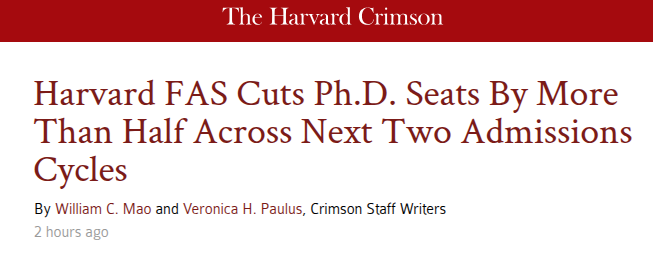
🚨Breaking: @Harvard just announced massive cuts to dozens of its PhD programs, citing “financial pressure.”
- Science PhD admissions reduced by more than 75%
- Arts & Humanities reduced by about 60%
- Social Sciences by 50–70%
- History by 60%
- Biology by 75%
- The German department will lose all PhD seats
- Sociology from six PhD students to zero
Researchers at the @CUBoulder, including Camille Dreyfus Teacher-Scholar @WyattShieldsIV, have created "a new way to build and control tiny particles that can move and work like microscopic robots."
https://t.co/6AJRxoo2yq
Newest work in #AdvancedHealthcareMaterials! 🔥🔥🔥 Macrophages improve delivery of particles to tumors ~5-fold and particle shape regulates cell function after delivery. Congrats @matthewmckwan and co-authors https://t.co/fzZzdnetQt
Ionic Liquid-Mediated Delivery of Ruxolitinib to Skin Using an Adhesive Topical Hydrogel System, out now in #AdvancedHealthcareMaterials by Nicole Day, co-authors, and collaborators @junling_g, @EdenTanner 👇https://t.co/INCtg5NpLe
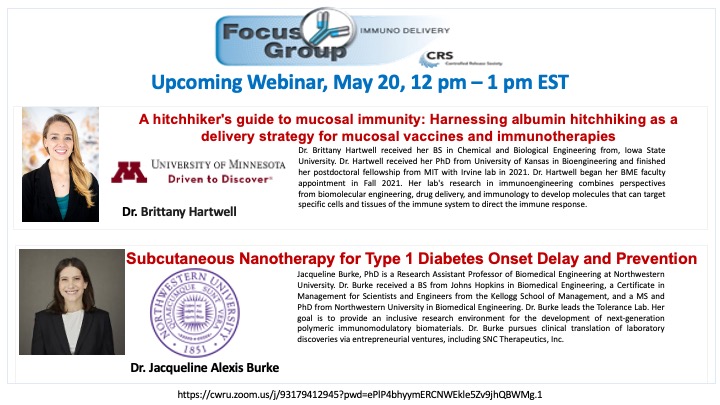
On behalf of the @CRS_FG_Immuno at @CRSScience, we are excited to introduce the third installment of our webinar series highlighting rising-star early career faculty in Immuno Delivery! 💫 Join us tomorrow at noon ET (9am PT) via the link below!
The university will not surrender its independence or relinquish its constitutional rights. Neither Harvard nor any other private university can allow itself to be taken over by the federal government. https://t.co/5k5t9RYYC2
🚨 BREAKING: With @NIH cuts leaving young researchers in limbo, CRI is stepping up - $2.5M for postdocs to keep #CancerResearch moving forward. Breakthroughs tomorrow depend on investing in young scientists today. Read more: https://t.co/7p0tHTHD3Y #FundingScience
Super excited; Published today in @CellPressNews@Device_CP, we report a multichannel acoustofluidic device driven by siphons for rapid, mulitplexed, picomolar-level protein detection from blood 👇https://t.co/aD1bgZ9q0l
Very sad to hear that UMass is rescinding all PhD admissions for Fall 2025. This means there will be no new PhD cohort, and UMass will not have a graduating class that year. This is just unprecedented and I am so very sorry for all the affected students.
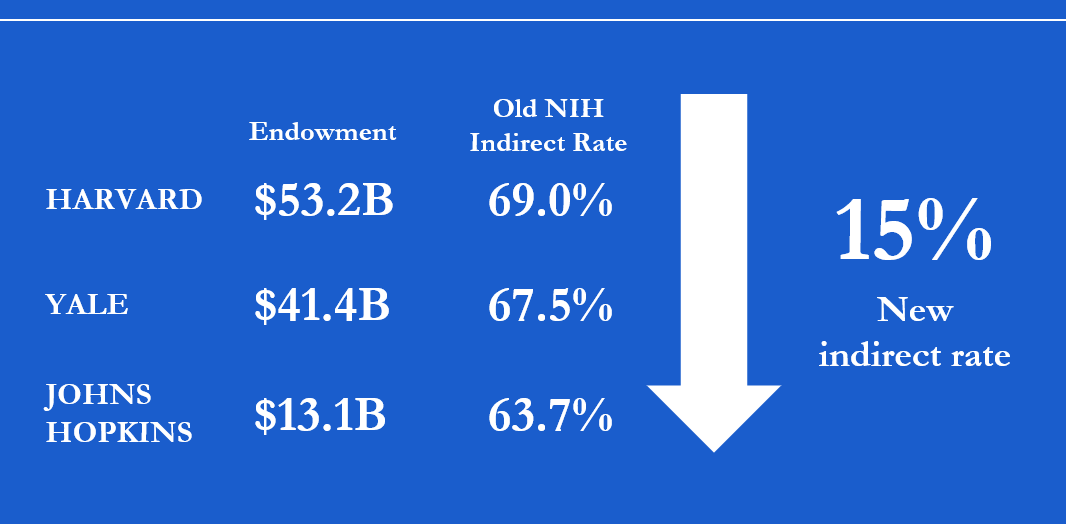
Last year, $9B of the $35B that the National Institutes of Health (NIH) granted for research was used for administrative overhead, what is known as “indirect costs.” Today, NIH lowered the maximum indirect cost rate research institutions can charge the government to 15%, above what many major foundations allow and much lower than the 60%+ that some institutions charge the government today. This change will save more than $4B a year effective immediately.
Thrilled to share our @ScienceAdvances paper at https://t.co/mfb6tq7WN7!
Acoustic pipette to rapidly detect picomolar biomarkers from blood.
If you like:
Acoustics 🔊
Microfluidics 💧
Biological sensing 🧪
Engineered particles 🟢
Fluorescence detection 🔬
See our tweetorial 🧵
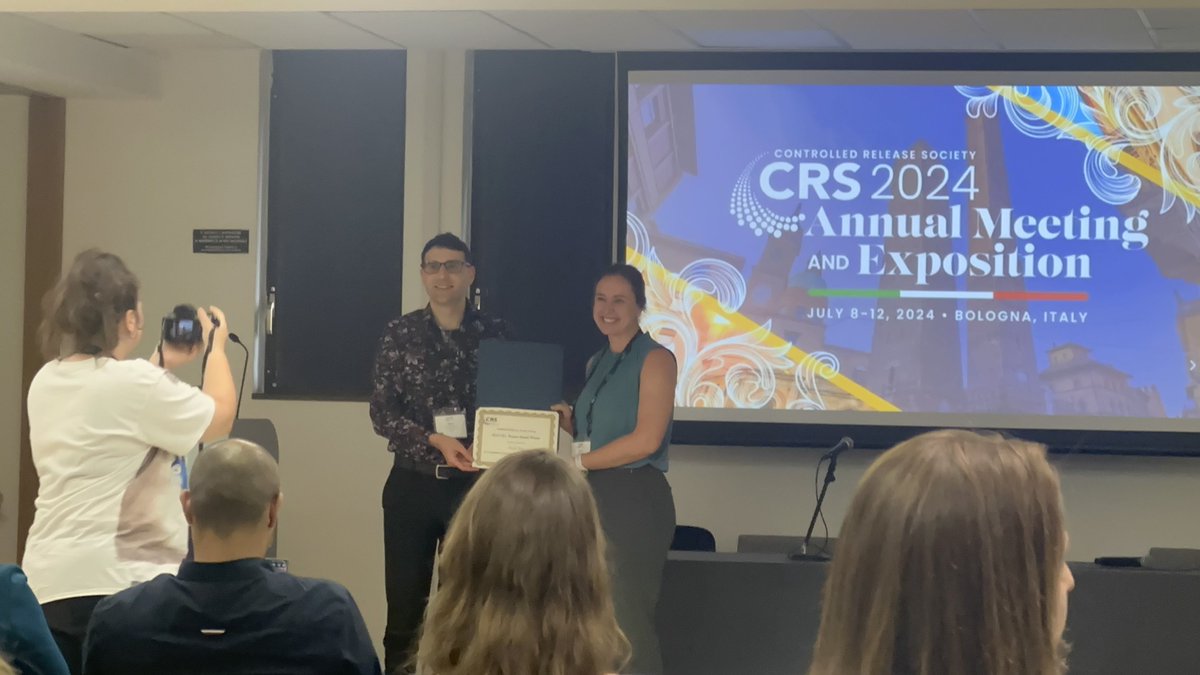
Closing the chapter on a great SFB Western Symposium. Thanks to @FarnsworthLab, @ChelseaMagin, and the students who made this a great meeting. Great job to my students on their presentations and to Nicole Day and @matthewmckwan on winning conference awards!
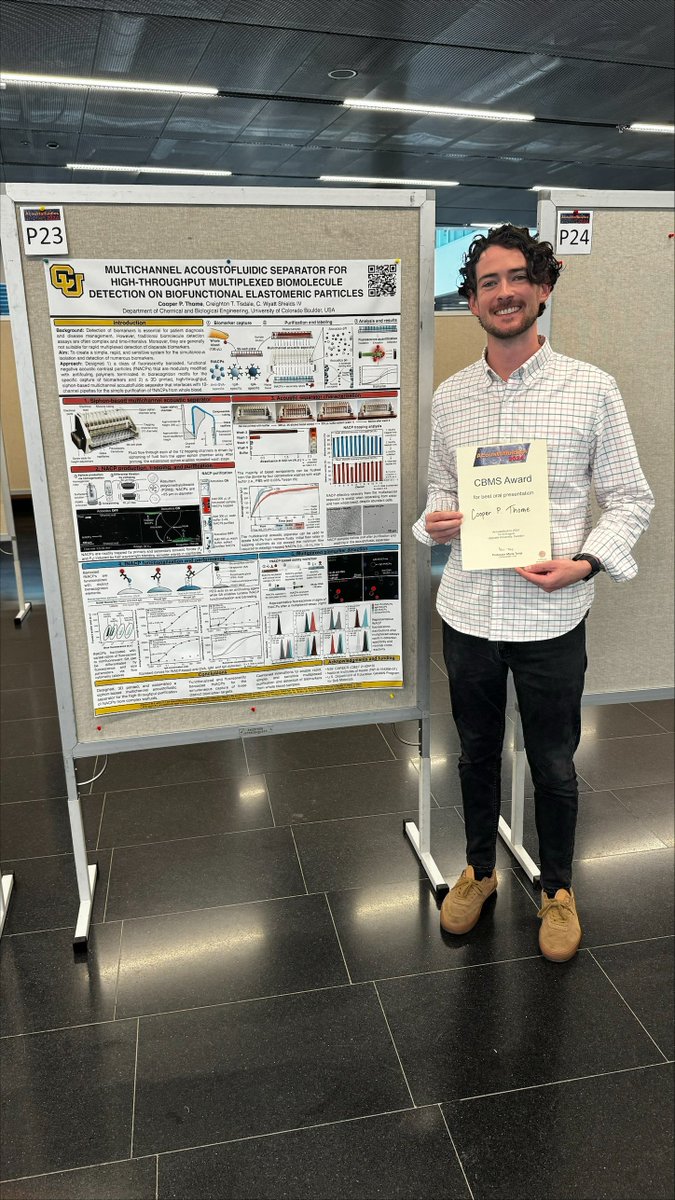
Congratulations to Shields Lab member Cooper Thome for winning the Chemical and Biological Microsystems Society best oral presentation award in Stockholm this week at Acoustofluidics. A rapid and acoustically driven biosensor device coming soon to a journal near you! 👀🌟
Did you know mesoporous silica nanoparticles can be modified to impart mechanical and chemical agonism of macrophages? 🤔 Congratulations Taylor on your first-author paper! 🎉 Check out his results below🚨😎👇 https://t.co/gsnHxhvIqx