A Generalized Protein Design ML Model Enables Generation of Functional De Novo Proteins
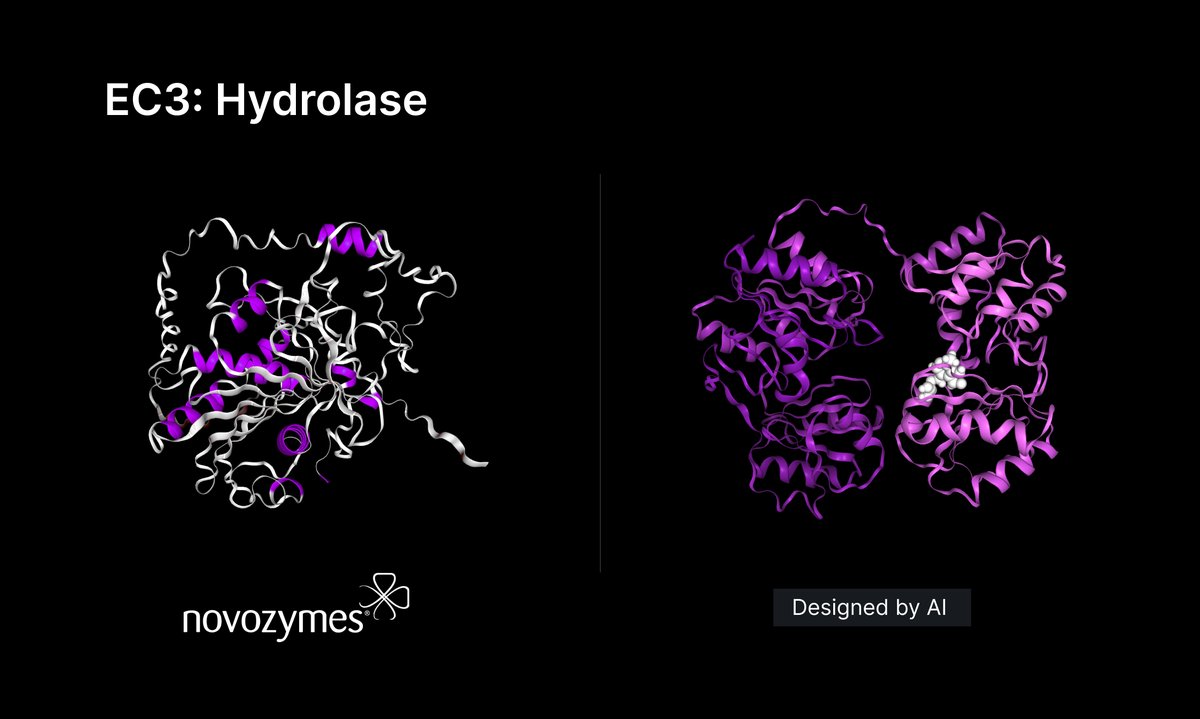
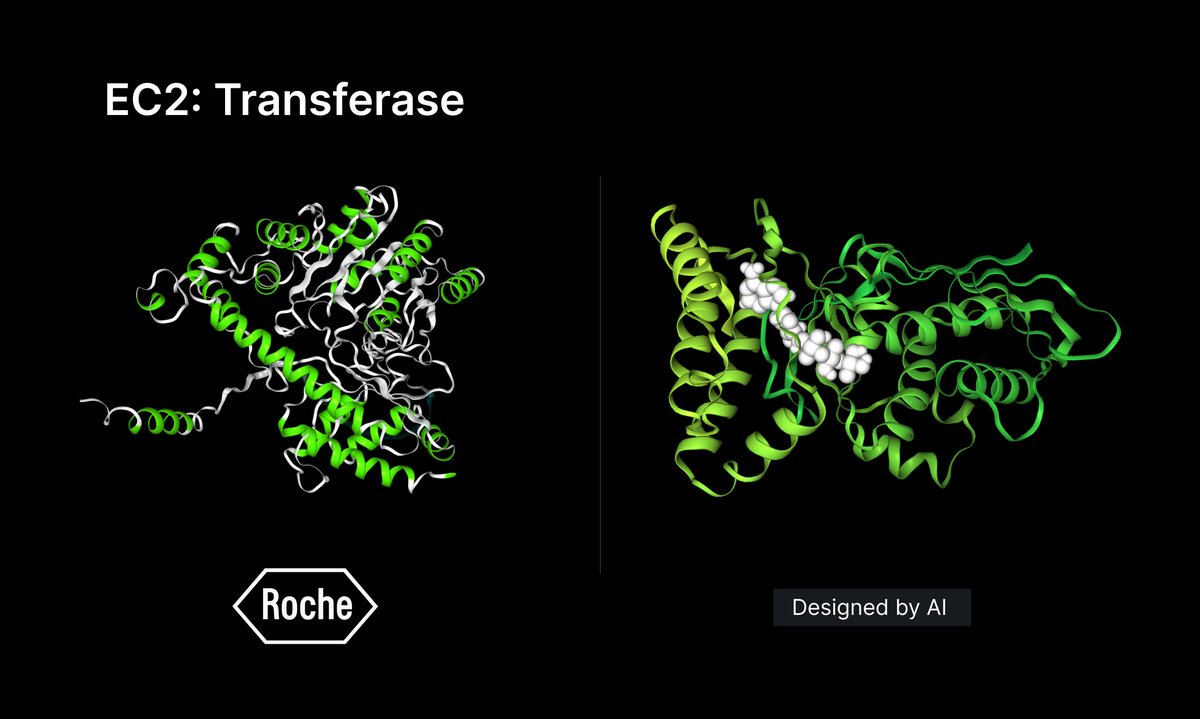
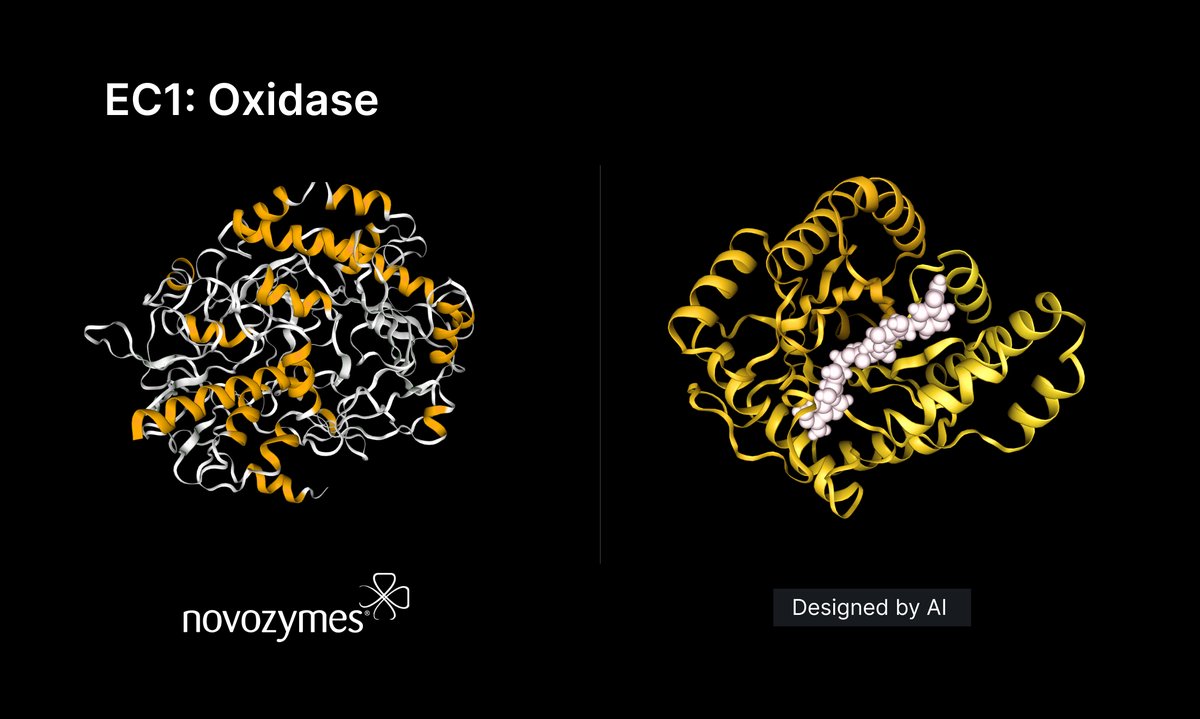
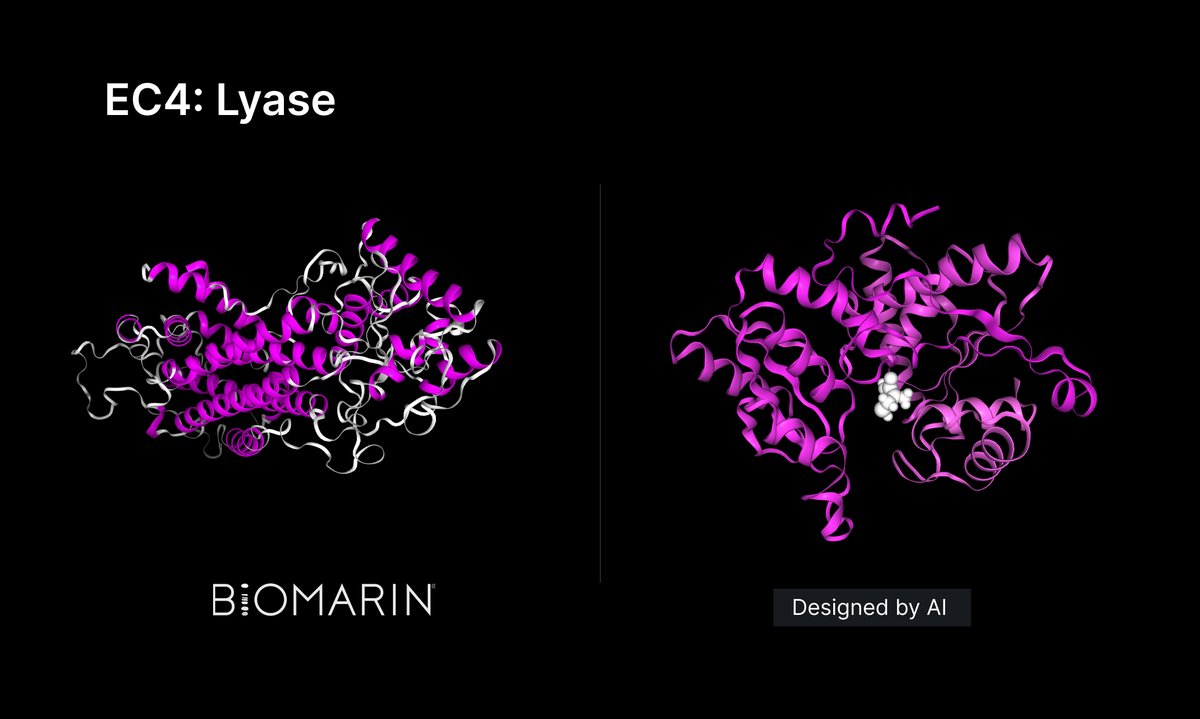
1. This paper introduces MP4, a transformer-based AI model designed to generate functional de novo proteins from minimal text prompts. Unlike traditional models that focus on predefined backbones, MP4 adopts a text-to-protein approach, allowing for more flexible and generalizable protein design.
2. MP4 is trained on a diverse dataset of 138,000 tokens and 3.2 billion unique data points, enabling it to learn complex relationships between sequence, structure, and function. The model simultaneously optimizes multiple properties, including structural foldability, functional specificity, and biological feasibility.
3. The generated sequences demonstrate high novelty, with many sequences showing at least 50% difference from known natural proteins. The model's Seqdif scores range from 50 to 80, indicating significant exploration of the sequence space.
4. MP4 demonstrates impressive predictive performance, with generated sequences showing high structural stability. The average predicted local distance difference test (pLDDT) score is 82.6, highlighting the model’s ability to produce stable protein structures.
5. Experimental validation was conducted on 94 selected proteins, of which 84% successfully expressed in a prokaryotic cell-free system. Thermostability assessments revealed average melting temperatures exceeding 62°C, with the most stable proteins approaching 90°C.
6. MP4 offers a versatile tool for rational protein design, generating proteins that exhibit desired functional properties, efficient expression, and robust stability. Future work will expand the vocabulary of functional prompts and improve integration of structural predictions to enhance design accuracy.
@mparsa_@kalantari11@KathyYWei1@310ai__
💻Code: https://t.co/8P5VXGqlDw
📜Paper: https://t.co/RwDu7WMKZY
#MP4 #DeNovoProteinDesign #TransformerModels #ProteinEngineering #Bioinformatics #MachineLearning #AI #ProteinDesign
No one becomes a clinician to do paperwork, but it's becoming a bigger and bigger administrative burden, taking time and attention away from actually treating and supporting patients.
That’s why we’re introducing Microsoft Dragon Copilot, the industry’s first AI assistant for clinical workflow.
We're thrilled to present ESM3 in @ScienceMagazine. ESM3 is a generative language model that reasons over the three fundamental properties of proteins: sequence, structure, and function. Today we're making ESM3 available free to researchers worldwide via the public beta of an API for biological intelligence.
Trained with over a trillion teraflops of compute, this is the first time a model of this scale has been trained for biology, pushing the frontier of AI for biological discovery and engineering.
ESM3 learns to represent the immense complexity of protein biology, learning from billions of natural proteins. From this training it developed the capability to design proteins, responding to complex prompts combining atomic level details and high level instructions to generate new proteins.
ESM3 can explore protein space far beyond natural evolution. We prompted ESM3 to generate a fluorescent protein at a far distance from any known fluorescent proteins, searching an unknown region of protein space, to discover a new fluorescent protein.
We estimate this is equivalent to simulating five hundred million years of evolution.
Seamlessly go from idea to result with 310 Copilot + @adaptyvbio
1️⃣ Describe the protein you want in words.
2️⃣ Use AI to bring your vision to life.
3️⃣ Send to the lab and get results!
Example: https://t.co/KTDZScGREP
Over 6,500 enzymes - including 725 novel proteins - discovered by MP4, an AI Text2Enzyme molecule programming model. Is the future of the enzyme industry here?
Full story: https://t.co/DTe1NCRqO1
🚀 Exciting AI-Driven Protein Design Model!
Recently, I evaluated the innovative Text2Protein AI model from https://t.co/OpsZYtPj5f, kudos @KathyYWei1@kooshiar, Whitepaper: https://t.co/QB6F4f2g9P, which generated new protein sequences from simple prompts. Check it out!
First text2protein AI model, compressing billions of years of life.
800+ novel, functional and foldable proteins are discovered by researchers.
Whitepaper and repo https://t.co/zYRiOEHOBI
Drug discovery is being transformed by advances in computational protein structure prediction and protein design https://t.co/tWCGv6Xv49
https://t.co/6pLKyGuKp4
Happy to share the publication of our paper in @Nature
Conformational ensembles of the human intrinsically disordered proteome
Work led by @GiulioTesei and @AnnaIdaTrolle. I'll post more later, but for now here is a link:
https://t.co/b3aZ6BbGpB
and a short movie about the work
Introducing AlphaGeometry: an AI system that solves Olympiad geometry problems at a level approaching a human gold-medalist. 📐
It was trained solely on synthetic data and marks a breakthrough for AI in mathematical reasoning. 🧵 https://t.co/g3RFSoWNPP
Do language models have an internal world model? A sense of time? At multiple spatiotemporal scales?
In a new paper with @tegmark we provide evidence that they do by finding a literal map of the world inside the activations of Llama-2!
Excited to share 🎞️ NanoLocz 🎞️
#AFM Image Analysis Software (pre-release)
Looking for feedback whilst we are still making significant edits to code, tell me if there are general capabilities you would like including e.g. file types?
Download now from:
https://t.co/jvcIqsRYaE
For this Focus issue, we asked experts in bioimaging from around the world to tell us what excited them about the future of bioimage analysis for the next 5-20 years. (1/n)
All Focus content can also be found here:
https://t.co/ckMtBOofwv
“Experiments provide insights into the molecular mechanism for memory and learning”– Prof. Mikihiro Shibata’s group published their new research achievement in Science Advances.
https://t.co/DpaUgrCGmL
@ScienceAdvances
Within an interactive interface with rich functionality, the BioAFMviewer computationally emulates tip-scanning of any biomolecular structure to generate simulated AFM graphics and movies. They greatly help in the interpretation of e.g., high-speed AFM observations.
@BioAFMviewer
Molecular dynamics has a powerful property of letting you quickly form an intuition of how molecules behave on their own scales. You immediately realize how thermal fluctuations dominate and how molecular states are a constant tug and pull. The insights of simulation.