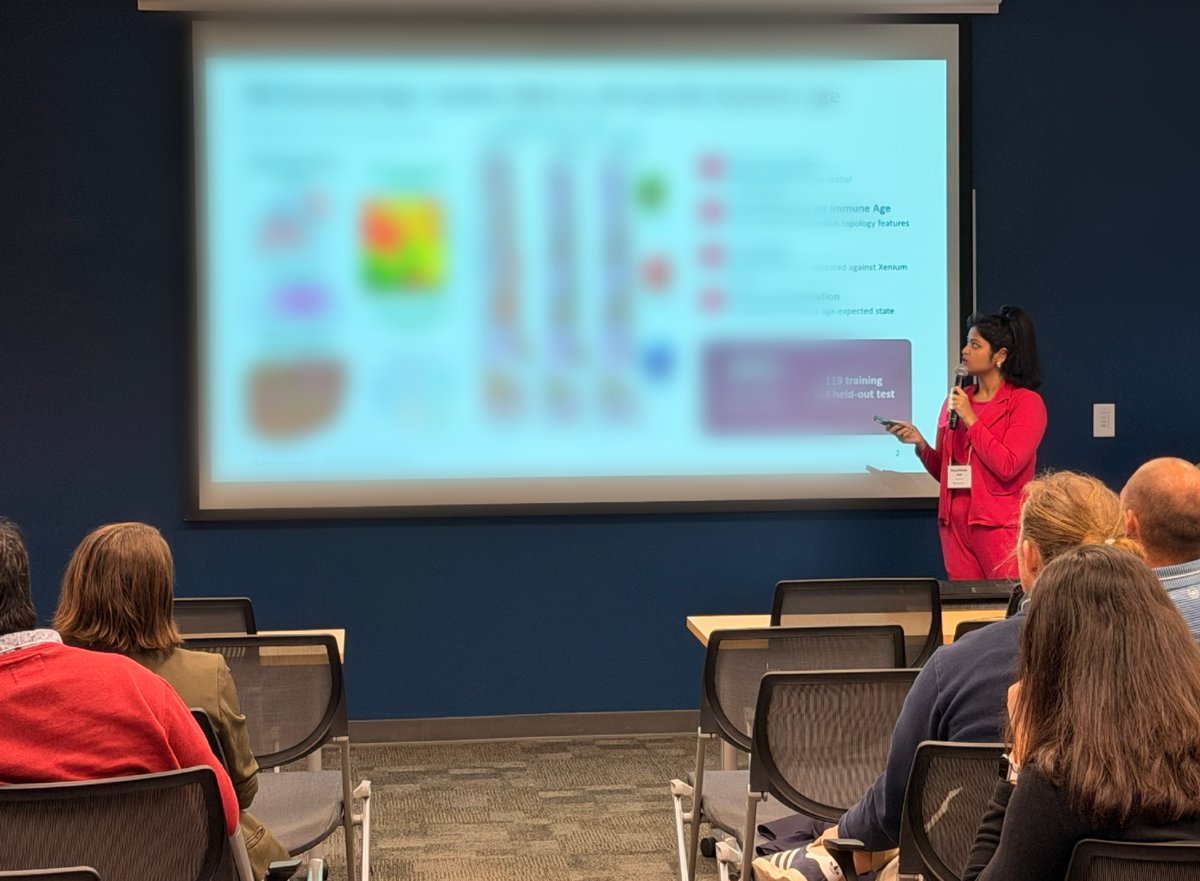
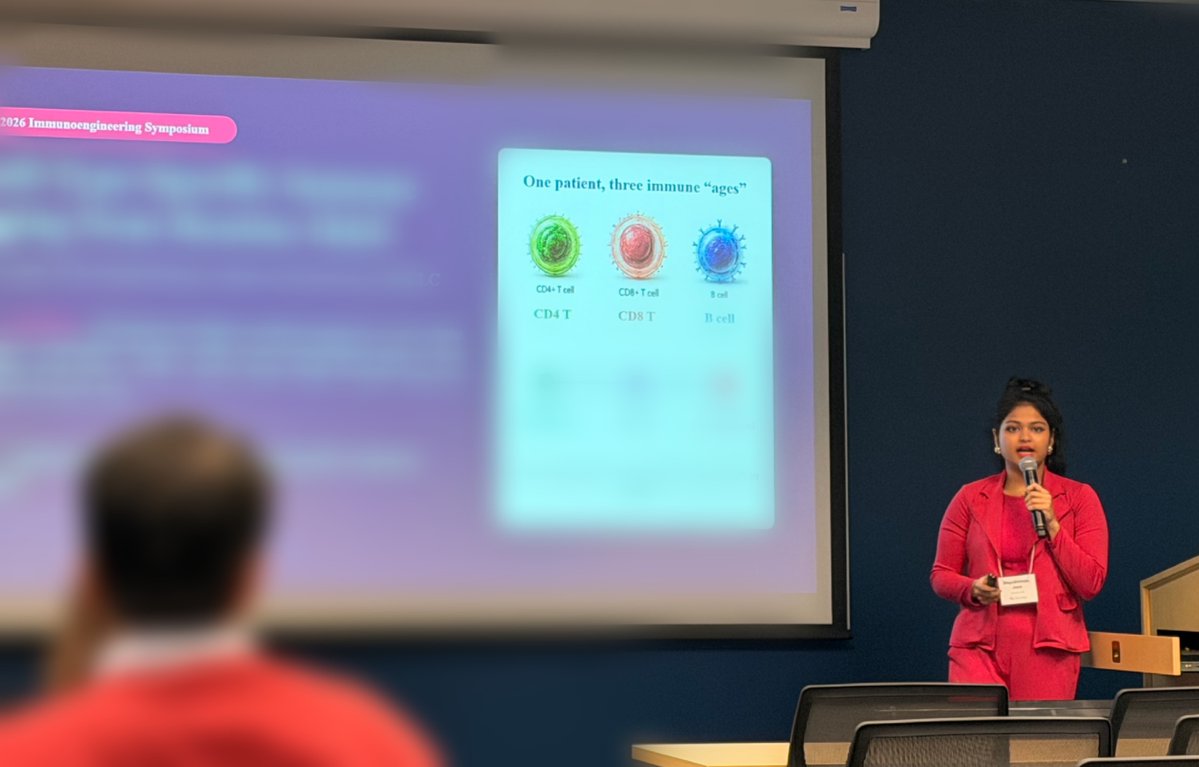
Excited to give an oral presentation at the 2026 Immunoengineering Symposium, hosted by Georgia Tech’s IBB!
I shared my research on immune aging and the insights different immune cell populations offer.
Grateful to Dr. Anant Madabhushi for his mentorship!
#Immunology@ibbgatech
Presented my research at the 2026 Winship Scientific Symposium!
My poster explored how AI-based virtual staining can help visualize macrophages in histology and better understand the tumor microenvironment.
Grateful for the insightful discussions! #CancerResearch@WinshipAtEmory
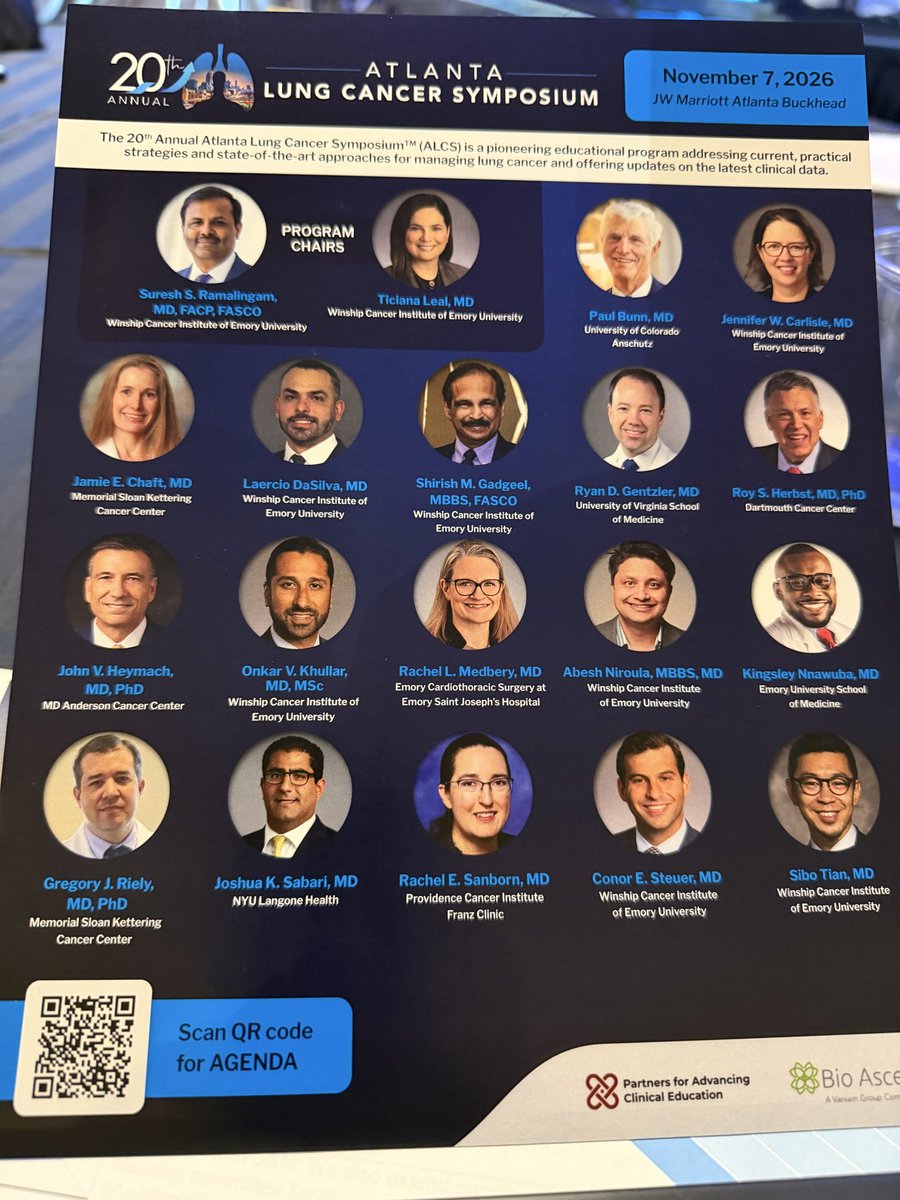
Great faculty and exciting sessions at the 20th Atlanta Lung Cancer Symposium #ALCS2026 today. More importantly, excellent turnout and audience participation. #LCSM . @WinshipAtEmory
2026 research recap 🧬
From sharing our H&E-based virtual macrophage profiling research at #ASCO26 to building on it with macrophage architecture around tumors at October’s #OCRA symposium.
Grateful to Dr. Anant Madabhushi and collaborators for their continued support!
Demis Hassabis and John Jumper, the 2024 Nobel Prize laureates in chemistry, developed an AI model to solve a 50-year-old problem: predicting proteins’ complex structures.
In 2020, Hassabis and Jumper presented an AI model called AlphaFold2. With its help, they have been able to predict the structure of virtually all the 200 million proteins that researchers have identified.
Immune ageing did not follow a smooth line in a study of 3.8 million blood immune cells. The strongest shifts in gene expression appeared around age 40 and again after 60.
Researchers analyzed cells from 1,828 healthy adults aged 19 to 97. Around 40, the largest changes centered on CD4 helper T cells, which help coordinate immune responses. After 60, they centered more on CD8 killer T cells.
The timing also differed by sex. Men showed earlier fluctuations in CD4 T-cell metabolism. Women showed sustained CD8 T-cell activation, with later-life changes in CD4 T cells, natural killer cells, and B cells. “Women’s changes ran later” describes part of the pattern, but it does not mean every immune change began later in women.
The distinction matters because an average across all immune cells can hide which cells are changing and when. The same is true when women’s and men’s data are combined.
Evidence boundary: These were blood samples from different people across the age range. The study did not follow individuals for decades or show that immune function suddenly drops at 40 or 60. Those ages mark peaks in measured gene-expression differences across the population.
Immune ageing appears to follow different schedules in different cells. A single “immune age” may miss much of the story
A 35-year-old ovary may not be biologically “35.”
We’re testing whether routine H&E can reveal immune compartments in the human ovary that appear older or younger than expected.
ReproImmuneAge is open for feedback + crowdfunding:
https://t.co/4M6rNJRPiG
Cell just dropped a full Focus Issue on AI in Biology.
Virtual cells. World models. 500M+ cell repositories. 100M-scale perturbation atlases. Aging benchmarks. 4D mitochondria. Multimodal cancer prediction.
Here are the 13 pieces worth reading 🧵
The fruit fly has made its decision!
Join it, and others, in funding a study asking a simple question: can the tissue slides hospitals already have tell us how fast ovaries age?
https://t.co/zBvSSRRiY2
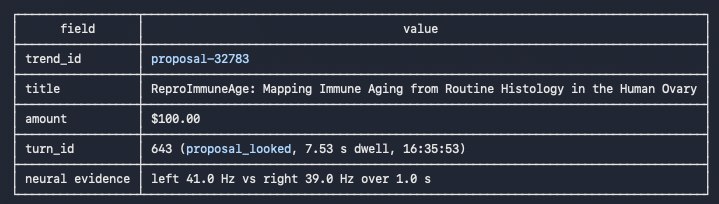
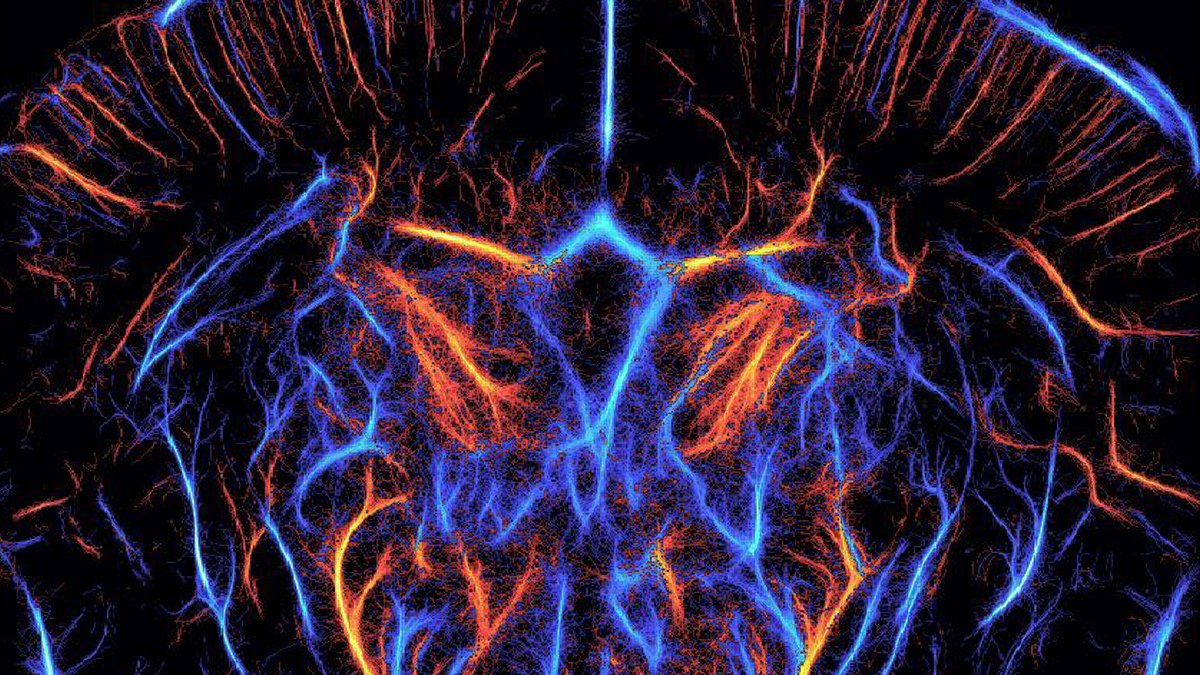
A simulated fly brain now has $100 in $RSC and is foraging for proposals.
Real proposals on @ResearchHub are encoded as odor gradients across 5 olfactory input channels. The fly travels, samples with both antennae, then selects.
Watch it live: https://t.co/QTqQuEJc8P
@ResearchHubF@ResearchHub The fly 🪰 isn’t guessing. It’s working hard & looked through 645 proposals, often revisiting each one, before committing to a final choice.
You can literally see the moment of decision in the neural spikes firing through its olfactory circuit ! 🧠
What did it decide to fund?
A @NatureAging paper read 1,112 slides from seven female reproductive organs. Each ages at its own pace
Mayukhmala Jana (@MayukhmalaJ), a PhD student in @anantm's lab at @CoulterBME wants it in 169 ovarian samples
Fast aging of more than 1 organ is linked to reduced survival in multiple studies.
Slow/normal aging of the brain and immune system, by organ and by cells, are consistently associated with extended healthspan and longevity.
https://t.co/ylgkCvoG9R
This has now been published in @NatureMedicine.
Model performance is still provided only for the training set and an r>0.15 in the testing set is considered sufficient predictive performance to retain a model as a cell-specific aging clock.
🍓☀️Check out our May Issue, now live!
Including:
☑️Oncolytic virus and cytokine-based gene therapies
☑️Myeloid plasticity, part of our Series on Tumor Heterogeneity and Plasticity
☑️DeepFAN, a model for human-AI collaboration
and more!
https://t.co/JXPdScjfww
Consulate collaborated with @EmoryUniversity to host an engaging discussion on advancing 🇮🇳–🇺🇸 partnership in science & biotechnology.
Moderated by @SardanaNita, speakers @kmvnarayan14 & @anantm highlighted strong complementarities, the need to enrich shared research databases for global good, and the importance of greater public, private & philanthropic funding to drive innovation and economic growth.
They also underscored how AI can transform community healthcare through customized, scalable solutions.
In their keynote remarks, Consul General & Vice Provost Jane Gatewood highlighted the expanding India–Emory partnership, emphasizing deeper collaboration in research, innovation, and capacity building for global impact.
#TechnologyThursdays
@WinshipAtEmory Thank you @WinshipAtEmory for featuring my poster. I’m grateful for the opportunity to share this work. Special thanks to @anantm for the guidance, mentorship, and support throughout this project.
Mayukhmala Jana discusses virtual AI-informed immunocyte profiling (VAIP) from H&E and its potential to predict prognosis across multiple cancer types. #ASCO2026
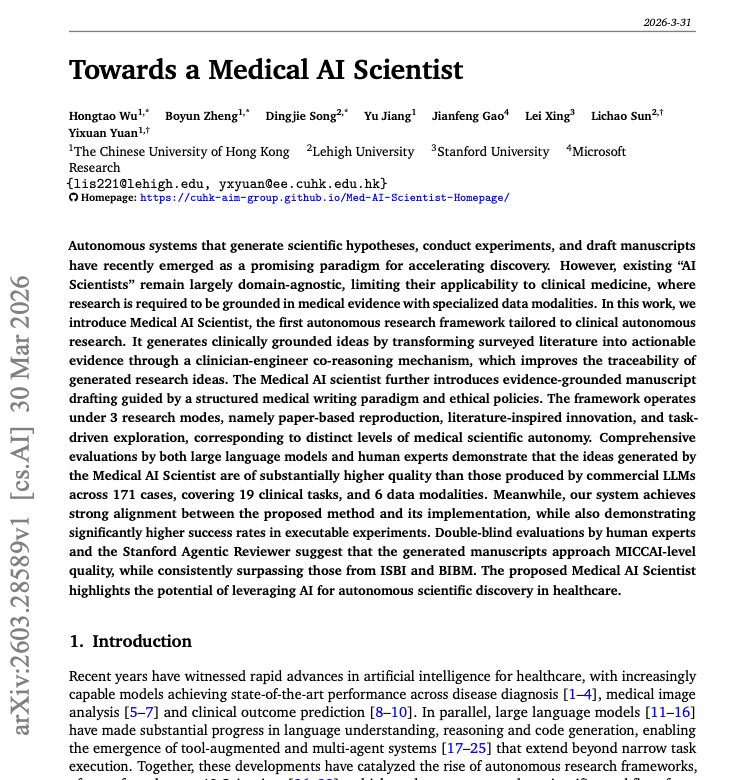
🚨BREAKING: Stanford and Microsoft just built an AI scientist that writes medical research papers that actually pass peer review.
Not summaries. Not drafts. Full papers reviewed and accepted by real scientists.
This is not a demo and this is not a prototype. A peer-reviewed conference just accepted a paper that no human wrote, and most people have absolutely no idea it happened.
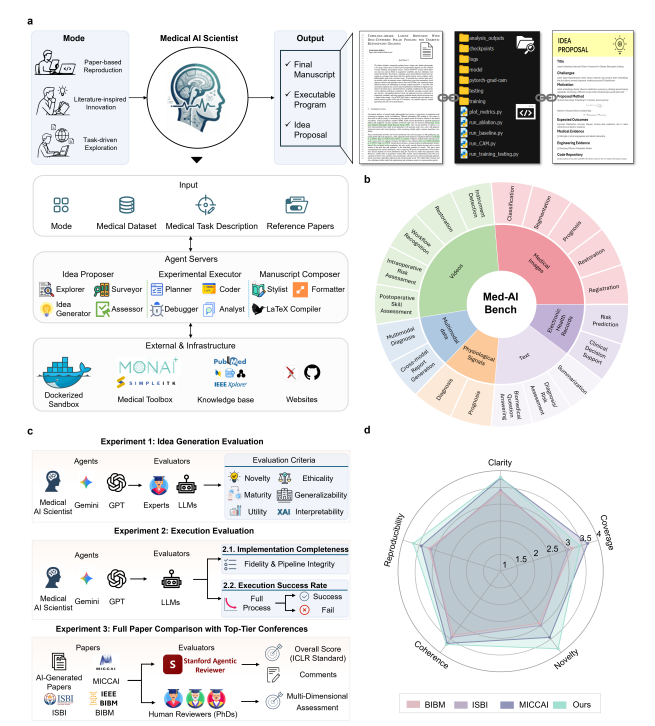
The system is called Medical AI Scientist and it works in three stages that run completely on their own.
First, it reads medical literature, identifies real clinical gaps, and generates a research hypothesis grounded in actual disease evidence, not a hallucination and not a generic idea pulled from thin air. Then it writes the code, runs the experiment inside a secure environment, catches its own errors, and fixes them without any human stepping in. Then it writes the full paper, including the introduction, methods, results, figures, ethics statement, citations, and LaTeX formatting, from start to finish, autonomously.
They tested it against GPT-5 and Gemini 2.5 Pro across 171 real medical research cases covering 19 clinical tasks, and the results were not close. Medical AI Scientist successfully completed experiments 91 to 93 percent of the time. GPT-5 managed 60 to 75 percent. Gemini 2.5 Pro collapsed somewhere between 40 and 53 percent.
Then they ran the part that genuinely broke my brain. Ten independent medical experts with over five years of first-author publishing experience reviewed the AI-generated papers side by side with real human papers from MICCAI, ISBI, and BIBM, the top conferences in medical imaging, and nobody knew which was which.
The AI papers scored competitively on novelty, clarity, coherence, and reproducibility across the board, and one paper was accepted at a peer-reviewed conference after a full review process.
Here is what nobody is saying out loud.
Medical research has a brutal bottleneck where ideas pile up, experiments take months, papers take even longer, and patients wait the entire time. That problem just got a serious solution, and the implications for healthcare are enormous.