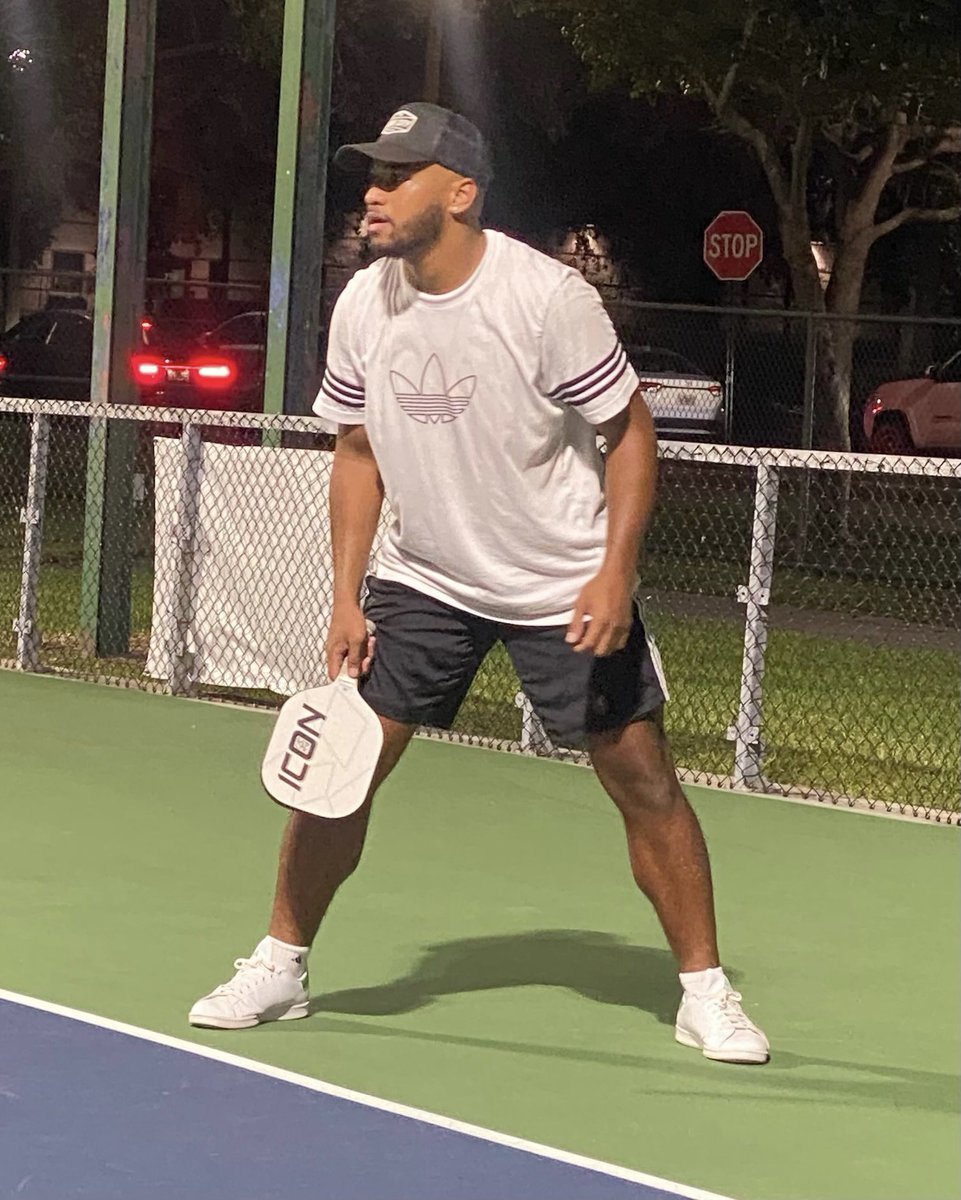
Pickleball will be a top 5 sport within 5-10 years in the US (top 4 - football, basketball, baseball, lacrosse).
Primarily in terms of participation (ppl growth) & potentially in $$ generated by industry. #pickleball#addicted
Live shopping platform @Whatnot has raised $545 million in Series G funding at a $20 billion valuation.
The company previously reported $8 billion GMV in 2025 & has said they've already surpassed that number just in the first half of 2026.👀
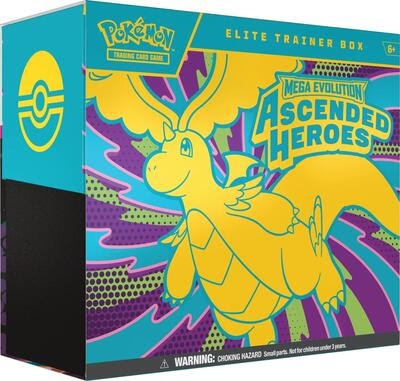
🎉 We have a winner!
Congrats to Mike from MC Collective (@mcc224), taking home the $180 Ascended Heroes Elite Trainer Box.
Thanks to all who entered — more giveaways coming. Add a card to your wishlist to be in the next one:
https://t.co/bfgHq31fnt
#PokemonTCG
AI won't kill fundamental investing because more information doesn't kill alpha. We have decades of priors here (Excel, Bloomberg, alt data...all democratized analysis & information gathering, and didn't kill alpha). As measured by factor volatility, stocks are less efficient and more alpha-rich than ever (and empirically, the ability of multi-eight figure market neutral multi-managers to consistently grind out 10-15% returns in an idio-maximized way proves this point...15 years ago a $10bn hedge fund was considered to be impossibly large).
Innovations in investment process have shifted alpha pools, for sure, and systematic investors have arbitraged many old, reliable fundamental alpha pools. But as the players at the poker table have shifted, the constraints of those new players have created new alpha pools. Long duration fundamental investing has been gutted, and definitionally competing against a group of non-fundamental (quants, factor/thematic investors, indexers) and duration-constrained (multi's) investors should be a huge competitive advantage, long term (however frustrating in the near term). To wit, a 9-month thesis where I "look through" the next two prints is now considered a long-term thesis.
Rigorous investment process serves investment judgment, but the real alpha generation fits a power-law distribution and there is some ineffable "nose for money" that the great investors have, that cannot be trained necessarily. Investing is a very hard game, that cannot be distilled to a reinforcement learning sandbox (by the time it is, the regime will have shifted and new drivers move stocks). AI has no sense of materiality, no true discernment, and the lack of context of N of 1 situations (if you haven't noticed, we are living in an N of 1 world!). There is a irreducible element of humanness that is critical to success in fundamental investing, and that won't change.
What does this all mean? In my opinion, there is no better time to be starting a careers as an investor. My first year on the desk, I spent a lot of time doing grunt work: updating Nielsen files, updating models for my PM, creating same store sales master files, building question lists for CEO meetings, etc. This is grunt work. I can automate this all now, and get more quickly to the deep, value added parts of learning the investment process.
Will AI drive alpha? This is a debate people are having, which I find sort of silly. When used correctly, by the right investor, of course it will. Ask any great investor if they had another 4 hours of research time per day whether the quality of their research would improve? That's kind of a dumb question...of course it will. Compressing the mechanical part of your job to focus more on the artisanal part of the job is Step 1, and with agentic systems accelerating fast is now in the strike zone of possibility. This is before we start to layer in a broader monitoring net and use cases to go deeper and build more rigor, finding signals in unstructured data that were missed before, as well as turning your investment genius into a co-pilot pattern recognition system.
The future is very bright for fundamental investing, in my opinion.
𝗜𝗻𝘁𝗿𝗼𝗱𝘂𝗰𝗶𝗻𝗴 𝗧𝘄𝗶𝗻 — 𝘁𝗵𝗲 𝗔𝗜 𝗰𝗼𝗺𝗽𝗮𝗻𝘆 𝗯𝘂𝗶𝗹𝗱𝗲𝗿.
No setup. Secure. Infinitely scalable.
We just raised a $𝟭𝟬𝗠 𝘀𝗲𝗲𝗱.
After a beta with 𝟭𝟬𝟬,𝟬𝟬𝟬+ 𝗮𝗴𝗲𝗻𝘁𝘀 𝗱𝗲𝗽𝗹𝗼𝘆𝗲𝗱, we’re now opening to everyone.
RT and comment “Twin” — first agents on us. 👇
Just created a complete investing workbook covering entry/exit strategies, position sizing formulas and the systematic approach that makes 10% of traders profitable.
I shared this with my 20,000+ students.
Free for 24 hours.
Like, RT & Comment "WORKBOOK" and I'll DM it."
Assuming $10B of annual cloud revenue per GW of data center capacity (in line with CoreWeave $CRWV), Oracle's $ORCL FY30 OCI guide of $166B implies they'll need to lock down 16.6GW of data center capacity over the next 5 years. They've already secured a handful of large leases (i.e. 1.2GW at Abilene from Crusoe, 1.4GW in Shackleford County from Vantage) but still should need 10GW+ of incremental DC capacity to meet their cloud forecast.
While there have been some murmurs around Oracle potentially seeking to self-build data center capacity, I suspect the vast majority of their capacity growth will come from third-party leases. FCF margins are already razor tight given the GPU-related CapEx, and leasing capacity obviously helps to preserve what little FCF is left.
This set-up should bode well for the crypto companies who have managed to pivot from running Bitcoin mining data centers towards a traditional co-location model, including Galaxy Digital $GLXY, TeraWulf $WULF, Applied Digital $APLD, and Cipher Mining $CIFR. The recent momentum in these names suggests further expansion of their co-location businesses is already priced in, but with 10+ GW of potential capacity up for grabs from Oracle alone, there could definitely be further upside should they execute and secure large deals.
$ORCL $CRWV $GLXY $WULF $APLD $CIFR
Microsoft is now spending 47% of its Operating Cash Flow on CapEx.
To put that in perspective, automotive giant GM spends less at 43%.
The capital requirements of big tech have shifted drastically.
$MSFT $GM
@david_perell How often are you actively listening to Spotify discover songs? (I don’t personally really)
Also wonder if the context makes a dif on whether we like a song - like the vibe/enviornment when hearing new music out in the wild.