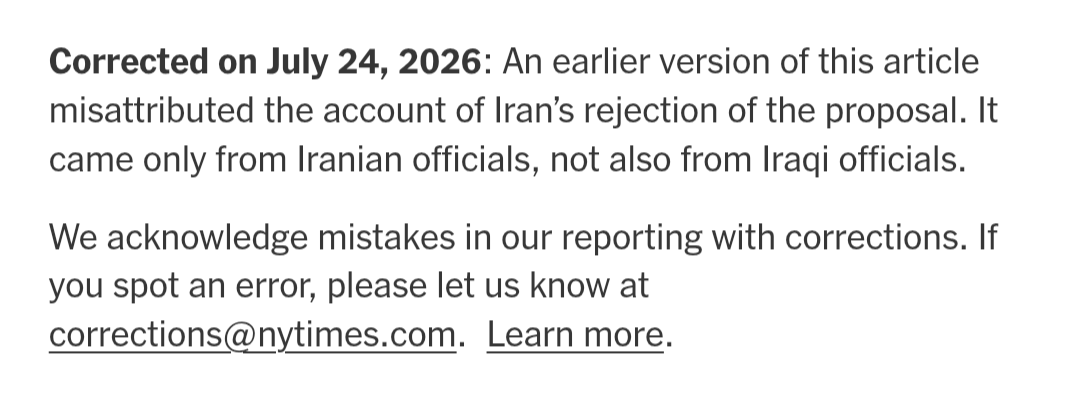
According to ISNA, Pakistan and Qatar have presented a joint proposal urging Iran and the United States to return to their pre-July 9 positions as a first step toward resuming talks.
- Reuters separately reports a proposed 10-day pause in attacks, while Al Hadath says a temporary reopening of the Strait of Hormuz is also under discussion.
- Taken together, this appears to be the same Qatar-led initiative i mentioned yesterday in my tweet now emerging in fuller detail.
#Iran
The Sana’a–Tehran corridor was blocked, but the Saudi–Houthi front reopened
In doing so, the IRGC offered its most overt public backing of the Houthis to date.
My latest Horizon Brief examines the developments, who gained, what changed, escalation pathways, geopolitical calculus & what to watch next👇
Read: https://t.co/ZX0t2rTPEK
סוכנות הידיעות הממשלתית האיראנית:
עד שהטקסט יאושר במלואו על ידי הרפובליקה האסלאמית של איראן, כל הנוסחים המתפרסמים בתקשורת הם בגדר ספקולציות תקשורתיות בלבד ואינם נחשבים לנוסח הסופי.
נוסח הסכם ההבנות הסופי לא יפור��ם עד לאישורו הסופי על ידי שני הצדדים.
כל הקווים האדומים שהוגדרו על ידי מנהיג המהפכה, האייתוללה סייד מוג'תבא ח'אמנהאי, זכו להתייחסות במסגרת פיקוח מתמשך של המועצה העליונה לביטחון לאומי.
בשלב הנוכחי לא ייחתם כל הסכם בנושא תיק הגרעין. איראן אינה מקבלת על עצמה התחייבויות חדשות ומסגרת תוכנית הגרעין האזרחית שלה תישאר ללא שינוי לאחר חתימת הסכם ההבנות.
על פי ההצעה הראשונית של איראן, כל משא ומתן בנושא הגרעין יתקיים במהלך תקופה של 60 יום לאחר חתימת הסכם ההבנות.
בניגוד לטענות שהופיעו בחלק מכלי התקשורת, איראן אינה מתחייבת בשום אופן להעביר את ניהול מצר הורמוז או להחזיר את המצב בו לקדמותו כפי שהיה לפני המתקפה הצבאית של ארצות הברית וישראל. הנושא היחיד המוזכר הוא חזרה ל��עבר ימי תקין במצר הורמוז לאחר סיום המלחמה, הבטחת ביטחון השיט על ידי המדינות שלחופי המצר, סיום המצור הבלתי חוקי והסרת האיומים על תנועת ספינות מסחר מצד ארצות הברית וישראל.
לבקשת איראן, לארצות הברית לא יהיה כל תפקיד בעתיד בניהול מצר הורמוז.
הדיון בעתיד מצר הורמוז לא ייכלל אפילו במשא ומתן שלאחר חתימת הסכם ההבנות. טהראן תסדיר את הסוגיה ישירות מול עומאן, המדינה הנוספת שלחופי המצר.
המטרה המרכזית של חתימת הסכם ההבנות היא סיום המלחמה בכל החזיתות באזור.
בהסכם מוזכר סיום המלחמה נגד איראן וכן סיום הלחימה בכל שאר החזיתות באזור, כולל לבנון. שמה של לבנון מופיע כחלק מהסכם ס��ום המלחמה, וארצות הברית תתחייב לכפות על ישראל להפסיק את הלחימה בלבנון.
הביטוי "הארכת הפסקת האש" אינו מופיע בנוסח הנוכחי, והדיווחים שטענו אחרת אינם נכונים. ההסכם דורש סיום מוחלט של המלחמה בכל החזיתות.
טהראן קיבלה ערבויות ברורות לשחרור נכסים מוקפאים באמצעות מנגנונים שהוגדרו לשביעות רצונה. אם תחליט לחתום על ההסכם, חלק מהנכסים ישוחררו מיידית והיתר בהדרגה במהלך המשא ומתן.
טהראן קיבלה ערבויות מוגדרות בנוגע לקבלת פיצויים מצדדים שלישיים.
במסגרת ההסכם מתוכנן משא ומתן בן 60 יום בין איראן לארצות הברית, שבמהלכו ידונו הצדדים בשלושה נושאים:
המשך תוכנית הגרעין האזרחית של איראן.
הסרת כל הסנקציות החד-צדדיות והבלתי חוקיות של ארצות הברית.
מנגנון הפיצויים על הנזקים שנגרמו לאיראן במלחמה שנכפתה עליה.
לא ייכלל במשא ומתן כל נושא אחר.
Fars News, citing a source close to Iran’s negotiating team, reports that no draft text for an initial Memorandum of Understanding with the United States has been approved so far.
#IranWar
Excellent piece. I suspect we’ll get at least one more proposal from Trump this weekend that tries to test the credulity of his supporters re: releasing funds, perhaps by leading with another “they’ve agreed to a deal” proclamation, likely another fade.
Signs point to the US Naval blockade being effective in curbing exports of Iranian crude oil with only a trickle making its way to China in May as the crisis approaches the 100-day mark
https://t.co/tvTRobeCtE
Free newsletter: The dawn of token-based billing has shown that generative AI doesn’t have a return on investment. It's too unpredictable, too unreliable, you can't easily measure the cost of tasks, and organizations are already pulling back.
https://t.co/wmI82zWdcq
When the DJIA was created in 1896, the distinction between what we think of today as a "stock" and a "bond" was a lot blurrier. Stocks then usually had a par value of $100. That is why dropping below $5 got a stock delisted from the NYSE, as it was not likely to remain a going concern. So if all the stocks were supposed to be hanging around par value, unless there was a big problem, then using a pure average of share prices was not a problem. Stocks' share pricing works differently now. Dow Jones held onto that methodology out of tradition, not because it is superior math.
Most know Weimar Germany’s stocks went vertical in Papiermarks due to hyperinflation.
🔥But few realize they also skyrocketed in USD terms; up ~40x from 1920-1923.
Why? Weimar Germany’s Companies earned hard currency abroad while paying workers in worthless marks. Stocks became a real asset hedge.
Then crashed hard after stabilization.
Source: JP Morgan
J.P. Morgan (specifically J.P. Morgan & Co. and J.P. Morgan Jr.) played a central role in the post-hyperinflation debt restructuring of Weimar Germany, particularly through the Dawes Plan of 1924.
One thing to put in perspective when you see everyone worried about the amount of oncoming IPO supply (which is a lot) is that there has been a lot more wealth created, so when you hear the doom porn of $600 bln in IPO supply, it’s important to put that into relative context.
The bigger thing to worry about is global FX, oil, rates and realized volatility rising into mid-terms.
Solid charts from Tony P at GS today.
Told @Reuters that Ship owners’ willingness to deal directly with Iran despite the risks shows the degree to which the Hormuz strait is under the Islamic Republic’s control.
The straits will be blocked or opened up only by the approval of the Iranian regime. Some will get through because of political alliances, others will have to pay, others will be turned back. This is the new norm.
@GavinFinchRtrs
https://t.co/YFOSdNPsM9
Every pundit, editor and armchair geopolitics expert who has hopped on the Thucydides train needs to read this as a matter of urgency, from @SevaUT
https://t.co/NKiNkW26UY
The most significant assistance China provides to Iran’s military industry relates to chemicals and materials that can support the development of Iran’s missile infrastructure. The challenge,
however, is that Beijing largely classifies many of these items as dual-use materials rather than weapons components, making it unlikely that China will move decisively to halt such transfers.
More importantly, China has a broader strategic interest in the survival of the current Iranian regime as part of its long-term competition with Washington. As a result, even if Chinese officials offer assurances regarding restraint, there are strong reasons to doubt that such statements will lead to a meaningful reduction in Chinese support for Iran.
At the very least, China is expected to continue purchasing discounted Iranian oil. More broadly, it remains highly doubtful that Beijing will take any substantive steps to support the U.S. administration’s efforts against Iran in this context.
#IranWar
US administration Cannot Demand Surrender From a Regime That Still Survives
The central flaw in current U.S. policy toward Iran is not tactical. It is conceptual.
Washington is increasingly behaving as though the Islamic Republic has already lost the war, even though the regime itself remains firmly in power.
The administration’s demands reflect the logic of postwar surrender terms: dismantle nuclear infrastructure, ship enriched uranium to the US, accept sweeping restrictions, and effectively abandon the strategic leverage Tehran spent decades building.
But there is one obvious problem: the regime did not fall.
This growing disconnect between the administration expectations and battlefield reality explains much of the frustration now emerging in Washington.
The administration appears trapped between maximalist objectives and limited willingness to escalate militarily to the level required to achieve them.
Washington continues searching for pressure mechanisms that might somehow compel Iranian capitulation without requiring either a full-scale war or a fundamental reassessment of American objectives. Maritime interdictions, sanctions enforcement, container seizures, covert disruption, and incremental military signaling all reflect the same hope: that enough cumulative pressure will eventually force Tehran to concede.
But regimes rarely surrender simply because pressure intensifies. They surrender when they believe survival itself is no longer possible.
And today, the Iranian leadership clearly does not believe that.
The Islamic Republic may be weakened, economically strained, regionally challenged, and militarily pressured. But weakened regimes do not automatically become collapsing regimes. As long as Tehran maintains internal control, preserves coercive capacity, and believes the state can survive the current confrontation, it is highly unlikely to voluntarily dismantle what it views as its core strategic deterrent.
This is the uncomfortable reality Washington has yet to fully internalize.
The administration therefore faces a choice it has attempted to postpone.
One option is strategic synchronization: aligning American demands with the actual balance of power. That would require recognizing that negotiations with a surviving regime are fundamentally different from dictating terms to a defeated one. Any realistic agreement under current conditions would almost certainly involve compromise, phased arrangements, and limits acceptable to both sides
but not unconditional Iranian retreat.
The second option is genuine escalation. Not symbolic strikes or calibrated signaling, but a level of sustained military and economic pressure explicitly designed to push the regime itself toward systemic instability or collapse.
But Washington appears reluctant to choose either path. Instead, it remains suspended in an unstable middle ground: demanding surrender-level concessions while avoiding the kind of escalation historically required to produce surrender.
That limbo is strategically unsustainable.
It guarantees prolonged confrontation without resolution. It raises expectations in Washington that Tehran will eventually “break,” while reinforcing Tehran’s belief that it only needs to outlast another cycle of American pressure. And it makes the prospects for a durable nuclear agreement increasingly remote.
The problem is not simply that diplomacy has stalled. The problem is that the United States is pursuing an end-state inconsistent with the current reality on the ground.
Until that contradiction is resolved, there will likely be neither a meaningful agreement nor Iranian capitulation, but Only a continuation of the deadlock.
#ira