On David Dimbleby’s criticism of cuts proposed by the new BBC Director-General, former senior BBC Executive Jamie Angus @JuliaHB1#TalkTV argues:
‘What you’re asking is: Do you want a BBC that only does things that the market can’t provide, or do you want the BBC as it is currently, which does a bit of everything for everyone?
‘Personally, I don’t think the BBC should only do market failure activity. I think it should offer some kind of universal service, but that’s expensive, right?’
‘As we go into the next Charter renewal process, the Culture Secretary, the management of the BBC and the government have to agree: How big do you want the BBC to be? And what do you want it to do? And then have a sensible discussion about how much of that is spent on costs. That’s what needs to happen over the coming year.’
Jacob Rees-Mogg @JuliaHB1#TalkTV on UK people smuggler exposé:
‘Very well done to the BBC. You and I are sometimes critical of the BBC, but this is it doing a real public service. Very impressive work. It obviously leads on to the question: Why weren’t the police doing this?’
Culture Secy Lisa Nandy (@lisanandy) quoted on #BBCPM on government’s plans to give established media more visibility on YouTube and TikTok (https://t.co/Ly10PcMgZI):
There are a lot of things ‘on the Internet that are not true, and it can be very difficult to find the good things you know you can trust. Now we think it’s wrong that parents and grandparents can find things they trust because they are watching it on the television, but children can’t because they are watching it on their tablets and phones’.
The government has set out proposals that could see public service broadcasters and other trusted news sources given more prominence on social media channels
https://t.co/ivLDS8FUjn
The Media Society (@TheMediaSociety) hosts Podcasts: Shaking up the world of media on the “dramatic impact on the world of media” and the potential of and challenges for podcasting with Chloe Straw @AdamFleming Nick Hilton and Ritula Shah (chair) https://t.co/utVO1WgGiX
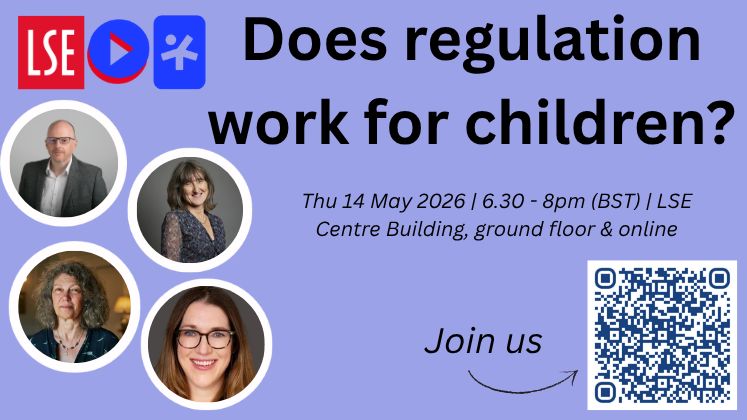
Today at 18:30 @MediaLSE and @5RightsFound’s Digital Futures for Children research centre hosts Does online regulation work for children? with visiting Senior Fellow Steve Wood, Prof Orla Lynskey (@lynskeyo) Prof Lorna Woods @EssexLawSchool Baroness Kidron @Livingstone_S (chair)
How does regulating digital environments change #children's lives? 📱
Join #DigitalFutures4Children on 14 May for a dive into Steve Wood’s latest report with:
Steve Wood, Beeban Kidron, Orla Lynskey, Lorna Woods & chair @s_livingstone: https://t.co/BuHRWJ5QJ1
@5RightsFound
On the death of broadcasting innovator and #Entrepreneur Ted Turner #RIP@DavidYelland on #r4today notes that being a “first mover” doesn’t guarantee success:
‘He was way ahead, and it’s very common for innovators and mavericks to be ahead [of others and] have the idea…
Rupert Murdoch launched Sky nine years after CNN and @FoxNews sixteen years after CNN.
‘Of course, Rupert Murdoch has kept control of Fox News, whereas Ted Turner lost control of CNN.
‘He did change the world. He had brilliant ideas, but he was unable to keep control, and I think he ended his life with huge regrets around that.’
Truth Tellers, the Sir Harry Evans Investigative Journalism Summit, kicking off in central London (also livestreamed) to “discuss the most pressing issues in the survival of truth and trust in today’s fragmenting infosphere” #SirHarrySummit
Co-hosted by editor and author Tina Brown CBE, Reuters editor-in-chief Alessandra Galloni, and Durham University vice-chancellor Professor Karen O’Brien
Speakers, discussants and hosts include CNN chief international anchor Christiane @Amanpour CBE, Wall Street Journal editor-in-chief Emma Tucker (@emmatuckerWSJ), investigative journalist and author Patrick Radden Keefe (@praddenkeefe), Guardian editor- in-chief Katharine Viner (@KathViner), The News Agents co-host Emily @Maitlis, Nobel Peace Prize-winning journalist and Rappler CEO @MariaRessa, journalist and host of The Don Lemon Show Don Lemon, journalist @KaraSwisher, The Atlantic staff writer @AnneApplebaum, Reuters global foreign policy editor @SamiaNakhoul, biographer and former editor of Time @WalterIsaacson, photojournalist @LynseyAddario, Bloomberg Weekend’s The Mishal Husain Show host @MishalHusain, New York Times Magazine staff writer @RonenBergman, CNN chief international correspondent @ClarissaWard, Comix Artist Art Spiegelman, Sky News political editor @BethRigby, and The Spectator editor Michael Gove.
https://t.co/s7IQBbAGpP
One week to go to #SirHarrySummit!
📰 The Agenda for Truth Tellers 2026 is now live, explore it here: https://t.co/ffSb8TeIbX
🔴Join us live from 9:30am, Wed 6 May: https://t.co/sxb1rBtBnJ
Co-hosted by @TinaBrownLM@Reuters@durham_uni
Interviewed on the Today programme @BBCRadio4#r4today this morning, Harvard University professor Steven Pinker (@sapinker), who is giving the #OrwellLecture this evening in London, was asked about freedom of speech in the context of the possible corruption of science. The interaction was as interesting as much in that this question was asked by host Justin Webb – albeit cautiously couched – as for Pinker’s measured response:
Host: ‘There is also a suggestion among some that science has become corrupted in an Orwellian way. The obvious example that they would give is when people aren’t able to say there there are two sexes and a difference between sexes, and you can’t change sex, and aren’t able to say that really in universities – and perhaps in some journalistic settings – and that wouldn’t have been the case some years ago, and that is a real change, and a change in a backward direction.’
Steven Pinker: ‘I think it is, but it isn’t exactly the Ministry of Truth. … things have gotten worse in the last ten years, but they can get worse without being the Ministry of Truth.’
Overall themes of ‘The Role of the New Fourth Estate Renewing Democracy’ are:
1: What does a democracy-supporting news and information environment look like? And how do new and established news providers work together to deliver it?
2: What might sustainable media models for rigorous newsgathering and reporting be in a world where Al may control the ‘attention economy’? And what are the attributes of news that Al cannot adequately replace?
3: How do we ensure the protection of evidence-based information in the face of foreign ‘information warfare’ and ‘bad actors’? Can the news media, tech platforms, and the state work together on this?
The conference is based around three working groups/themes:
A: NATO for News
B: The new power brokers of the media
C: National security rules of the road
The Ditchley Foundation hosts (4–6 December, Oxfordshire) ‘The Role of the New Fourth Estate Renewing Democracy’ with speakers including Ceri Thomas, Noreen Gillespie, Vilas S. Dhar, Dr Felix M. Simon, Professor Piotr Wilczek, and Peter Munford https://t.co/tybTYpetI6
Government needs to recognise that the market is failing in journalism, and the #CairncrossReview pointed out the need for in/direct support for local journalism; but they need to reward the innovators and not be propping up the old models – @AdamC_Corn of @TheBristolCable#BBCPM
We each learn form the experience of others, historical and imaginary, which is why the idea that the arts don’t matter and can be cut in schools is so stupid – Pat Barker / You should read, as you can hold the whole world your hand – Lee Child #R4OpenBook https://t.co/azvVKYBl4X
An audience doesn't exist: it is a collection of human beings. ‘There is no such thing as a bad audience, only a bad performance’ / The British never criticise the ‘cultural appropriation’ of Shakespeare – theatre director Peter Brook on #BBCFrontRow https://t.co/Nqpw30AnNv
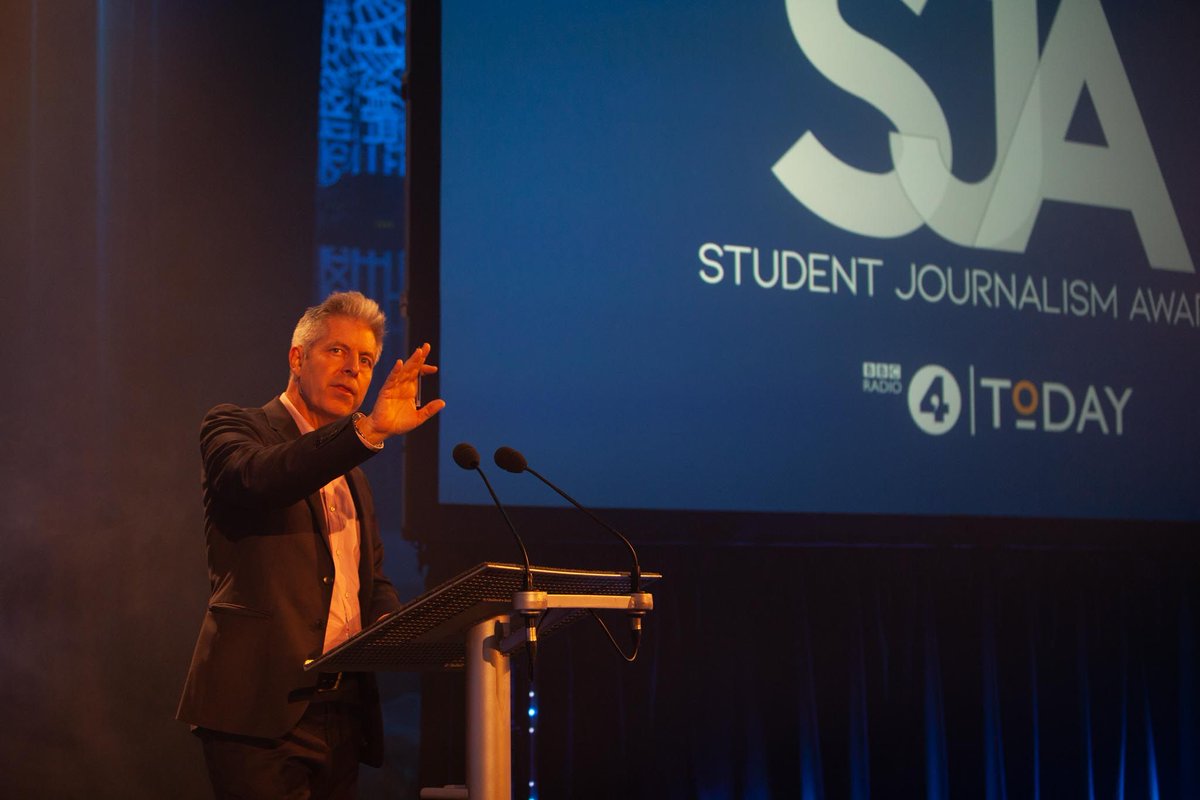
BBC Radio 4 Today Student Journalism Awards 2019: Journalist of the Year @HamzahAbbas_; Visual Journalist: Ollie Cameron; Publication: ‘The Boar’; Critic: @JohnMaier_; Broadcaster: @GeeStewardson; Programme: ‘A week in Concrete’ #r4today https://t.co/KP3FLM3ZAR
Mark Thompson, President and CEO of The @NYTimes Company, and former BBC DG, will deliver the 2019 Steve Hewlett Memorial Lecture for the Royal Television Society (@RTS_media ), 24/9, with proceeds going to #RTSSteveHewlettFund scholarships https://t.co/sMWMLFdg0R
Impartial Journalism in a Polarised World: @Tortoise’s James Harding convenes discussion @BBCRadio4, TX 09:00, with Robert @Peston The Atlantic’s @HelenLewis Julia Hartley-Brewer (@JuliaHB1) @BBCMarkMardell and @VICEUK’s Gavin Haynes https://t.co/IK7tf2tMah (cc @micycle)
Discussion of Apple's soon-to-be announced entertainment service on #r4oday with David Abrahams and Sophie Curtis (@scurtsy), 08:25, on the competition, value to UK Creative Industries, implications for public service broadcasting, and regulating which platforms are pre-installed
I’ll be on the Today Programme this morning talking about Apple’s rumoured Netflix rival and other subscription services. BBC Radio 4 at 8.20 if you’re interested!
Masthead Reporting Residency: @TheAtlantic launches a reader-funded, US-based, 3-month residency to cultivate emerging writers as a new generation of public-service journalists, developing a portfolio piece or series; with a $15K stipend https://t.co/8Ta458nM3S
Computer and full-motion video games aren't new, but seamless branching video can now be accessed at home. It’s never going to replace traditional story-telling, and I'm still writing linear narratives – @charltonbrooker on #Bandersnatch on #R4FrontRow https://t.co/LmJRAHpwl4
News Impact Summit (Cardiff) today on Local News & Community Engagement and 'challenges and opportunities that will define the future of regional, local, and hyperlocal news'; supported by @GoogleNewsInit and European Journalism Centre (@ejcnet) https://t.co/u3D8f5F6Hn #NISCDF