Consumer Reports states plastic chemicals being found in varying foods - @UMichSPH prof John Meeker talks "Phthalates," a group of chemicals used to make plastics more durable. On @CBSNews https://t.co/NxNkdexXx9
In a recent @NIH-funded study, researchers from @UMichSPH, @UCSF, & other institutions discovered a significant increase in exposure to chemicals among pregnant women. They also found that women of color & of lower socioeconomic status had higher exposure. https://t.co/TWwX8llZqD
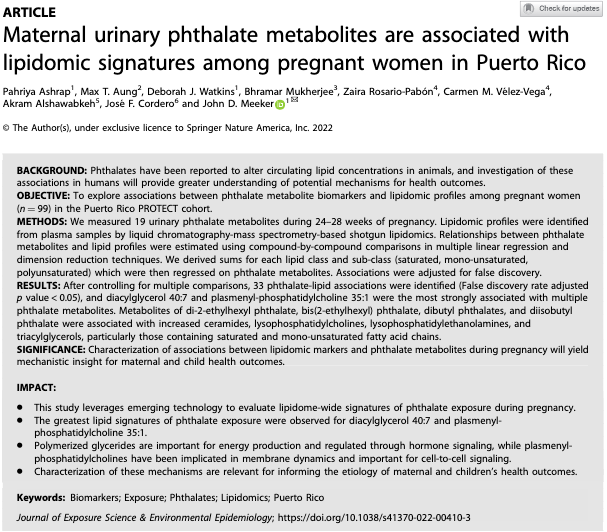
Our prepint is now published in @JExpSciEnvEpi! We report #lipidomic signatures associated with #phthalate exposures during pregnancy in the @PROTECT_SRP cohort. Lipid-mediated mechanisms may be an important link for downstream health outcomes!
https://t.co/tMxhmB2ygo
Amber Cathey (@cathey__amber) has been working with PROTECT for five years, participating in and now leading research projects on environmental epidemiology. Read about her journey with PROTECT and environmental health in this month's trainee spotlight: https://t.co/gugZITBlu4
Such an honor to be asked to speak on @AgentschangeEJ podcast with @max_aung and @amizota
And so important to be talking about equitable policy change to protect health and address environmental injustices.
A recent @umichsph study linked a chemical widely used in herbicide with preterm births. @JDMeekerUM, professor of Environmental Health Sciences, sat down with @WEMU891 to discuss the findings.
Listen 🔊 https://t.co/VvemS9d8S9
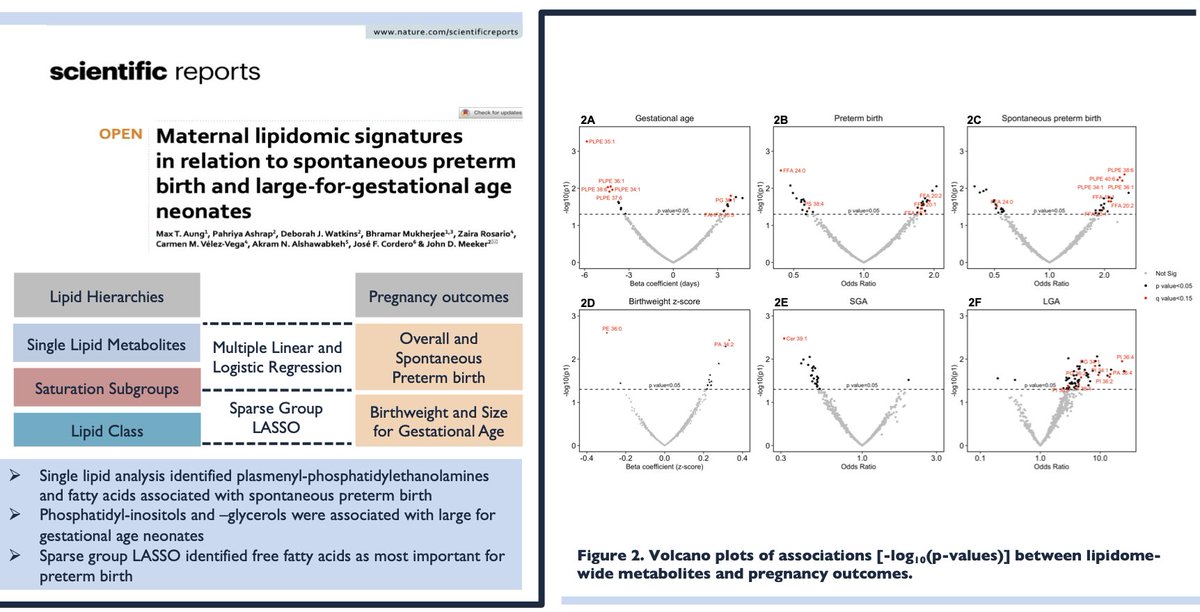
In the @PROTECT_SRP cohort, we explored #lipidomic signatures of pregnancy outcomes and find free fatty acids as important predictors of preterm birth, which complements our previous findings with #eicosanoids
https://t.co/OqnSrtncVC
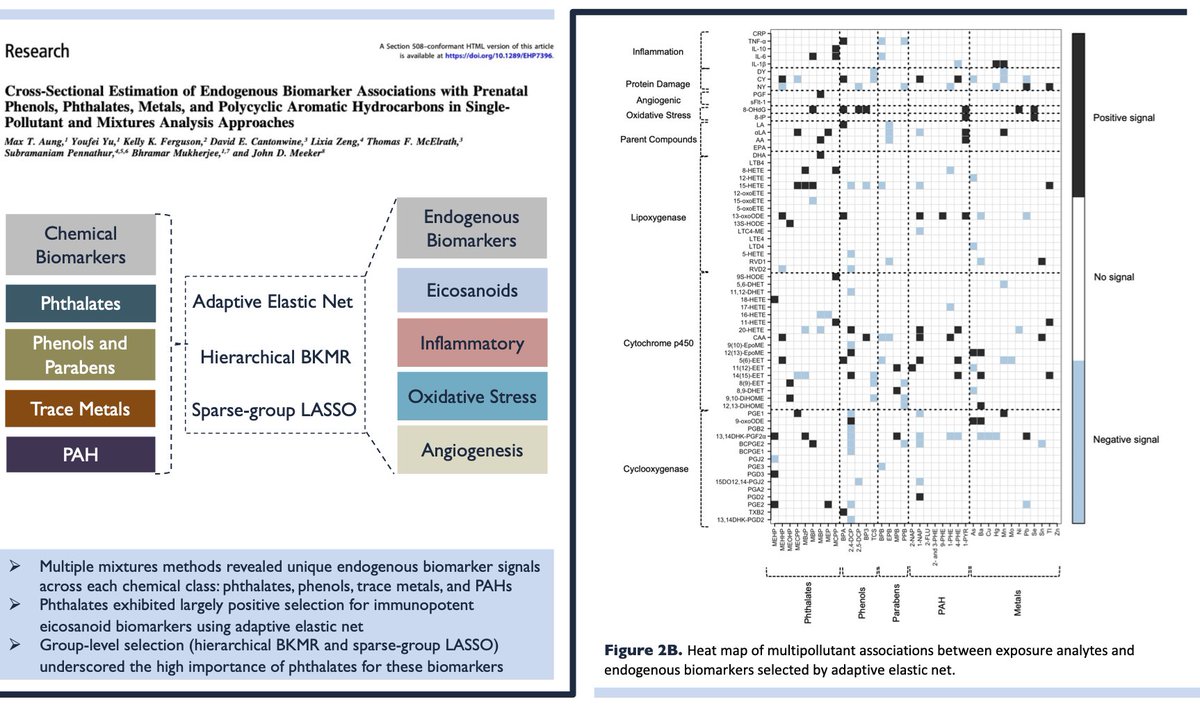
Our new study in @EHPonline explores statistical methods for single and grouped mixtures analyses for an extensive panel of exposures and endogenous biomarkers! We recommend the need to apply multiple methods to get the full #exposome picture
https://t.co/JLVtURRRhI
Our recent findings among children in Mexico City suggest that essential and non-essential metals have the potential to disrupt the onset and progression of puberty via interrupting the critical hormonal pathways.
https://t.co/qyaZwZstRi
In our recent @env_int_journal paper collaborating with @ZorimarN we explored the relationships between metals and prenatal sex-steroid hormones. https://t.co/d0L9a7TH7S