I am pleased to announce our latest paper in JMIR led by @meghanaksagar from our lab on the risk of hospitalization and mortality after breakthrough SARS-CoV-2 infection by vaccine type.
https://t.co/h35qLuToIW
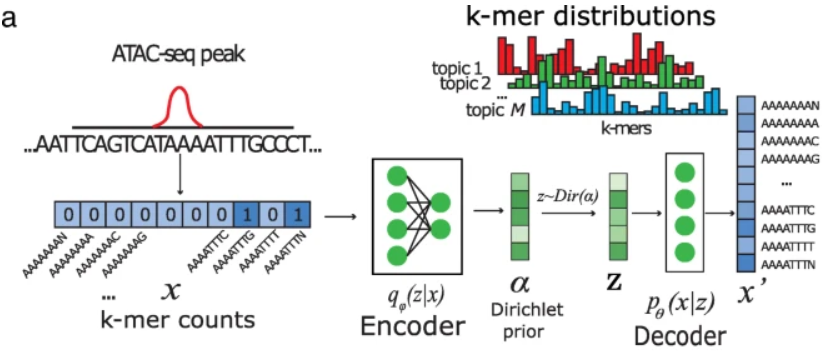
BindVAE from @meghanaksagar, Leslie & co, a method based on Dirichlet variational autoencoders for decoding transcription factor motifs from open chromatin data. It can learn cooperative binding signals for pairs of transcription factors https://t.co/4Vz2xISPRE
@KCDH_IITB hosted Dr. @meghanaksagar for an interactive session and sharing interesting work being done in proteomics, genomics and public health at the AI For Good Lab at Microsoft.
https://t.co/5jzQFnUKU4
#iitbombay#digitalhealth#kcdh
@KCDH_IITB hosted Dr. @meghanaksagar for an interactive session and sharing interesting work being done in proteomics, genomics and public health at the AI For Good Lab at Microsoft.
https://t.co/5jzQFnUKU4
#iitbombay#digitalhealth#kcdh
This morning @Microsoft, @planet and @nature_org, announced the #GlobalRenewablesWatch, a first-of-its-kind living atlas to allow users to evaluate clean energy transition progress and track trends over time.
Why human neurons mature so slow?
Is it possible to accelerate their maturation?
Excited to share our work as a preprint. We tackled this question using human pluripotent stem cells (hPSC). Thanks to everybody involved in this work @studerl 1/8
https://t.co/uP9SGaSDsc
Risk of hospitalization and mortality after breakthrough SARS-CoV-2 infection by vaccine type and previous SARS-CoV-2 infection utilizing medical claims data https://t.co/QneLZDSMBW #medRxiv
Great work from Meghana Kshirsagar from my lab, in collaboration with @Benetech on using AI to identify potential evidence of war crimes in videos from the Syrian conflict. via #aiforgood#aiforhumanitarianaction@WSJ
https://t.co/kay5bi6IqL