6/ We are excited to share this work with the community! Huge thanks to all collaborators and patients who made this possible.
💡 Check out the preprint for the full story:
👉 https://t.co/kUqyEvt9cX
#NSCLC#spatialomics@WesleyResearch @UQMedicine @pahospital@PARFoundation
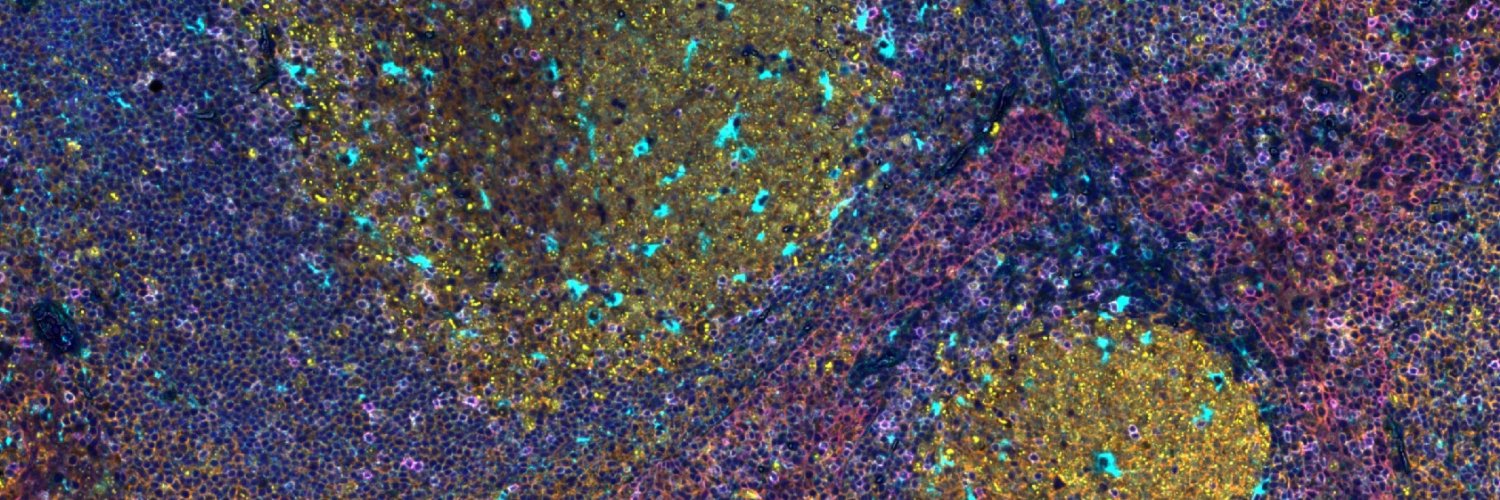
1/ After a huge team effort, we’re thrilled to share our latest study exploring the tumour microenvironment in NSCLC 🎯We integrated spatial proteomics, transcriptomics, and machine learning to uncover how the architecture and metabolism of the TME relate to patient outcomes.🧵👇
🚨@Qld_SBC Scientific Director, @aruthak profiled in the @abcnews on the weekend!
📢 New publication led by UQ and @Yale scientists, in the leading scientific journal #NatureGenetics aims to revolutionise #lungcancer treatment.
ABC article https://t.co/QjWVFT6IO7
We are super proud of our @YaleMed and Clinical-oMx Lab @UQ_News team for our new publication in @NatureGenet titled “Spatial signatures for predicting immunotherapy outcomes using multi-omics in non-small cell lung cancer”. Let’s get into it…https://t.co/Bg5W7f1jf3
🚨New paper alert! 📷 We are excited to announce the publication of our latest paper, “Proximity and metabolic activity of the Tumour Microenvironment as predictors of survival in High Grade Serous Ovarian Cancer”, is now live📷https://t.co/uNE4DJJnSZ
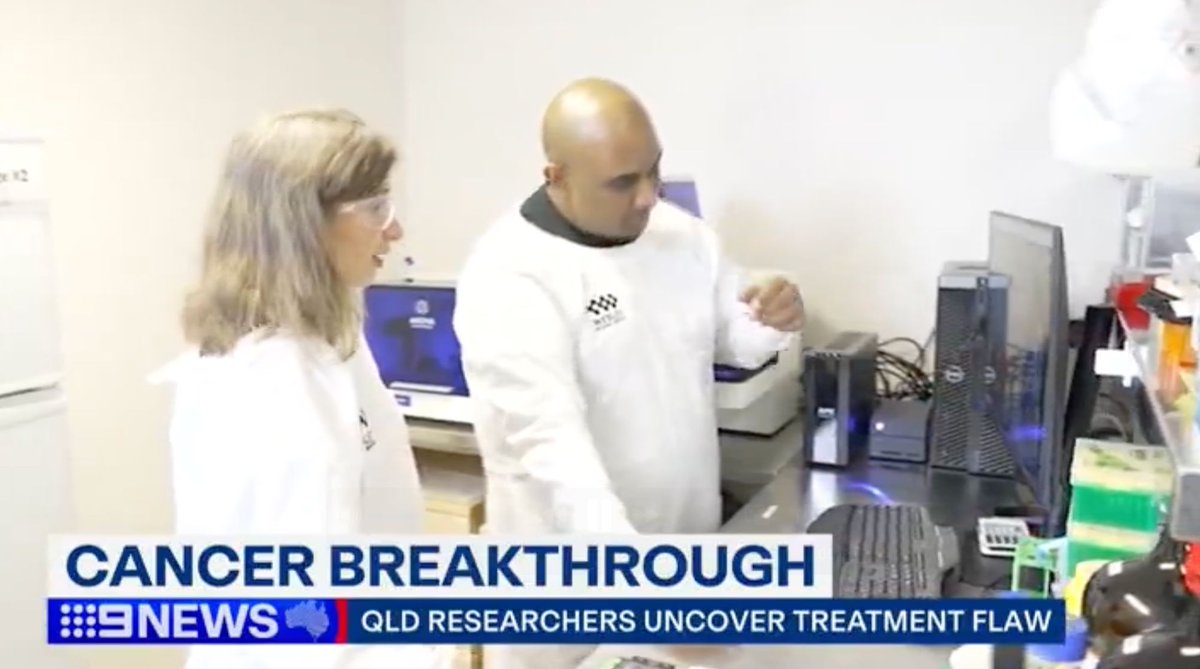
Did you catch the @Qld_SBC on @Channel9?
@aruthak shared an exciting world-first discovery! His team has profiled hundreds of proteins & thousands of gene messages from just a single tissue slide, using samples from 84 patients with head & neck cancer. https://t.co/M6AT900Q8O
Cellular keys to cancer survival/treatment resistance have been unlocked. Scientists including TRI-based @aruthak mapped the tissue microenvironment to identify immune cells linked to living longer with disease in remission. The work is in The @australian. https://t.co/tV92qHJYOj
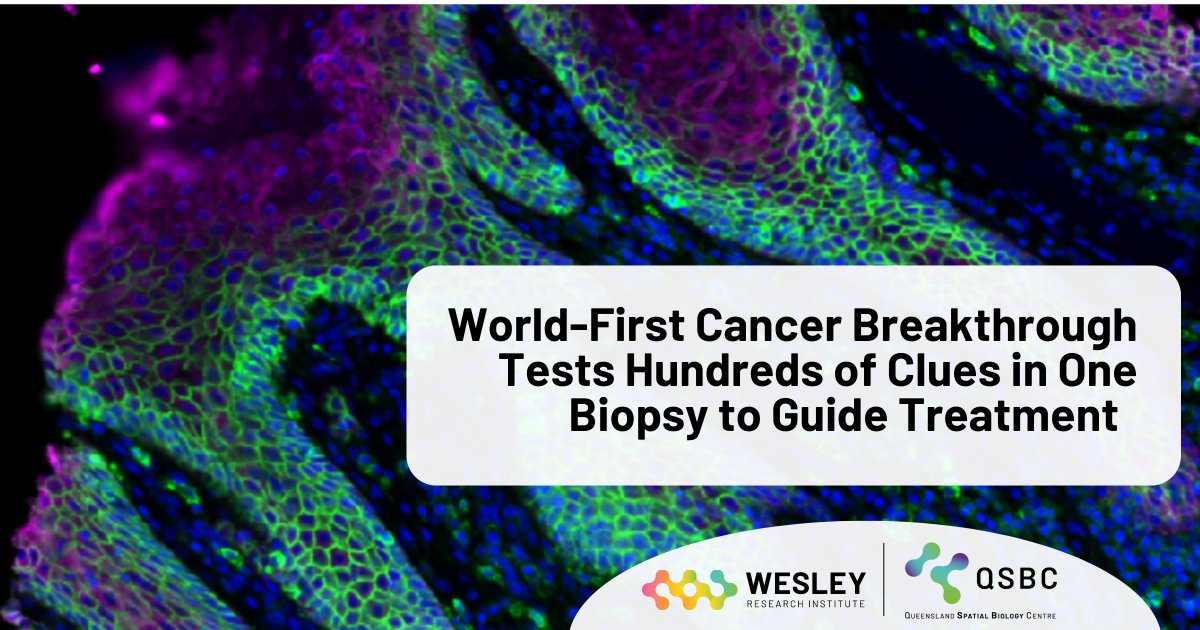
In a world-first discovery from the @Qld_SBC , doctors can now check hundreds of markers in a single biopsy to show which treatments, like #immunotherapy, #chemotherapy or #radiotherapy, will work best for patients with head and neck #cancer.
Learn more https://t.co/jgP8RLsQ4Y
Assoc. Prof Arutha Kulasinghe (Director of Science QSBC) and the Wesley Research Inst. dedicated team, trying to make living with Cancer a much more manageable outcome for all. It's a privilege to work along side them as the Consumer Advocate rep. Well done to the team
🚨Excited to share our latest paper from the #ClinicaloMxLab#QSBC where we spatially resolved >580 proteins in head and neck cancer! This is the largest spatial proteomic panel currently commercially available for fresh frozen and FFPE samples 💪
https://t.co/gTRytnbzig [1/12]
@aruthak sat down with the @AACR to talk all things spatial biology.
His team at @Qld_SBC are using cutting-edge spatial biology approaches to gain deeper insights into patient biopsies and surgical resections across a range of tumour types.
Read 👉 https://t.co/jWHOdQz80E
Members of WRI had the pleasure of attending the Art of Medicine exhibition at @gabbaart. An inspiring initiative exploring the intersection of science, art, and wellbeing in medicine. We were proud to showcase three high-resolution #spatialbiology images from @Qld_SBC
A/Prof Arutha Kulasinghe @aruthak from @Qld_SBC presented his lab's latest research focused on spatial biology and immunotherapy recently at the SelectScience Cancer Research Summit 2025. Listen to his webinar 👂💻https://t.co/BuBZyYBJVb
#spatialbiology#cancerresearch
Did you see @Qld_SBC in the news yesterday? 📰 🔬 The story highlights an innovative study by researchers at WRI, who have uncovered a crucial factor that determines whether patients with head and neck cancer will respond to immunotherapy. Learn more - https://t.co/IHeh3xaHCH