When he was alive & his wife filed a case, he was called by Courts twice every month thousands of Kms away
Now that he is dead, he has got a date AFTER ONE YEAR !!!!!
ATUL SUBHASH WILL NEVER GET JUSTICE IN THIS COUNTRY
I AM 100% SURE
#JusticeForAtulSubhash
It is wrong to call this a dog hater's verdict. I have read the entire SC order, and at several places, it states how to care for dogs in shelters. If the civic authorities and the so-called stray dog lovers haven't taken any action in this regard, someone needs to take the first step.
Absolutely disagree with this. Numbers do not lie. Look at the rising dog bite cases. Rather than pointing out a lack of understanding of SC's approach, it is the lack of knowledge among blind-sided stray dog feeders of how stray dogs behave.
Here's my analsys of the SC order to clear misconceptions.
https://t.co/IXNPRxcF9y
Kisan Credit Cards were meant for farming needs. Instead, they’re being used to pay for surgeries, school fees and even desperate dowry demands.
In rural India, easy farm credit is fast turning into a lifelong debt crisis. My story from the ground:
https://t.co/Gu3iBSbHTe
The weight of grief bears down on me at the news of the passing of my honoured and cherished friend: Dr Manmohan Singh.
Obituaries, essays and books a plenty there will surely be about this great man, celebrating him as the architect of India’s economic reforms. As Prime Minister, Dr Manmohan Singh was the midwife of India’s emergence as one of the world’s economic giants.
I had the rare privilege of witnessing the early years of these transformative policies first-hand while we both served as finance ministers during the 1990s. We shared a fervent commitment to the war against corruption — even collaborating on unravelling a major case.
The praise that will follow in the days ahead will be truly well-deserved. Dr Manmohan Singh, slightly awkward as a politician but undeniably upright, steadfast and resolute as a statesman, leaves behind a legacy that will inspire generations to come.
To me, he will be all that and much more. Not many people know this, and it is time that I share it with Malaysians: during the years of my incarceration, he extended a kindness that he didn’t have to — one that was neither politically expedient nor, as one can imagine, appreciated by the Malaysian government at that time. Yet, true to his character, he did it anyway. He offered scholarships for my children, particularly my son, Ihsan. Although I had declined the gracious offer, such a gesture undoubtedly showed his extraordinary humanity and generosity, demonstrative, as the Bard would have it, of a man so full of “the milk of human kindness”.
In those dark days, as I navigated the labyrinth of imprisonment, he stood by me as a true friend. Such acts of quiet magnanimity defined him, and they will remain etched in my heart forever.
Goodbye, my mitra, my bhai, Manmohan.
Photo: Getty images
Despite all the buzz around D2C, q-com and e-com, and despite all these channels growing much quicker than the market, any consumer founder you speak to will always want to go and scale offline and become an omnichannel brand
And to build a large (500 cr+) profitable consumer brand, I don’t think not going offline is even an option in 99% of categories
Caveat: Wherever I have mentioned offline, I have primarily considered General Trade, which is 80% of offline in most categories
Why offline?
a) Channel Mix: Most categories still have 80-85% volumes coming from offline channels. And while the online channels are growing, most existing categories will still continue to have a significant offline share. Channel mixes don’t change overnight in any category. Brands that try to have a significantly different channel mix from the category at large usually end up with much higher CAC.
Eg: If 80% of consumers buy shoes offline, it means unless you are present offline, your effective TAM is only 20% of the universe. And while you may argue that you can try and persuade a consumer to buy online through ads/offers, it would mean significantly higher CAC as in addition to convincing about product/brand, you are also persuading someone to change their channel preference
The only exception to this rule is if you are launching a new category itself or the current category where you are launching is small and doesn’t have an established channel yet. Eg: premium protein bars, electric toothbrushes, water flossers etc could be such examples. In these categories, going offline isn’t a no brainer and needs to be evaluated
b) Profitability at Scale : The rule of thumb is that if the more fragmented it is, the greater the margin retention and power for the brand. Conversely, if a channel is more organized, such as e-commerce or q-com or Modern Trade, the margin retention and power shift towards the channel.
When you have 100s of distributors and 1000s of retailers selling your product, you are not dependent on few partners. And thus margin power stays with the brand
When it is few players controlling the entire channel ( eg: Swiggy/Zepto/Blinkit in quick-com), the cost of doing business will always be significantly higher compared to offline
The other reason why profitability improves at scale is that you get the benefits of economies of scale. General Trade is a compounding channel. Yes, to open any city, you need to invest a fixed amount in manpower and trade marketing collaterals in most shops. But once the shops starts selling in greater quantities, your costs more or less stays the same. Thus improving profitability. This is unlike channels like e-com/D2C where the cost of acquiring customers only increases after a certain point
c) Omnichannel Consumer: The consumer is truly omnichannel. They will discover online, buy offline and also discover offline, buy online. This is behaviour displayed by a good chunk of consumers. So if your product is not available at the store, you lose out on this entire cohort of consumers. And having an offline presence helps build more trust with consumers. They can physically examine the product. The ability to “touch and feel” does and will continue to be an important parameter for trust. If you’re visible, you’re credible
When to Go offline?
For digital-first consumer brands thinking to launch offline, it’s critical to get the timing right. The investment is high both in terms of time and money. The risk is even higher because, unlike e-commerce marketplaces, you don’t get second chances easily. On Amazon, if you fail with a launch once, you can re-launch with a different branding and messaging. But in GT, a false start is hard to rectify
So when should you start offline? Ideally, only after you experience product-market-price-fit on D2C or e-commerce channels. You know that your product is accepted and wanted in the market at the price you’ve kept, and offline channels will only accelerate growth
But how do you identify if you have achieved PMF on online channels? There are a few indicators:
a) Your product’s share in e-commerce in your price category should be 10% or more. Eg: If I am selling a 7000 Rs mixer and I do not have a 10% market share in the >6000 segment on Amazon, it is too early to go offline. If I can’t beat large incumbents online, it will be foolish to assume I can do that on their playground, which is the offline market
b) Product Ratings greater than 4.3. This shows that the product delivers what it commits it will deliver
c) Conversion rate higher than the category average at the price point. It shows that Value>Price. This is extremely critical as it is very difficult to tweak/play around with pricing once you launch offline
d) High repeats ( if you are in a repeat category). This is the strongest identifier of a great product and increases your chances of success when you go offline
All the above parameters point to some kind of organic pull from the market. When such a product is taken offline, the probability of success is much higher
But online PPMF alone and some kind of organic pull is not enough
The reason is that driving sellout from offline retail counters is extremely difficult. Yes, you can have the best distributor, best sales processes, be present in the best counters. But if your product does not sell from the counters, you will fail
It is obvious and the same holds true in online channels as well. The only difference is in online channels, you have 100x more control on the execution of the sellout levers. If products aren’t getting clicks on Amazon, you can increase spends on search ads. If conversion is low, you can increase discounts. You get the drift
It is extremely difficult to execute this at scale efficiently in offline channels. And hence if there is no pre-existing demand for your product or a solid demand gen plan, launching offline is bound to fail for new age brand
Retailers have two primary objectives: maximize earnings and sell good products. The earning from sales is their livelihood. And they need to stock good products to retain the trust of their customers and ensure repeat visits.
So basically, they want to stock products that:
· Customers want and love
· Are easy to sell and fast moving
· Have good margins and trade schemes
It’s almost a given that retailers will retain a higher margin from new brands for the risk they’re undertaking. But high margins don’t mean much without good sales. And to drive sales, brands need to do a lot of work on the ground and even away from it.
There are only 4 ways to ensure sellout increase from retail counters
a) Get more people to come and ask for your brand/pick your brand
b) When people are looking for the category and haven’t decided on a brand and is asking the retailer, get the retailers to push your product
c) When people are looking for the category and haven’t decided on a brand and is looking around the store, get your in-shop display to grab attention and bring the product into the consideration set
d) Have promoters in shop to push the brand to people who haven’t decided on the brand
And all of this need significant investment in manpower, on-ground demand gen ( BTL, promoters, extra margins, schemes etc) and overall demand gen ( brand, performance spends) in that geography
And unlike digital channels, since there are so many stakeholders involved, the chances of poor execution is high. And it also takes time to show results
So, the other most important part while going offline, is to account for the investments and time that will be needed to get results. If your financials don’t allow that today, do not expand offline
In a nutshell, go offline once you have clear Product Price Market Fit online, great product reviews, some pre-existing pull, a detailed offline demand generation plan and the ability to absorb all the financial hits for the first 9-12 months
And even then, do not start with more than 1-2 markets. Perfect the process in a couple of markets ( preferably where you already have demand) and then expand into other markets
Winning offline is very difficult. But following this process will significantly increase the odds of success in the most profitable channel in most categories- offline General Trade
If @diljitdosanjh's historic performance at @FallonTonight@jimmyfallon doesn't get the world's and India's (Yes, still) attention to the HIGH level he deserves I'm not sure what will.
I'm just going to call it out cause, well, I might know a tiny thing or two about a turbaned sikh trying to break historical stereotypes created by the mainstream cinema and media.
In Hollywood, Sikhs have played roles of the villain’s aide in the James Bond film, Octopussy, or as a New York taxi driver in a 2014 film, Learning to Drive.
In Indian cinema, for decades, Sikhs were stereotypically mostly projected as cartoonish, angry, trustworthy or brave. (Exceptions like RocketSingh exist)
This has had an incalculable limiting impact on young male Sikhs. Their stories remain underreported, mostly untold. Ask them. Ask your Sikh friends, male and female. Attention storytellers.
Funnily enough, four years ago, I pitched stories to some of the biggest news platforms globally but it wasn't for them. It STILL isn't?
This is an excerpt of one of those pitches -
"On August 5, 2020, posters of a turban-wearing Sikh man illuminated the Times Square Billboards. The portrait was in celebration of the success of Indian singer and actor Diljit Dosanjh’s latest album titled G.O.A.T., released July 30th. In less than a week, the album was trending in 20 countries on YouTube, 26 countries on Apple Music, it had 10 million hits on Spotify, the highest for any Indian album ever, and the title track “G.O.A.T,” had accrued 52 million views on YouTube. With unprecedented success in America, Canada, U.K., Australia, UAE, and New Zealand, Dosanjh is the first minority performer from India transcending the globe and that too during a pandemic.
G.O.A.T, isn’t just a 16-song music album. It’s a loud proclamation by a minority culture coming out and saying we’ve arrived on the global stage of entertainment and if you don’t recognize it, we’ll just own it ourselves. The messenger is Diljit Dosanjh and he might just have hit the spot."
Yup, this was in the middle of the pandemic when @diljitdosanjh released his latest album titled GOAT. The first track was a monologue/speech with background music. Identity was at the crux of the message of the album.
Dosanjh sets the tone in the album with the first track titled "Intro" by boasting “they said ‘A TURBAN-WEARING MAN CAN'T MAKE IT,’” on the global entertainment stage.
Sure, it was the pandemic, and media houses didn't have the resources or money but perhaps now is the time!
He's been trying to get the world to notice, illustrate, and truly recognize how difficult it is to do what he has done. He's not just a singer, he's done it in Hindi and Punjabi. He's not just a lead actor in Punjabi cinema but also in Hindi cinema. He's made Indian cinema rethink its worn-out, unauthentic methods of making a non-Sikh superstar wear a turban and play a Sikh man. He's performed at @coachella.
For Sikhs, and those who connect with the culture, of whom there are many, he's breaking barriers of a type that unleashes confidence in an entire culture. He's simply the first to have done it so profoundly, so loudly, yet staying true to his nature, silently, modestly.
We need to think about whether we are recognizing this enough. How long do the architects of information, storytellers, award-givers, want to continue ignoring his feat by relatively small recognitions/accolades here and there?
Write about it in depth, profile his journey, hold information shows about what this means for a culture, and give it the recognition it deserves!
Thanks for reading:)
Humbly!
Amitoj
PS: HERE IS THAT INTRO TRACK:
https://t.co/SrfRNJ0r08
Novak Djokovic's entire interview on 60 Minutes is excellent — but this clip of him talking about developing mental toughness is especially great.
“Even though there is no physical contact in tennis, there’s still a lot of eye contact”
RBI increases risk weights for banks and NBFCs. This is pretty big!
1) All consumer credit (other than housing, vehicle, gold, edu and MFI loans) see an increase in risk weight to 125% from 100%
What this means is:
Thread🧵1:5
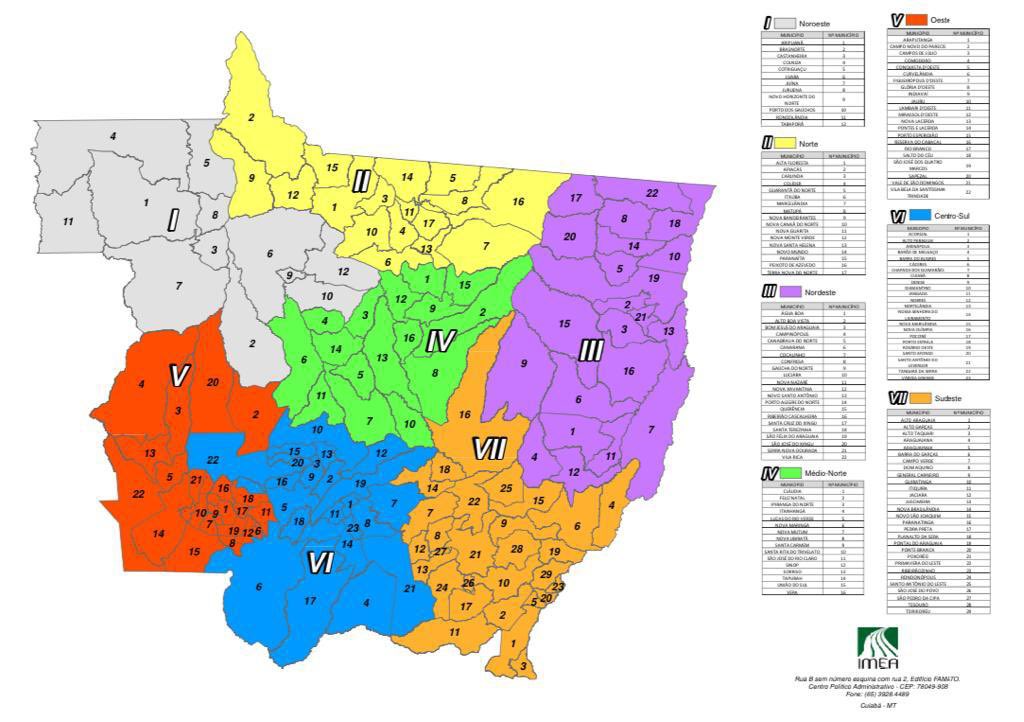
Here is my impression as a farmer about the drought that hits Mato Grosso (MT)
Soybean cycle
The varieties planted in MT have a cycle of 100 to 110 days mostly (some 90-95), having spent 30 days without rain means that they are at best 25% of the cycle without water
BREAKING! The Government authorized today to postpone corn shipments for 240 days if the load ends between July 24 and September 30. This decision potentially implies from 3.6 to 5.4 MMT of corn.
What are we to make of AI?
Should we be scared? Excited? Is the Singularity almost here? Would you like to be a paperclip?
@ajay_shah & I argue furiously in episode 2 of Everything is Everything, our new podcast: https://t.co/cP1M80zOcZ
Guest appearance: Mark the AGI.
A tech company is done the moment its CEO starts thinking of himself as a capital allocator.
If Elon Musk, Bill Gates, Steve Jobs, Walt Disney still could spend most of their operating time hands on, in product / engineering / marketing projects, so can you.
From term sheets being pulled out to undergoing severe depression, the founders of #FarMart have seen it all during their #enterpreneurial journey.
This is how they pulled through -
@farMart_@mehtab_hans@alekhs22
https://t.co/kKeNPrG9zV
We are closing out the crazy week of the fund raise with a sit down with one of our early backers.
It is a rare occurrence to have both @mehtab_hans and @alekhs22 together publicly talking about the work at @farMart_