@girishkuber आजचा लेख आवडला. नवीन प्रदेशाची आणि त्याच्या इतिहासाची ओळख झाली. विशेष म्हणजे सतत भारताशी उपहासगर्भ तुलना करण्याची खदखद नसल्याने तो प्रवासवर्णन म्हणून अधिक वाचनीय झाला आहे. अजून अशा तुलनेचा विखार नसणाऱ्या अनेक लेखांसाठी खूप शुभेच्छा! 🙂👍
Thanks for your critique, Janet. We actually tried a couple of episodes where House (Hugh Laurie) (please put the brackets in the right place) gets it right first time, but they were only 6 minutes long. NBC weren’t happy. Then we tried some where House never gets it right and the patient dies. The audience wasn’t happy.
One could apply your trenchant analysis to other art forms: JS Bach wrote 30 Goldberg variations on the same chord structure; Frida Kahlo painted 50 portraits of herself; Henry Moore, what??
The point is, or was, variations on a theme; if all you see is hospital, medical blah blah, then it wasn’t meant for you.
Nonetheless, I look forward to your first novel!
A lot of the emails I get from founders are now written in a hard-hitting journalistic style. I know they're written by AI, because no founder ever wrote this way before. And once you realize something is written by AI, it's hard not to ignore it.
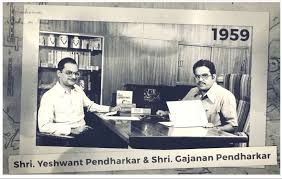
The name sounds British, but it is actually a purely Indian acronym. In 1952, a 55 yr old grocery store owner from Nagpur named Keshav Vishnu Pendharkar decided to shut down his shop, pack up his family of 10 children, & move to Bombay. He wanted to create a chemical-free, swadeshi alternative to the foreign cosmetic brands that were ruling post-independence India.
He started his business in a tiny, cramped godown in Parel, Bombay. He named his company after his father: Vishnu Industrial Chemical Company. V-I-C-C-O. There was no British Lord or foreign laboratory. It was just a middle-aged Marathi man & his sons working out of a shed with a dream to revive ancient texts.
Keshav Pendharkar’s brother-in-law held a basic degree in Ayurveda. Together, they huddled over ancient scripts & formulated a tooth-cleaning powder made from 20 rare herbs & barks (including Babool, Bakul, & Neem).They called it Vajradanti.
In the 1950s, urban Indians were rapidly switching to chemical, white, sweet-tasting toothpastes imported by MNCs like Colgate. When the Pendharkers tried to sell a brown, astringent Ayurvedic powder, shopkeepers laughed them out of their stores. Keshav & his sons refused to surrender. They literally walked the streets of Bombay, going door to door to hand out samples, educating people on how chemical foam was destroying their gums, & manually building their empire 1 household at a time.
In 1971, Keshav passed away, & his son, Gajanan Pendharkar, took over. Gajanan looked at the skincare market & saw it was utterly dominated by colonial-legacy snow creams like Afghan Snow, Pond's, & Nivea. All of them were stark white. Gajanan decided to launch a face cream containing Turmeric (Haldi) & Sandalwood oil. When the product launched, shopkeepers panicked. They screamed, "Baap re! If women put this on their faces, it will turn them yellow!" Nobody wanted to buy a yellow cream because the world had been conditioned to believe that beauty products had to be white.
The Pendharkars weaponized the traditional Indian wedding ritual of Haldi-Chandan. They sent salesmen into the markets armed with handheld mirrors. The salesmen would manually apply the cream onto the shopkeepers' faces right then & there to prove it absorbed completely into a vanishing base, leaving a glow w/o any yellow stains. If you remember the iconic jingle: "Vicco Turmeric, Nahi Cosmetic, Vicco Turmeric Ayurvedic Cream"... you should know that those words were not just a clever marketing tagline. They were a battle cry born from a massive legal warfare.
In 1975, the Central Excise Department of India dropped a bombshell on Vicco. They insisted on classifying Vicco Turmeric & Vajradanti as "Cosmetics." If classified as cosmetics, the govt could levy a crippling 105% luxury tax on the products, which would have priced Vicco completely out of the market & forced them into bankruptcy. The Pendharkars refused to pay. They argued that their products were manufactured under a formal Drug License & were Ayurvedic Medicines (Drugs), which attracted significantly lower taxes.
This was not a minor dispute; it turned into a historic, grueling 25 yr legal battle. The case climbed all the way up to the Supreme Court of India. While battling global giants in the market, the family spent their resources fighting their own govt in courtrooms for ~3 decades. Finally, in the 2000s, the Supreme Court ruled in favor of Vicco, legally decreeing that their products were indeed medicinal, cementing the truth of their tagline forever.
How did a homegrown brand from a Parel godown become globally famous? Through sheer marketing brilliance before the internet existed. In the 1980s, South Asian immigrants abroad were obsessed with watching Bollywood movies on rented VHS video cassettes. Gajanan Pendharkar realized this & started buying ad space directly inside the video cassettes distributed globally.
Long before foreign networks recognized Indian brands, families in the US, UK, & Middle East were singing along to the Vajradanti jingle before their favorite movie started.
Despite controlling a multi-million dollar empire, the house had only 1 giant mega-kitchen. Every single meal was cooked in massive industrial-sized pots, & the entire family sat on the floor together to eat. Gajanan believed that if the family broke bread separately, the business would fracture into pieces.
In the early decades, the sons & grandsons who worked for Vicco did not get individual corporate salaries/luxury allowances. The company took care of all household expenses centrally. If a family member needed a car/a dress/a medical trip, it was cleared by the family elders, ensuring that personal greed could never overtake the company's mission.
Vicco did not survive because it was backed by British capital/Western tech. It survived because an Indian family was willing to go door to door with brown tooth powder, rub yellow cream onto skeptical faces, & spend 25 yrs in court defending the scientific validity of Ayurveda. The name might sound like a colonial legacy, but the blood inside the tube is Sampoorna Swadeshi.
This paper criticises IKS without referring to a single document on IKS released by the government of India and its agencies.
It is evident that this journal of the Cambridge University Press has no real peer review system in place.
ज्येष्ठ टाळवादक माउली टाकळकर यांचे निधन
https://t.co/BVL2fJfp27
अभिजात संगीताच्या मैफलीत अभंग आणि भजन गायनाच्या वेळी गायकाच्या सुरांमध्ये आपल्या टाळवादनाने रंग भरणारे ज्येष्ठ टाळवादक ज्ञानेश्वर उर्फ माऊली टाकळकर (वय ९९) यांचे अल्पशा आजाराने रविवारी खासगी रुग्णालयात निधन झाले.
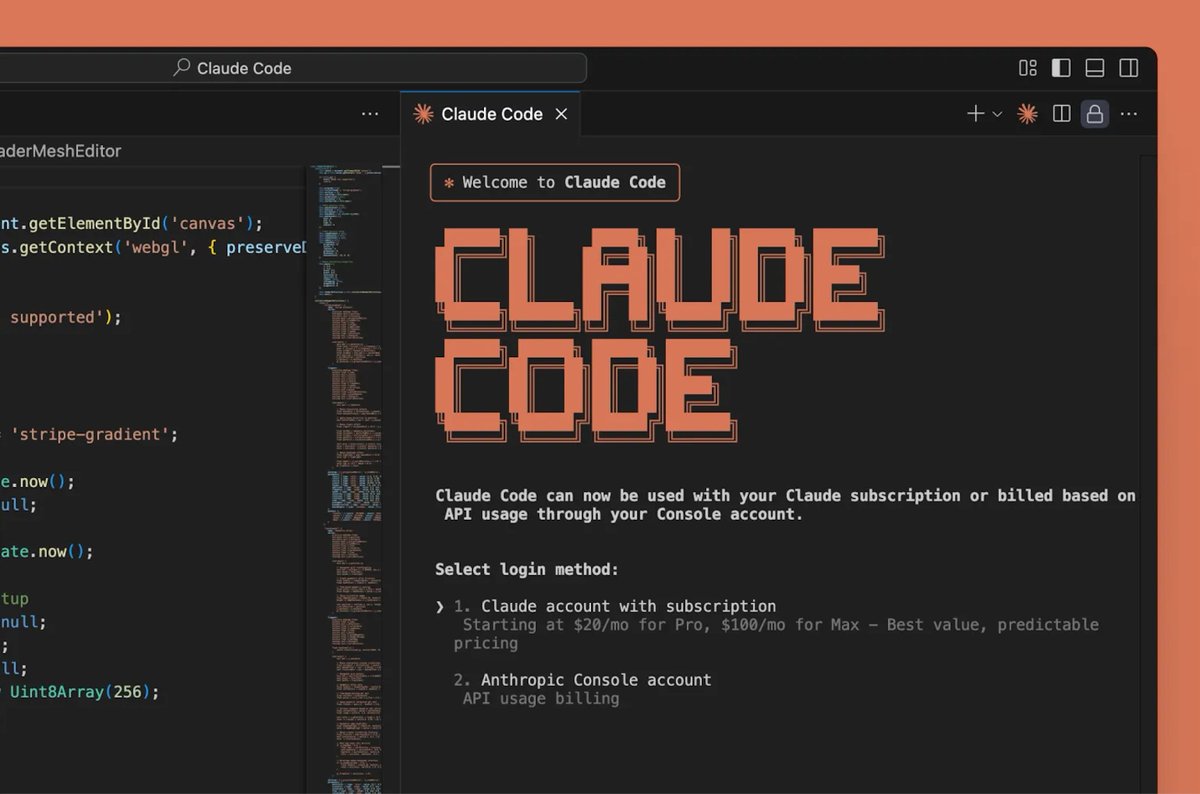
Uber gave 5,000 engineers access to Claude Code in December. By February, usage had nearly doubled. By April, the CTO told the company they'd burned through the entire annual AI budget.
The adoption curve tells you everything about what happened. In December 2024, 32% of Uber's engineers were using Claude Code. By February 2026, that number was 63%. That's not a gradual rollout. That's a product so useful that engineers pulled it into their workflow faster than finance could model the spend.
Uber has about 34,000 employees. Engineering is roughly 15% of that headcount, somewhere around 5,100 people. At enterprise API pricing, Claude Code runs $100 to $200 per developer per month on Sonnet alone. But that's the subscription math. The real number is token consumption, and Uber's engineers aren't building hello-world apps. They're building rider-driver matching algorithms, dynamic pricing engines, and real-time logistics across 70+ countries. Every one of those tasks eats context windows for breakfast.
The scale of what these engineers are actually doing with AI is wild. 92% of Uber's developers use AI agents monthly. 65 to 72% of code written inside IDEs is now AI-generated. 11% of all pull requests are opened by agents, not humans. The company's AI code review system, uReview, analyzes over 90% of the 65,000 diffs Uber ships per week.
AI-related costs at Uber are up 6x since 2024.
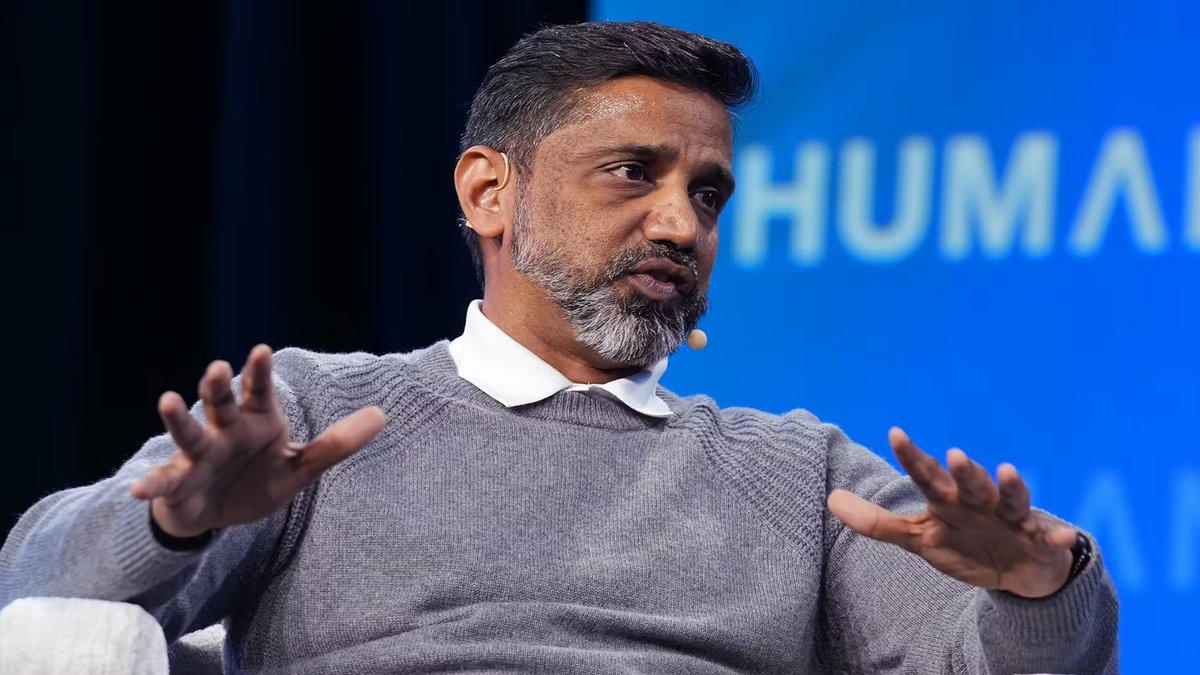
CTO Praveen Neppalli Naga's quote was "I'm back to the drawing board." That's the CTO of a $144 billion company admitting that the tools work so well his team can't afford to keep using them at this rate.
Here's the part nobody is pricing in. Anthropic's Claude Code hit $2.5 billion in annualized revenue by February 2026. That's up from $1 billion in November 2025. The fastest enterprise software ramp in history, and a huge portion of that growth is coming from exactly this pattern: companies deploy Claude Code, engineers love it, usage explodes, budgets evaporate.
Uber won't be the last company to have this conversation. The average Claude Code developer burns about $6 per day. Multiply that across thousands of engineers running complex agentic workflows, spawning sub-agents that each maintain their own context windows, and the math compounds fast. One engineering team running Claude Code in automated CI/CD loops can drain a monthly budget in days.
The CFO problem is now the bottleneck for AI adoption at the enterprise level. The technology works. The productivity gains are real. Uber's own data says 75% of AI code review comments are marked helpful by engineers. The constraint is that traditional annual budgeting was designed for tools with predictable per-seat costs, and AI coding agents have usage curves that look like cloud compute bills from 2015: exponential until someone notices.
Every enterprise CTO is about to have the same meeting Praveen just had. The tools are too good to pull back. The costs are too unpredictable to ignore. And the companies that figure out token cost optimization first will have a structural advantage over every competitor still running annual budget cycles against exponential adoption curves.
Sad news. My friend Simon who did the original bird for Twitter, Octocat for GitHub and Redid Sammy The Shark for DigitalOcean has passed away, he was 56.
He was a great guy. What a loss.
A long piece, but much repetition & much AI smell. AI has a tremendous impact. No doubt about it. It's converting every profession a mass market FMCG good. All salt packets are the same, all aluminium foils are the same; just packets different. Scale that to every job imaginable.
No one knows how many users @obsdmd has
I think it's around 5-10 million people but I'm not sure?
Anyone can download the app and start using it without creating an account or talking to anyone, and there are no analytics built-in 🤷♂️
Do share. For every broke, struggling passionate filmmaker Dreaming of making a zero budget film: MANN-PISHACH is an 80-minute experimental film built on a home PC. Two actors - Yaaneea Bhardwaj and Deepak Damle - iPhone performance footage, a 60-page screenplay, hand-drawn storyboards, Photoshop, generative AI and After Effects. Total cost: ₹33,000. If this helps even one broke filmmaker create something from nothing, the experiment was worth it. - Rahi Anil Barve
A Kanchipuram Sari is not mere fabric.
It is a language with grammar, a financial instrument you can wear, a biological object dyed with chemistry, & a cultural archive woven by history & hand.
For over a millennium, it functioned as liquid wealth. In desperate times, the silk could be burned away, leaving behind real silver & gold.
A garment that protected its wearer, even in fire.
Today, that loom meets AI, microbes, & cryptography — systems trying to relearn lost grammar, grow colour without poisoning land, & turn trust from promise into proof.
What happens when a thousand-year-old loom meets 21st century’s thinking machines?
Issue 3: Kanchipuram Saris & Thinking Machines, written by Nivedita, designed & built by @AltCarbonIndia
https://t.co/VI6AwcmAWs
No fancy projects needed.
Just fix the basics. Proper drains, usable footpaths, lane markings, waste management.
That alone can transform our cities.
Urban Planning is not Rocket Science, it’s Basic Governance. 🙏