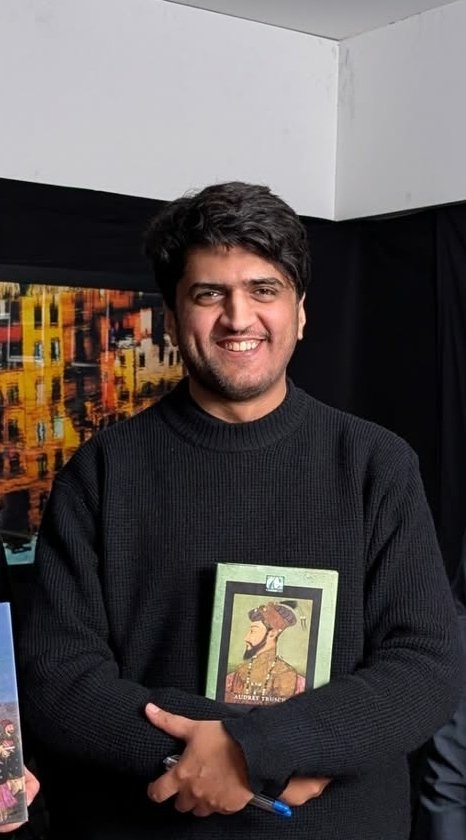
سندھ کی پچاس ڈگری سینٹی گریڈ کی گرمی میں ننگے پاؤں چلنے والے غریب بچوں اور لڑکیوں میں چپلیں بانٹنے والا یہ نوجوان کون ہے؟
کاش یہی کام کوئی وڈیرا یا ارب پتی سیاستدان بھی کرتا تو ہم سلام کرکے ویڈیوز شیئر کرتے
To civil society, journalists, and state officials:
I am writing as a grieving wife, seeking the immediate and lawful release of my husband, Muhammad Saad.
At approximately 3:30 AM this Monday, 12–13 masked men with guns forcibly entered our home and took him away without presenting any warrant or lawful authority. This was an unlawful deprivation of liberty and a direct violation of due process.
Only after legal pressure did personnel within CTD register an FIR on laughable grounds. This post facto action raises serious concerns of mala fide intent and abuse of process, where the law is invoked after the fact to justify an illegal act.
Saad is a journalist, researcher, and Political Science scholar. His work engages with complex subjects, including Balochistan, Kashmir, and international affairs. He has interviewed recognised public figures such as Former Prime Minister Anwar ul Haq Kakar, as well as senior journalists Sohail Warraich and Hamid Mir, and has introduced major international voices to Pakistan’s media space.
More importantly, Saad has worked with state institutions when called upon, contributing to areas aligned with the national interest. He was vetted, cleared, and entrusted by the State. Today, that same individual is being subjected to coercive action by its functionaries.
This contradiction is not incidental but structural.
If individuals who have been vetted and trusted by the state can be subjected to arbitrary detention and retrospective criminalisation, then the question is unavoidable: on what basis does the state expect trust from its citizens?
The actions of certain personnel within CTD constitute a clear overreach of authority. Powers granted for public safety cannot be exercised in violation of constitutional safeguards, including the inviolability of the home and the right to due process. The law does not permit enforced taking into custody followed by procedural reconstruction.
Saad has never engaged with any proscribed material nor been involved in any unlawful activity. His life and work have remained within the bounds of law and intellectual inquiry.
I call upon civil society, the media, and responsible state authorities to take immediate cognisance of this case. Ensure due process. Examine the legality of the initial detention. Hold those responsible accountable. And ensure his safe and immediate release.
This is not just about one individual. It is about law and dignity. It is about giving hope to others who have worked for the state and Pakistan whenever called upon, who have trusted the state against all odds. This youth must be protected and safeguarded within a shrinking demographic that believe in state and that is increasingly disillusioned and disenfranchised.
#ReleaseSaad #RuleofLaw
Anne Hathaway said inshaAllah in an interview. No explanation. No footnote. No self-conscious pause. Just a word used correctly, naturally, in a moment of genuine hope.
Not Muslim and wondering if you can say it too? The answer is an enthusiastic yes. Christians say "Lord willing." Jews say im yirtzeh Hashem. And the Spanish word ojalá comes directly from inshaAllah.
The words we share across cultures aren't walls. They're doors. https://t.co/4fJ48vB9yK
This desert in Pakistan was once a river valley. Four thousand years ago people built civilisations here that were among the most advanced on earth. Every single major Indus Valley site sits on Pakistani soil. Mohenjo-daro. Harappa. Mehrgarh. Taxila. Pakistan's birth certificate, written four thousand years before the country had a name. Great work by @TDCPOfficial
Overwhelmed. Genuinely. The messages, the shares, the people reaching out from places I did not expect. Thank you.
I have not done anything special here. I just put into words what we have all felt. With the world's attention on Pakistan this week, it felt important to set the record straight. Who we are and who we are not.
What I think gets missed in conversations about Pakistan is that despite the incredible diversity, the languages, the provinces, the traditions, we have managed to forge a national identity that is distinctly and unapologetically our own. That deserves to be named and taken pride in.
I am as Pakistani as they come. I have lived and breathed everything in that piece. At the same time, I've grown up and have spent most of my life outside Pakistan, working in international media, I know how to write for those audiences. That combination is probably why the piece lands. I know the country from the inside. I know how to explain it to the outside. This piece was the bridge.
Thank you for crossing it with me.
Petrol at Rs 30/litre in Pakistan sounds crazy. It is not. What is crazy is the policy failure that prevents it.
Petrol is around Rs 300/litre today, excluding government levy, here's how it can effectively be Rs 30/litre.
People do not consume petrol for its own sake; they use it to travel. The average Pakistani rides a motorbike. A fuel-efficient motorbike can travel about 60 km on one litre. An efficient electric scooter can travel about 30 km per kWh, so it needs only 2 kWh to cover the same 60 km.
What should 2 kWh cost in Pakistan? Pakistan is one of the best places in the world for solar, with an all-in LCOE cost of around 5 cents per kWh. The electricity cost is 10 cents, or Rs 30/litre of distance travelled! The Rs 30/litre calculation remains the same for cars.
The 300-versus-30 gap is the cost of bad policy. It reflects billions of dollars of saving that could instead finance EV infrastructure: charging, distribution, battery swapping, and smart pricing software etc. - boosting much-needed domestic investment.
Since solar is highly modular. You do not need massive scale to get reasonable efficiency. That creates business and employment opportunities for small domestic power producers. Instead, Pakistan leaned into large fossil-fuel plants financed by dollar-denominated borrowing and guaranteed returns.
Local firms face credit constraints, but solar creates a natural collateralizable cash flow through electricity sales to the grid. With the right regulatory framework, this could have unlocked large private domestic investment, and employment.
Battery swapping is another area where small local businesses could have emerged and scaled.
Electricity enables smart pricing. When solar supply is abundant, prices can fall, and poor households and firms can shift usage to cheaper hours - automatic demand stabilization
Better air quality would mean longer, healthier lives and higher productivity. That is a growth multiplier
Green technology industries could be developed domestically with the right industrial policy, easing balance-of-payments pressure while raising employment and investment.
Instead, Pakistan chose imported-fuel power plants, protected a backward-looking domestic auto sector, and raised electricity prices by burdening them with the fixed costs of those plants and heavy taxation, slowing EV adoption. Then came the net-metering fiasco, all to keep zombie power plants alive.
Pakistan’s energy policy may be the clearest example of a broken nervous system. I hope someone fixes it, because people are paying the price, 300-versus-30
How Pakistan made the world over 3 trillion dollars richer
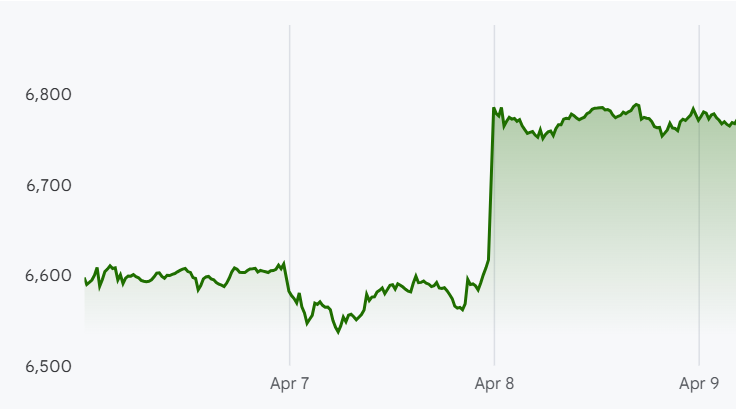
On April 7, the world edged toward Trump's 8pm ultimatum that "a whole civilization will die tonight." By mid-afternoon, Polymarket gave less than a 5% chance for a ceasefire. But then in a flurry of last-minute diplomacy led by Pakistan's PM Shehbaz Sharif, ceasefire odds shifted from near-impossibility to 100%, as both U.S. and Iranian leadership publicly acknowledged the important role played by Pakistan.
The sharp shift in probability of ceasefire from near-zero to certainty, allows us to estimate cleanly the market value of Pakistan's successful diplomacy. There was a sharp jump of 2.9% in S&P500 around the ceasefire announcement. The reaction was similar the world over.
Global markets represent about $125T, so a 2.9% jump represents a gain of 3.6 trillion dollars for the world. Pakistan helped create TEN times its own GDP for the world!
For me, the best part is not the trillions of dollar, but seeing Pakistan on the world stage as a peace maker.
I hope Pakistan runs with this new identity by promoting peace not only abroad, but also at home. That means moving away from politics of division and exclusion, and treating every citizen as its own.
Atif Mian, a noted Pakistani-American economist and currently a professor of Economics at Princeton University, has said that Pakistan must adopt a new economic vision calling for sustained income growth under a “Five-for-Fifty” (5/50) framework.
The proposed 5/50 vision argues that Pakistan should target 5% annual per capita income growth for the next 50 years, enabling the “average Pakistani to earn as much as the average citizen of the world”, wrote Atif on his website https://t.co/ziQheX3OFR on Tuesday.
وسعت اللہ خان کی تحریر: ضیاالحق کا خواب پورا ہونے میں 46 سال لگے - BBC News اردو
ہر بات سے اتفاق کریں یا نہ یہ مقالہ ضرور پڑھیں۔ آج پاکستان میں ووٹ کی وقعت اورجمہوریت، انسانی حقوق، صوبائی اختیارات، آ��اد عدلیہ _ سب نشانے پر ہیں۔ یہ دہائیوں پرانا منصوبہ ہے۔ https://t.co/gk5xBudzUn
Today is the death anniversary of the pride of Punjab, Nobel Prize winner in Physics, Dr Abdul Salam.
Look how beautifully he explained physics in Punjabi. He even wore a Punjabi pagri and khusa when receiving the award.
@CSMR786 Ignorance at its best. Punishing parents who purchased devices for their daughters to be in touch. Try this in boy’s schools.
If concentration is the requirement, teacher can have cell phones at the beginning of the class and return them at the end.
پاکستان میں اقلیتوں کے خلاف جتھوں کا ابھرنا جنرل ضیاء الحق کے دور میں شروع ہوا اور اب لگتا ہے ریاست پاکستانی معاشرے کو اپنی اصل شکل یعنی معتدل اور برداشت کرنے والا بنانے کے لئے کوشاں ہے جس کو ہر پاکستانی کو سپورٹ کرنا چاہئے