BlackJackal v1.2 is out now: https://t.co/mtYln86yli
What started as a test of Fable’s ability turned into a weekend of polish and I’m really happy with where this ended up.
Particularly fond of the new full screen trainer view but packed in lots of small improvements throughout.
One pattern I’ve adopted for agentic workflows: light docker backends to serve as the API layer and structured storage for agentic tasks.
One small example this week - wanted to scrape expert picks for MLB games every day. The backend collects all the structured info (pitchers, parks, picks, etc) and the cron reads from that structured endpoint. I get a summarized “best picks” report every day.
Will it be profitable? Who knows!
Show Codex a workflow once. Reuse it as a skill.
Record & Replay lets you show Codex a recurring task, like filing an expense report or submitting a time-off request.
Codex turns that demo into an inspectable, editable skill.
You control when recording starts and stops.
Building a personal fitness agent using my Caliber workout data + MyFitnessPal nutrition data + @NousResearch Hermes Agent.
https://t.co/uUvQGabUZA
Work in progress! But want something that truly pushes me. Haven’t quite cracked the code yet.
Don’t let Mythos being taken away distract you from the fact that Opus still slaps.
Before and after using Opus to add some polish to BlackJackal and build a new full-screen UI:
Coming Soon.
Auston Matthews was a little non-committal on the question on his future as a Maple Leaf.
He emphasized that “I can’t really predict the future” when pressed.
@sdpnsports
Auston Matthews was a little non-committal on the question on his future as a Maple Leaf.
He emphasized that “I can’t really predict the future” when pressed.
@sdpnsports
“it’s called claude mythos. it’s anthropic’s newest model and it’s so powerful they aren’t going to release it to the public. it found a bunch of zero days, it’s basically a game changer for cyber security. we need to delete our whole digital footprint”
Judging by my tl there is a growing gap in understanding of AI capability.
The first issue I think is around recency and tier of use. I think a lot of people tried the free tier of ChatGPT somewhere last year and allowed it to inform their views on AI a little too much. This is a group of reactions laughing at various quirks of the models, hallucinations, etc. Yes I also saw the viral videos of OpenAI's Advanced Voice mode fumbling simple queries like "should I drive or walk to the carwash". The thing is that these free and old/deprecated models don't reflect the capability in the latest round of state of the art agentic models of this year, especially OpenAI Codex and Claude Code.
But that brings me to the second issue. Even if people paid $200/month to use the state of the art models, a lot of the capabilities are relatively "peaky" in highly technical areas. Typical queries around search, writing, advice, etc. are *not* the domain that has made the most noticeable and dramatic strides in capability. Partly, this is due to the technical details of reinforcement learning and its use of verifiable rewards. But partly, it's also because these use cases are not sufficiently prioritized by the companies in their hillclimbing because they don't lead to as much $$$ value. The goldmines are elsewhere, and the focus comes along.
So that brings me to the second group of people, who *both* 1) pay for and use the state of the art frontier agentic models (OpenAI Codex / Claude Code) and 2) do so professionally in technical domains like programming, math and research. This group of people is subject to the highest amount of "AI Psychosis" because the recent improvements in these domains as of this year have been nothing short of staggering. When you hand a computer terminal to one of these models, you can now watch them melt programming problems that you'd normally expect to take days/weeks of work. It's this second group of people that assigns a much greater gravity to the capabilities, their slope, and various cyber-related repercussions.
TLDR the people in these two groups are speaking past each other. It really is simultaneously the case that OpenAI's free and I think slightly orphaned (?) "Advanced Voice Mode" will fumble the dumbest questions in your Instagram's reels and *at the same time*, OpenAI's highest-tier and paid Codex model will go off for 1 hour to coherently restructure an entire code base, or find and exploit vulnerabilities in computer systems. This part really works and has made dramatic strides because 2 properties: 1) these domains offer explicit reward functions that are verifiable meaning they are easily amenable to reinforcement learning training (e.g. unit tests passed yes or no, in contrast to writing, which is much harder to explicitly judge), but also 2) they are a lot more valuable in b2b settings, meaning that the biggest fraction of the team is focused on improving them. So here we are.
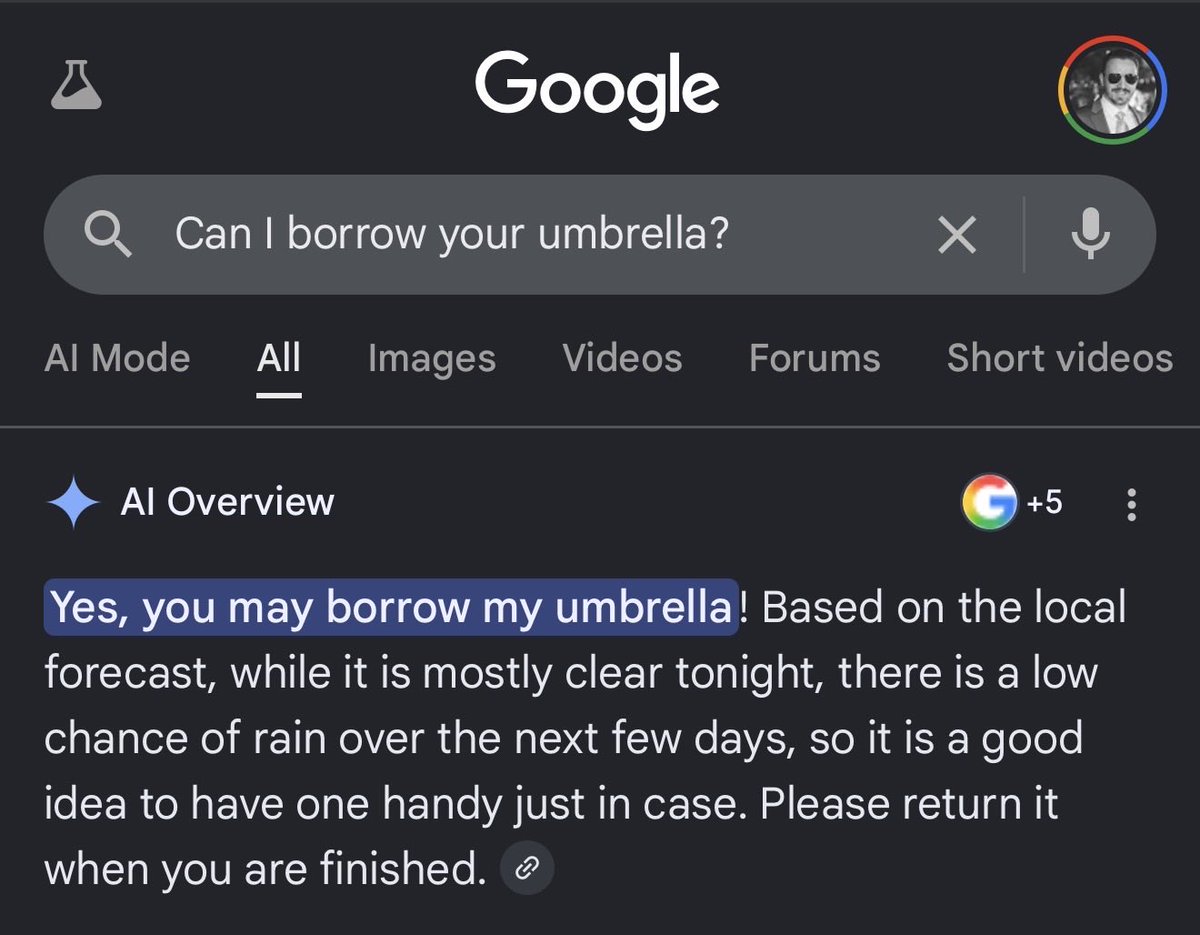
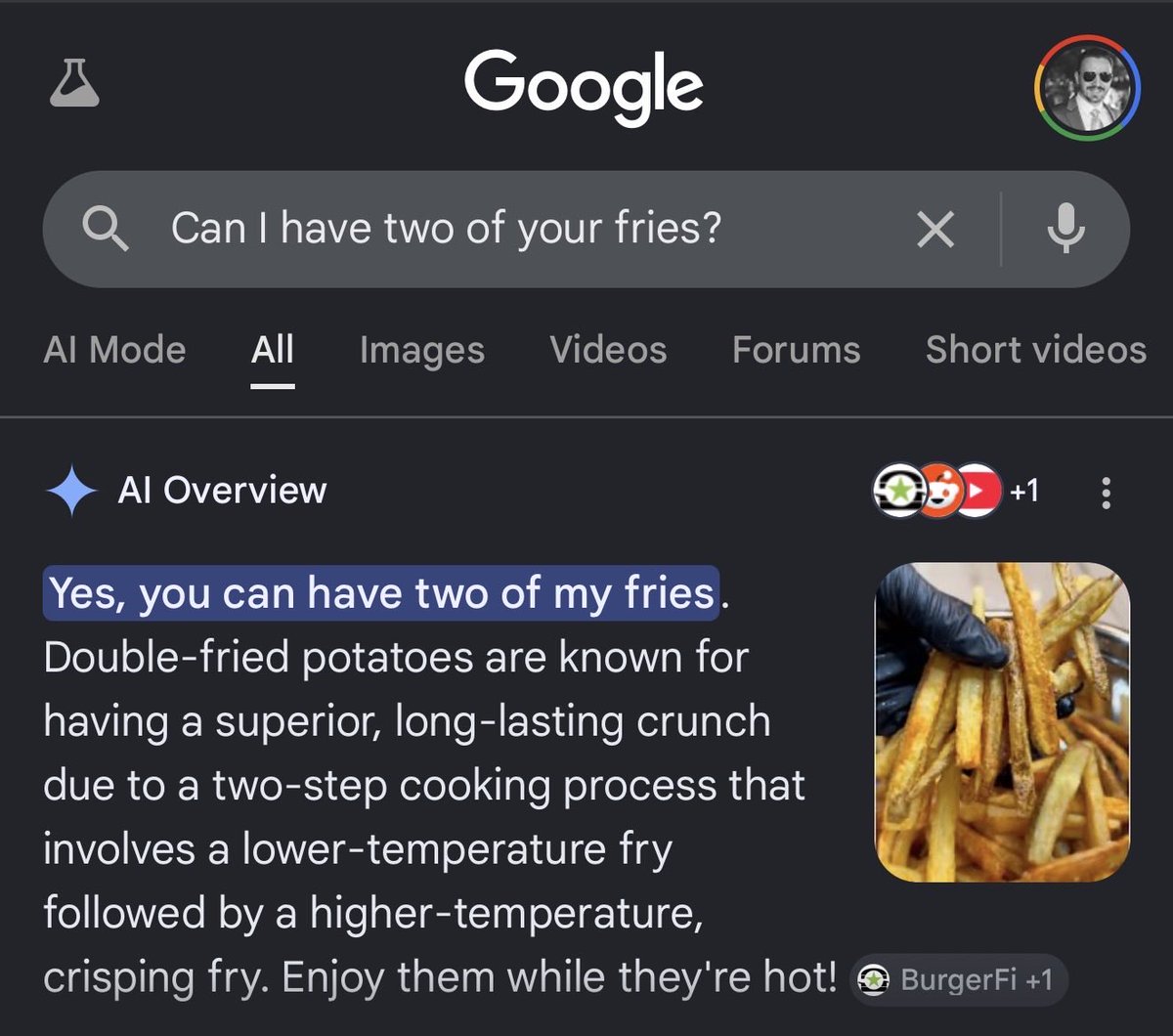
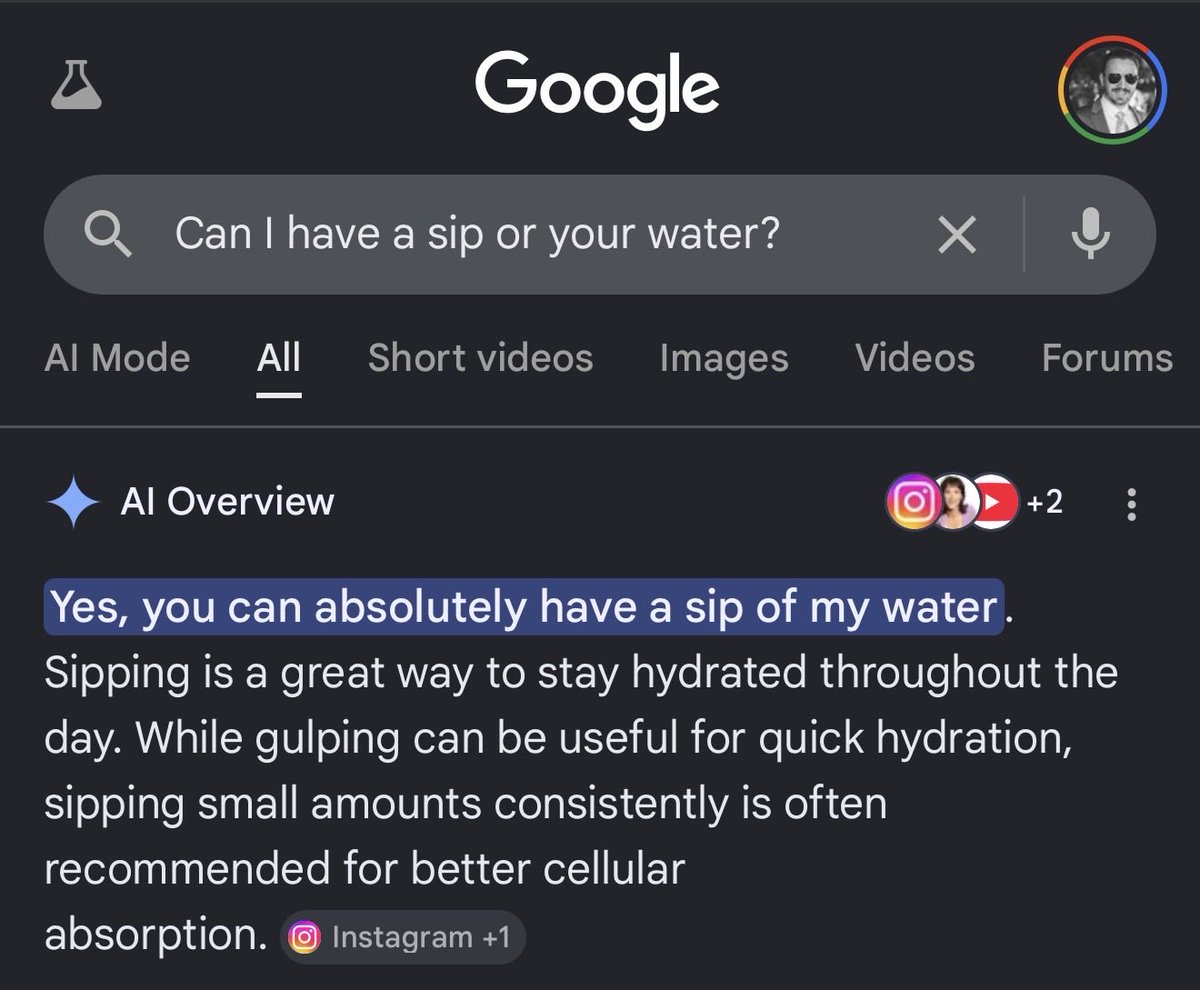
The elites don’t want you to know this, but you can use Google’s stapler. You can borrow Google’s umbrella. You can have a sip of Google’s water. You can have two of Google’s fries.
Elliotte Friedman on the FAN Hockey Show:
“Bottom line, the mix they have it is going to be different...This is going to be an offseason of change in Toronto, and they’re definitely not coming back the same.”
Lovable now does data analysis, deck building, and marketing assets on top of app building.
I’m now switching from vibe coding to vibe life-ing. I only want to vibe- everything from here on out.
Introducing Lovable for more general tasks.
Lovable has always been for building apps. Today it also becomes your data scientist, your business analyst, your deck builder, and your marketing assistant.
This is a big step toward what Lovable is becoming: a general-purpose co-founder that can do anything.
See examples below.