Our Philosophy Compass paper on conceptual engineering is out, open access: Any feedback most welcome, enjoy!
With huge thanks to the editors, the reviewers, and the folks we list in the acknowledgments! <3
https://t.co/FxuVejhOxA
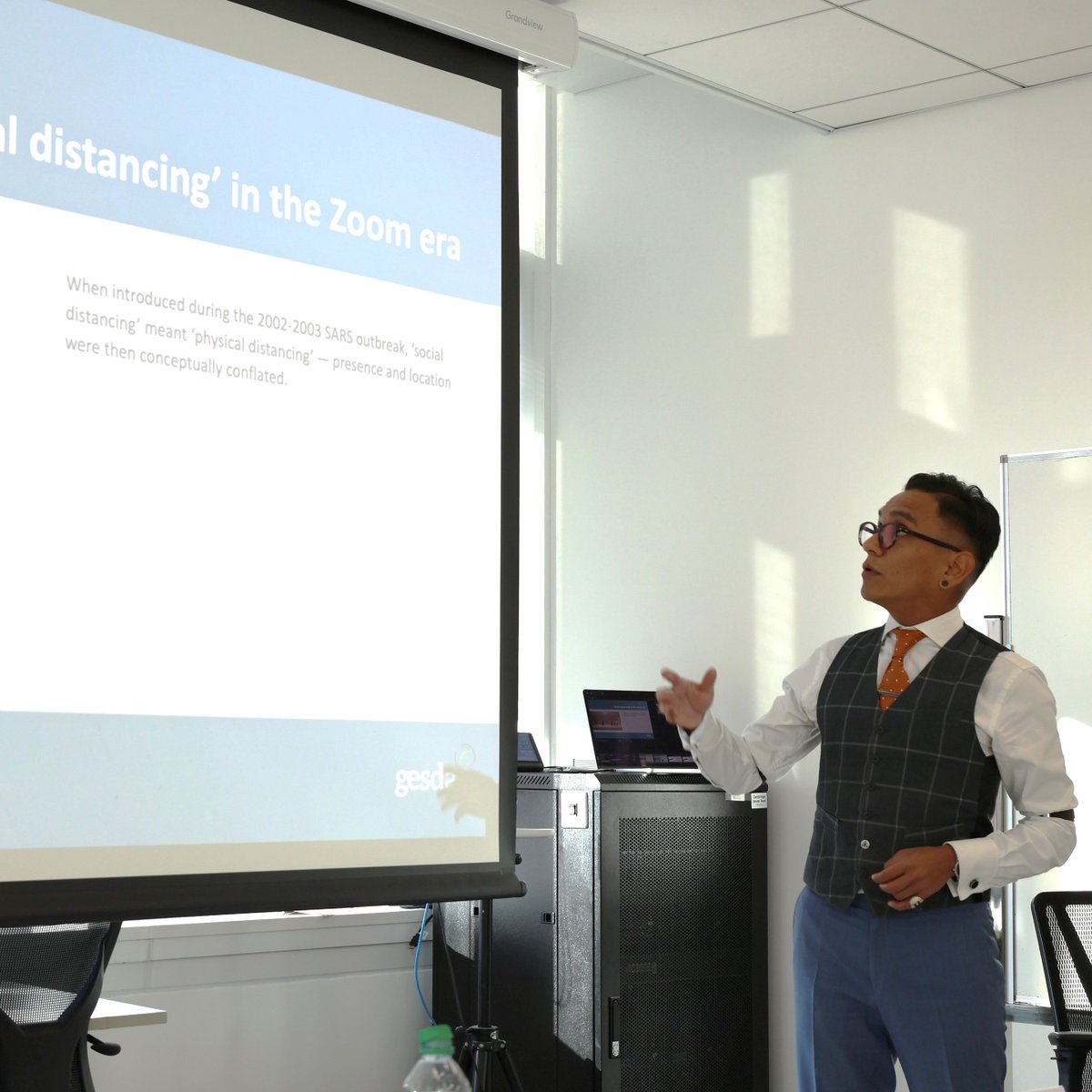
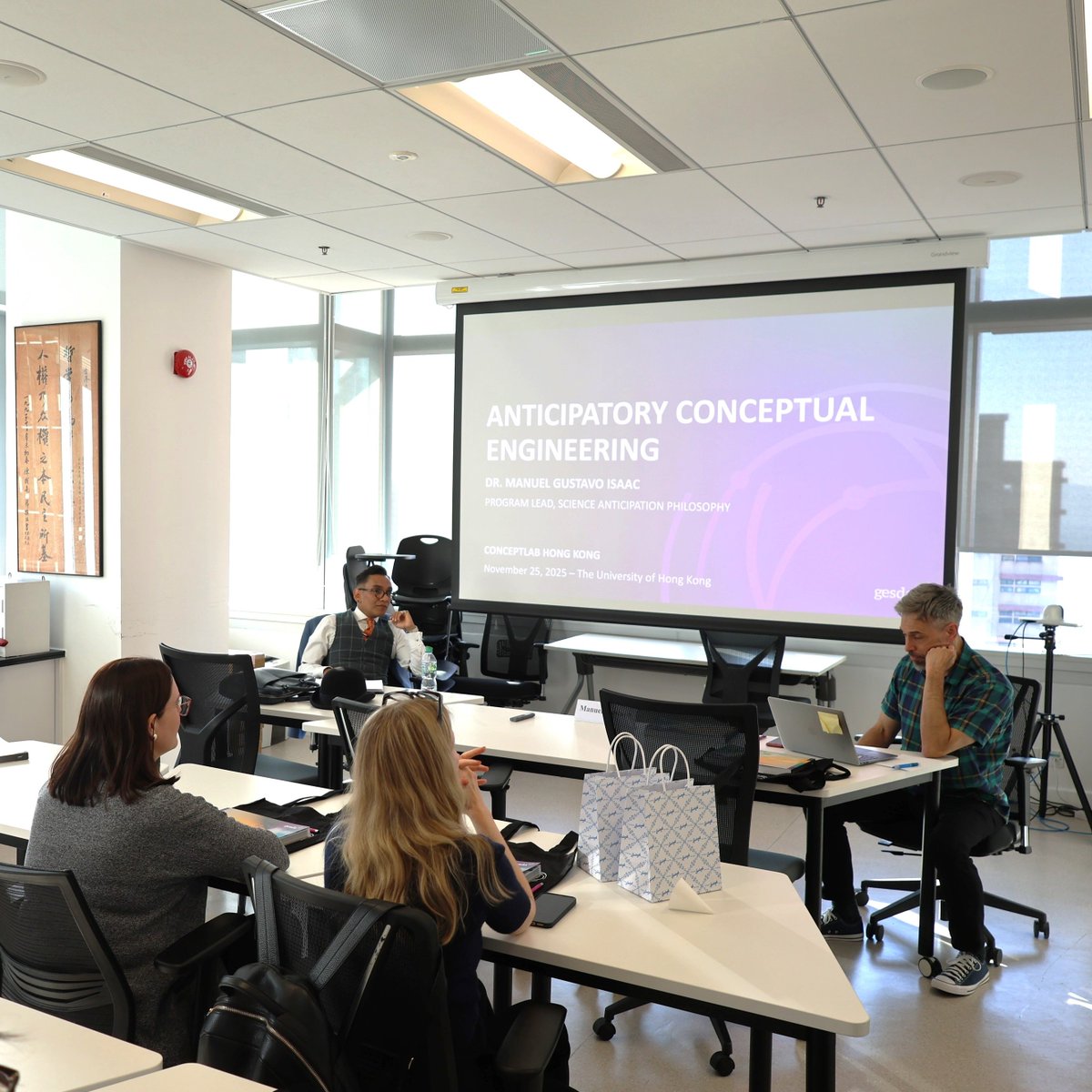
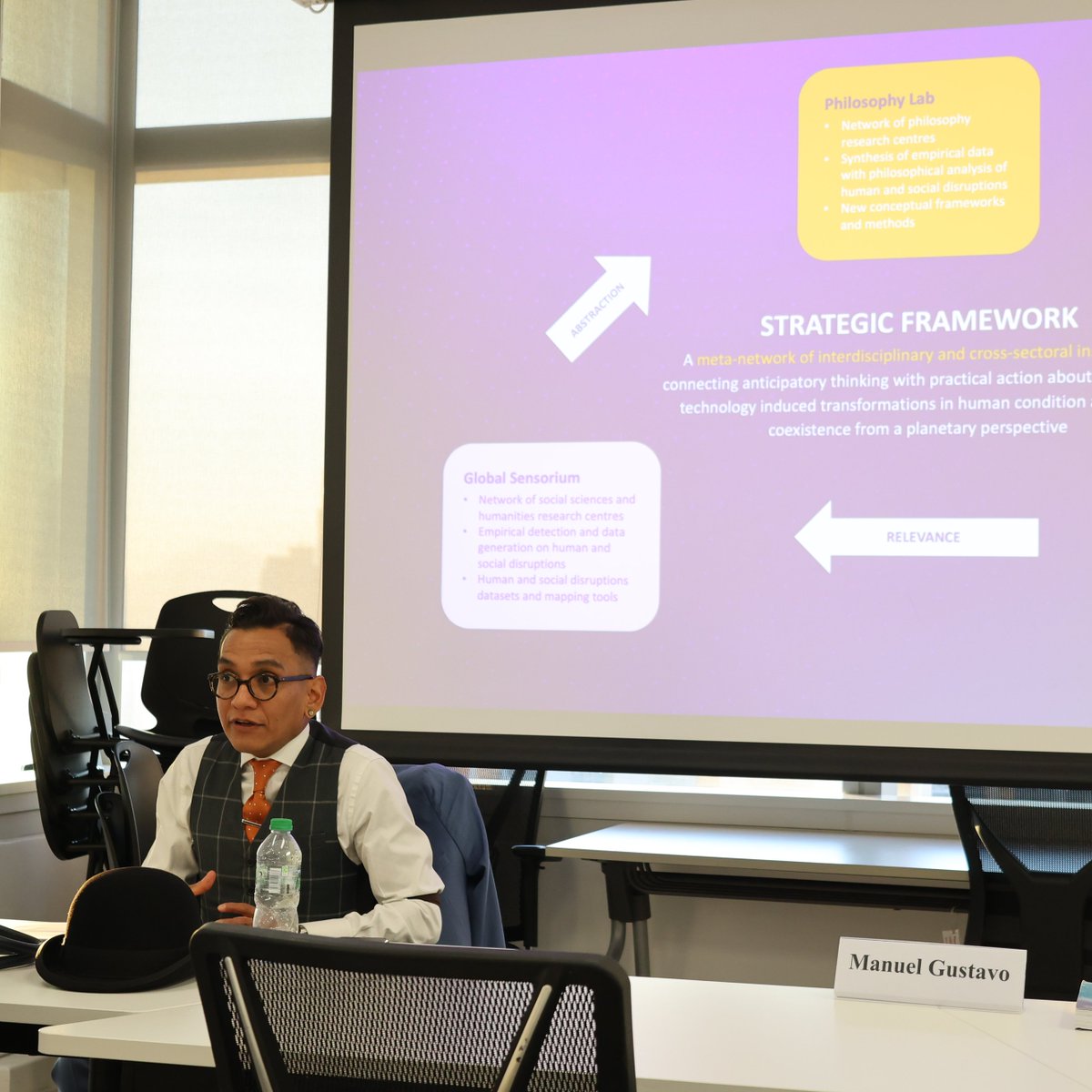
A special thank you goes to our ConceptLab HK guest speaker - Dr Manuel Gustavo Isaac- visited from GESDA (Geneva Science and Diplomacy Anticipator) to share his knowledge about applies conceptual engineering as a philosophical method to GESDA's science anticipation.
Meet Dr Manuel Gustavo Isaac from GESDA (Geneva Science and Diplomacy Anticipator)! He is giving a special talk that applies conceptual engineering as a philosophical method to GESDA's science anticipation.
Register Now! https://t.co/lFRc5sbm3Z
What does it mean to be human in an era of rapid technological change and global environmental challenges?
This was one of the questions at the heart of the 3rd Villars Anticipation Workshop by @GESDAglobal.
Info: https://t.co/p6EXZtFYeG
@Josikinz Tells you more about us — humans asking anthropomorphizing questions to machines with some awkward underlying hopes — than about the machines…
🚨 CONCEPTUAL ENGINEERING NETWORK WEBINAR @ YOUTUBE
📺 Next up: our 2023 panel on conceptual complexity in science by Philipp Haueis with Ingo Brigandt & Rose Nozick is out now — enjoy! ⬇️🔥
https://t.co/TWOQ2US10e
Last year we had a really fun discussion on the evolution of the concept of planet🪐 with Janna Müller (doing her PhD in history of science at Cambridge), Mike Brown (discoverer of Eris and killer of Pluto) and Ethan Landes (experimental philosopher). The video is now on YouTube!
📢 𝗡𝗘𝗪 𝗕𝗢𝗢𝗞 𝗔𝗟𝗘𝗥𝗧: Big kudos to my good friend Alex Krauss who has just published "Science of Science: Understanding the Foundations and Limits of Science from an Interdisciplinary Perspective" with @OUPAcademic. 📚🎉
https://t.co/x3qeR0FN6c
🚀 The 4th #GESDAsummit was a resounding success: Over 1,000 brilliant people gathered from around the world to explore the acceleration of science and its potential to solve global challenges. 🤖🧬🌏
🔗https://t.co/z6vsua1UTK
NEW BOOK — On behalf of Nick Shea, a must-read (with open access PDF!):
Concepts at the Interface
Nicholas Shea
2024 Oxford University Press
https://t.co/vXEUzM95mN
🔥Come and work with us (@ModelTransfERC). Three days left to apply for a 3y postdoc in philosophy of science to work on topics related to model transfer in a vibrant phil of sci environment (@iphilLUH) & within the fields of history and phil of modeling (@ERC_Research).
Nick Shea's excellent new book on concepts is out in open access – it develops his account of concepts as 'plug-and-play' devices that interface between general-purpose reasoning & special-purpose systems. You can get the book for free here: https://t.co/Rv3BY60xIZ
@EthanELandes @DruckerDaniel@ALogins Plus, contrast with "bread or jam": here the exclusive interpretation of "or" would make no sense and instead suggest a case of swapping "or" for "and".
@EthanELandes @DruckerDaniel@ALogins Disagree with the swapping suggestion, as I think you would accept folks replying "Yes, I [only] had bread actually" (same for eggs) but not "No, I [only] had bread actually" (and for eggs).
@EthanELandes @DruckerDaniel@ALogins Considering what I said above, I should be on your side here. Still, I’d consider “Yes, I had both, actually” more likely than “No, I had both actually.”