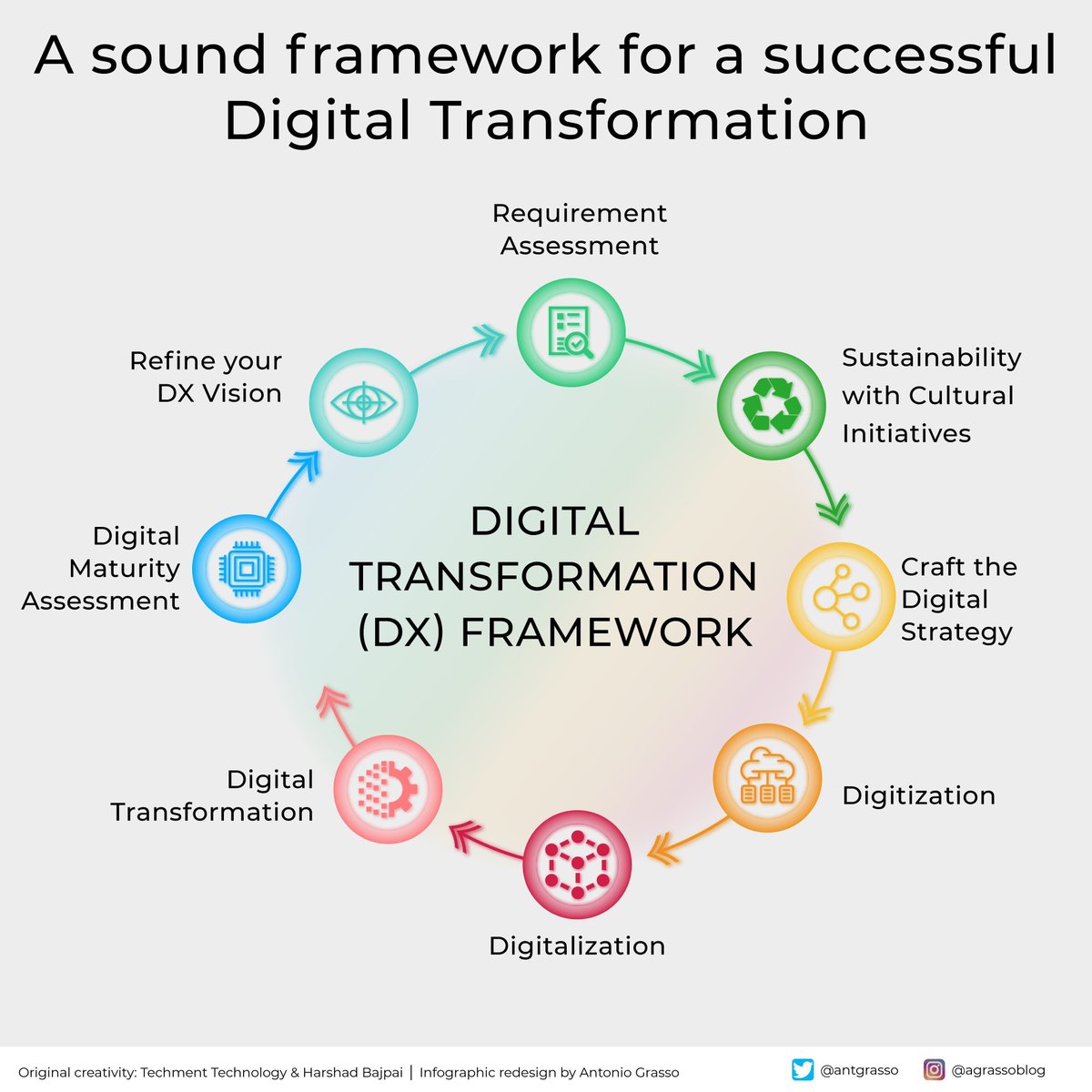
The complexity of digital transformation shows how fragile progress can be when business strategy, technology, and human skills are not aligned, since each gap magnifies the others and turns innovation into a continuous exercise of resilience.
Microblog @antgrasso#Leadership
Digital transformation unfolds as a continuous cycle where assessment, strategy, cultural alignment, digitization, and digitalization converge, shaping a path that strengthens organizational maturity and refines vision with clarity and purpose.
Microblog @antgrasso#CIO
“The link between lack of sleep and cancer is now so strong that the World Health Organization has classified any form of nighttime shift work as a probable carcinogen."
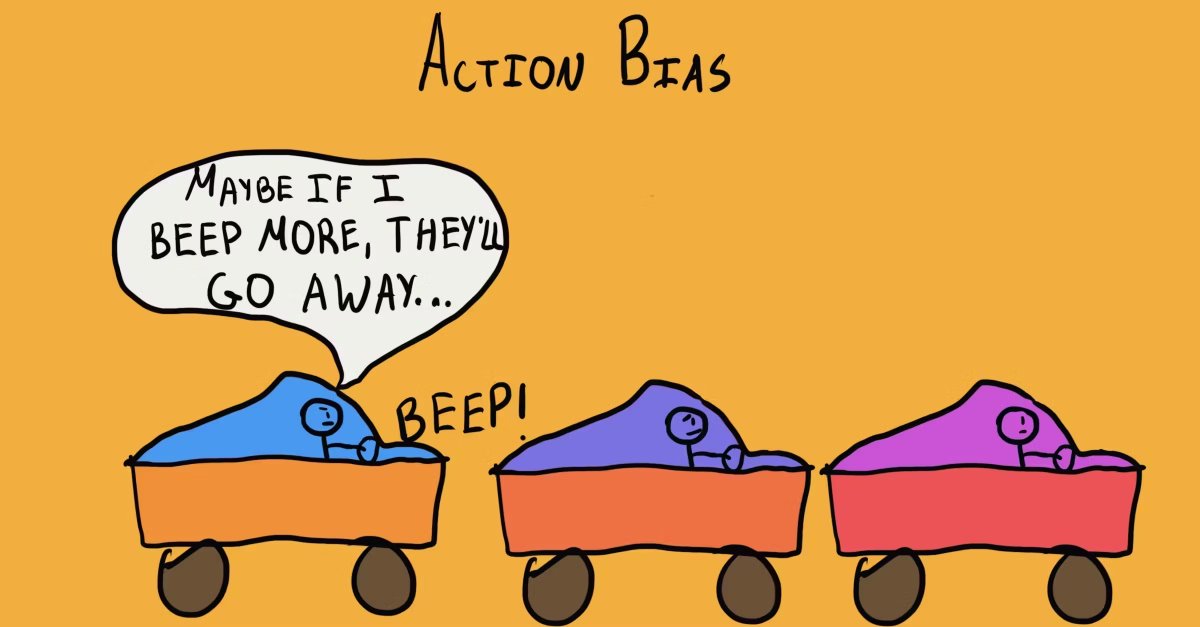
Action bias. Football goalkeepers will jump to the left or right when facing penalties, even though statistically they'd be better off just staying in the middle. Action bias is the tendency to choose action over inaction, even where there's no indication that taking action will help. We tend to (falsely) equate activity with productivity & keeping control. We see action bias frequently in the improvement world. When results don't come quickly, leaders will want more changes, rather than waiting for the improvements to work their way through the system. Deliberately deciding to do nothing is a good practice/skill that improvement leaders need: https://t.co/xXazrA4695. By @TheDecision_Lab
In improvement work, we typically choose to focus on the quality of (siloed) parts of the system (eg, a testing or treatment process). Yet the biggest opportunities lie in improving the quality of intersections between parts of the system. Similarly, the breakthroughs that lead to the greatest innovations are at the intersection between different domains of thinking. AI is going to help speed this up through synthesis - taking prompts that merge information from separate realms. The future of improvement, of innovation & of work lies in intersections: https://t.co/12tSJ1j733 Via @FerraroRoberto@gbolles
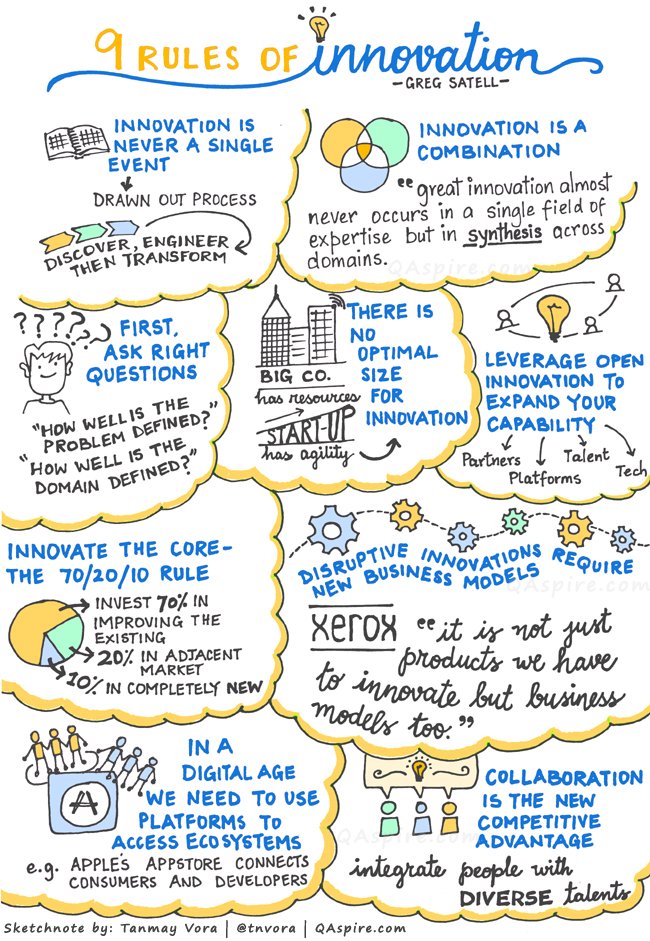
Our systems need to change, which means we have to prioritise innovation. Innovation will only happen if we create the conditions for it. @Digitaltonto sets out nine "rules" of innovation:
1) Innovation is a drawn out process, not a single event
2) Innovation is combination
3) First, ask the right questions
4) There's no optimal size for innovation
5) Seek partners beyond your own capabilities (open innovation)
6) Disruptive innovation needs new business models
7) Follow the 70:20:10 model
8) Use platforms to widen and deepen connections
9) Collaboration is the best way to compete
https://t.co/vsEsFJdMNM. Graphic by @tnvora
We might think that being a perfectionist leader is a positive thing; it means we work to high standards & strive for excellence. But it isn't. Perfectionism has an overarching detrimental effect at work. It's exhausting & it predisposes us to harsh judgments of others who are less than perfect. Time to rethink perfectionism: https://t.co/6GqZ5jC3RF By @taracousphd Graphic: @grantdraws