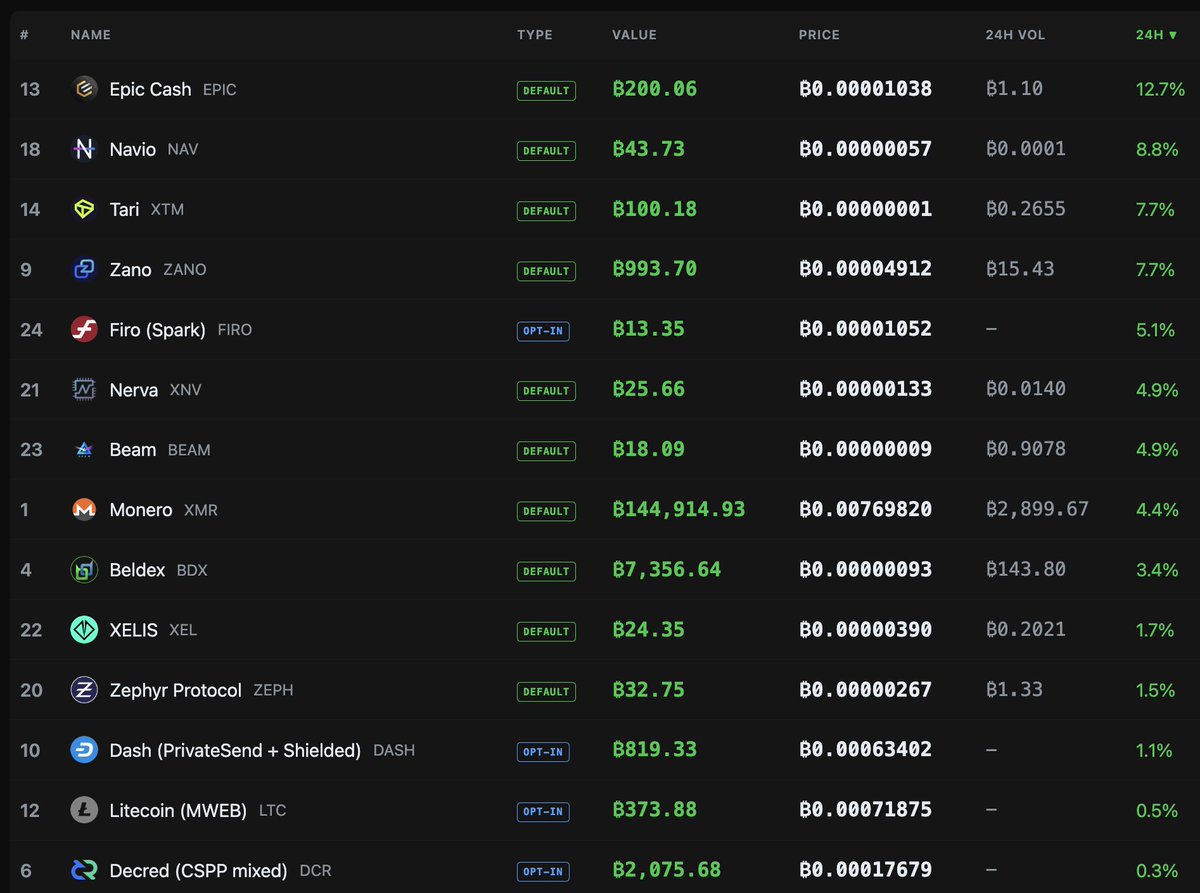
Buy Monero.
DCA.
Hold for a decade.
Ignore shiny coins.
Ignore influencers.
Stay focused. Stay humble. Stack.
Simple.
Works because almost no one actually does it.
monero:native
How to keep your seed/private keys OFF of your mobile crypto wallet:
1. Use a hardware wallet like @Ledger@FoundationHQ@Trezor@BitBoxSwiss etc. which seamlessly work with @cakewallet
or
2. Use Cupcake, the air gapped companion app to @cakewallet. Yes its a mobile device, but it should be a device that is disconnected from the internet, and you install NO OTHER apps on it.
💰Today is the day! Get your free XMR today before it goes to $5000 in the spring! Reply with your screenshot of your Monero receive screen from @cakewallet or @MoneroCom !!
A Cake Wallet feature most people don't know about!
Prove an address is yours without moving a single coin, paying a fee, or touching the chain. Just sign a message with your keys, and anyone can check that it really came from you.
You don’t need an account to swap on Trocador. Pick your coins, paste your address, send. That’s it.
If you do make one, here’s what you get:
• Your swap history in one place
• Notes on each swap, so you remember what it was for
• An address book for wallets you’ve already checked
• CSV export for your own records
Handy if you swap often, but never required.
Turn off JavaScript in Tor's safest mode
and think you are covered?
You are not.
Your OS still leaks through the headers.
Safest mode protecting you from passive fingerprinting is now just security theater.
https://t.co/rRbjJQ7H4X
AI agents hacked chainalysis
AI agents are laundering the binance funds across thousands of addresses
AI agents will soon de-anonymize every transparent chain in seconds
in an AI world, privacy isn't a feature. it's the only defense
monero:native was built for this decade
The Binance exploiters are rushing to stay a step of stablecoin freezes. One method we’re tracking involves stashing their stablecoins in DeFi protocols. Then claiming them back on new, clean addresses.
This method has been used on the Tron blockchain since the early hours of the $6.4 billion attack. It involves swapping TRX for stablecoins, then exchanging those stablecoins for depository receipt tokens. Unlike the stablecons they represent, these receipt tokens cannot be frozen. But they can be exchanged for the stablecoins they represent by whomever holds them. That’s an edge for prospective hackers and money launderers. Especially North Korean threat actors, who have used this method on other heists, too.
Here's how North Korea's TraderTraitor group moved $500K. Step by step.
Step 1: Start with TRX. The hackers moved TRX into a swap wallet, positioning the funds for the next stage of the laundering process.
Step 2: Swap into stablecoins. The hackers converted TRX into stablecoins through a DeFi exchange. The stablecoin offers liquidity and stability, with a catch: risk of freezing. The longer you hold illicit funds in stablecoins, the more likely its centralized issuer freezes your tokens. Circle and Tether have already contributed to $2.8 billion in freezes so far. This creates a critical vulnerability for the hackers and a potential intervention point for investigators. This is a dilemma for hackers — how to exploit stablecoin liquidity without the risk of freezing.
Steps 3 and 4: Move the stablecoins: To solve the dilemma, the hackers moved the stablecoins and deposited them in a DeFi lending protocol. In return, they received a deposit token that could not be frozen. Rather than holding stablecoin directly, they now held a token representing a claim on pooled assets. They can now transfer the claim to the asset without risking a freeze.
Steps 5 and 6: Move the claims token: The hacker moved their claim tokens to a new, clean wallet that was not tainted by association. That new wallet then converted the deposit token back to stablecoin.
Steps 7 and 8: Bridge the funds. The hackers then exfiltrated their assets from the Tron blockchain via a bridge, swapping freezable stablecoins on one side with unfreezable ETH on the other. Now the exploiter is free of worry of a freeze.
Of course, exchanging stablecoins for ETH does not make the hackers bulletproof. Chainalysis investigators analyze patterns like this to keep up with the hackers in real-time. We will continue to monitor how the blockchain is used and misused.
Gm (get monero)
Your algorithm is your village. What’s obvious and based to you can be brand new to someone outside it. We’re sliding back into a middle-age village mentality, anything beyond our bubble feels novel
$XMR could 100x in an instant