Author–After the Spike: Population, Progress, and the Case for People. Former White House CEA senior economist. Economics professor, UT-Austin. Personal account
For about three decades, scholars have argued that if men did more childcare and housework, the fertility rate would rise. The first part is happening, but the second is not.
https://t.co/JS3cQLChUW
@kearney_melissa Still trying to convince my own 13 year old to read it! But he’s at least absorbed that other people on the planet are why he has a Nintendo switch, Marvel Movies, and all the ketchup he can eat.
Daughter back from sleep-away camp - reported that one morning all the girls were saying they don’t want to have kids, it will be better for their careers, plus it’s better for the world since the population is too big…(the Ehrlich legacy just won’t die…)…
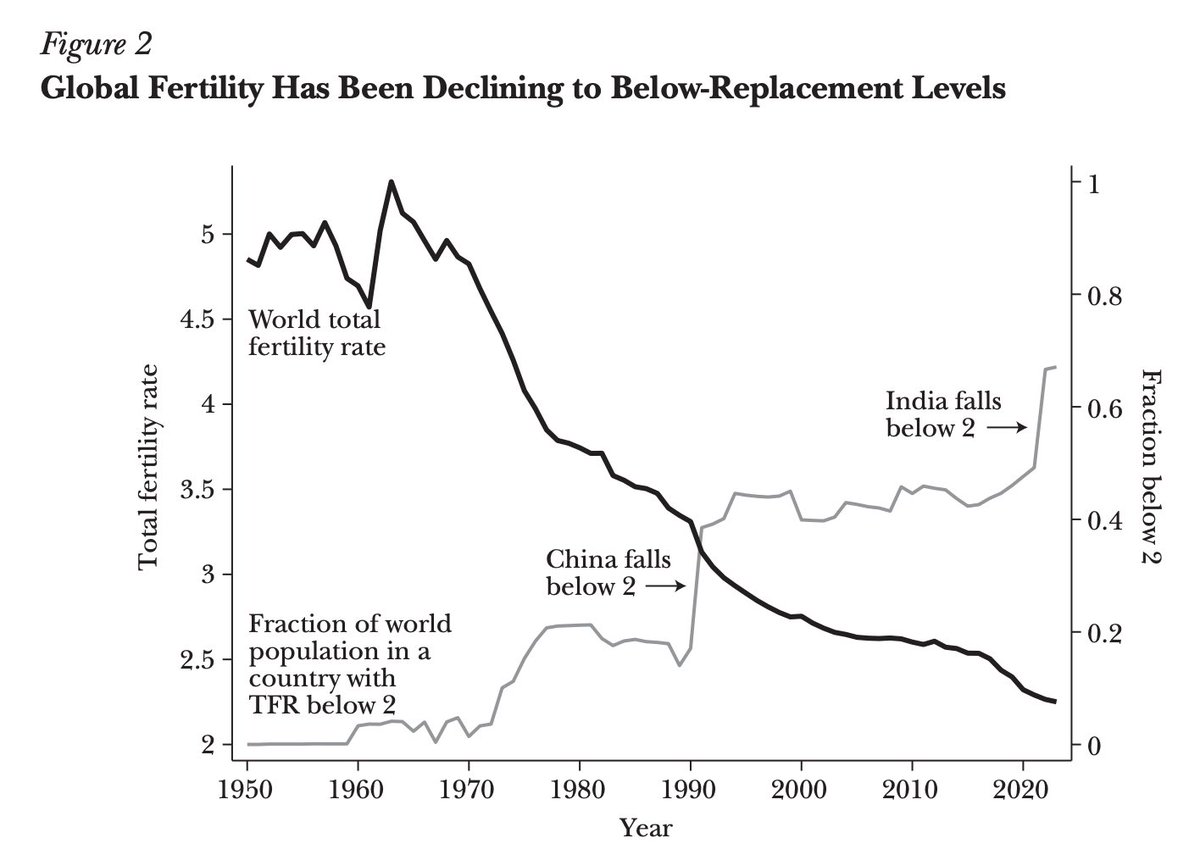
Most explanations of collapsing birth rates picture adults who never have kids at all. @MikeGeruso & Dean Spears (NBER, 2025) decompose the decline: childlessness explains only 38% of it in rich countries. The fall is mostly parents having fewer children.
How will your country's demographics change this century?
At Our World in Data we built a tool to let you see for yourself.
The UN's assumptions are the starting point.
But then you can adjust the three drivers of change — births, deaths, and migration — to what you expect.
What if the population crisis isn’t too many people, but too few? Falling birth rates could reshape growth, climate, and prosperity.
Join @MikeGeruso this Friday as he explores one of the century’s biggest shifts and its impact on our future.
Register → https://t.co/pZlYueoh4d
This graph and headline should have made everyone scratch their head!
The 40 year olds who allegedly “caught up” had much higher fertility at 30 years old than 30 year olds today do!
Upon further consideration, I was too neutral about this article.
It is contorting itself to make a point that is not supported by the data.
It's still possible the 1990 cohorts will reach 2 birth per woman. But you should bet against it.
https://t.co/gBKIpZEsUE
@ernietedeschi@greg_ip@kearney_melissa Ah, well, Forget N=1. All bets are off at what labor demand and living standards look like if we ever reach N=100 million in a global economy! None of us know, so I hope humanity doesn’t bank on some endogenous reversal to avoid it.
@greg_ip@ernietedeschi@kearney_melissa If rising real wages (society-wide) caused birth rates to rise, it would be at odds with the main historical pattern. The biggest-picture story of global fertility decline is that it has coincided with rising real wages (and incomes) around the world.
I am grateful to our authors and our core editing team -- @ProfJAParker, @TimothyTTaylor, and Jeff Kling) for all of the work behind this winter 2026 issue of the Journal of Economic Perspectives.
Available open-access (as always) here: https://t.co/HWgip5dIN4
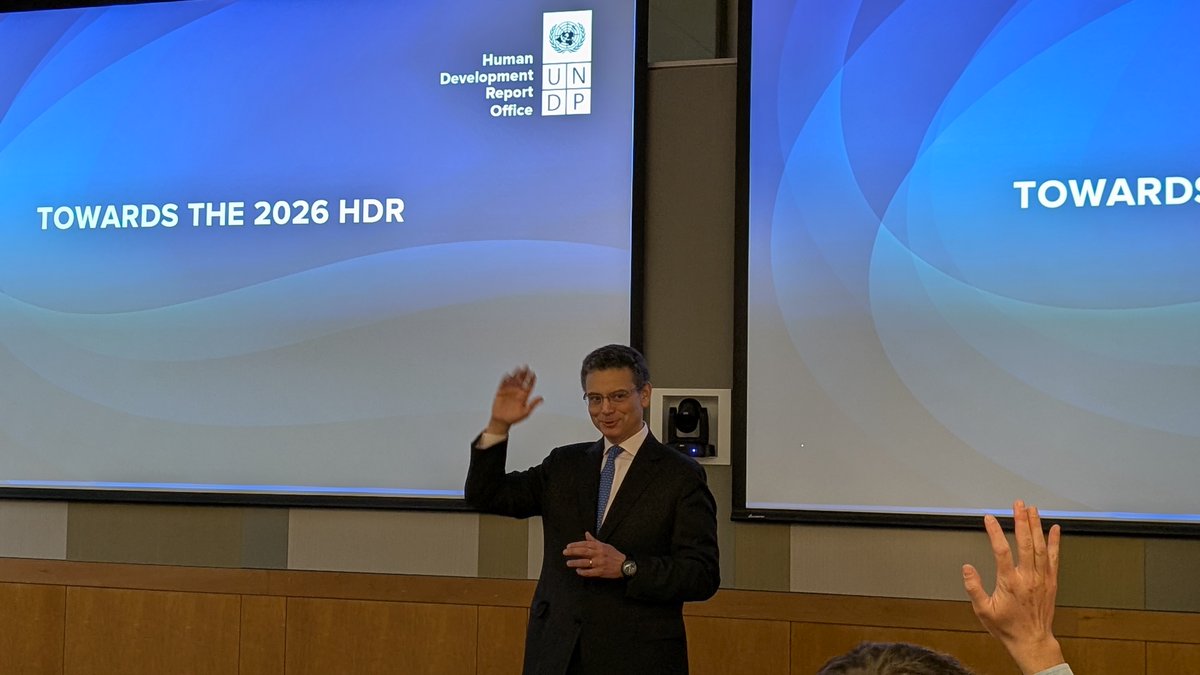
Last week, @HDRUNDP engaged with the faculty, students, and researchers of @UTAustin to consult on key themes and analytical directions of the forthcoming 2026 Human Development Report and to advance joint research on development outcomes, fertility dynamics, and their links to the #HumanDevelopment Index.
Key points discussed at the #HDR2026 consultation hosted by the @UTPopCenter include:
• Population decline ≠ solution to climate change 🌍
• Focus on drivers: consumption, production, tech & policy
• Aspirational, actionable framing with the concept of Nature Relationship Index (NRI)
Visit our website to learn more and stay tuned for updates on the forthcoming Report!
👉https://t.co/K6SGCNUR8C
As a former economist in Biden's CEA, if I tried to frame an analysis as "Biden v. Trump" states or "Red v. Blue" states, I would have been fired (or at least heavily disciplined) because it was simply the case that we were working for all Americans, not just Biden voters.
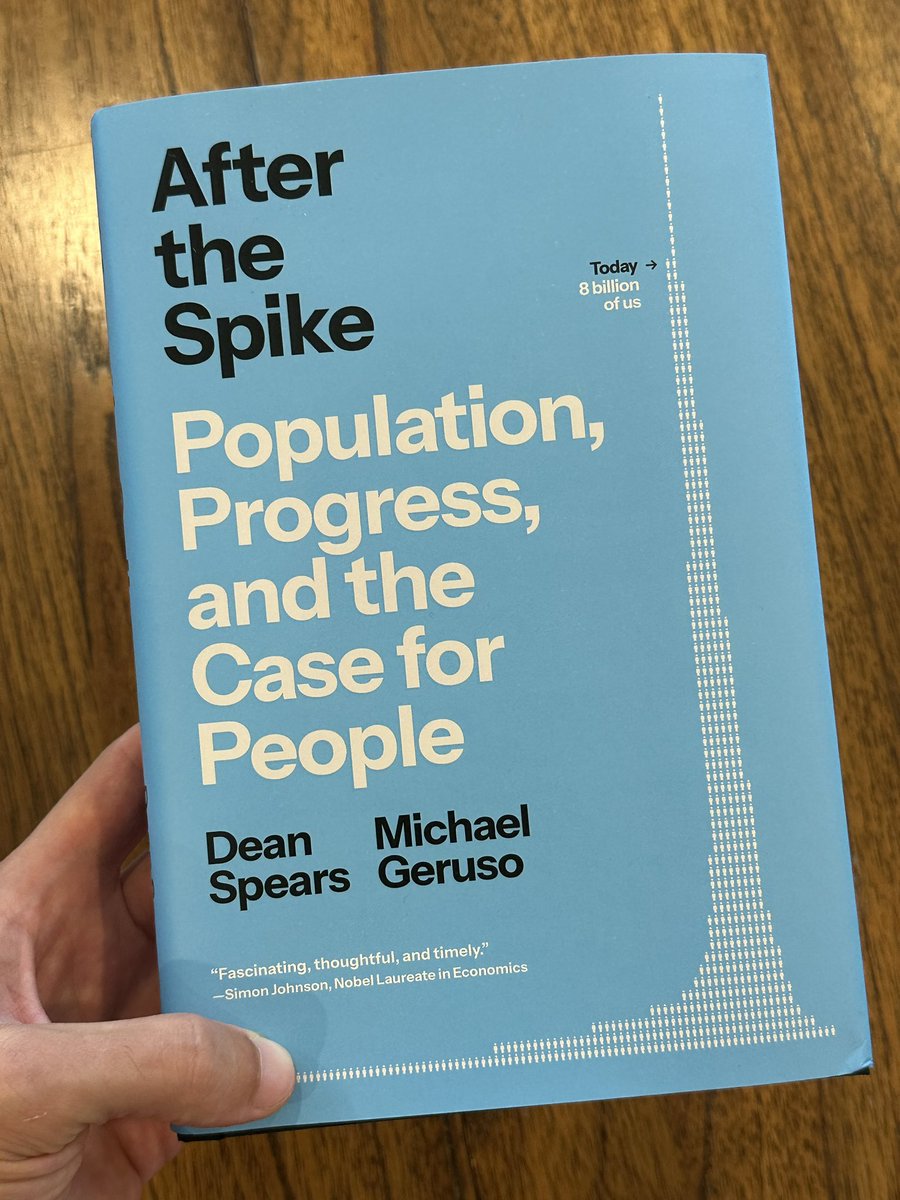
Dean Spears and Michael Geruso’s new book, “After the Spike,” considers how depopulation will transform the world—and argues that societies should make an effort to stabilize population levels. Read @JenniferSciubba’s review.
https://t.co/v4JCTtDaoh
Michael Cannon seems fond of saying that research by a Biden advisor (me) found that Obamacare made things worse for sick patients. He's made that claim again just now in the WSJ. The only problems are 1) I’ve never said it, and 2) my work certainly doesn't show it.