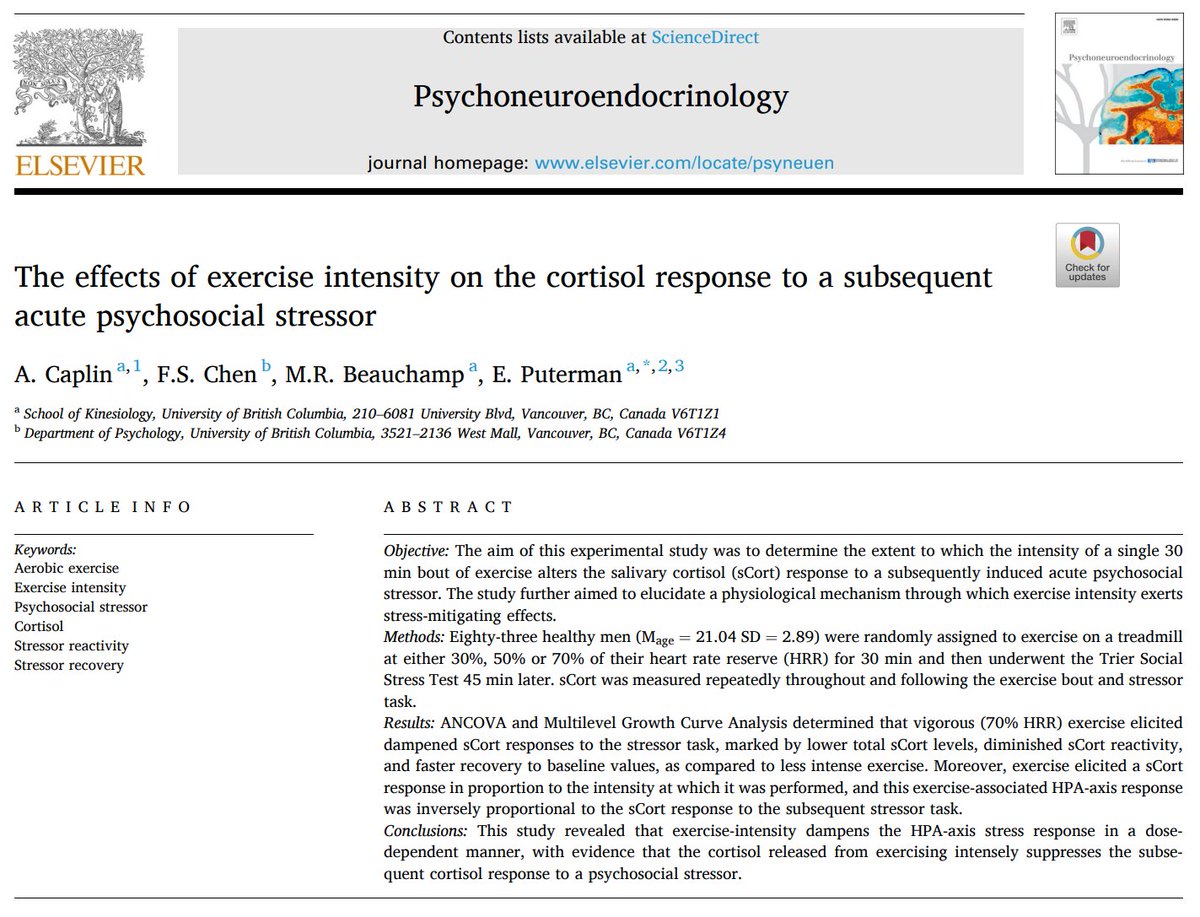
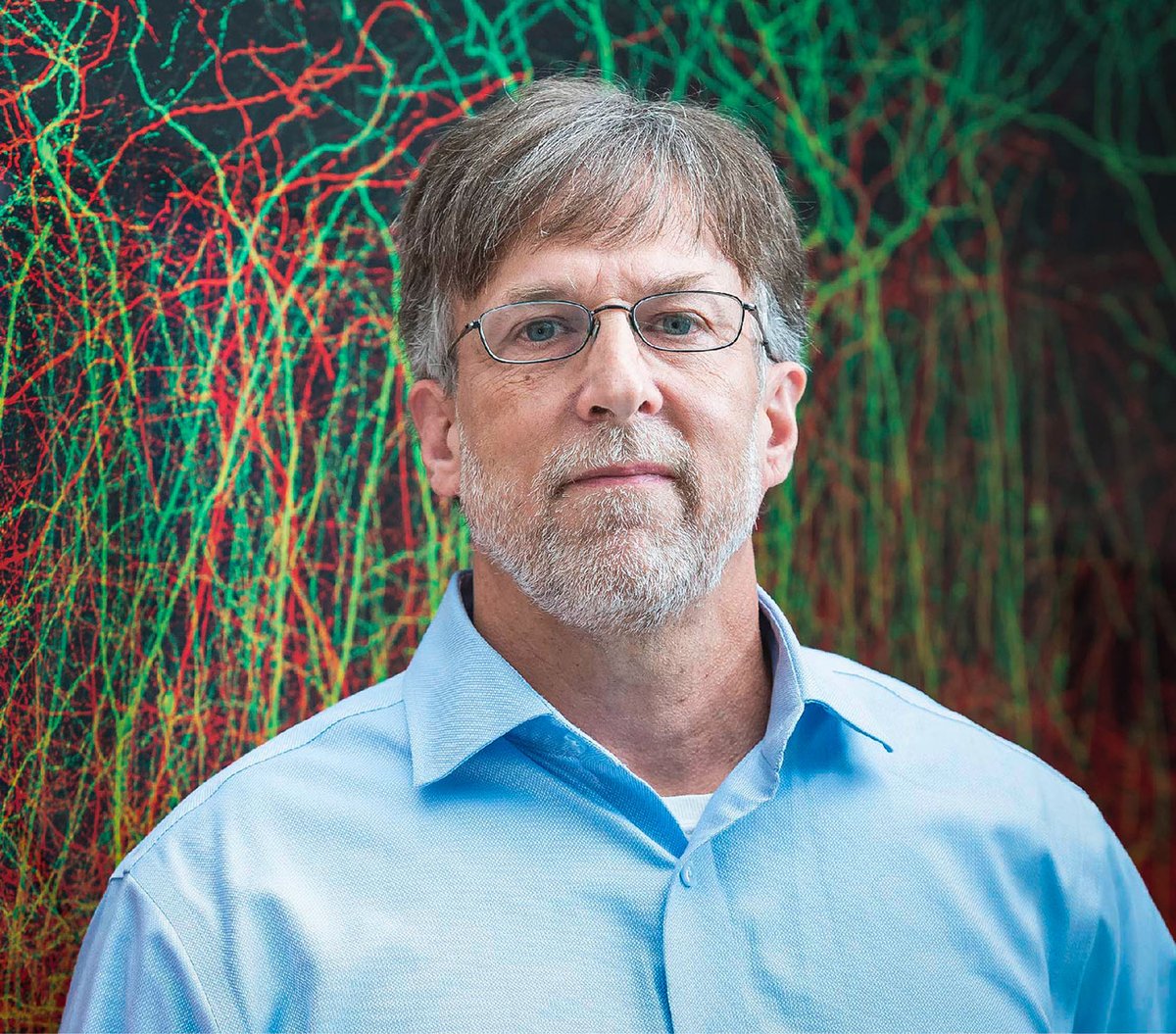
I had the opportunity to write this piece for The Conversation about something we often underestimate in Tourette syndrome: the extraordinary amount of effort many people expend trying to suppress their tics. People may appear relatively tic-free in a classroom, workplace, clinic or on a stage, but that outward appearance can hide an exhausting internal struggle. Suppression is not simply “stopping” a tic; it can require sustained attention, awareness of premonitory urges and enormous mental energy, and the tics may rebound later. The encouraging part is that this same ability to recognize urges and modify responses is also central to behavioral treatments such as CBIT. I have spent much of my career learning from people living with Tourette syndrome, and I continue to be reminded that what we see from the outside rarely tells the whole story. The lesson for all of us is simple: look beyond the tic, listen to the person, and recognize the effort we may not be able to see.
https://t.co/BmBfgzaHKs
Do you ever feel like you’re living life in a loop? That everything blurs together? Life’s redundancies, it turns out, are the building blocks of memory formation. https://t.co/0cep0sfax1
I still don't understand why everyone is not using this yet. Thanks to it, a year ago I increased my income to 17,000 dollars a month
Andrey Karpathy, co-founder of OpenAI, published a simple idea that got 16 million views: stop using AI to write code, use it to build a second brain
You point Claude Code to a folder, drop any source in there (an article, transcript, PDF) and Claude reads it, links it, and saves it into a living wiki of everything you know. It compounds like interest: the more you feed it, the smarter it gets
Here is the gist:
Install Obsidian, create a vault, open it in Claude Code
Paste the file with Karpathy's wiki idea and tell Claude to build it
Claude creates three folders: raw for sources, wiki for its pages, CLAUDE
which runs everything
Drop any source into raw and say "ingest this"
Ask questions across everything, forever
Five minutes to set up, and you never start with an empty chat again
The full step-by-step guide is in the article. Save to bookmarks
Another consciousness theory, presented by Mark Solms below, is that feeling is the most fundamental form of it. A conscious being is a self-sustaining system that is trying to remain intact with a functional architecture based in feeling. This is what some researchers know as consciousness in living things and what could potentially make AI conscious. Can AI have some form of feeling?
Yann LeCun just told the most well-funded industry in human history it is solving the wrong problem.
LeCun: “Babies learn this around the age of eight or nine months, that objects don’t float, they fall.”
No dataset. No labels. No reward signal.
A nine month old drops a spoon and builds a physics engine no machine can match.
LeCun: “Most of us can learn to drive in about 20 or 30 hours of training without ever crashing, causing any accident.”
Twenty hours.
Tesla has built the most capable driving system on the road. It took billions of miles of data to get there. A sixteen year old gets there over a long weekend.
Not because the teenager is the better driver.
Because the teenager is not learning to drive. They are deploying a model of reality they have been building since birth.
LeCun: “If we drive next to a cliff, we know that if we turn the wheel to the right, the car is going to run off the cliff and nothing good is going to come out of this.”
You simulate the crash. You see the wreckage. You feel the fall. You turn the wheel.
None of it was real. All of it was intelligence.
Every AI has to crash a thousand times to learn what you imagined once and never did.
That is not a performance gap. That is an architecture gap.
LeCun: “The main problem we need to solve is how do we learn models of the world.”
Not bigger models. Not more compute. Not another trillion tokens.
World models. A machine that can run reality forward before it acts.
The industry is scaling language.
LeCun says language is a compression of thought. Not thought itself.
You understood gravity before you could say the word.
You grasped cause and effect before your first sentence.
The deepest intelligence you will ever possess was built in total silence.
And every lab on Earth is trying to reconstruct the mind from words alone.
Physics does not care about your context window.
A baby who learns that cups fall in a kitchen already knows that rocks fall off cliffs. No retraining. No fine-tuning. One model. Every environment.
That is what intelligence actually is.
Not prediction. Not pattern matching. Not scale.
A simulation of reality so precise you rehearse the future before it exists.
Every infant on Earth builds one.
No machine ever has.
🇬🇧 The Silver Swan Automaton has been running flawlessly for 250 years on nothing but mainsprings and brass gears.
Built in 1773 to last forever, and it did exactly that. We've somehow gone backwards.
Inside bird eyes is a strange and mysterious structure called the pecten oculi. It looks like a pancake flipper, or maybe a radiator. Some 350 years after anatomists first described it, biologists finally figured out its purpose. https://t.co/Ful3jkIQ6J
Yann LeCun says you cannot build a reliable agentic system without a world model
LLMs don't have world models. They can't predict the consequences of their actions before taking them
"they just act, and whatever happens next is someone else's problem"
Without that, it's not intelligence
Fun fact.
This trick shot by Mary Tyler Moore in a 1962 episode of "The Dick Van Dyke Show" was actually made in one take.
It was intended for an expert pool player to film the trick, but to everyone's surprise, she actually got it.
A new study finds psychopathic traits appear to be more common in the general population than we previously realized. Here are some warning signs to watch for in your everyday encounters. https://t.co/oTvEAKjwLX
Recently, neuroscientist Jeffrey Magee explored the unsung role that dendrites play in memory formation. The findings rewrite our understanding of the brain’s neuroplasticity. “That made it even more interesting, of course, and a little bit intimidating, because then we were going to be facing up to nearly 100 years’ worth of dogma,” he said.
https://t.co/OBNHVIScvx
Unlike traditional robots focused on functionality, Origin F1 is designed to explore a new dimension of embodied intelligence—where interaction feels intuitive, emotional, and human.
Yann LeCun (AMI Labs Founder): "The AI industry is completely LLM-pilled. Everybody is working on the same thing. They're all digging the same trench."
LeCun explains why no lab dares break from the pack:
"They are stealing each other's engineers. So they can't afford to do something different because if they start going on a tangent, they're going to fall behind the other guys. And so they're all doing the same thing."
This groupthink is exactly what drove him out of Meta.
"Meta also became LLM-pilled with sort of recent reshuffling. And it's fine, a strategic decision that maybe makes sense for them. It's just not what I'm interested in."
For @ylecun, the problem runs deeper than strategy.
LLMs are missing something essential about how intelligence actually works:
"I cannot imagine that we can build agentic systems without those systems having an ability to predict in advance what the consequences of their actions are going to be. The way we act in the world is that we can predict the consequences of our actions and that's what allows us to plan."
His broader critique is that the industry has mistaken fluency for intelligence.
Language turned out to be the easy part. The hard part is the physical world.
It's why we still don't have domestic robots or level-five self-driving cars, even though today's systems can pass the bar exam and write code.
There I am talking about Aristotle - see the intro of https://t.co/yb9r7TjDNR : "The concept of a mental model of the world—a world model—dates back millennia. Plato [PLA1] suggested that we recognize objects by recollecting internal blueprints or templates, today often called internal representations. Aristotle wrote that phantasia or mental images allow humans to imagine the future and to plan action sequences by mentally manipulating images in the absence of the actual objects [ARI1]. Only 2,370 years later—a mere blink of an eye by cosmical standards—we are witnessing a boom in world models based on artificial neural networks (NNs) [DLH][WHO4-11] for artificial intelligence (AI) in the physical world."
See also https://t.co/LHWFJNSMHe
A cat with cerebral palsy couldn't feed itself and needed daily care.
One day, while enjoying a delicious meal, it shed tears, as if expressing gratitude and joy for the love its owner had given it over the years…
Why do Americans tend to smile more than people in many other countries? This piece from The Atlantic explores the cultural and historical forces that shaped the American smile, and how expressions can be interpreted differently around the world.
It’s a fascinating reminder that context matters when reading emotion. https://t.co/JaXTweXnZJ
Media Lab Prof. @rosalindpicard reflects on the origins of her work in wearable sensing and Affective Computing — technology designed to measure and respond to human emotions.
In January, Professor Picard was named as a recipient of the 2026 IEEE Medal for Innovations in Healthcare Technology, one of @IEEEorg’s highest honors. She was recognized “for pioneering contributions to wearable affective computing for health and wellbeing.”
https://t.co/AxokR3dQhz